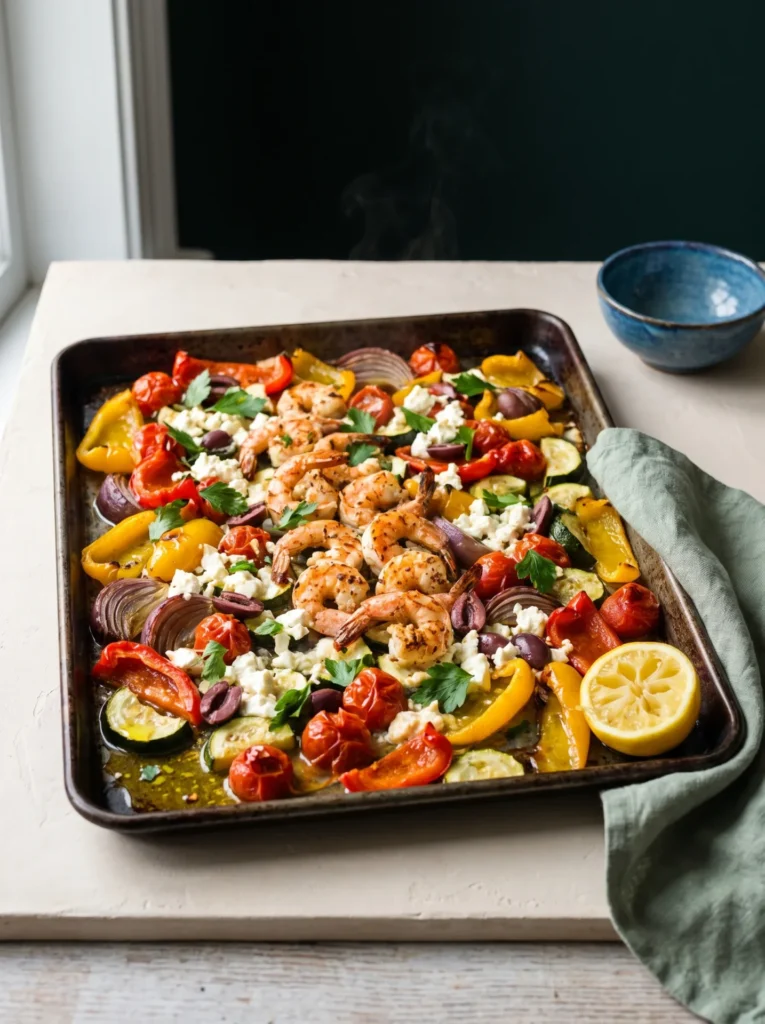
Sheet pan Mediterranean shrimp and vegetables is the dinner that survives a bad day: everything goes on one tray, the oven does the work, and there is a single pan to wash at the end. The only real decision is timing, because peppers need a quarter of an hour of hard heat and shrimp need six minutes. Stagger those two and you get blistered, sweet vegetables under shrimp that are still tender. It belongs squarely to the Mediterranean way of eating: olive oil, seafood, a tray of vegetables, lemon, and feta used as seasoning rather than as a topping.
Table of Contents
Why this sheet pan Mediterranean shrimp and vegetables tray works
- The vegetables get a head start. Peppers, onion and zucchini go in alone for fourteen minutes at 425°F. By the time the shrimp arrive the vegetables are already collapsing and caramelising, so nothing has to be compromised for anything else.
- Hot metal, not steam. Preheating the pan itself means the vegetables sear on contact instead of sweating. That single step is the difference between roasted shrimp and vegetables and a tray of pale, watery ones.
- Space is an ingredient. One half-sheet pan for four servings keeps everything in a single uncrowded layer. Crowd it onto a quarter-sheet and the moisture has nowhere to escape.
- It is a full plate without a side dish. Each serving carries 40 g of protein and close to a pound of vegetables between four people, with olive oil doing the work that butter or cream would do elsewhere.
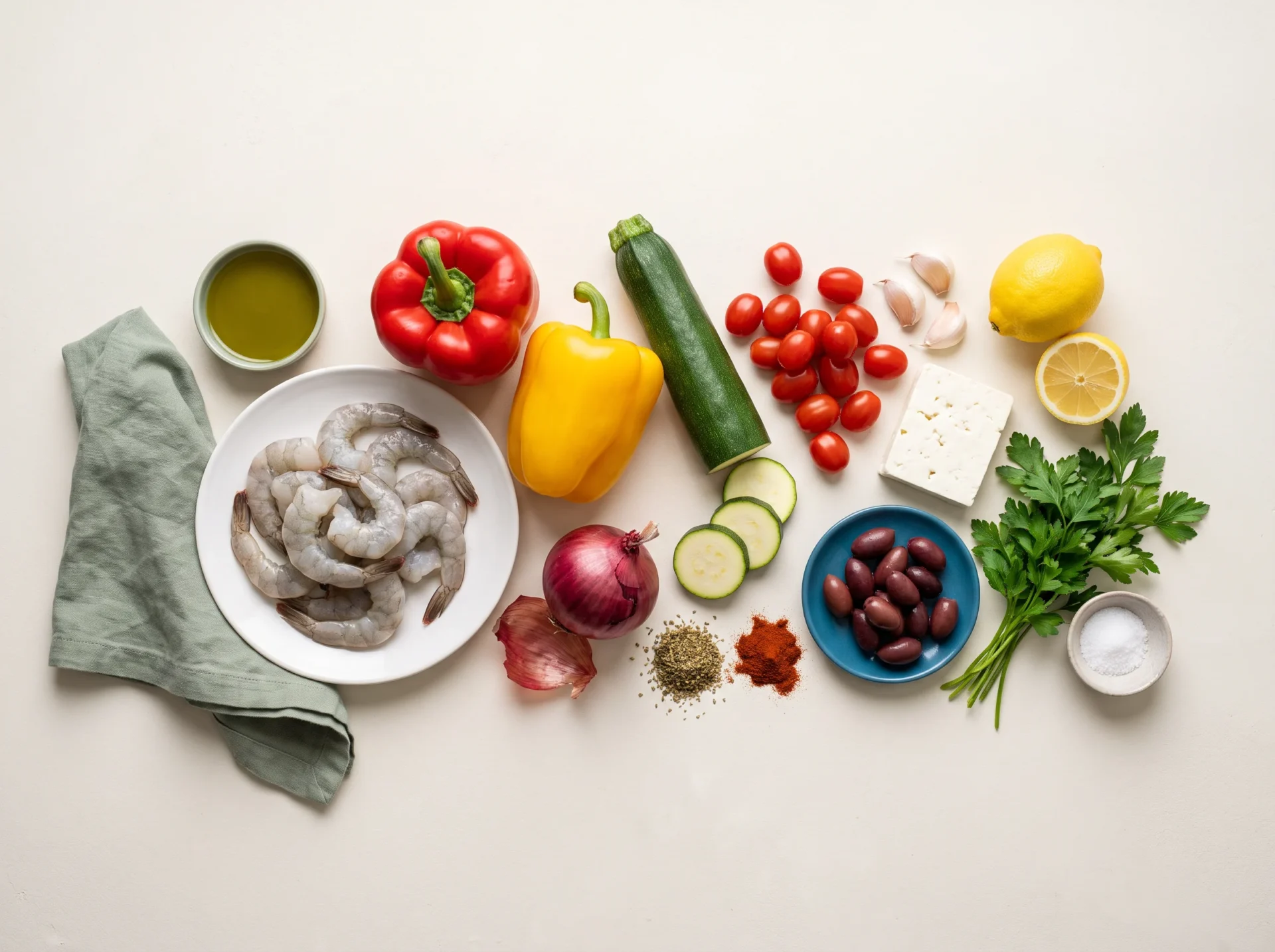
Ingredients
Makes 4 servings.
Equipment
How to make it
- Preheat the oven and the pan. Set the oven to 425°F (220°C) with a rack in the upper third, and slide the empty sheet pan in while it heats. Give it a full 15 minutes; a cold pan is the most common reason vegetables steam instead of roast.
- Season the vegetables. Toss the peppers, zucchini, red onion and cherry tomatoes in a large bowl with 3 tbsp of the olive oil, the oregano, smoked paprika, 3/4 tsp of the salt, the black pepper and the red pepper flakes, until every piece is glossy.
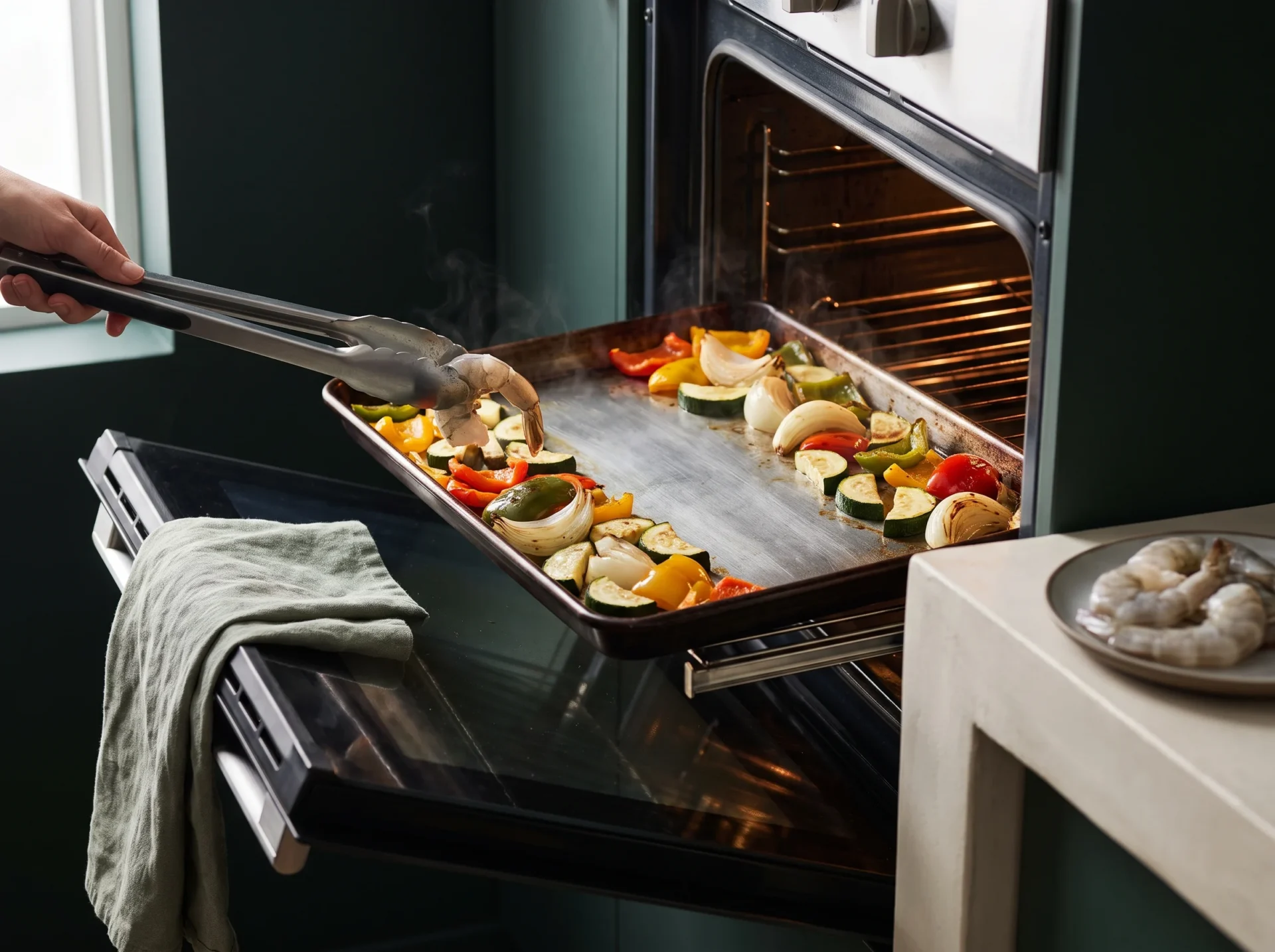
- Roast the vegetables alone. Tip them onto the hot pan; they should hiss on contact. Spread them into one uncrowded layer and roast 14 minutes, until the pepper edges are browning and the tomato skins have split.
- Dress the shrimp. While the tray is in the oven, pat the shrimp completely dry and toss them with the remaining 1 tbsp olive oil, the minced garlic, the lemon zest and the last 1/4 tsp salt. Dry shrimp brown; wet shrimp poach.
- Add the shrimp and finish. Pull the pan out, push the vegetables to the edges, and lay the shrimp in a single layer down the middle with space between them. Roast 6 to 7 minutes, until they are opaque and pearly and register 145°F (63°C) at the thickest part, the minimum safe internal temperature the FDA gives for seafood.
- Dress the tray off the heat. Squeeze the lemon juice over the whole pan while it is still hot, then scatter the olives, feta and parsley across it. Let it sit 3 minutes so the feta softens at the edges, and serve straight from the pan.
Practical cooking tips
- Cut for the clock, not for looks. Everything on the tray should be roughly 1 inch. Zucchini cut thin turns to mush in fourteen minutes; onion cut thick is still squeaky at the end.
- Use two pans rather than one crowded one. If you are doubling this sheet pan shrimp for a crowd, split it across two trays and rotate them halfway. A heaped pan is a braise wearing a roasting pan’s clothes.
- Overcooked shrimp is the one failure that cannot be undone. Six minutes is usually enough at 26-30 count; check the first one at five. Buy raw rather than pre-cooked, which has nowhere left to go but rubbery.
- Add the feta off the heat. Roasted feta goes chalky and squeaks. Scattered onto a hot tray it softens just enough to melt into the pan juices.
- Do not skip drying the shrimp. Two minutes with paper towels is the whole difference between browning and grey, watery edges.
Swaps and variations
- Swap the zucchini for asparagus or green beans. Both roast in about the same time. A pound of trimmed asparagus in place of the zucchini changes the numbers very little: about 5 more calories and 1 g more protein per serving.
- Make it a bulkier one pan shrimp and veggies tray. Add 12 oz (340 g) of halved baby potatoes, tossed in oil and roasted 20 minutes before the other vegetables join them. That adds roughly 72 calories and 16 g of carbs per serving, so it is no longer low-carb.
- Skip the feta for a dairy-free tray. You lose about 56 calories, 4.5 g of fat and 3.5 g of protein per serving. Replace the salty edge with an extra tablespoon of olives and a second squeeze of lemon.
- Want the same method with chicken? Our sheet pan Greek chicken uses the same staggered-timing logic with thighs at 165°F instead. More trays and skillets like this live in the recipe archive.
Storage and meal prep
Spread the tray out to cool for 20 minutes, then refrigerate in shallow containers within two hours of cooking. Cooked seafood keeps 3 to 4 days refrigerated according to USDA leftover guidance, and that is the honest window here. For sheet pan shrimp meal prep, hold the feta and parsley back and add them the morning you eat each portion; they are the two things that do not survive four days in a box.
Reheat in a 350°F oven for 6 to 8 minutes rather than a microwave, which drives the shrimp straight past done. This particular Mediterranean shrimp dinner is also very good cold, folded through a grain or eaten out of the container over the sink. Freezing is not worth it: the zucchini and tomatoes collapse into water on thawing.
Nutrition per serving
| Nutrient | Per serving |
|---|---|
| Calories | 401 kcal |
| Protein | 40 g |
| Fat | 21 g |
| Total carbs | 15 g |
| Fiber | 4 g |
| Net carbs | 11 g |
Values were calculated from the quantities written above using USDA FoodData Central entries matched to each ingredient’s raw state. Nutrition is an estimate and varies with brands and exact portion sizes.
Frequently asked questions
Can I make sheet pan Mediterranean shrimp and vegetables with frozen shrimp?
Yes, once they are fully thawed and dried. Thaw overnight in the fridge, or seal them in a bag under cold running water for 15 minutes, then pat them dry twice. Frozen shrimp put straight on the tray release enough water to steam the vegetables you just spent fourteen minutes browning.
Why did my vegetables come out soggy?
Almost always crowding or a cold pan. Vegetables touching each other trap steam, and a pan that went into a cold oven never gets hot enough to sear. Use a full half-sheet, preheat it empty, and resist adding a fifth vegetable to a tray that is already full.
Do I need to line the pan?
Parchment makes cleanup easier but costs you browning, because the paper insulates the food from the metal. Bare pan gives the best colour. If you line it, add two or three minutes to the vegetable stage.
What should I serve with it?
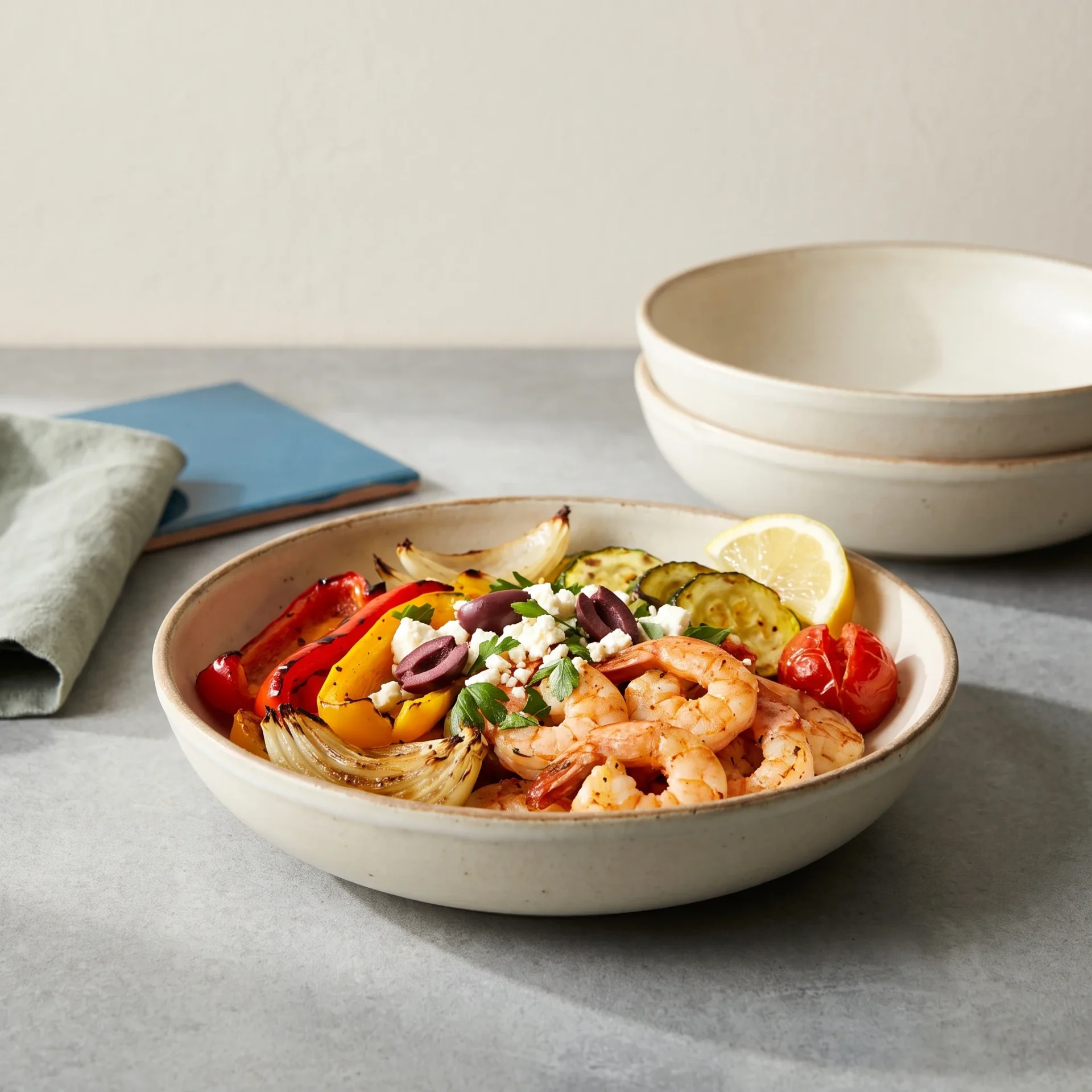
Nothing is required, but warm pita or a scoop of orzo turns it into a larger meal, and either one is useful for the lemony oil left in the pan. A spoonful of plain Greek yogurt on the side works as an unfussy sauce.
Is this low carb?
As written, yes: 15 g total carbohydrate and 11 g net carbs per serving, all from vegetables. Adding potatoes as described in the swaps roughly doubles that, so keep them out if the carb count is the point.
Ratings and reviews
No ratings yet. If you have cooked this, your rating helps the next person decide.
Rate this recipe