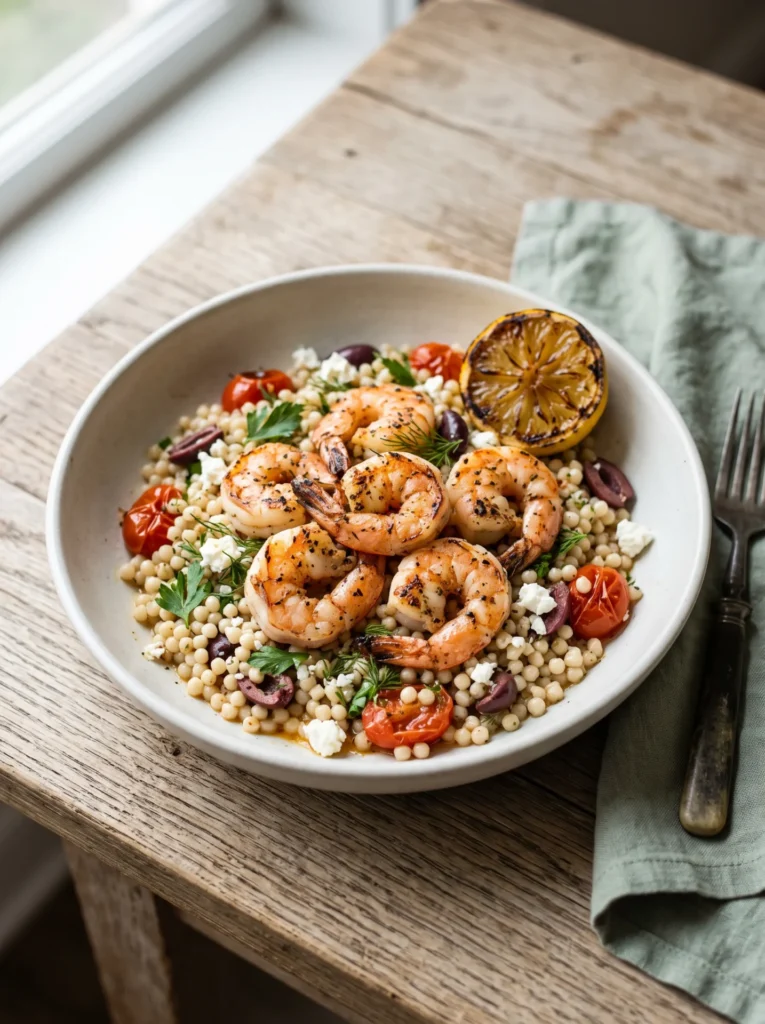
Mediterranean shrimp couscous is the one-pan answer to a bag of shrimp and twenty-five minutes of goodwill. Toasted pearl couscous drinks up seasoned broth while sweet peppers and cherry tomatoes soften around it, and the shrimp go in last, steaming on top of the grain instead of boiling in it. Lemon, olives and feta stirred in off the heat keep the whole thing inside the Mediterranean pattern of eating: olive oil, vegetables, whole grains and seafood, with cheese used as seasoning rather than substance.
Table of Contents
Why this recipe works
- Toasting the couscous is the entire flavour step. Two minutes in hot olive oil turns the pale beads golden and genuinely nutty before any liquid arrives. Skip it and the grain tastes like plain starch no matter how well seasoned the broth is.
- The shrimp steam on top, never stirred through. Laid over almost-cooked couscous under a lid, they cook in trapped steam for five or six minutes and stay springy. Stirred into simmering broth they overcook in half that time and go rubbery.
- One pan, one rising temperature curve. Aromatics, grain, vegetables and seafood go in strictly ascending order of heat tolerance, which is what makes this a true one pan shrimp couscous rather than three pots pretending to be one.
- The finishing ingredients never meet the burner. Lemon, olives, feta and soft herbs go in off the heat, so the feta stays crumbly instead of melting into paste, the herbs stay green, and the acid stays sharp rather than cooking flat.
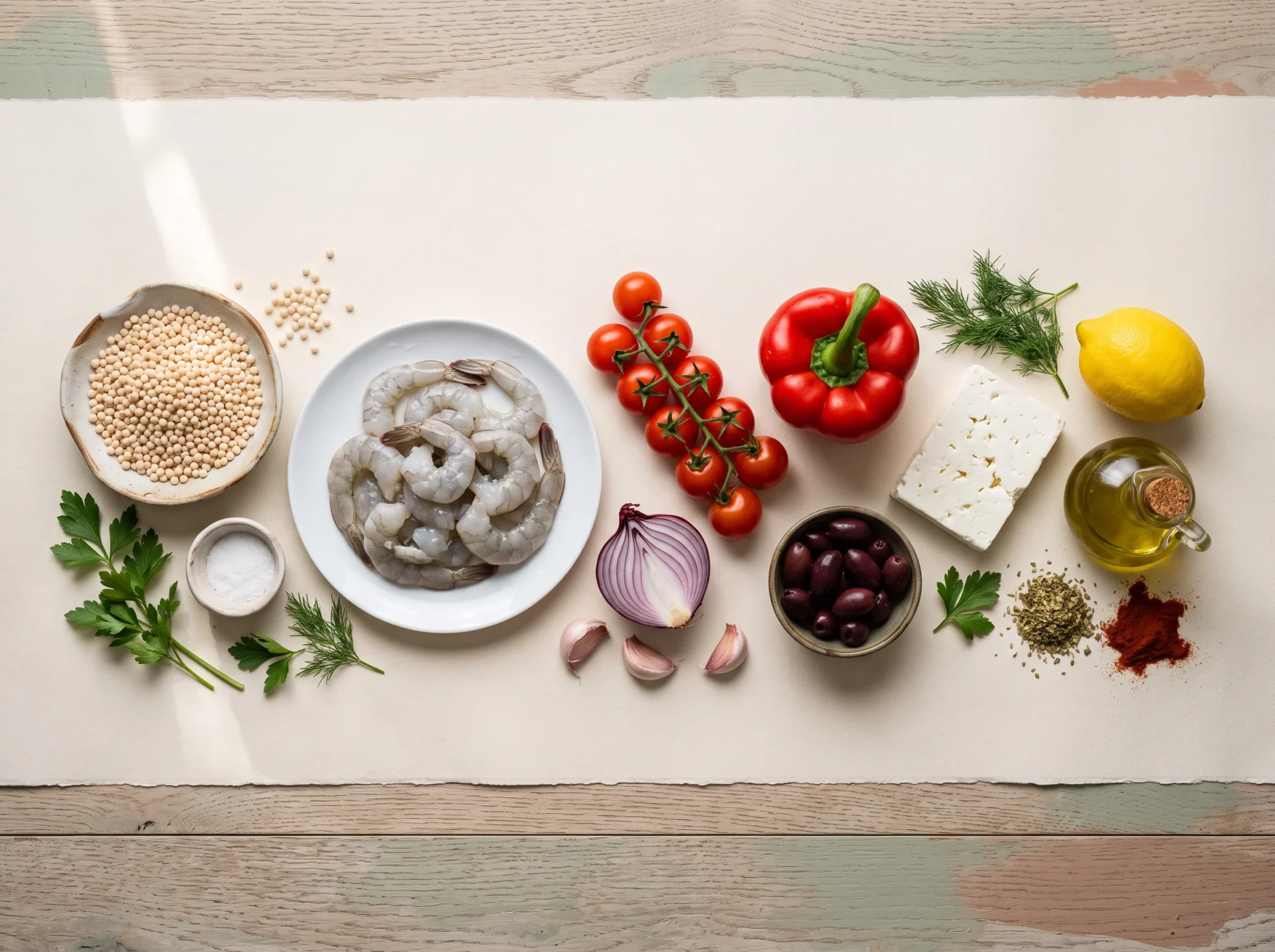
Ingredients
Makes 4 servings.
Equipment
How to make it
- Season the shrimp and leave them alone. Toss the dried shrimp with 1 tbsp of the olive oil, the oregano, smoked paprika, red pepper flakes and half the salt. Leave the bowl on the counter while you build the base; taking the chill off helps them cook evenly.
- Soften the onion and pepper. Warm the remaining 2 tbsp olive oil over medium heat, add the red onion and bell pepper with the rest of the salt, and cook for 4 to 5 minutes until the onion is translucent and the pepper edges have gone floppy but not brown. Add the garlic and stir for 30 seconds, just until it smells sweet.
- Toast the pearl couscous. Tip in the dry couscous and stir constantly for about 2 minutes over medium heat. You are waiting for roughly a third of the beads to turn the colour of pale honey and for the pan to smell like toasted bread. Do not walk away — the turn from golden to scorched takes under a minute.
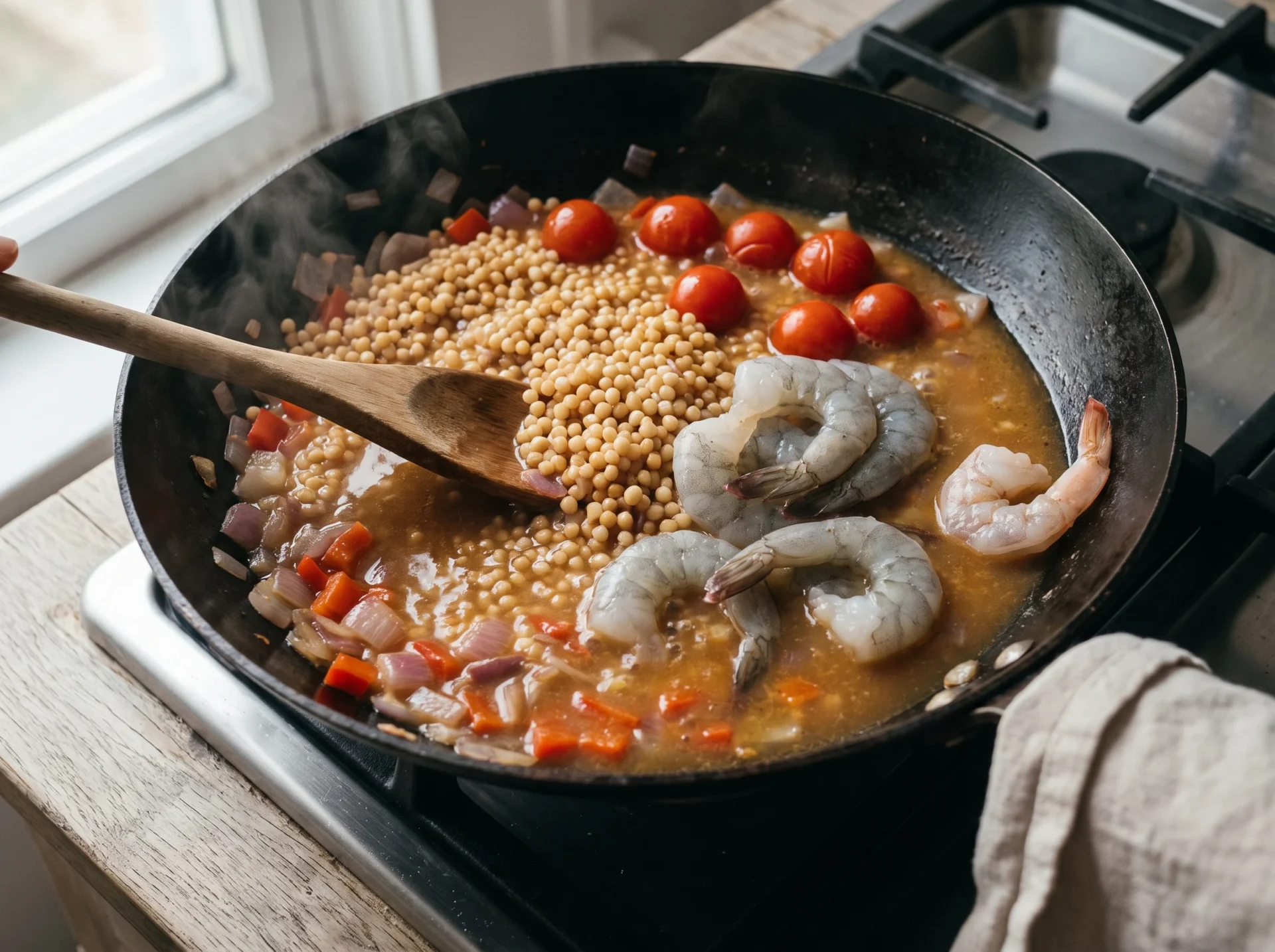
- Simmer until almost absorbed. Pour in the broth, scrape the bottom of the pan, and bring it to a brisk simmer. Cover, drop the heat to low, and cook for 8 minutes, until the couscous is tender at the edge but still chalky in the centre of a bead and most of the liquid is gone — a shallow pool should remain to steam the shrimp.
- Add the tomatoes and shrimp on top. Scatter the halved cherry tomatoes over the couscous, then lay the shrimp in a single layer across the surface without stirring them in. Cover and cook on low for 5 to 6 minutes, until the shrimp are opaque and pearly through the thickest part and read 145F (63C) on an instant-read thermometer, the FDA safe minimum internal temperature for shrimp and other seafood.
- Finish off the heat. Take the pan off the burner, add the lemon zest and juice, the olives, the feta and the parsley and dill, and fold everything through gently so the shrimp stay whole. Rest uncovered for 2 minutes, taste, and add salt only now — the olives, feta and broth have all been salting the pan behind your back.
Practical cooking tips
- The most common failure is adding the shrimp too early. Mediterranean shrimp couscous goes wrong at exactly one point: shrimp that join the broth at step 4 get thirteen minutes of heat instead of six, and no amount of lemon rescues that texture. Wait until the couscous is nearly done.
- Dry shrimp season better than wet ones. Thawed shrimp carry a surprising amount of surface water, which dilutes the spice mix. Blot them with paper towel before the oil goes on.
- Keep the simmer genuinely low. Pearl couscous scorches on a hot dry base far more readily than rice. If you hear crackling rather than bubbling, slide the pan off the heat for thirty seconds and add a splash of broth.
- Broth ratio is the one number worth respecting. This shrimp couscous recipe uses slightly less liquid than the package directions because the tomatoes release their own juice on top. Follow the box instead and you get a soupy pan.
Swaps and variations
- Fine Moroccan couscous instead of pearl. It needs no simmering — stir it into the hot broth off the heat, cover for 5 minutes, then fluff and add the separately cooked shrimp. Macros barely move, since the two are nearly identical per dry gram.
- Orzo for a softer, starchier result. Swap gram for gram and add about 1/4 cup extra broth. Calories rise by roughly 10 per serving and the dish loses the distinct bead texture, but it holds sauce better.
- Chickpeas instead of shrimp. Two 15 oz cans, drained, added at step 5. That lands near 505 calories, 18 g protein and 74 g total carbs per serving — noticeably less protein, considerably more fibre.
- Leaner Mediterranean couscous with shrimp. Drop the feta and halve the olives to cut about 60 calories and 6 g fat per serving. If you want the grain gone entirely, the Mediterranean shrimp meal prep bowls use the same flavour base over vegetables, and the full recipe archive has more in the same family.
Storage and meal prep
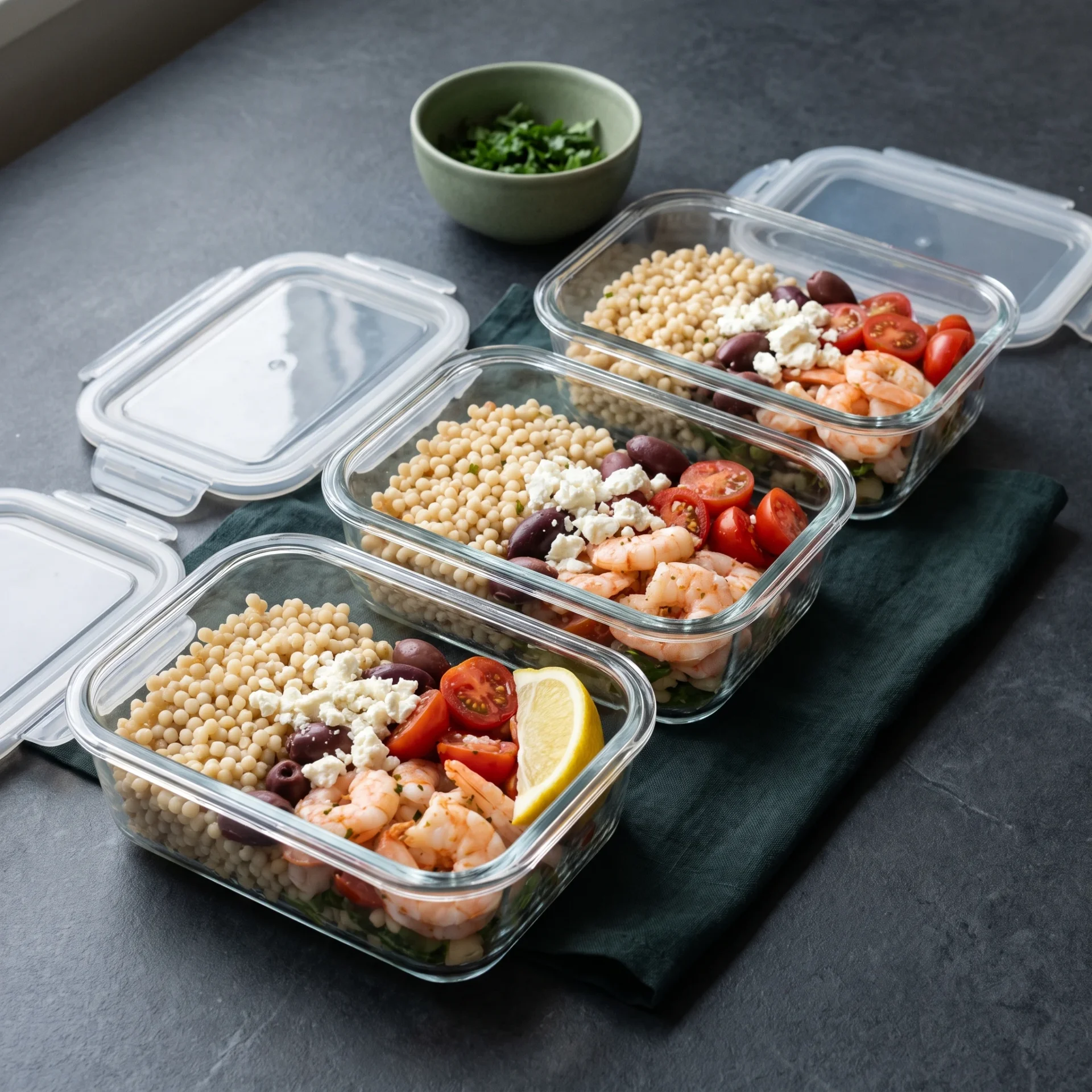
Mediterranean shrimp couscous stores better than most seafood dinners, because the grain shields the shrimp from drying out. Cool the pan within two hours, then refrigerate in airtight containers at or below 40F (4C) for up to 3 days. For shrimp and couscous meal prep, portion it while still slightly warm so the grain absorbs the last of the pan juices, and hold the herbs back until serving. Reheat gently — 60 to 90 seconds in the microwave at half power, or a covered pan over low heat with a tablespoon of water — because full heat turns cooked shrimp tough. Freezing works for the couscous but not the finished dish: the shrimp go mealy and the tomatoes collapse into water on thawing.
Nutrition per serving
| Nutrient | Per serving |
|---|---|
| Calories | 547 kcal |
| Protein | 36 g |
| Fat | 18 g |
| Total carbs | 62 g |
| Fiber | 6 g |
| Net carbs | 56 g |
Nutrition is an estimate calculated from USDA FoodData Central entries for the exact quantities above, and varies with brands and portion sizes.
Frequently asked questions
Can I make Mediterranean shrimp couscous with regular couscous?
Yes, but the method changes. Fine Moroccan couscous is pre-steamed and only needs 5 minutes sitting in hot liquid off the heat, so it cannot share the pan with raw shrimp the way pearl couscous does. Cook the shrimp separately in the seasoned pan, lift them out, hydrate the couscous in the broth, then fold everything together.
Do I have to thaw frozen shrimp first?
Yes. Frozen shrimp release a lot of water as they thaw, and dropped straight onto the couscous they will steam it into porridge. Thaw them in a colander under cold running water for about 5 minutes, then blot them thoroughly dry before seasoning.
How do I know when the shrimp are cooked?
They turn opaque and pearly-white all the way through and curl into a loose C shape; a tight O means they have gone too far. The FDA gives 145F (63C) as the safe minimum internal temperature for shrimp, measured at the thickest part of the largest one in the pan.
Is pearl couscous with shrimp gluten free?
No. Pearl couscous is a small rolled pasta made from semolina wheat, so it contains gluten. For a gluten-free version, substitute an equal weight of dry white rice or short-grain brown rice and extend the covered simmer at step 4 to match the grain’s package timing before the shrimp go on top.
Can I use water instead of chicken broth?
You can, but season harder to compensate. Water gives Mediterranean shrimp couscous no background savouriness, so add an extra 1/4 tsp salt and a squeeze more lemon at the end. Vegetable broth is the better swap and keeps the dish pescatarian.
Ratings and reviews
No ratings yet. If you have cooked this, your rating helps the next person decide.
Rate this recipe