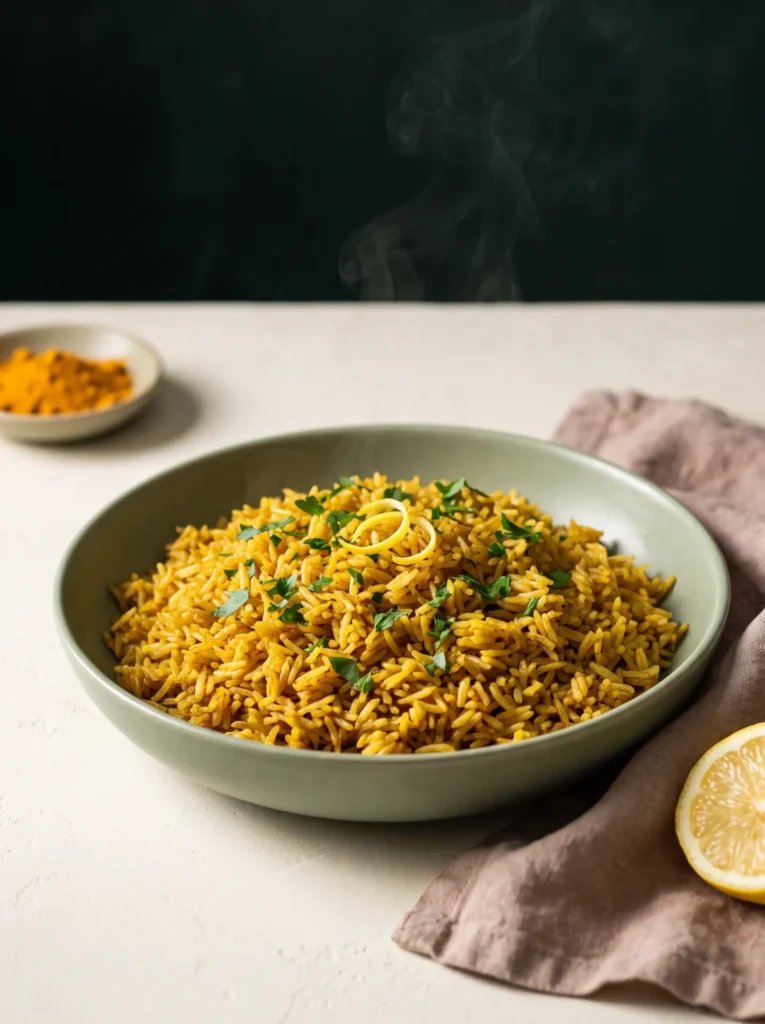
Mediterranean yellow rice normally means white basmati stained gold with turmeric, on the table in twenty minutes. Swap in brown basmati and you keep the bran and a nuttier grain, but the liquid ratio changes and the simmer roughly triples, which is why so many attempts land crunchy or sodden. This version is built for the whole grain: the spices bloom in olive oil before any rice goes in, the pot stays shut for forty minutes, and it rests off the heat so the grains finish in their own steam. A plain, useful Mediterranean rice side dish that reheats better than the white version does. Pair it with anything from our Mediterranean recipes.
Table of Contents
Why this Mediterranean yellow rice works
- The spices go into the oil, not the water. Turmeric, cumin and coriander bloom in hot olive oil for under a minute, pulling their fat-soluble aroma into every grain instead of leaving it suspended in the broth.
- Brown basmati holds its shape. The intact bran keeps the grains separate through a long covered simmer, so the pot gives you pilaf rather than porridge.
- One pot, nothing drained. The rice absorbs all of its liquid, so the colour and the spice stay in the pan instead of going down the sink.
- It is a genuinely healthy yellow rice recipe. The fat is extra-virgin olive oil rather than butter, and the bran that makes brown rice slow to cook is the same bran that carries its fibre.
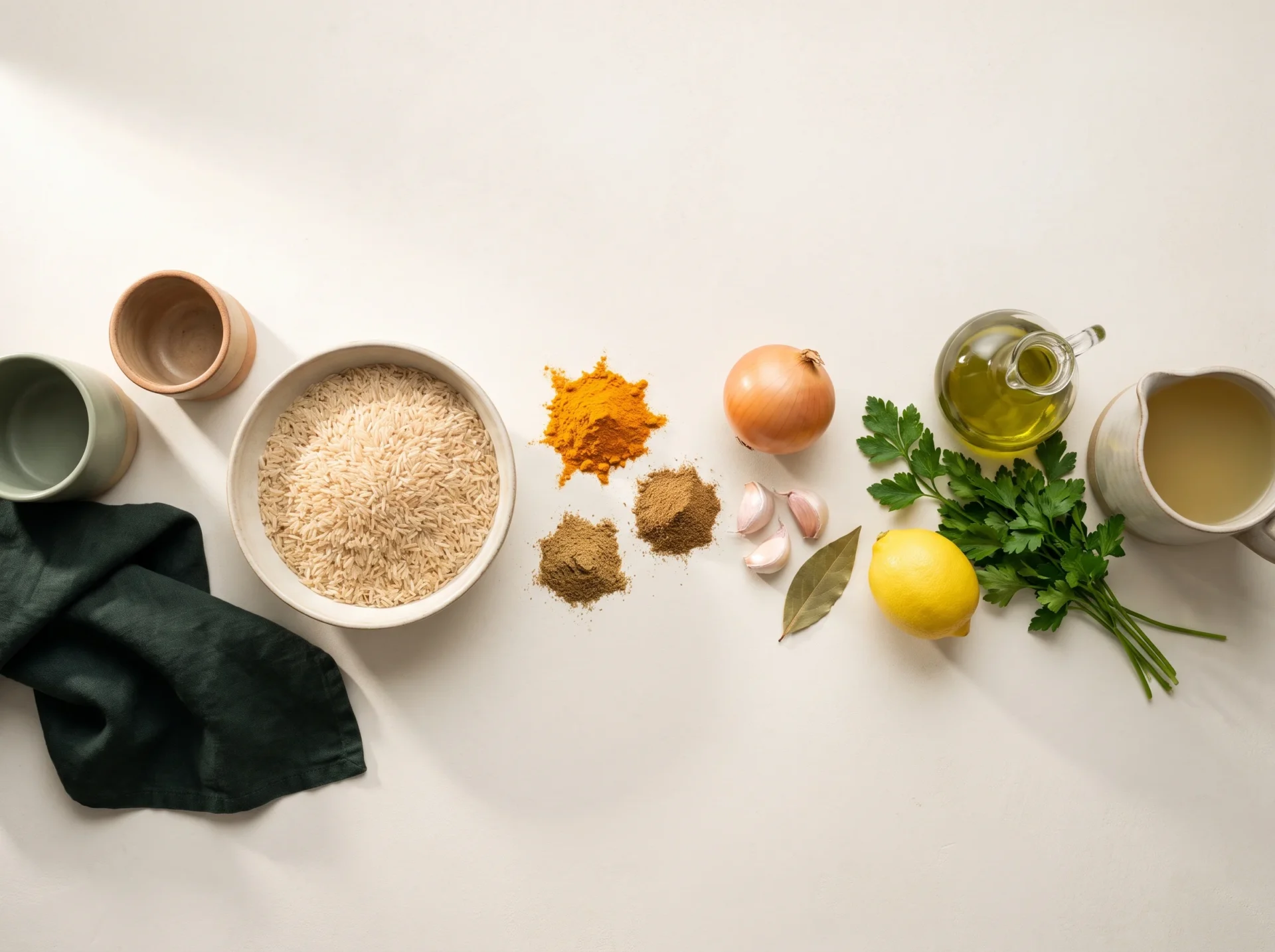
Ingredients
Makes 6 servings.
Equipment
How to make it
- Rinse the rice. Rinse the brown basmati in a fine-mesh strainer under cold running water for 60 to 90 seconds, turning the grains with your fingers, until the water runs clear rather than milky. Drain well.
- Soften the onion. Warm the olive oil in the saucepan over medium heat, add the onion and ½ tsp of the salt, and cook 5 to 6 minutes until the pieces are translucent and just colouring at the edges.
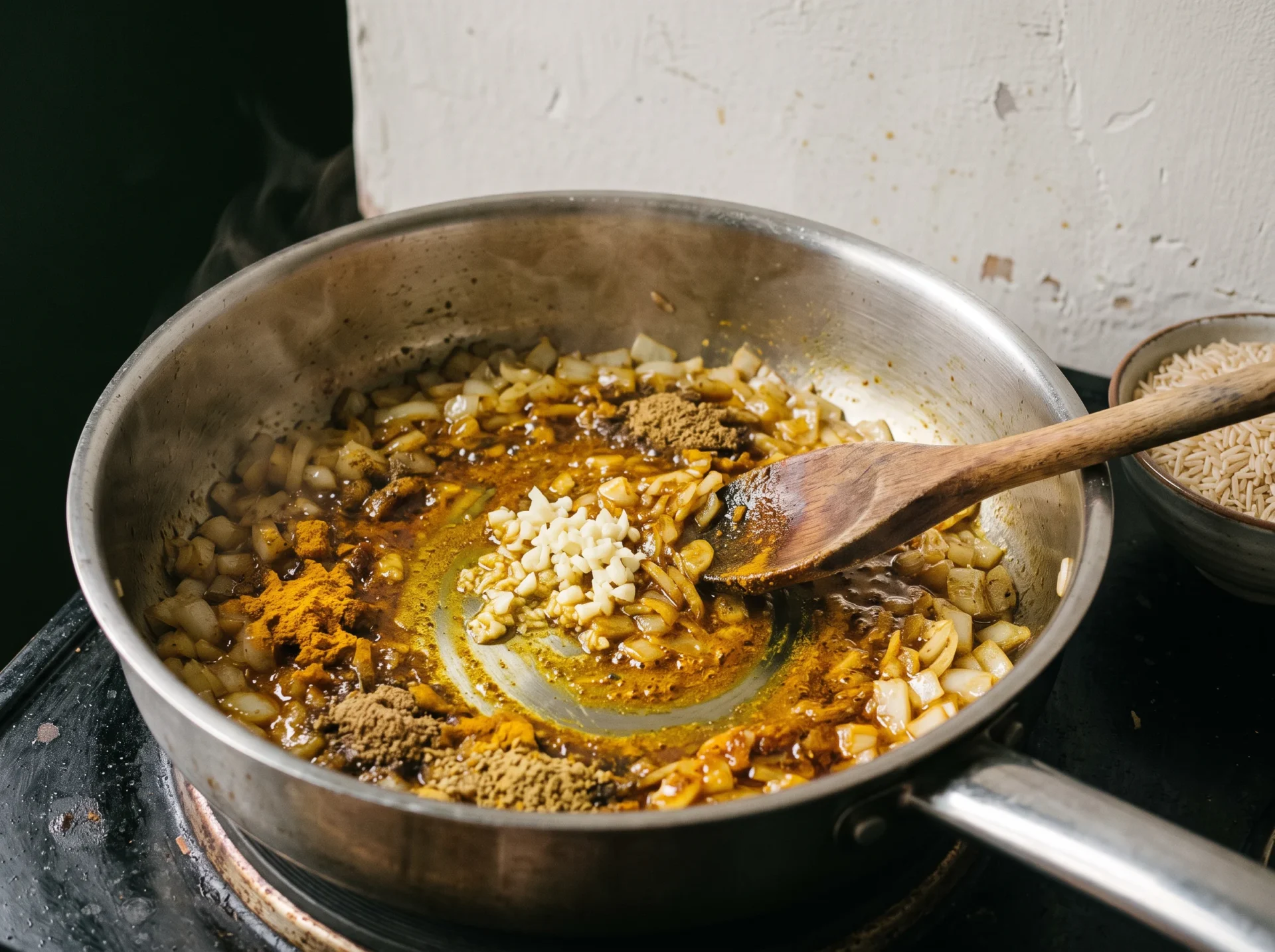
- Bloom the spices. Add the garlic, turmeric, cumin, coriander and pepper. Stir constantly for 30 to 45 seconds, until the oil turns deep gold and smells toasted rather than dusty. Scorched turmeric goes bitter and cannot be rescued, so move fast here.
- Toast the drained rice. Tip in the rice and stir for 2 minutes, until every grain is coated in the spiced oil and the pan smells nutty.
- Simmer covered, undisturbed. Pour in the broth, add the bay leaf, and bring to a full rolling boil. Reduce to the lowest heat that holds a bare simmer, cover tightly, and cook 40 minutes without lifting the lid. It is ready when no liquid pools at the base of the pan and a grain squeezed between two fingernails is tender with a slight chew at the core.
- Rest off the heat. Move the covered pan off the burner and leave it for 10 minutes. The trapped steam finishes the grains and evens the moisture out from top to bottom.
- Finish and fluff. Discard the bay leaf. Add the lemon juice, zest, parsley and remaining ¼ tsp salt, then fluff with a fork from the edges inward, lifting rather than stirring.
Practical cooking tips
- Do not lift the lid. This is the most common failure. Turmeric brown rice that arrives crunchy on top has usually lost its steam to a mid-cook peek, not been given too little time.
- Rinse until the water is genuinely clear. A quick splash is not enough; the loose surface starch is what glues grains into clumps.
- Watch the pan, not the clock, while blooming. Ground spices in hot oil go from fragrant to burnt in seconds, and turmeric turns first.
- Salt in two stages. Half with the onion to season the oil, half at the finish so the surface tastes seasoned too.
- If the pan is dry but the grains are still hard, add 3 tbsp of hot broth, cover, and give it 5 more minutes on the lowest heat.
Swaps and variations
- Short-grain brown rice works but drinks more liquid: add ¼ cup (60 ml) broth and expect a softer, stickier brown rice pilaf instead of separate grains.
- Toasted pine nuts, 3 tbsp (25 g) folded in at the end, add roughly 28 kcal and 2 g fat per serving.
- Chicken broth in place of vegetable broth deepens the savour and leaves the macros essentially unchanged, but the dish is then no longer vegan.
- Turn it into a full meal by treating it as the base and topping it the way our Mediterranean brown rice bowl with lemon chicken does; there are more grain bases across every recipe on the site.
Storage and meal prep
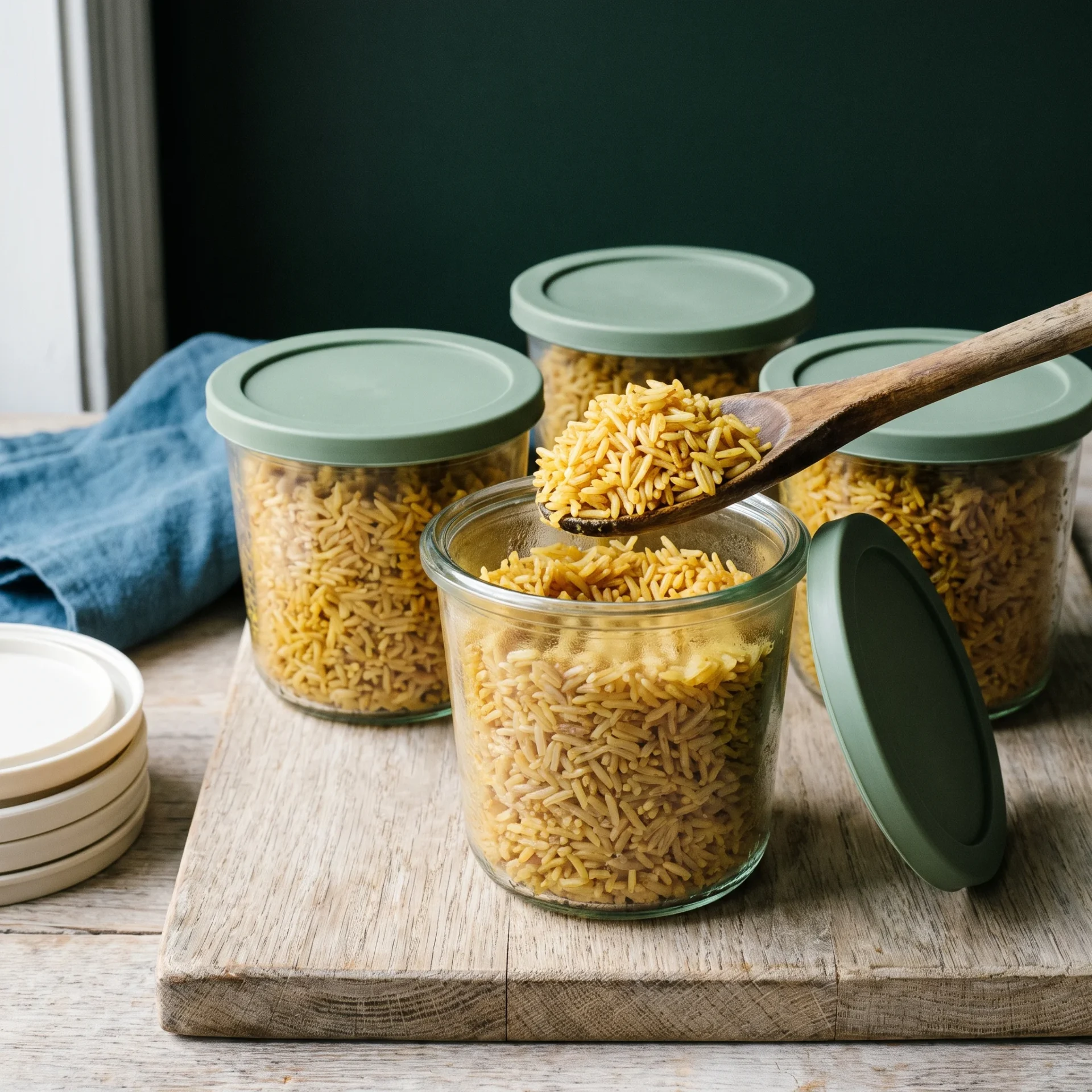
Mediterranean yellow rice is a strong meal-prep grain, but cooked rice needs to be cooled fast. Spread it thin on a tray or portion it straight into containers, then refrigerate within one to two hours: the UK Food Standards Agency’s guidance on chilling food safely sets a fridge of 0 to 5°C and a 48-hour window for leftovers, which is the conservative figure worth applying to cooked grains.
Reheat a single portion with 1 tbsp of water, covered, until it is steaming hot right through; the same agency’s cooking guidance defines that as 70°C (158°F) held for two minutes. It freezes flat in bags for up to a month and thaws overnight in the fridge. Hold back the parsley and lemon and add them after reheating, because neither survives storage well.
Nutrition per serving
| Nutrient | Per serving |
|---|---|
| Calories | 253 kcal |
| Protein | 4 g |
| Fat | 8 g |
| Total carbs | 41 g |
| Fiber | 3 g |
| Net carbs | 38 g |
These figures cover one of six servings of Mediterranean yellow rice and were calculated from the ingredient quantities above using USDA FoodData Central records for the raw ingredients. Nutrition is an estimate and varies with brands and exact portion sizes.
Frequently asked questions
Can I make yellow rice with brown rice instead of white?
Yes, and this recipe is written for it rather than adapted to it. Brown basmati needs more liquid per cup than white does and about forty minutes of covered simmering instead of fifteen. Everything up to the point the liquid goes in is identical.
Why is my Mediterranean yellow rice pale instead of golden?
Almost always because the turmeric went into the liquid rather than the oil. Turmeric’s colour compounds are fat-soluble, so 1½ teaspoons bloomed in hot olive oil coats every grain, while the same amount stirred into broth mostly tints the water and drains away with it.
Do I need to soak the brown rice first?
No. Rinsing matters, soaking is optional. Soaking shortens the simmer and softens the grain, but it also leaves the finished rice more inclined to clump, so this method skips it.
Is this recipe vegan and gluten-free?
As written, both, provided the vegetable broth you choose is gluten-free. Rice, olive oil, onion, garlic, lemon, parsley and dried spices contain nothing animal-derived and no gluten. Broth is the only variable worth checking; some brands carry barley or wheat-derived flavourings.
How does it fit a Mediterranean way of eating?
The Mediterranean diet is a dietary pattern rather than a prescription, and its usual shape puts whole grains, vegetables, herbs and olive oil at the centre with less refined starch. Brown rice cooked in olive oil fits that shape. It is a side dish, not a treatment for anything.
Can I cook it in a rice cooker?
Yes. Do steps one to four in a skillet, then transfer everything with the broth and bay leaf to the cooker on its brown-rice setting and let it run its cycle. The only thing you give up is judging the simmer by ear.
Ratings and reviews
No ratings yet. If you have cooked this, your rating helps the next person decide.
Rate this recipe