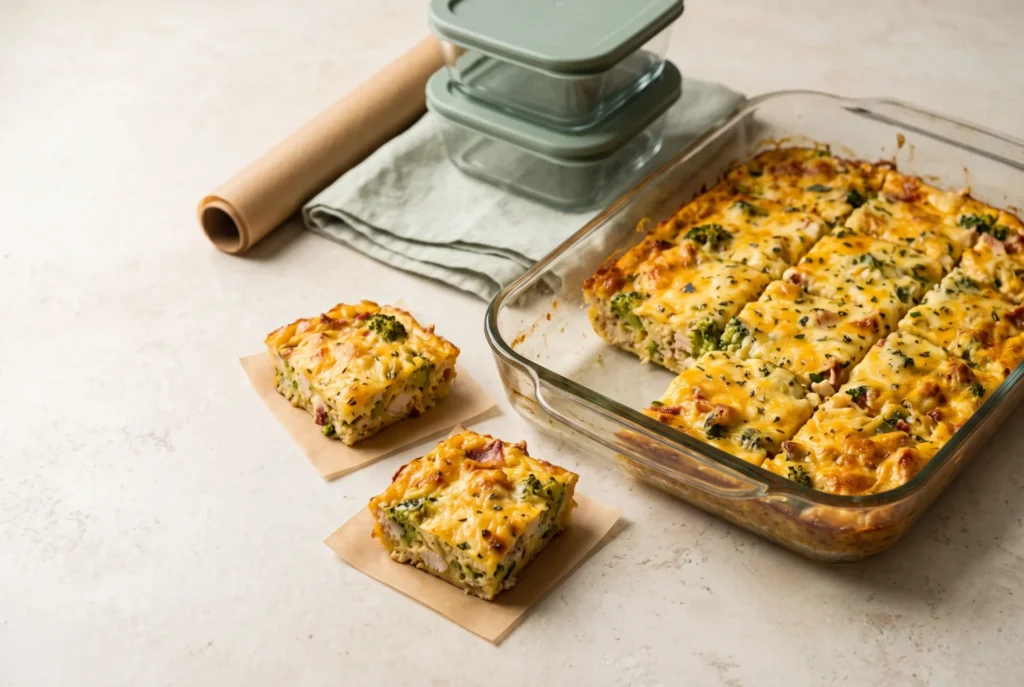
How to freeze keto casseroles comes down to three moves: bake the dish first, cool it fast, then freeze it in single portions rather than as one solid block. Handled that way a casserole reheats firm and browned, not grey and watery.
What almost nobody writes down is that the rule changes with the filling. Cheese, chicken and ground meat come back from the freezer intact. Cauliflower rice and raw zucchini do not, and no wrapping technique changes that. Below is how our own five published keto recipes actually behave.
Key takeaways
- Bake first, then freeze. A fully baked casserole freezes better than a raw assembled one because the vegetables have already given up most of their water in the oven.
- Freezing at 0 °F keeps food safe indefinitely, so the two-to-three-month limit on an egg-based casserole is a quality deadline, not a safety one.
- Portion before freezing, never after. Single squares thaw evenly and reheat in roughly half the time a whole dish needs.
- Cauliflower rice and raw zucchini are the two fillings that fail. Freeze those recipes as separate components and assemble on the day.
- Cool fast. Food should not sit between 40 °F and 140 °F for more than two hours at any point in the process.
How to freeze keto casseroles, step by step
Five steps, and the order matters more than the equipment. This is the same sequence whether you are batching a single tray or building a week of keto freezer meals.
- Bake it fully. Pull the dish when the top is set and browned. A make-ahead keto casserole that goes into the freezer raw releases its vegetable water later, in your oven, where it has nowhere to evaporate.
- Cool it fast, on the counter then in the fridge. Bacteria multiply fastest between 40 °F and 140 °F, doubling in number in as little as 20 minutes, so the dish should not sit out longer than two hours — one hour if the kitchen is above 90 °F.
- Portion it before it freezes. Line the dish with parchment before baking, lift the whole slab out once cool, and cut it into squares. Cutting a frozen block later shatters the edges.
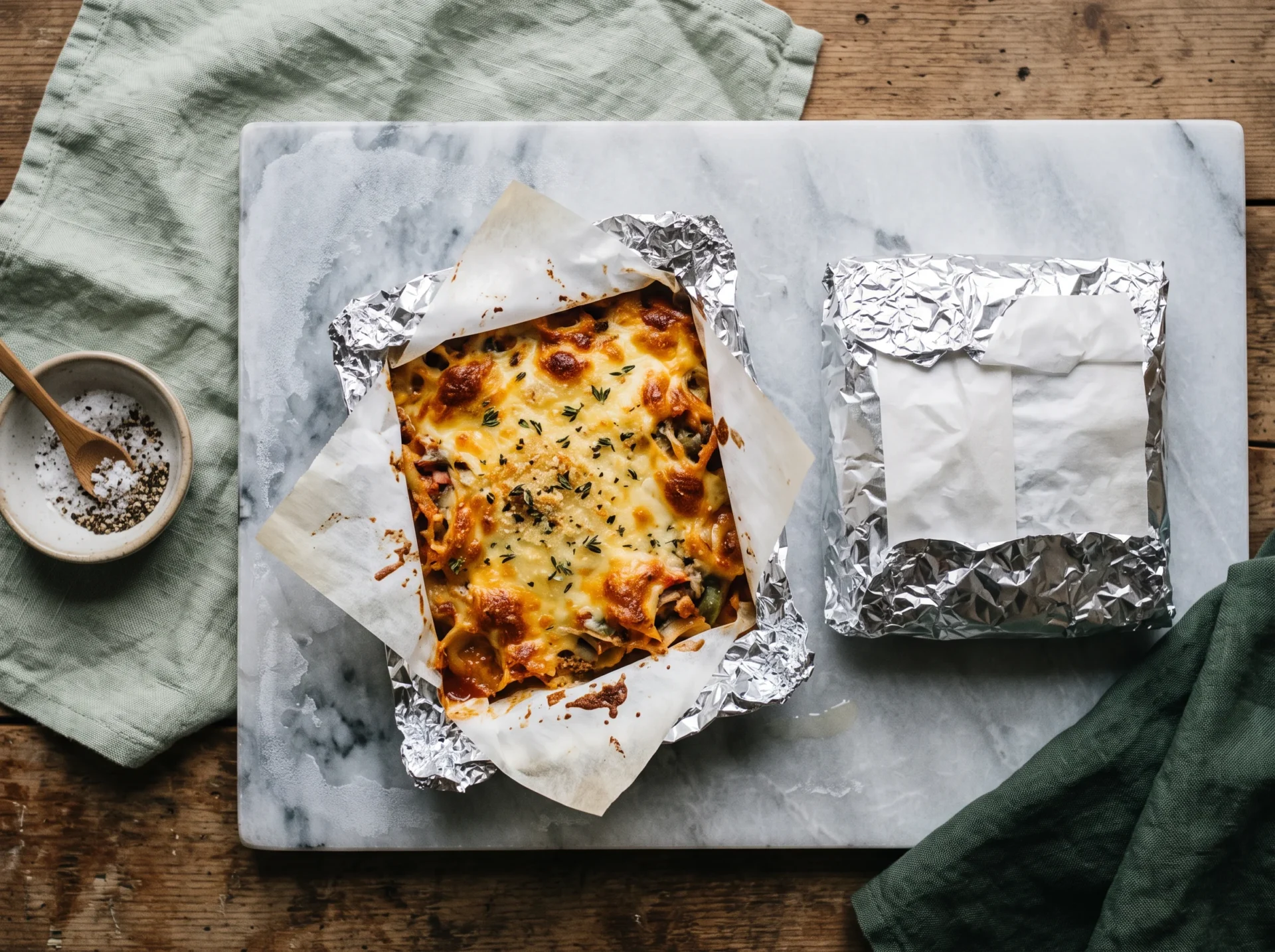
- Wrap twice. Parchment or plastic wrap flat against the cut surface, foil over the top, then a freezer bag with the air pressed out. The double layer is what limits freezer burn.
- Label with the dish and the date. Two months on, every foil parcel looks identical.
Which keto fillings survive the freezer, and which do not
Water content decides everything. Ice crystals rupture the cell walls of high-moisture vegetables, and on thawing that water runs out into the dish. Fat and protein have far less free water, which is why the cheesiest, meatiest recipes make the most reliable freezer-friendly low carb casseroles. Here is where each of our published keto recipes lands, with the carbohydrate figure from its own recipe card.
| Recipe | Carbs per serving | How it handles the freezer |
|---|---|---|
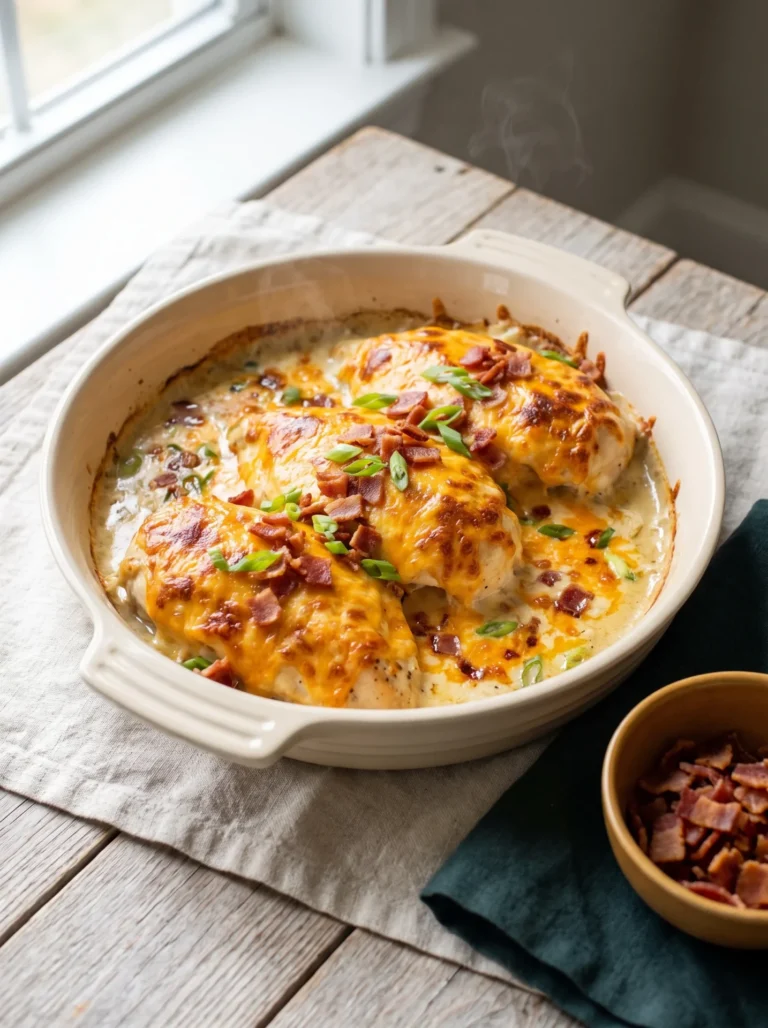
| Cheesy Bacon Ranch Chicken Bake | 5 g | Best of the five. Chicken, bacon and melted cheese hold their structure completely. |
| Keto Lasagna with Roasted Zucchini Noodles | 11 g | Good, and only because the zucchini is roasted first and has already lost its water. |
| Mediterranean Ground Beef Skillet with Feta | 10 g | Freezes cleanly. Ground meat and feta are forgiving and reheat without separating. |
| Mediterranean Shrimp Zoodles | 13 g | Skip it. Raw zoodles go slack and the shrimp overcooks on the second heating. |
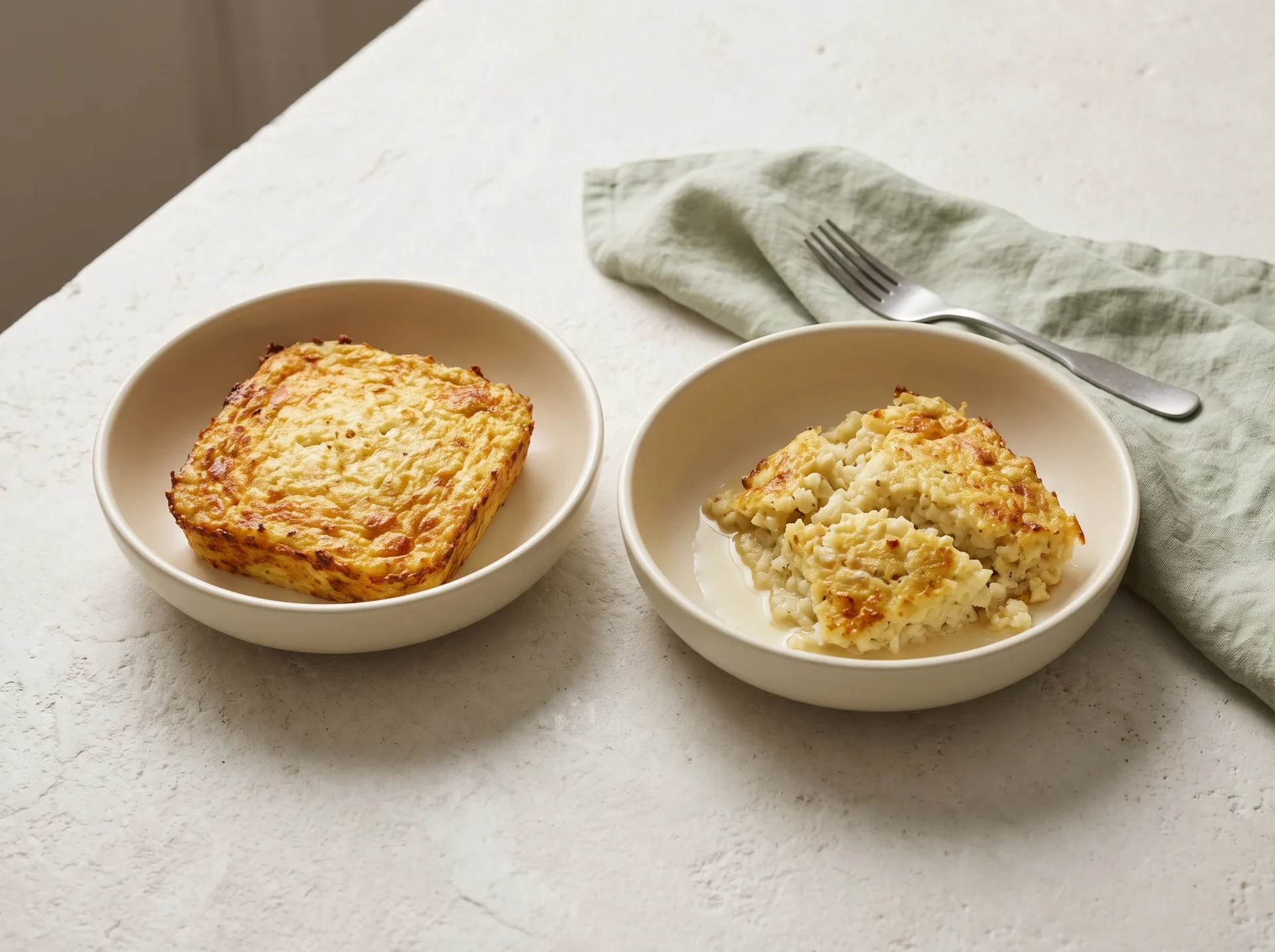
| Mediterranean Cauliflower Rice Bowl | 22 g | Freeze the components separately. Cauliflower rice weeps badly once thawed. |
The clearest example of the good case is the bake below: almost no free water in it, and it comes out of a second heating browned rather than steamed.
The awkward case is Keto Mediterranean Cauliflower Rice Bowl with Chicken, which is worth freezing only as parts: cook and freeze the chicken and sauce, and make the cauliflower rice fresh in the eight minutes the rest takes to reheat. Keto Lasagna With Roasted Zucchini Noodles sits on the other side of the line, because roasting the zucchini first is exactly the step that makes it freezer-safe. You can see the same split across our Keto recipe collection.
How long a frozen keto casserole actually keeps
Two different clocks run here, and confusing them is why people throw away perfectly good food. Freezing to 0 °F inactivates microbes and keeps food safe almost indefinitely, which means every storage time you read is about quality alone.
For quality, the reference figures for a baked casserole containing eggs are 3 to 4 days in the refrigerator and 2 to 3 months in the freezer. Past three months the dish is still safe; it simply tastes increasingly of the freezer. Once a portion has thawed in the fridge, treat it as a leftover and eat it within 3 to 4 days.
How to reheat a frozen casserole without the watery middle
Thaw overnight in the refrigerator, where the food stays at a constant 40 °F or below. Never thaw a casserole on the counter. Then reheat it covered with foil at 350 °F until hot through, pull the foil off for the last ten minutes to drive the surface moisture away and bring the browning back, and check that the center has reached an internal temperature of 165 °F.
Two habits do most of the work: reheat from thawed rather than from frozen, and take the foil off at the end. That last step is the difference between a casserole that tastes reheated and one that does not.
What a frozen portion actually costs you in carbs
Freezing changes nothing about the macros, but portioning changes what you reach for: once everything is in identical squares, the easy choice is whichever parcel is nearest. Across our own recipes that choice matters. One serving of the cauliflower rice bowl at 22 g of carbohydrate carries more than four servings of the bacon ranch bake at 5 g. So the planning half of how to freeze keto casseroles is simply this: freeze the low-carbohydrate dishes, and cook the higher ones fresh.
What to skip
- Anything finished with mayonnaise or sour cream. Emulsions split on thawing and the topping turns grainy. Bake the base, freeze that, and add the topping on the day.
- Raw assembled cauliflower-rice dishes. They go into the oven already waterlogged and never recover.
- Fresh toppings. Avocado, herbs, arugula and fresh tomato all collapse. They take thirty seconds to add after reheating.
- One enormous block. A full tray takes most of a day to thaw and forces you to reheat the whole thing to eat one serving.
Everything else in the full recipe archive that leans on cheese, eggs and meat is fair game.
Frequently asked questions
Can you freeze cauliflower rice casserole?
Not as a finished dish, if you want the texture to hold. Cauliflower holds a great deal of water, and ice crystals rupture it so that the rice turns soft and weeps on thawing. Freeze the meat and sauce instead, and cook fresh cauliflower rice while they reheat.
Should you freeze a keto casserole baked or unbaked?
Baked, in almost every case. Baking drives off the vegetable water before it can turn to ice, and it means reheating rather than cooking from cold, which is faster and far more even. Freeze unbaked only for egg-based breakfast dishes you want freshly set.
How long can a keto casserole stay in the freezer?
Two to three months for best quality if it contains eggs. It stays safe well beyond that at 0 °F, but the texture and flavor fade steadily, and freezer burn on any exposed surface becomes obvious somewhere around the four-month mark.
Do you have to thaw a keto casserole before reheating?
No, but the result is better if you do. Reheating a single frozen square works at a lower oven temperature under foil; reheating a whole frozen tray does not, because the edges dry out long before the middle is hot. Thaw overnight in the fridge.
Why does my keto casserole go watery after freezing?
Almost always the vegetables. Zucchini, cauliflower, mushrooms and spinach hold a lot of water that ice crystals release on thawing. Roast or sauté them before assembling, drain them properly, and the same recipe will come out of the freezer firm.
Note: This article is for general information and is not medical advice. Nutrition figures are estimates that vary with brands, ripeness, and portion size. Talk to a doctor or registered dietitian before changing your diet, especially if you are pregnant, managing diabetes or kidney disease, or taking prescribed medication.