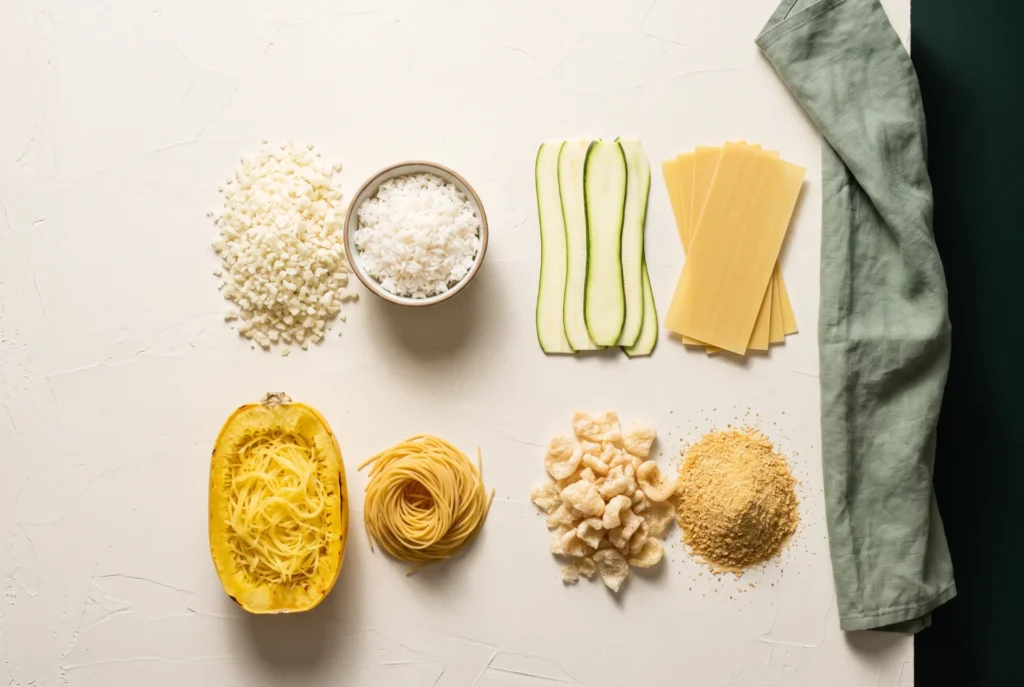
The keto casserole ingredient swaps that actually work are riced cauliflower for rice, sliced zucchini for pasta sheets, spaghetti squash for spaghetti, and crushed pork rinds for breadcrumbs. All four cut carbohydrate sharply. Three of them also add water, and that is why swapped casseroles come out soggy.
Every list of low carb casserole substitutes on the internet stops at the first half of that sentence. The carbohydrate saving is real and easy to look up. The water each swap drags in with it is the number nobody publishes, and it is the one that decides whether the dish sets or sits in a puddle. Below is both, per 100 grams, from USDA FoodData Central — and then what those numbers do to a real casserole from the Keto collection.
Key takeaways
- Riced cauliflower carries 3.0 g of net carbs per 100 g against 27.8 g for cooked white rice — but 92.1 g of water against 68.4 g.
- Every low-carb base swap trades carbohydrate for water: a 400 g pasta layer replaced with sliced zucchini removes about 108 g of net carbs and adds about 130 g of water.
- Crushed pork rinds are the only common swap that makes a casserole drier — 1.8 g of water per 100 g against 6.5 g for dry breadcrumbs, and no carbohydrate at all.
- Four swaps in one dish is not the same as zero carbs: 400 g of zucchini still carries about 8 g of net carbs before anything else goes in.
The swaps that work, and the one trade they all make
A casserole is a set volume of solids held together by a set volume of sauce. Swap a dry, starchy solid for a wet, fibrous vegetable and you change both sides of that balance at once: less starch to absorb liquid, more liquid released into the dish. The carbohydrate goes down and the free water goes up, every time, and no amount of extra cheese fixes it.
That is not a reason to avoid keto casserole ingredient swaps. It is a reason to compensate for them — by pre-drying the vegetable, cutting the sauce liquid, or both. The three base swaps below are worth making. The topping swap is the only one that works in your favour on both counts.
Every swap, with its carb and water cost
Net carbs are total carbohydrate minus dietary fibre. Fibre is subtracted because it is declared separately on the label and is not digested as sugar, a distinction the FDA sets out in its dietary fibre guidance. Each cell reads swap → what it replaces.
| Swap → replaces | Net carbs / 100 g | Water / 100 g |
|---|---|---|
| Riced cauliflower → white rice | 3.0 g → 27.8 g | 92.1 g → 68.4 g |
| Sliced zucchini → pasta sheets | 2.1 g → 29.1 g | 94.8 g → 62.2 g |
| Spaghetti squash → spaghetti | 5.1 g → 29.1 g | 92.3 g → 62.2 g |
| Crushed pork rinds → breadcrumbs | 0 g → 67.4 g | 1.8 g → 6.5 g |
Read the middle column and every swap looks like a straight win. Read the right-hand column and three of the four are handing you a problem to solve later. Cauliflower rice instead of rice is the mildest of the three, because cooked rice is already 68 per cent water; zucchini against pasta is the harshest.
How much water each swap actually adds
Per 100 grams the water difference looks small. Scaled to the amount a casserole actually holds, it is not. A 9×13 dish takes roughly 400 g of base layer, and at that weight the gap between the swap and the original is the difference between a dish that slices and one that pools.
The topping swap runs the other way. A 60 g layer of crushed pork rinds brings about 3 g less water than the same weight of dry breadcrumbs, and unlike breadcrumbs it will not soften into paste, because there is no starch in it to gelatinise.
What the swaps look like in a finished dish
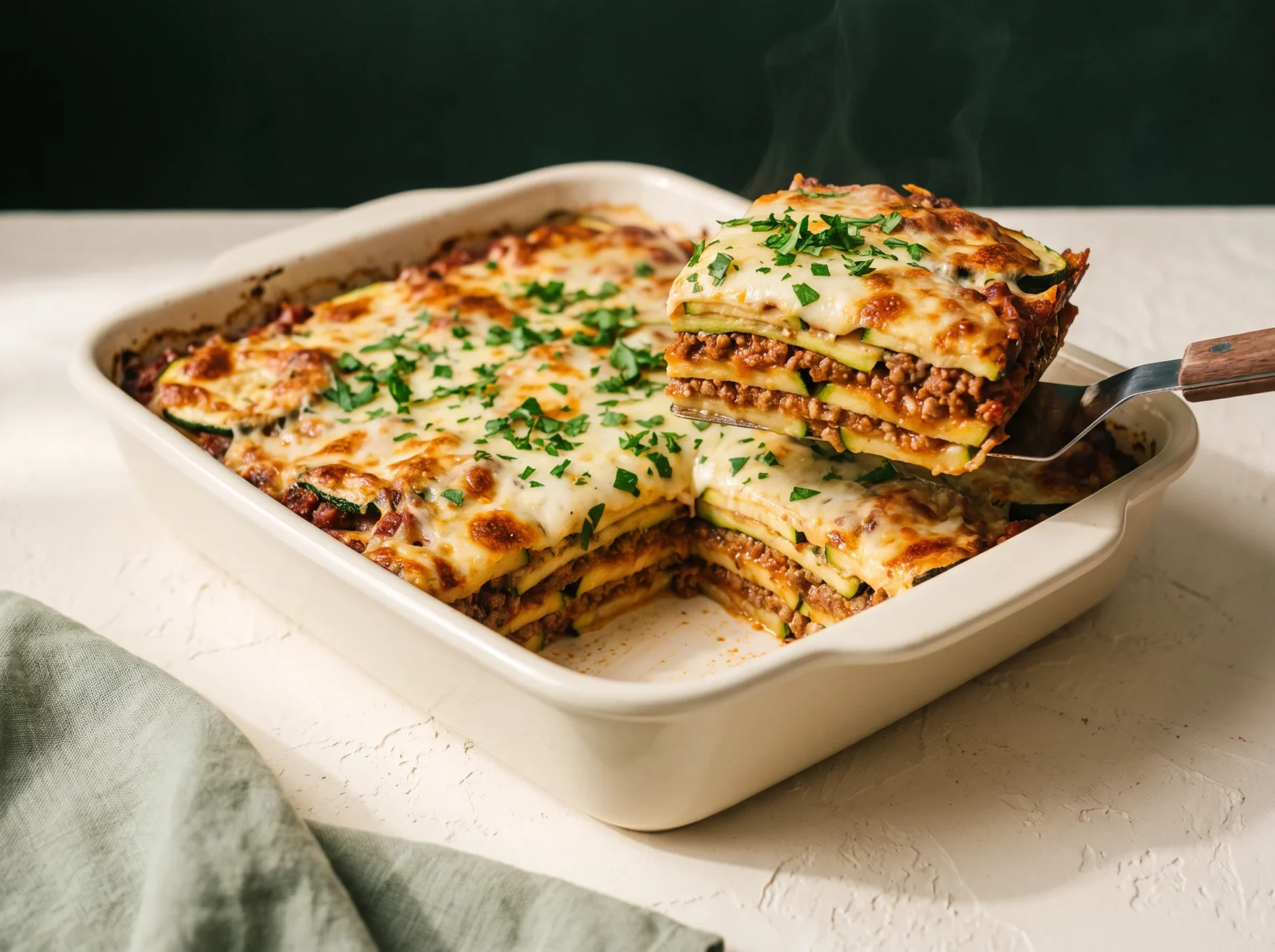
Numbers per 100 grams only matter once they are inside something you eat. Zucchini instead of pasta is the swap with the largest water penalty and also the largest payoff, and roasting the slices before they are layered is what makes it survive the oven.
Riced cauliflower behaves the same way in a bowl or a bake: dry it first and it seasons like a grain, skip that and it waters down whatever is on top of it.
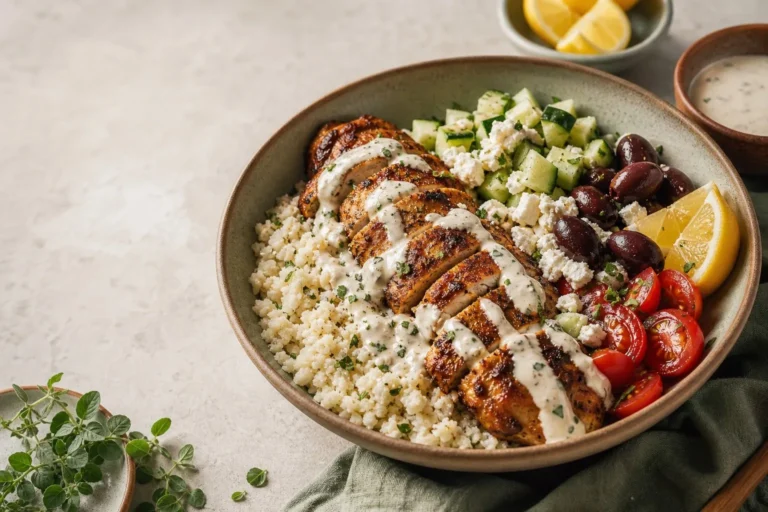
The same logic applies outside the oven — Keto Mediterranean Shrimp Zoodles with Feta and Olives leans on the water in the courgette rather than fighting it, which is the easier route when nothing has to hold its shape. And the sauce itself is a swap most lists forget: Keto Cheesy Bacon Ranch Chicken Bake in 40 Minutes uses cream cheese and cream as the binder where a traditional bake would open a can of condensed soup, which is a starch-thickened ingredient in its own right. More of these are in the recipe archive.
What to skip
- Do not treat the swaps as free. Net carbs in casserole swaps are lower, not absent. Four hundred grams of zucchini is about 8 g of net carbs, 400 g of spaghetti squash about 20 g, and that is before cheese, sauce or onion. A dish built from four swaps can still land in double figures.
- Do not use frozen riced cauliflower straight from the bag. It is the single most common cause of a watery bake, and it is a drying problem rather than a recipe problem — the water is already in the packet.
- Do not swap potato for another starchy vegetable and call it done. The Harvard T.H. Chan Nutrition Source is blunt about this in its vegetables and fruits guidance: skip the potatoes and choose vegetables with more slowly digested carbohydrate. Sweet potato is not the low-carb answer it is often sold as.
- Do not add more cheese to absorb the water. Cheese releases fat and moisture of its own under heat. It hides the problem for about five minutes out of the oven and then makes the reheat worse.
Frequently asked questions
What are the best keto casserole ingredient swaps?
Riced cauliflower for rice, sliced zucchini for pasta, spaghetti squash for spaghetti, and crushed pork rinds for breadcrumbs. Those four cover almost every casserole structure. The first three cut carbohydrate by roughly 25 g per 100 g and add water; the fourth cuts carbohydrate to zero and removes water.
Should cauliflower rice be cooked before it goes in?
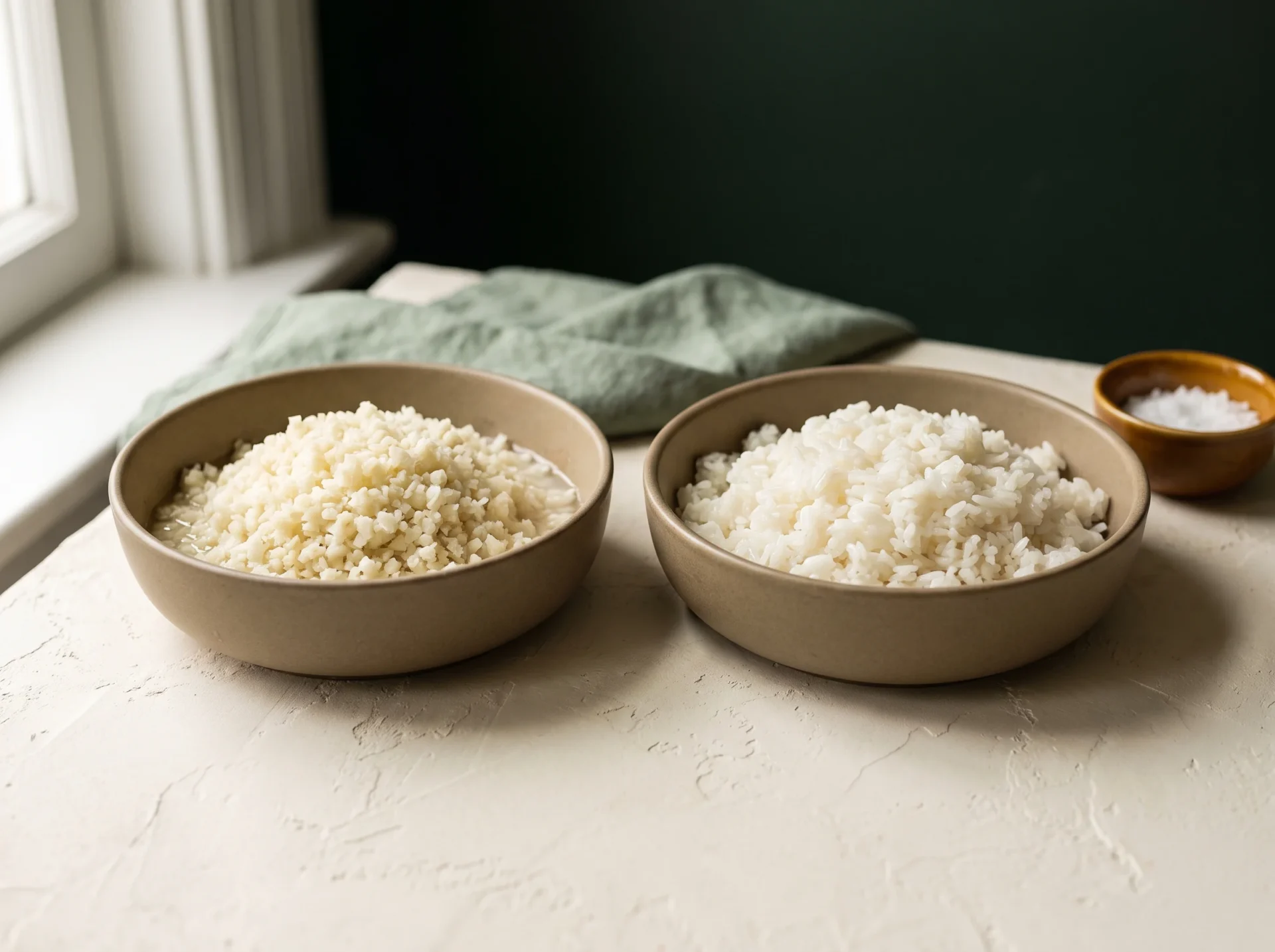
It should be dried, which usually means cooking it. Dry-fry it in a wide pan until the steam stops rising, or roast it spread thin, then let it cool before layering. Cauliflower rice instead of rice only works if that water leaves before the dish goes in the oven.
What is the best keto breadcrumb substitute for a topping?
Crushed pork rinds, at zero carbohydrate and 1.8 g of water per 100 g. They brown rather than soften, which is the opposite of what almond flour does on top of a wet bake. Mix them with grated parmesan if you want the topping to hold together in sheets.
Does zucchini instead of pasta work in a lasagna?
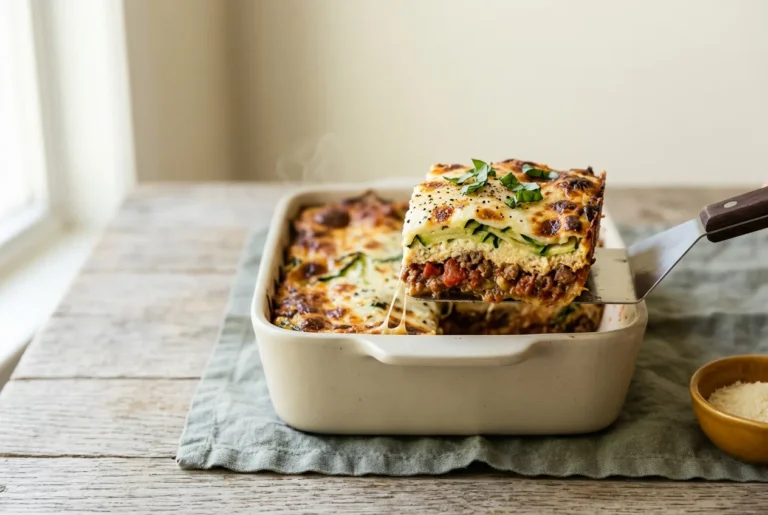
Yes, but only if the slices are pre-cooked. Raw zucchini layered straight into a lasagna releases about 130 g of water per 400 g of slices during baking. Roast, grill or salt-and-drain the slices first and the finished dish will cut into squares instead of collapsing.
Why is my casserole watery after swapping the base?
Because the swap added water and nothing was removed to compensate. The starch you took out was also the ingredient absorbing the sauce. Either pre-dry the vegetable or cut the liquid in the sauce by roughly the amount the table above says the swap brings in.
Note: This article is for general information and is not medical advice. Nutrition figures are estimates that vary with brands, ripeness, and portion size. Talk to a doctor or registered dietitian before changing your diet, especially if you are pregnant, managing diabetes or kidney disease, or taking prescribed medication.