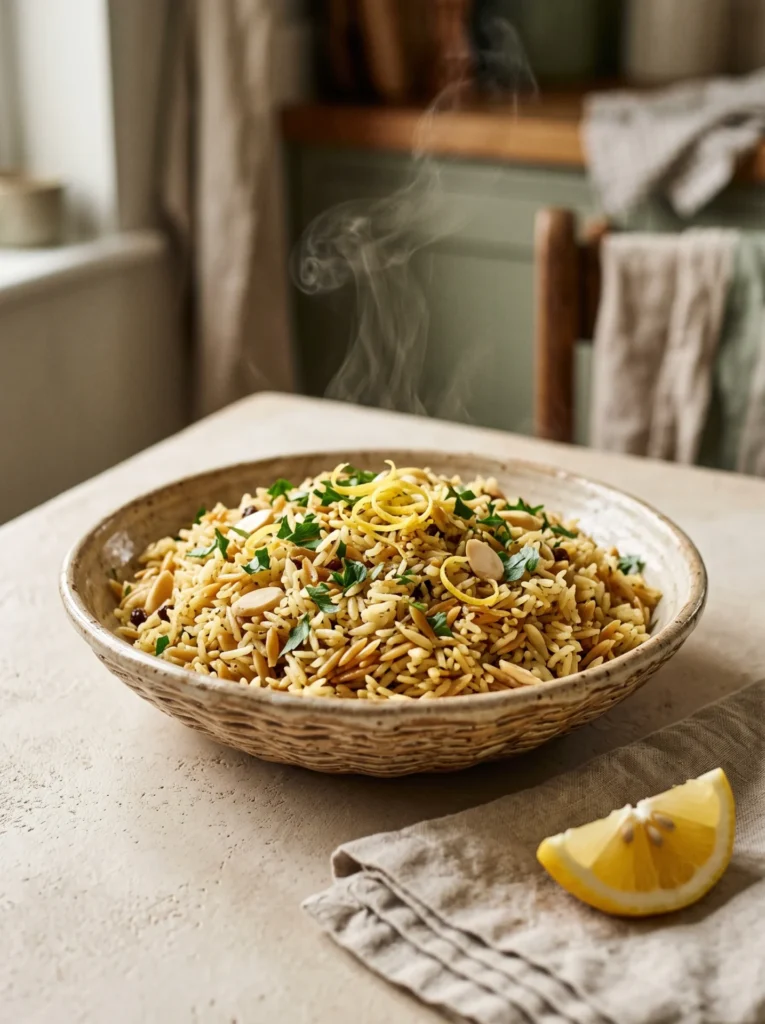
This Mediterranean rice pilaf with orzo toasts short orzo pasta and long-grain rice in butter and olive oil until both turn a light golden color, then simmers them in lemon-brightened broth until every grain separates and turns fluffy. The technique runs through Greek, Turkish, and Levantine home kitchens, and it turns a plain pot of rice into a fragrant, nutty-tasting side that holds up next to grilled chicken, roasted fish, or a vegetable main. Toasted almonds and fresh parsley finish it, so the texture stays interesting from the first bite to the last, and it slots easily into a Mediterranean diet lineup of meals.
Table of Contents
Why this recipe works
- Toasting builds flavor before any liquid goes in. Browning the orzo and rice in fat first creates a nutty, slightly caramelized base that plain boiled rice never gets.
- The 2:1 liquid-to-grain ratio keeps the pilaf fluffy, not gummy. Rice released too much starch when overcrowded with liquid; this ratio leaves each grain separate.
- One pot, 35 minutes, minimal cleanup. Everything from toasting to simmering happens in a single lidded saucepan.
- It fits the Mediterranean eating pattern. Olive oil, lemon, herbs, and a modest amount of nuts are staples of that pattern rather than a strict prescription.
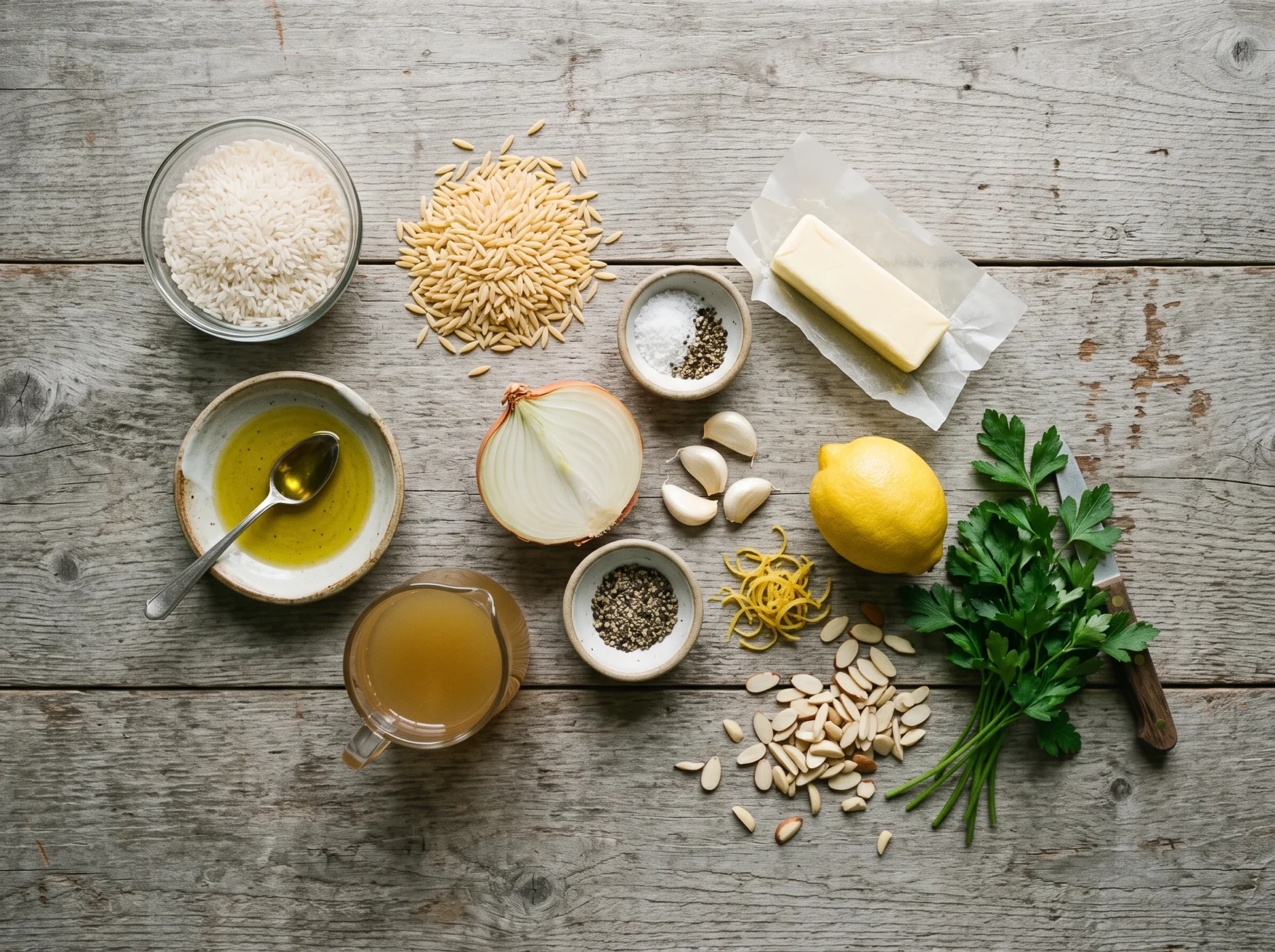
Ingredients
Makes 6 servings.
Equipment
How to make it
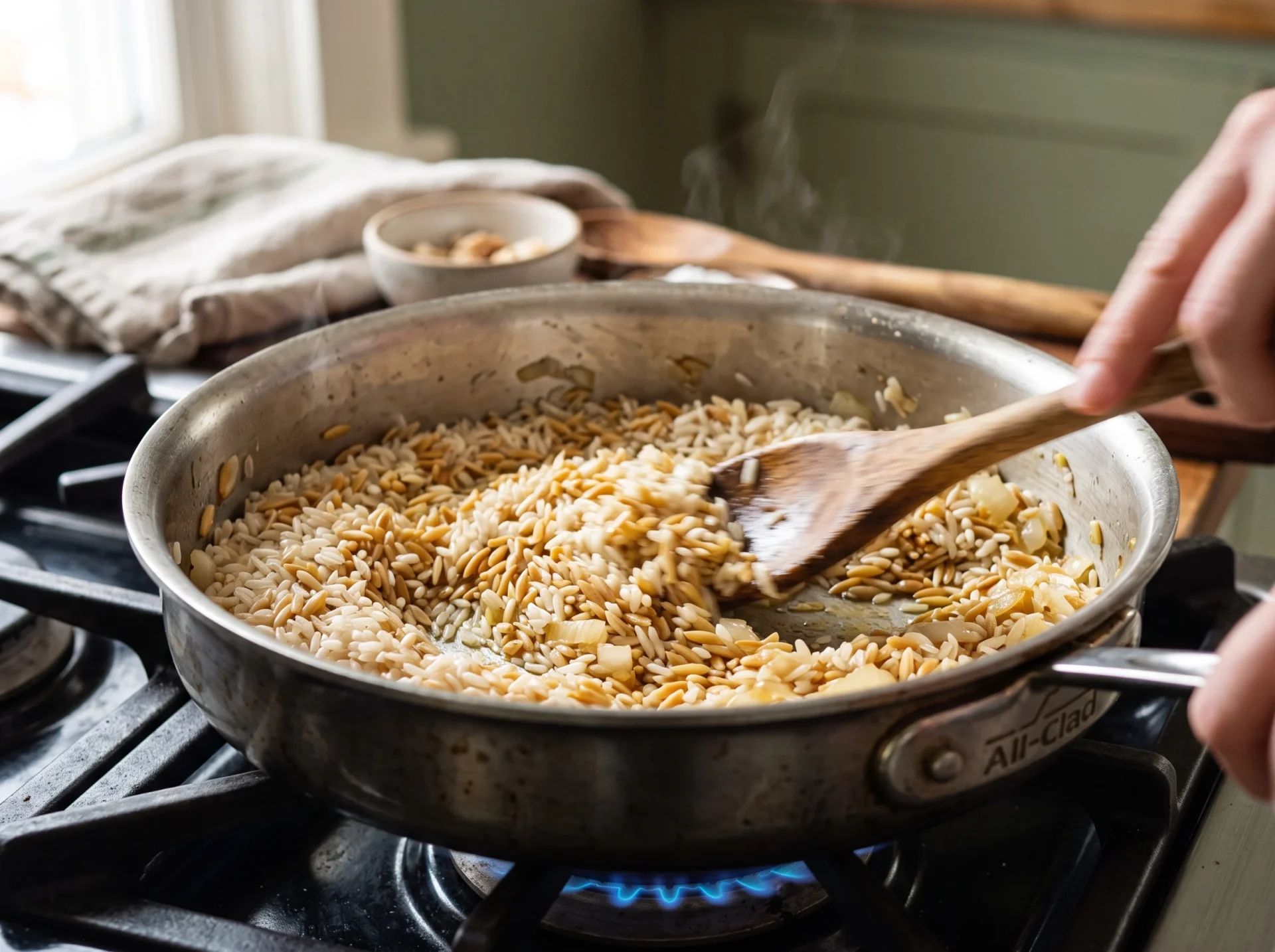
- Toast the orzo. Melt the butter with the olive oil in the saucepan over medium heat. Add the orzo and cook, stirring constantly, for 3 to 4 minutes, until most pieces turn golden brown. Watch closely in the last minute — orzo goes from golden to burnt in under 30 seconds once it starts to color.
- Add the rice and aromatics. Stir in the rinsed rice, onion, and garlic. Cook for 2 minutes, stirring often, until the rice grains look coated and slightly translucent at the edges and the onion has softened.
- Add the liquid and bring to a boil. Pour in the broth, lemon juice, salt, and pepper. Raise the heat to bring the pot to a full boil, uncovered, which takes about 2 to 3 minutes.
- Simmer, covered, undisturbed. Reduce the heat to low, cover with the lid, and simmer for 15 to 18 minutes. Do not lift the lid during this time — the trapped steam is what finishes cooking the grains evenly. The pilaf is done when the liquid is fully absorbed and small steam holes appear across the surface.
- Rest off the heat. Remove the pot from the heat, keep it covered, and let it rest for 5 minutes. This step lets the last bit of steam redistribute, which is what keeps the pilaf fluffy instead of clumped when you fluff it.
- Fluff and finish. Uncover, fluff the pilaf gently with a fork, then stir in the lemon zest, toasted almonds, and half the parsley. Taste and adjust salt. Scatter the remaining parsley over the top before serving.
Practical cooking tips
- Rinse the rice until the runoff water is only slightly cloudy. Skipping this step is the most common reason a rice pilaf with orzo turns gummy — the extra surface starch gelatinizes and glues the grains together.
- Taste your broth before adding the stated salt. Store-bought broths vary widely in sodium, and this recipe is written for a low-sodium broth; a regular broth needs less added salt.
- Toast the almonds in a dry skillet over medium-low heat for 3 to 4 minutes, shaking the pan often, until fragrant and just starting to color — they go from toasted to bitter fast once they start browning.
- Use a heavy-bottomed saucepan. A thin pan runs a real risk of scorching the bottom layer of rice during the simmer, especially on a strong burner.
Troubleshooting tips
- Rice is still crunchy after 18 minutes. The lid seal likely let steam escape, or the heat was too low. Add 2 tablespoons of hot broth, re-cover, and cook 3 to 5 minutes more without lifting the lid again.
- Pilaf turned mushy or gluey. The rice was probably not rinsed, or the pot was uncovered and stirred during the simmer, which releases starch. Rinse next time and leave the lid on undisturbed.
- Bottom layer is scorched. The heat was too high for the simmer stage. Drop to the lowest setting your stove allows, and serve from the top layers only — the burnt bottom carries a bitter taste through the whole pot if stirred in.
Swaps and variations
- Swap the orzo for broken vermicelli noodles for a more traditional vermicelli rice pilaf — break the strands into 1-inch pieces before toasting; the macros stay nearly identical.
- Use brown basmati rice for more fiber, but extend the covered simmer to 35 to 40 minutes and add 1/4 cup more broth, since brown rice absorbs liquid more slowly.
- Stir a pinch of turmeric or a few saffron threads into the broth for a golden greek style rice pilaf color, at negligible extra calories.
- Add 3/4 cup drained chickpeas with the broth for a heartier one pot mediterranean side dish — roughly 60 kcal and 3 g more protein per serving.
Serving ideas
- Serve alongside sheet pan Greek chicken for a complete Mediterranean-pattern dinner — the lemon in both dishes echoes without competing.
- Spoon it under grilled or pan-seared white fish; the fluffy grains soak up any pan juices instead of turning soggy.
- Top with a dollop of plain yogurt and a drizzle of olive oil for extra creaminess without added sugar.
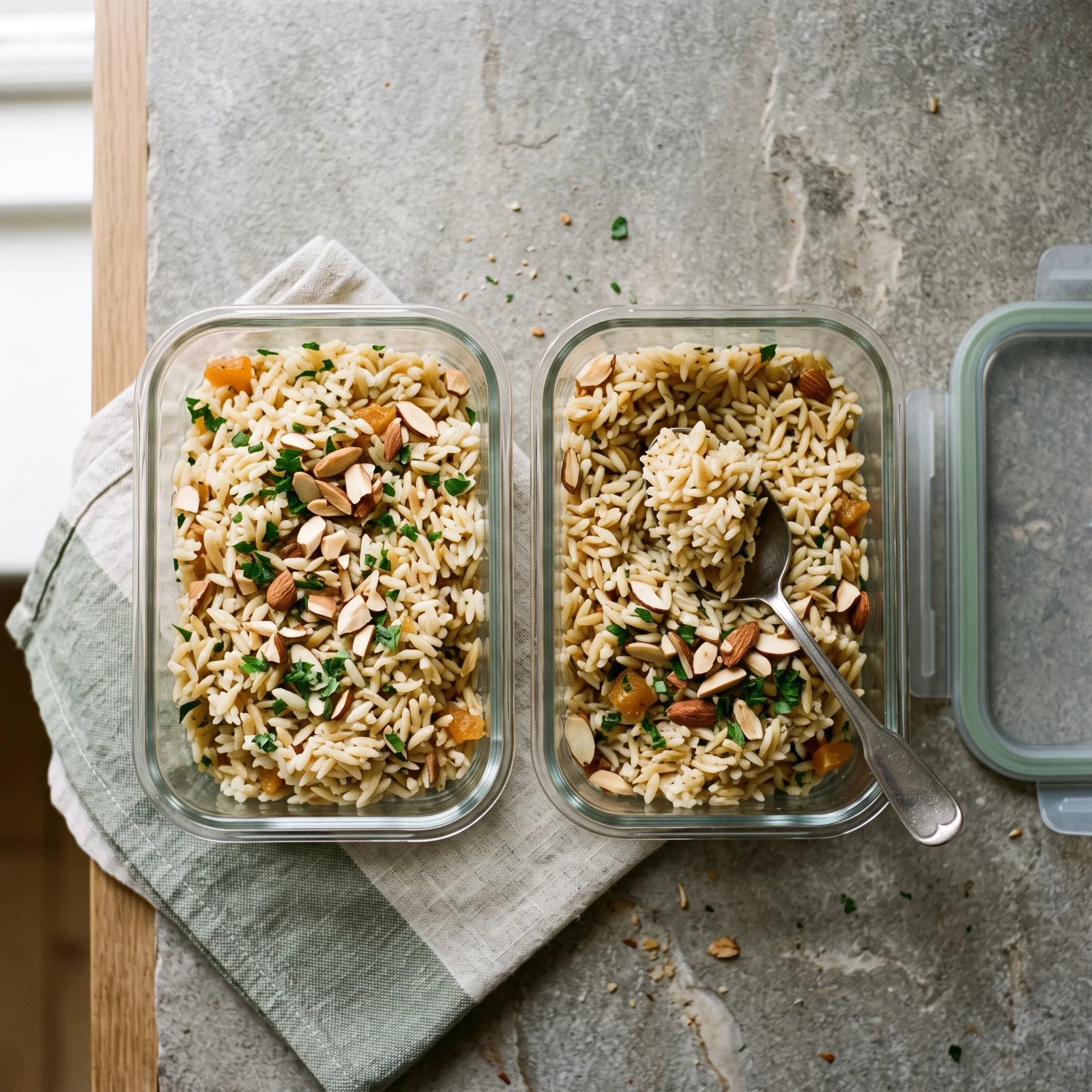
- Pack this rice pilaf with almonds into lunch containers with roasted vegetables for a make-ahead midweek lunch.
Storage and meal prep
Cool the pilaf to room temperature, then refrigerate in an airtight container within 2 hours of cooking — the general food-safety window recommended for cooked, starchy foods to limit bacterial growth. Refrigerated, this Mediterranean rice pilaf with orzo keeps well for up to 4 days. It also freezes for up to 2 months in a freezer-safe container; thaw overnight in the fridge before reheating.
Reheat gently in a covered skillet with a splash of broth or water over medium-low heat, or in the microwave in 30-second bursts, stirring between each, until steaming throughout. It’s a reliable addition to any weekly rotation from our full recipe archive. The fresh parsley loses its brightness after a day or two in the fridge — stir in a fresh pinch when reheating leftovers rather than relying on what was mixed in originally.
Nutrition per serving
| Nutrient | Per serving |
|---|---|
| Calories | 260 kcal |
| Protein | 6 g |
| Fat | 9 g |
| Total carbs | 38 g |
| Fiber | 2 g |
| Net carbs | 36 g |
Nutrition is an estimate calculated from the ingredients above using USDA FoodData Central values; it varies with specific brands and exact portion sizes.
Frequently asked questions
What is a Mediterranean rice pilaf with orzo, and how is it different from plain rice?
It is rice and small orzo pasta toasted in fat before being simmered in seasoned broth, rather than rice simmered on its own. The toasting step adds a nutty flavor and firmer texture that plain steamed or boiled rice does not develop.
Can I make this pilaf without butter?
Yes — replace the butter with an additional tablespoon of olive oil. The toasting still works the same way; the dish will taste slightly less rich but stays within the Mediterranean pattern of using olive oil as the primary fat.
Why did my rice pilaf turn out sticky instead of fluffy?
The most likely cause is unrinsed rice releasing extra surface starch, or lifting the lid and stirring during the simmer. Rinse the rice until the water runs mostly clear, and leave the lid on undisturbed for the full simmer time.
Is this recipe gluten-free?
No, orzo is a wheat pasta. For a gluten-free version, swap the orzo for an equal volume of gluten-free small pasta shapes, or omit it and use 1 1/2 cups rice total, toasting the rice slightly longer to compensate for the lost toasting surface area.
Can I make a bigger batch for meal prep?
Yes — this recipe scales up cleanly by doubling every ingredient and using a wider pot so the rice layer stays roughly the same depth; the simmer time stays close to the same 15 to 18 minutes as long as the pan is not overcrowded.
Ratings and reviews
No ratings yet. If you have cooked this, your rating helps the next person decide.
Rate this recipe