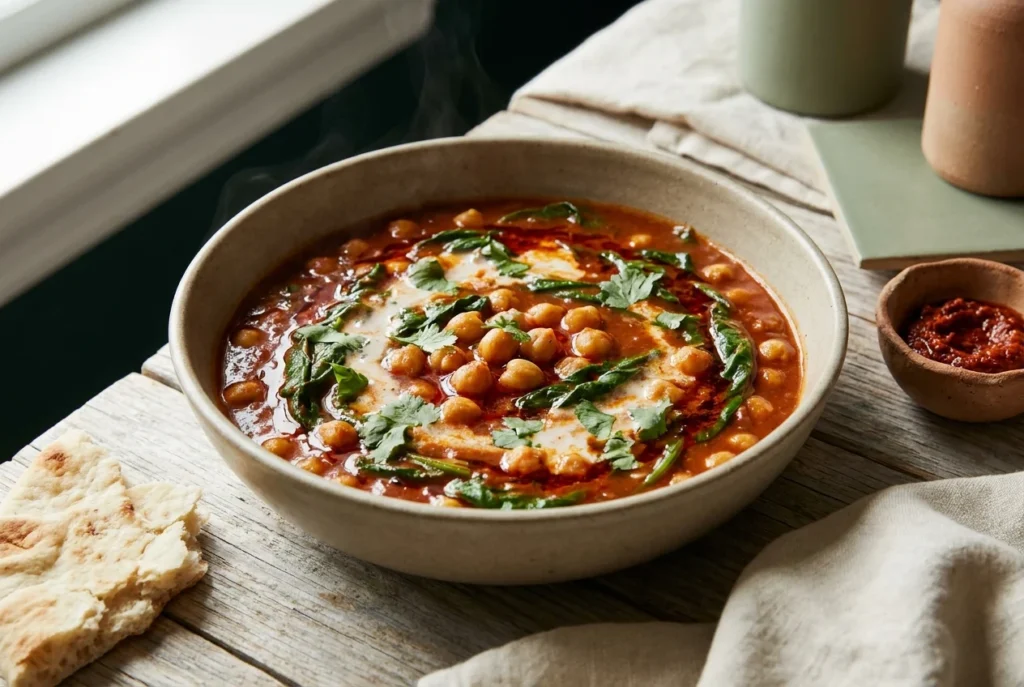
This harissa chickpea stew is what happens when a jar of North African chili paste meets two cans of chickpeas and forty minutes on the stove — smoky, garlicky, gently sweet from fire-roasted peppers, with a heat that builds instead of burning. Full-fat coconut milk stirred in off the heat rounds the harissa’s edges without muting them. It is one pot, it is entirely vegan, and it genuinely tastes better on day two.
Table of Contents
Why this harissa chickpea stew works
- Blooming the harissa, cumin and tomato paste in hot oil for a full minute before any liquid goes in is the difference between a stew that tastes spiced and one that tastes of raw chili paste.
- Jarred fire-roasted red peppers do the work of a 40-minute roasting session and bring a sweetness that keeps the chili in check.
- Two cans of chickpeas carry 15 g of protein and 13 g of fiber into each bowl, so it fills you up without meat or dairy.
- It is one Dutch oven and about 40 minutes, most of it unattended simmering while you do something else.
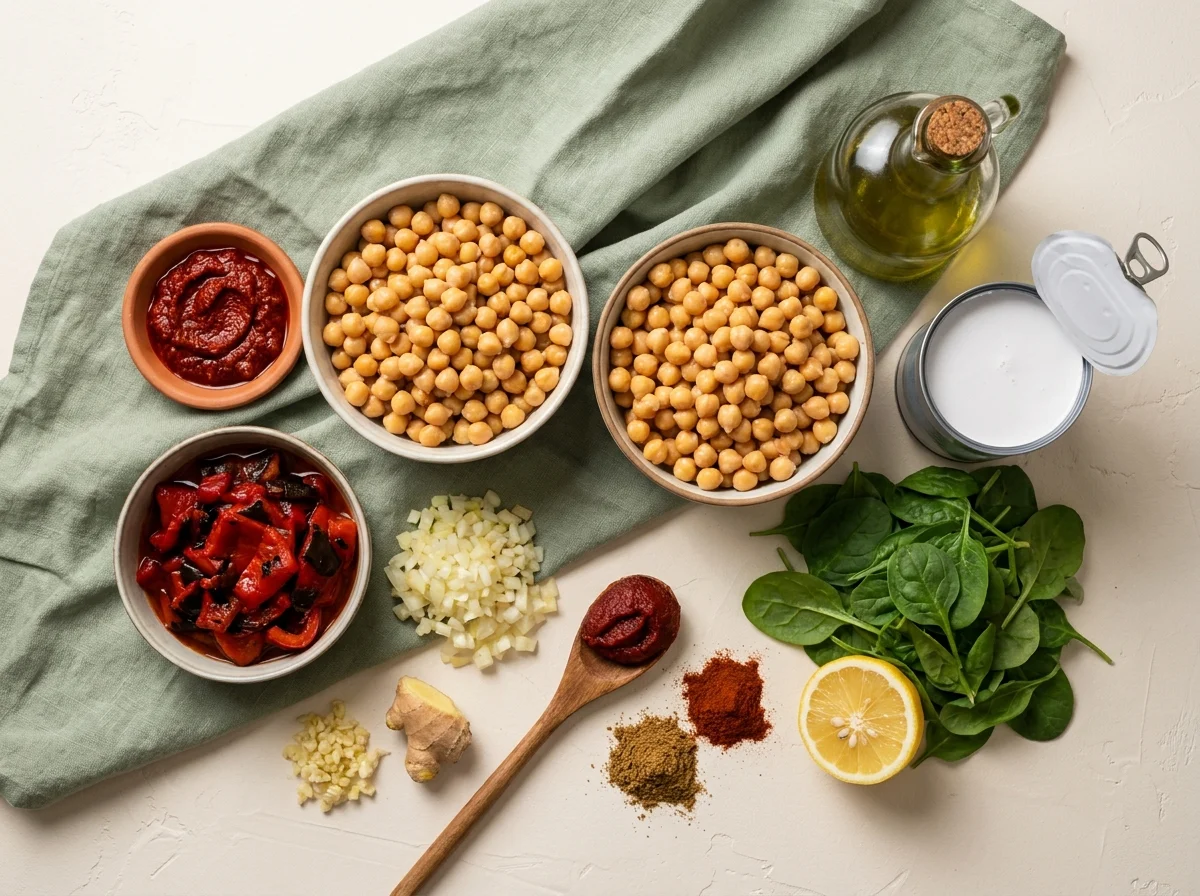
Ingredients
Makes 4 servings.
Equipment
How to make it
- Sweat the aromatics. Warm the olive oil over medium heat until it shimmers, about 1 minute. Add the onion and salt and cook, stirring now and then, for 6 to 8 minutes, until the pieces turn translucent at the edges and slump but take on no colour.
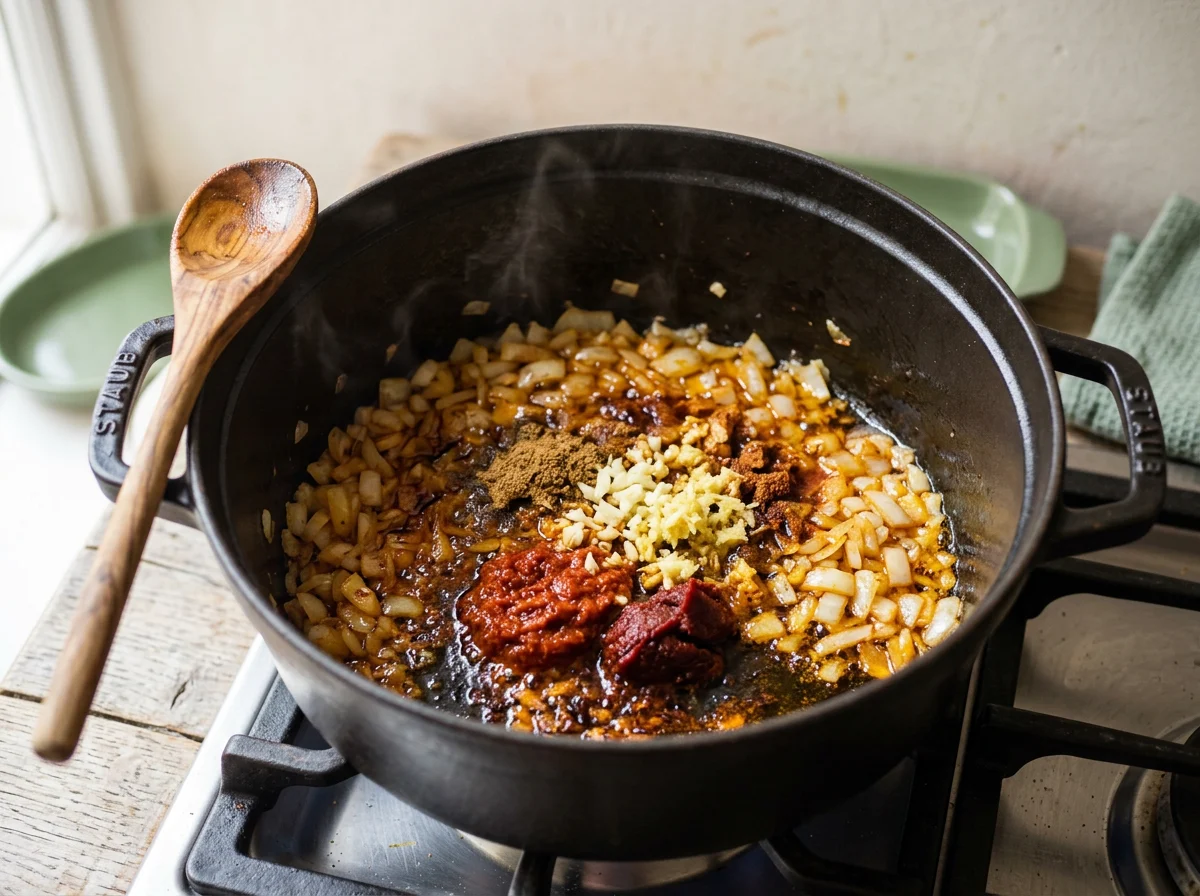
- Bloom the spices. Stir in the garlic, ginger, harissa, cumin, smoked paprika and tomato paste. Cook 60 to 90 seconds, stirring constantly, until the paste darkens by a shade and smells toasted rather than sharp. Do not let it catch on the bottom.
- Build the base. Add the chopped roasted peppers and crushed tomatoes, scraping up every browned bit. Simmer uncovered 5 minutes, until a spoon dragged across the bottom leaves a trail that closes slowly rather than instantly.
- Simmer the chickpeas. Stir in the chickpeas and broth, bring to a gentle bubble, then drop the heat to low, cover partially and simmer 15 minutes. It is ready when the chickpeas are creamy at the centre and the liquid coats the back of a spoon.
- Finish off the heat. Pull the pot off the burner. Stir in the coconut milk, then the spinach a handful at a time, letting each addition collapse before the next — about 2 minutes. Add the lemon juice and black pepper, then taste and adjust the salt.
- Rest and serve. Let it sit 5 minutes so the flavours settle and the surface loses its raw-coconut sheen. Scatter the cilantro over the top and serve in shallow bowls.
Tips from the test kitchen
- Harissa strength varies wildly by brand — some jars are mild pepper paste, others are chili-forward. Start with 2 tablespoons, taste at step 4, and stir the third in only if it needs it.
- The most common failure is scorching the spice paste in step 2. If your burner runs hot, lift the pot off the heat for the last 20 seconds and let residual heat finish the bloom.
- Rinse the chickpeas until the water runs clear. The starchy canning liquid tastes tinny and dulls everything else in the pot.
- Never boil after the coconut milk goes in. Above a bare simmer it splits into grainy flecks that will not come back together.
- If it tastes flat rather than under-salted, it wants the lemon, not more salt. Acid is what makes the smoke read.
Swaps and variations
- Trade the coconut milk for 1/3 cup tahini loosened with water: about 3 g more protein and 2 g less fat per serving, and a nuttier finish.
- Use one can of chickpeas plus 1 lb diced sweet potato for a lighter-protein, higher-carb bowl — roughly 11 g protein and 62 g carbs per serving.
- No harissa in the cupboard? Use 2 tbsp tomato paste with 1 tsp cayenne and 1 tsp ground caraway. Macros barely move, but the smoke does not fully translate.
- Stir 1 cup cooked pearl couscous in at the end for a heartier bowl, adding about 45 calories and 9 g carbs per serving.
Storage and meal prep
Batch-cooked, this spicy chickpea stew is one of the few dishes that genuinely improves by day two: the harissa mellows and the sauce thickens. It is the one pot vegan dinner we keep on rotation precisely because the leftovers are the point, not a consolation.
Cooled and sealed, this harissa chickpea stew keeps 4 days in the fridge and reheats best over low heat with a splash of broth to loosen it. Cool it to room temperature within two hours of cooking before it goes into the fridge. It freezes for up to 3 months — freeze it before the spinach goes in and wilt fresh greens into the reheated pot instead, because thawed spinach turns slippery and grey. Portioned into four containers, day two is better than day one, as the chickpeas keep drinking up the spiced broth. The cilantro is the one element that does not survive storage; add it at serving.
Nutrition per serving
| Nutrient | Per serving |
|---|---|
| Calories | 451 kcal |
| Protein | 15 g |
| Fat | 21 g |
| Total carbs | 53 g |
| Fiber | 13 g |
| Net carbs | 40 g |
Nutrition is an estimate and varies with brands and exact portion sizes.
The chickpeas carry most of the fiber here — the Harvard T.H. Chan School of Public Health puts a cooked cup at around 12 grams. For more plant-forward dinners built the same way, browse the full recipe archive.
Frequently asked questions
How does this vegan chickpea stew differ from a coconut curry?
A chickpea stew with coconut milk usually leans on the coconut for body. This harissa recipe uses it only to soften the chilli, so the fire-roasted peppers and the harissa stay in front. The result reads North African rather than South Asian.
How spicy is this harissa chickpea stew?
Moderately — a warm heat that builds rather than a sharp one, roughly a medium curry. Three tablespoons of a standard rose harissa lands near 5 out of 10, and the coconut milk pulls it down noticeably from there. Halve the harissa for a mild version and the recipe still works.
Can I use dried chickpeas instead of canned?
Yes. Use 1 1/2 cups (300 g) dried chickpeas, soaked overnight and simmered until tender, which yields about the same 500 g drained weight. Add 10 minutes to the covered simmer in step 4 so they finish creamy rather than chalky.
What should I serve with it?
Warm flatbread is the default, because it handles the sauce better than rice does. Couscous, farro, or a spoonful of plain coconut yogurt on the side all work. Skip anything else spicy — the harissa is already carrying the whole dish.
Is it freezer friendly?
Very. Freeze it flat in bags for up to 3 months, leaving out the spinach and cilantro. Thaw overnight in the fridge and reheat gently over low heat. The coconut milk can look separated straight from frozen, but it comes back together with stirring as long as you stay below a simmer.
Why did mine turn out watery?
Almost always an under-reduced base. Step 3 needs the full 5 uncovered minutes, and step 4 should be partially covered, never sealed. If it is already thin, uncover and simmer 5 minutes more, or mash half a cup of the chickpeas against the side of the pot to thicken it.
Ratings and reviews
No ratings yet. If you have cooked this, your rating helps the next person decide.
Rate this recipe