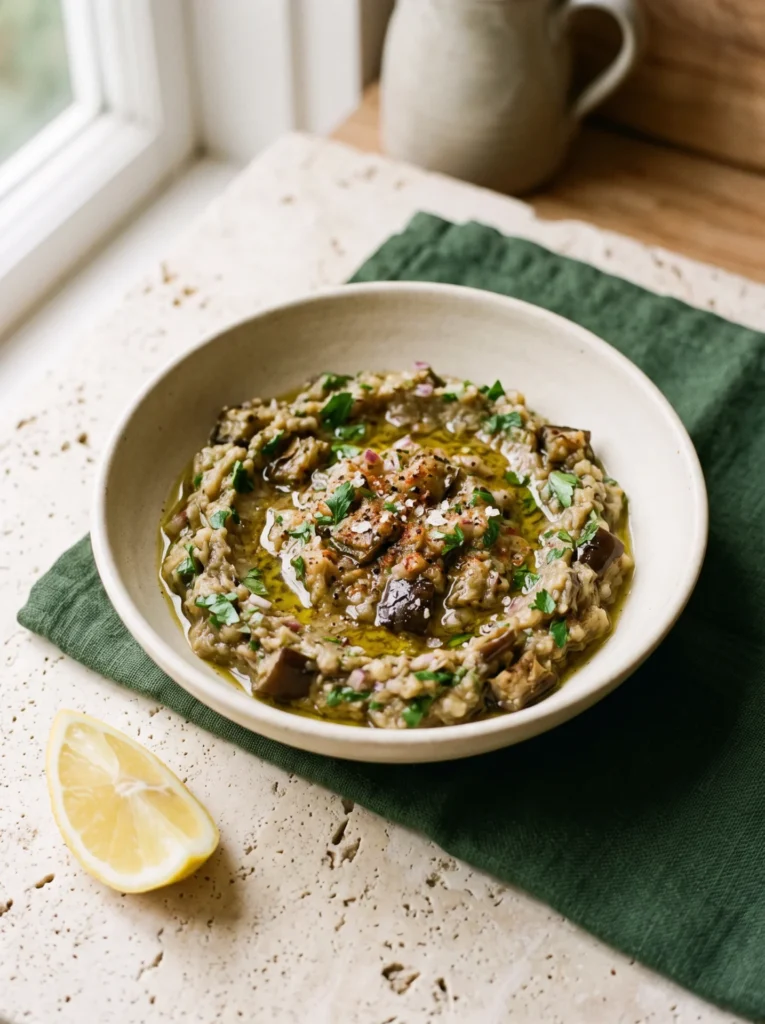
Greek eggplant dip melitzanosalata should taste smoky, bright, and rustic—not like a thin puree. Charring the eggplants until collapsed, then draining the warm flesh for 20 minutes, concentrates the flavor before the oil is folded in. It fits a plant-forward Mediterranean pattern without making a health promise.
Table of Contents
Why this recipe works
- Whole eggplants char deeply while their skins contain the steaming flesh.
- The 20-minute colander rest removes bitter liquid and prevents a watery eggplant dip.
- Hand chopping preserves strands and keeps this smoky eggplant spread rustic; a processor can make it loose and pasty.
- Lemon and vinegar are added before the olive oil so seasoning reaches the eggplant evenly.
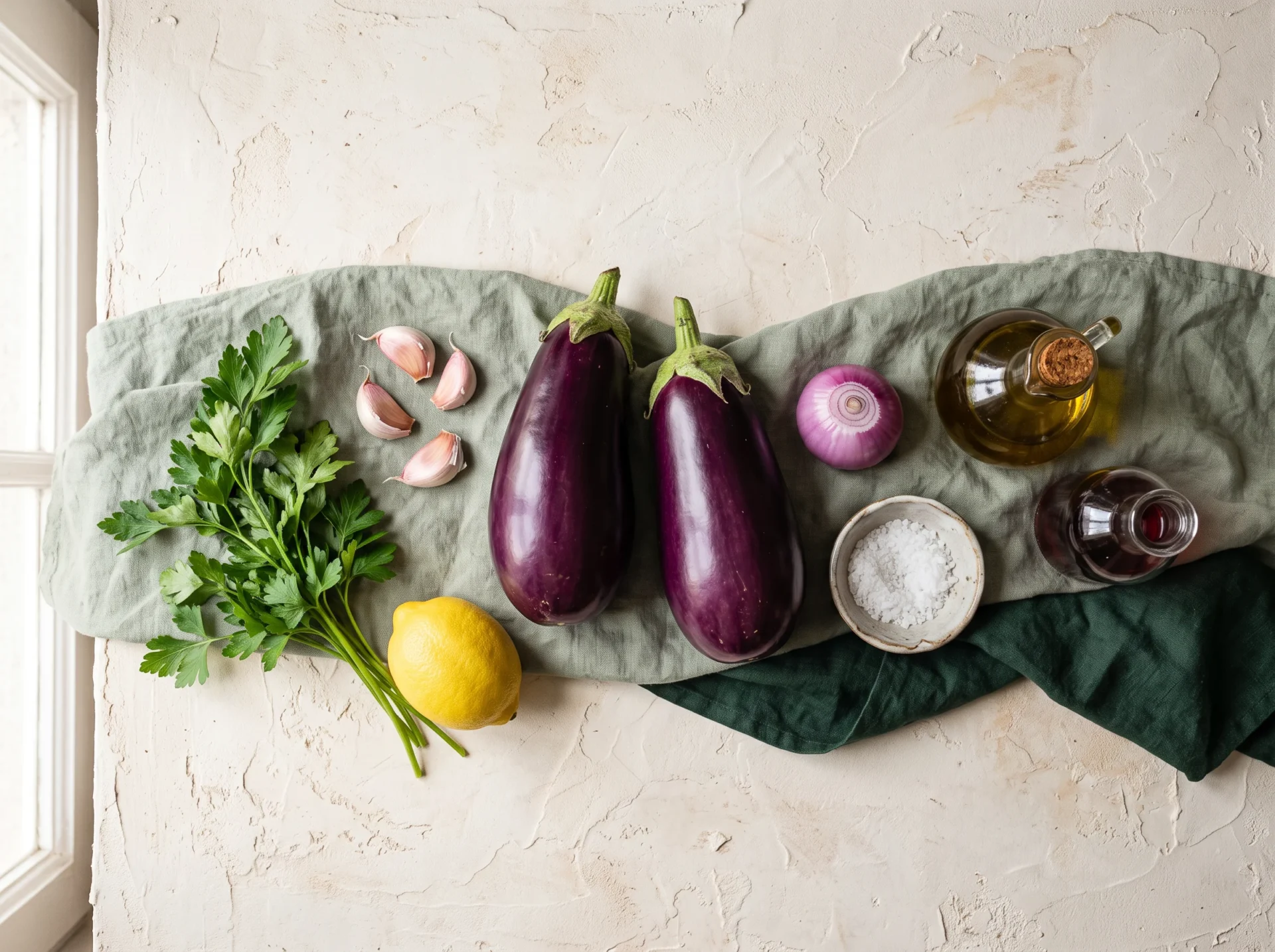
Ingredients
Makes 8 appetizer portions.
Equipment
How to make it
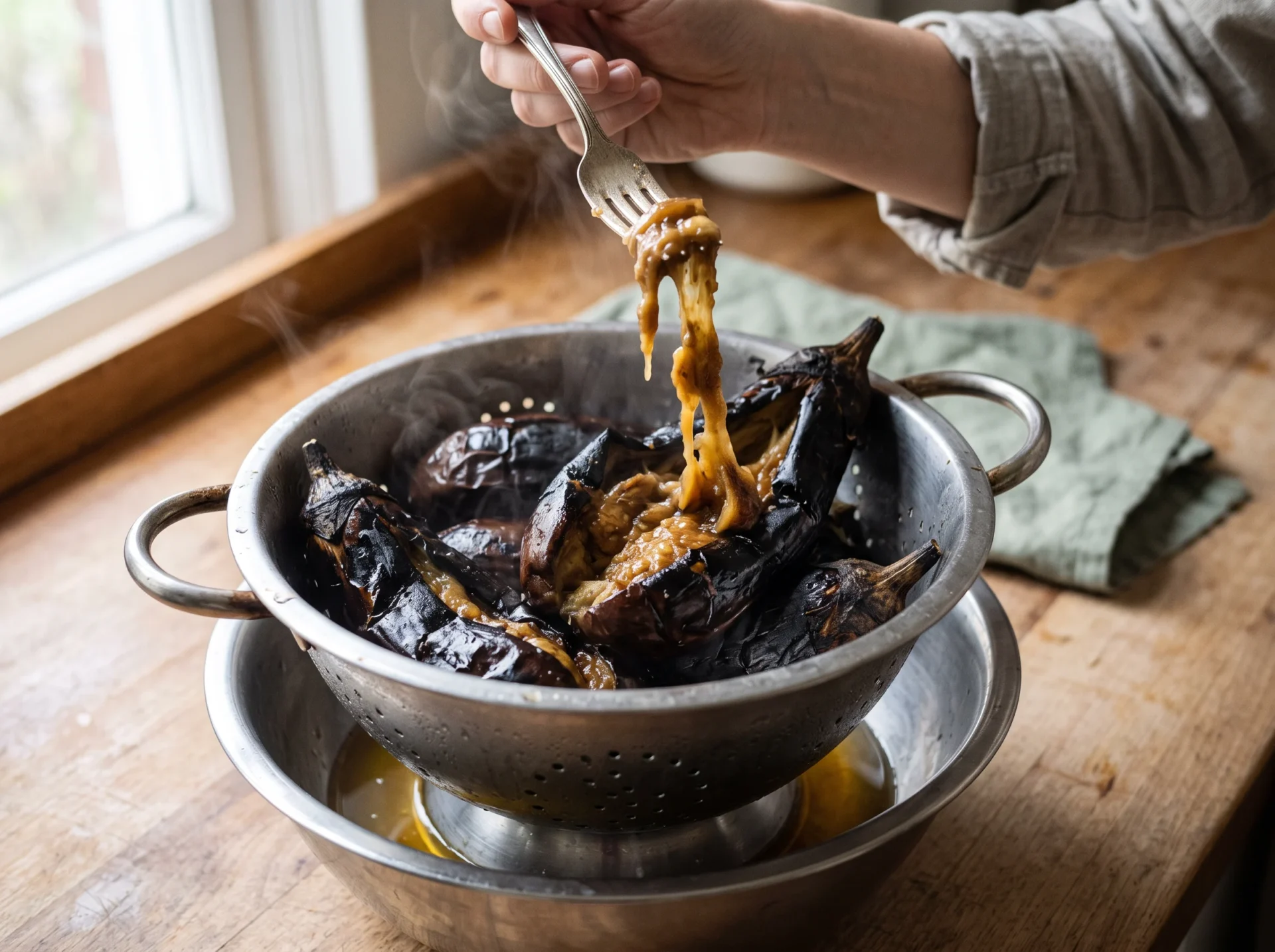
- Char the eggplants. Pierce each eggplant four times. Char over a gas flame or hot grill, turning with tongs for 20 to 30 minutes, or broil 6 inches from the element for 35 to 40 minutes, until the skins are black and the bodies collapse completely.
- Steam and peel. Set the hot eggplants on a tray for 5 minutes so steam loosens the skin. Split them, scoop the soft flesh away from the charred skin, and discard any hard pale sections that resist the spoon.
- Drain for structure. Place the warm flesh in a colander over a bowl for 20 minutes. Press only once or twice with the back of a spoon; aggressive squeezing removes body along with water.
- Chop, do not puree. Move drained flesh to the cutting board and chop repeatedly until spreadable but still visibly fibrous. This coarse texture is the signature of a Greek roasted eggplant dip.
- Season in order. Fold in onion, garlic, lemon juice, vinegar, salt, and half the parsley. Taste while the mixture is still slightly warm; add a pinch more salt if the smoke tastes muted.
- Emulsify by hand. Drizzle in olive oil a tablespoon at a time while folding with a fork. Stop when glossy and creamy but still moundable. Chill 30 minutes, then finish with the remaining parsley.
Practical cooking tips
- Choose eggplants that feel heavy and have taut skin; light, wrinkled fruit often has drier, seedier flesh.
- Char past merely tender. The skin should blacken and the body should collapse under the tongs.
- For a true no-puddle melitzanosalata recipe, keep the full drain time even when the flesh looks dry on top.
- Dice onion very finely so it seasons the dip without creating crunchy wet pockets.
Troubleshooting tips
- Dip spreads into a puddle: the flesh was not drained long enough. Return it to the colander before adding more oil.
- Flavor is bitter: remove every loose sheet of black skin and taste the olive oil separately; old oil can dominate the dip.
- Texture is pasty: a food processor broke down the seeds and fibers. Chop by hand next time and fold gently.
- Smoke is weak: broil until the skin is deeply blackened, not just browned, and finish with extra lemon rather than artificial smoke flavor.
Swaps and variations
- A grill gives the strongest smoke; a broiler is reliable indoors and needs no ingredient change.
- White wine vinegar can replace red wine vinegar in equal volume with a slightly lighter flavor.
- Omit onion for a smoother dip, but do not replace it with onion powder unless you recalculate the seasoning.
- This is already a Greek vegan appetizer; yogurt and feta are optional serving additions, not part of the recipe or nutrition.
Serving ideas
- Serve cool or at room temperature with cucumber, pepper strips, or warm pita.
- Spoon beside grilled fish or chicken as a bright vegetable spread.
- Build a mezze table with another dish from the recipe archive, keeping the olive-oil portion visible rather than calling the dip calorie-free.
Storage and meal prep
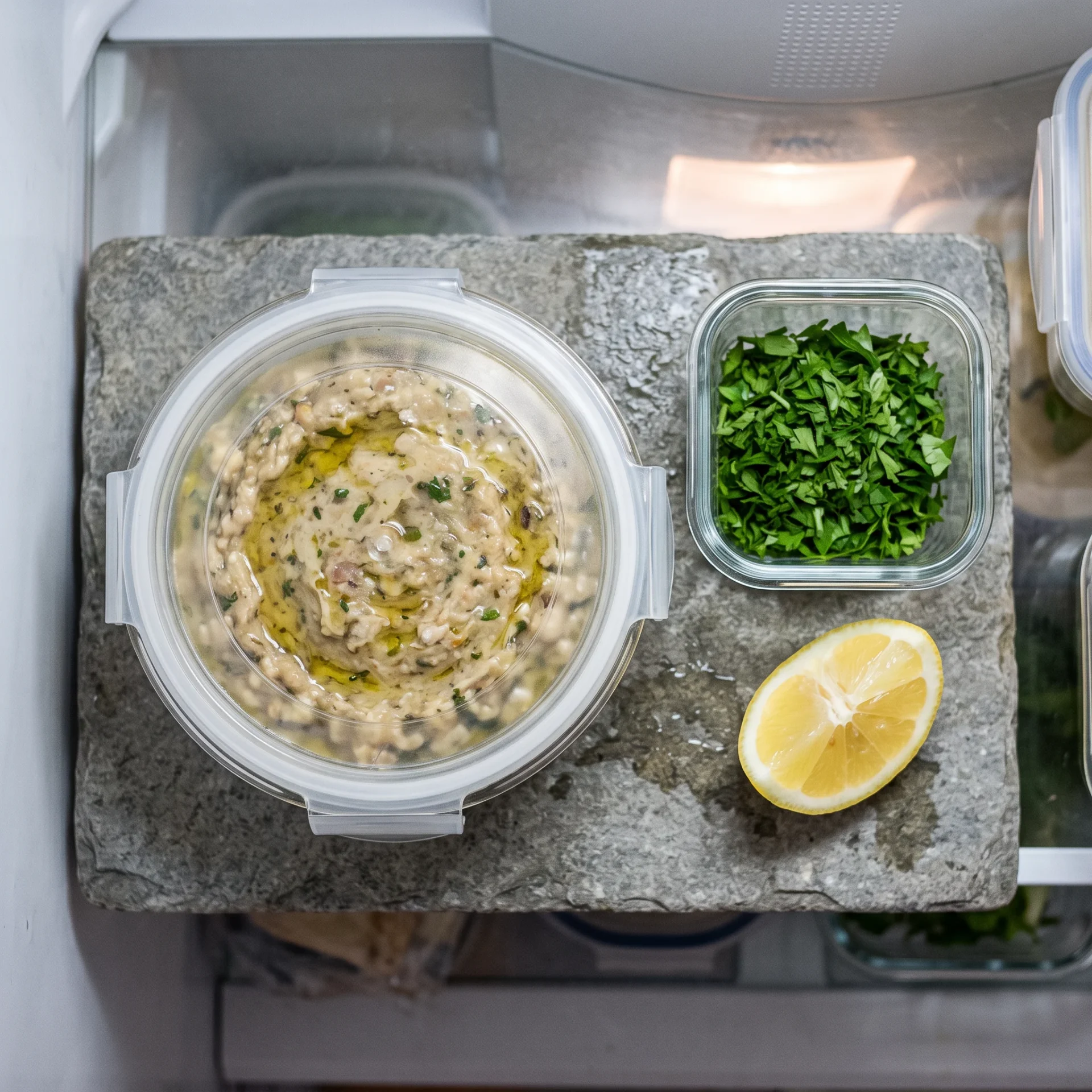
Refrigerate in a shallow airtight container for up to 4 days. Press a reusable cover directly over the surface to limit browning, and stir before serving. The dip can be frozen for up to 1 month, but thawed eggplant may release liquid; drain briefly and fold again. Do not leave the finished dip at room temperature for more than 2 hours.
Nutrition per serving
| Nutrient | Per serving |
|---|---|
| Calories | 110 kcal |
| Protein | 2 g |
| Fat | 8 g |
| Total carbs | 9 g |
| Fiber | 4 g |
| Net carbs | 5 g |
Nutrition is a calculated estimate based on USDA FoodData Central ingredient data and varies with brands and exact portion sizes.
Frequently asked questions
Why is my Greek eggplant dip melitzanosalata watery?
The roasted flesh retained too much liquid. Drain it warm for 20 minutes before chopping, and add olive oil only after lemon, vinegar, and salt are mixed in.
Do I need a food processor?
No. A knife and fork give the rustic strands associated with melitzanosalata. A processor can make the eggplant pasty and release more water.
Can I make melitzanosalata without a gas flame?
Yes. Broil the pierced eggplants close to the element, turning until every side is charred and the bodies collapse.
Is melitzanosalata vegan?
This version is vegan because it uses eggplant, olive oil, lemon, vinegar, aromatics, and herbs. Some restaurant versions add dairy, so ask when ordering.
Can I prepare it ahead?
Yes. The flavor settles after a few hours in the refrigerator. Hold back the final parsley and oil drizzle until serving.
Ratings and reviews
No ratings yet. If you have cooked this, your rating helps the next person decide.
Rate this recipe