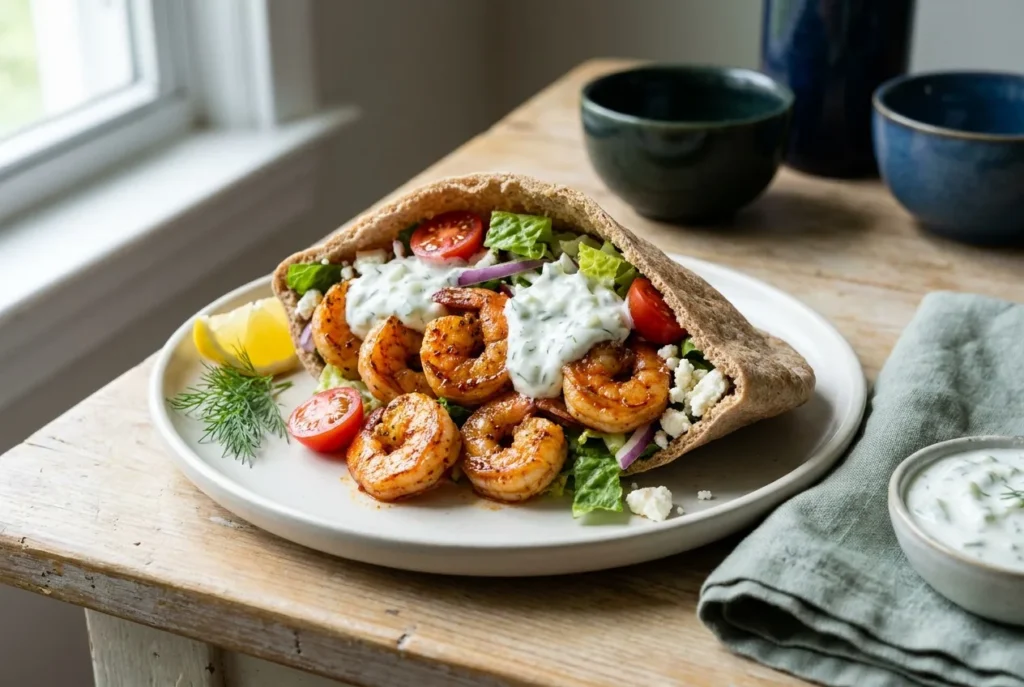
This Mediterranean shrimp pita is what a 30-minute weeknight dinner should taste like: shrimp seared hard in garlic, oregano and smoked paprika, then packed into a warm whole-wheat pocket with cold, thick tzatziki that starts to melt the second it hits them. The whole thing works because the two halves are opposites — one screaming hot and barely cooked through, the other straight out of the fridge. It sits squarely inside the Mediterranean diet playbook: lean seafood, olive oil, cultured dairy, raw vegetables and a whole grain, with nothing standing in for flavour that a lemon could not do better.
Table of Contents
Why this Mediterranean shrimp pita works
- The shrimp cook in under four minutes. They go into a properly hot dry-surfaced pan already seasoned, so the browning happens before the interior has a chance to tighten.
- The tzatziki is the sauce and the dressing. One bowl of yogurt covers both jobs, which is why there is no mayonnaise anywhere in the ingredient list and no second thing to whisk.
- It is protein-forward without being heavy. Shrimp and strained yogurt carry the load; the olive oil and feta supply the fat, and the pita is the only real starch.
- The pattern is the point. Seafood, olive oil, yogurt and vegetables in one handheld meal is close to the template the American Heart Association describes when it talks about eating this way.
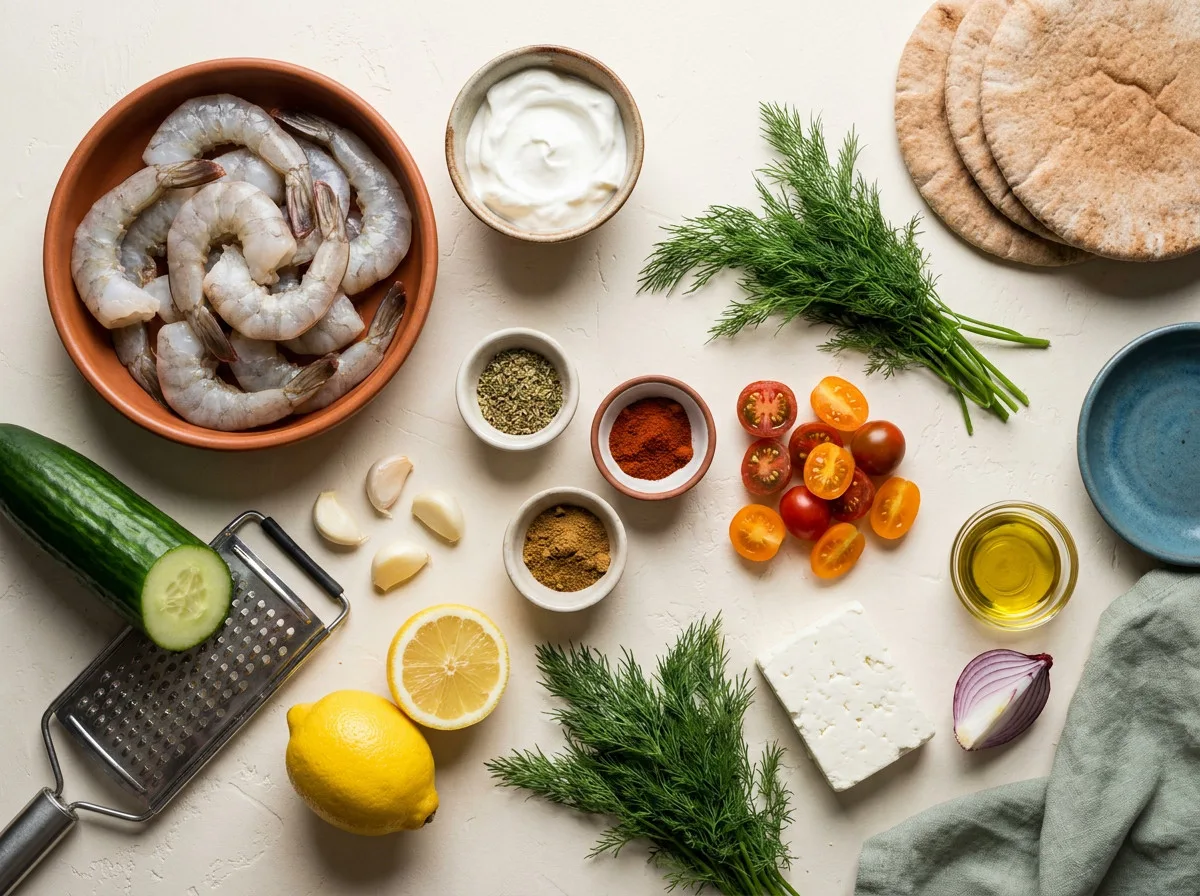
Ingredients
Makes 4 servings.
Equipment
How to make it
- Season and dry the shrimp. Pat the shrimp completely dry — drier than looks necessary — then toss with 1 tbsp olive oil, the 4 minced garlic cloves, oregano, smoked paprika, cumin, the lemon zest, 3/4 tsp salt and several grinds of pepper. Leave at room temperature for 10 minutes while you build the sauce. Any surface moisture left on them will steam instead of sear.
- Make the tzatziki. Grate the cucumber on the large holes, pile it into a towel and wring hard over the sink until you have pulled out roughly 1/4 cup of liquid and the pulp feels dry and springy. Stir it into the yogurt with the grated garlic clove, 1 tbsp olive oil, 1 tbsp of the lemon juice, the dill and 1/4 tsp salt. It should mound on a spoon rather than run off it. Refrigerate until you build the pitas.
- Prep the salad. Halve the tomatoes and shred the romaine. Slice the red onion as thinly as you can and soak it in cold water for 5 minutes, then drain — this pulls the harsh sulphur bite out and leaves the sweetness.
- Warm the pitas. Wrap them in foil and put them in a 350°F (175°C) oven for 6 to 8 minutes, or toast them 30 seconds per side in a dry skillet until they puff slightly at the edge and feel pliable and steamy. Warm pita folds; cold pita cracks along the seam.
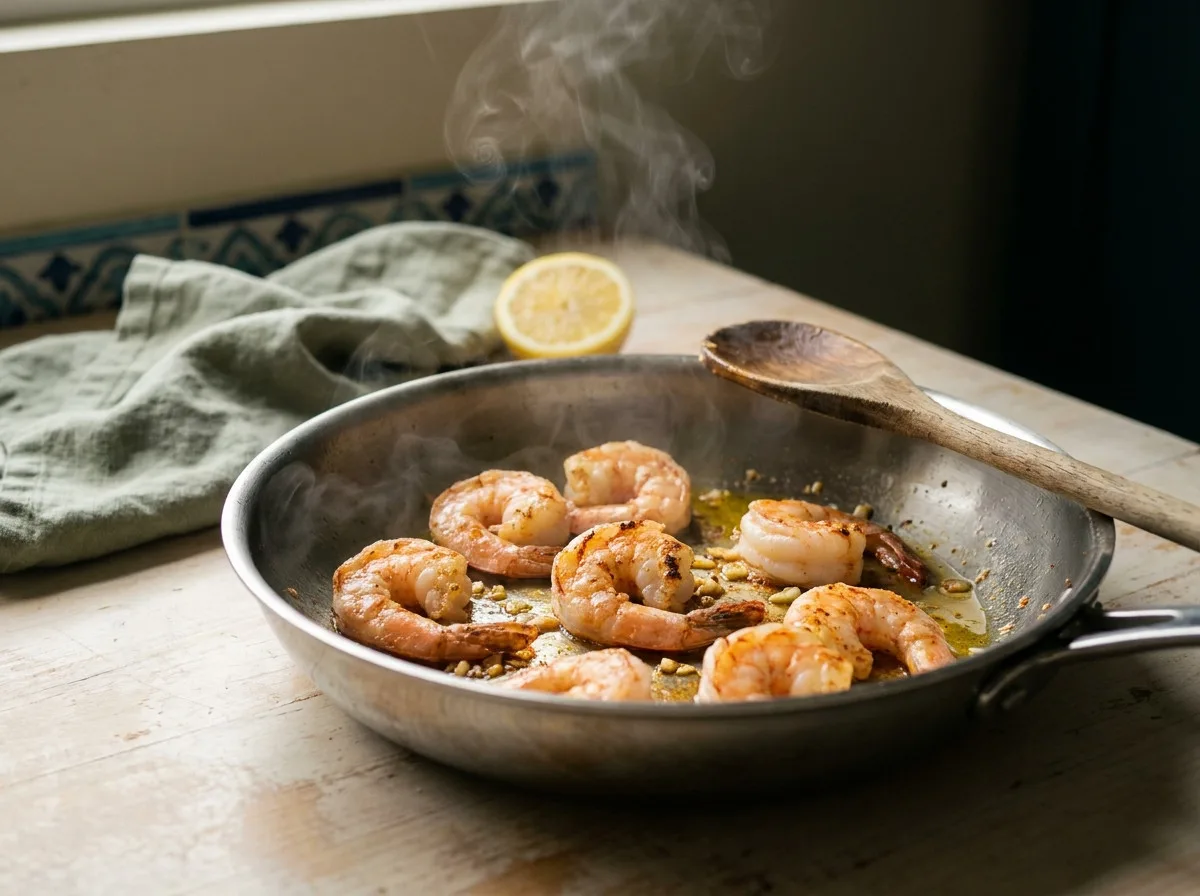
- Sear the shrimp. Heat the remaining 1 tbsp olive oil in the skillet over medium-high until it shimmers and thins out across the pan. Lay the shrimp down in a single uncrowded layer, working in two batches if they touch. Leave them alone for 90 seconds, until the underside is opaque with golden-brown spots, then flip and cook 60 to 90 seconds more.
- Pull them early. Shrimp are done when the thickest part has just turned opaque and the body has relaxed into a loose C. A tight O means they went too far. The FDA recommends an internal temperature of 145°F (63°C) for shrimp; carryover heat will take them there on the plate.
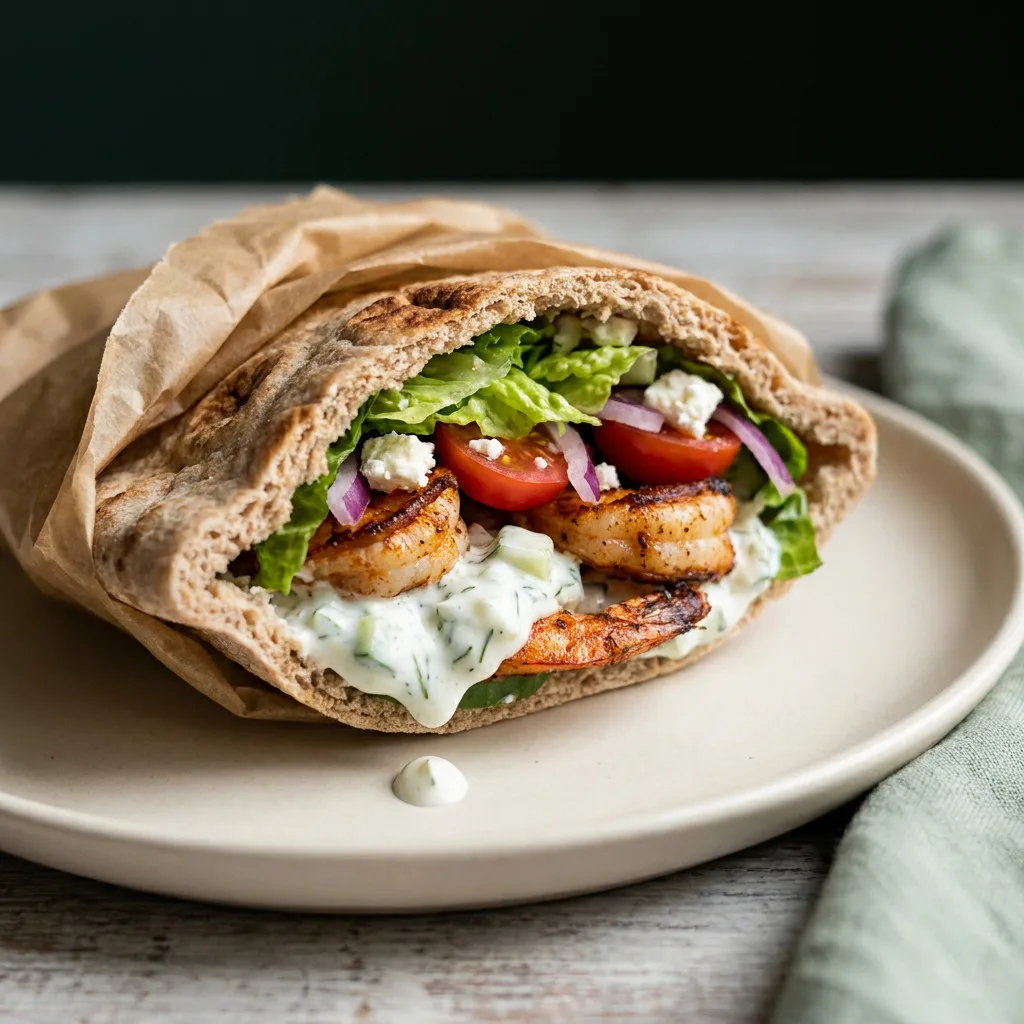
- Finish and build. Off the heat, squeeze the remaining lemon juice over the pan and toss so it lifts the browned spice from the bottom. Open each warm pita, spread a generous spoonful of tzatziki inside, add the shrimp, then the romaine, tomatoes and onion, and scatter the feta over the top. Serve straight away.
Tips from the test kitchen
- The most common failure is a crowded pan. Shrimp release a lot of water; put them all in at once and they poach grey in their own liquid instead of browning. Two fast batches beat one slow one every time.
- Wring the cucumber harder than feels reasonable. Under-squeezed cucumber keeps weeping into the yogurt, and a thin sauce turns the bread to paste within about two minutes of assembly.
- Frozen shrimp are fine, often better. Most “fresh” shrimp at the counter were frozen anyway. Thaw them in a colander under cold running water for 5 minutes, then dry them thoroughly.
- Salt the shrimp, not the assembled sandwich. Between the feta and the yogurt there is plenty of salt arriving later; season at the start and taste before adding more.
- Make the tzatziki first if you have the time. Thirty minutes in the fridge lets the garlic bloom and the sauce tighten noticeably.
Swaps and variations
- Chicken instead of shrimp. Boneless thigh cut into strips takes the same spice rub and about 8 minutes in the pan; expect roughly 60 more calories and 5 g more fat per serving. The same seasoning logic drives our sheet pan Greek chicken with lemon and oregano.
- 2% Greek yogurt. Drops about 25 calories and 3 g fat per serving, but the sauce runs thinner — strain it in a fine sieve for 15 minutes to compensate.
- Skip the bread. Build it into two large romaine cups per person instead and you cut roughly 140 calories and 33 g of carbohydrate per serving.
- Add olives. A quarter cup of pitted Kalamatas split across the four pitas adds about 25 calories and 3 g fat per serving, and a lot of brine.
Storage and meal prep
Packed for lunch, treat it as a mediterranean shrimp wrap rather than an assembled sandwich: keep the shrimp, the tzatziki and the bread apart, and the garlic shrimp pita sandwich goes together in a minute at the desk.
Store the parts, never the assembled sandwich. Cooked shrimp keep 2 days in an airtight container in the fridge; tzatziki keeps 4 days and gets better on day two; the chopped salad holds 2 days if the tomatoes are kept separate.
A built Mediterranean shrimp pita has a shelf life of about ten minutes before the bread surrenders, so pack the components in separate containers and assemble at the table. Reheat the shrimp gently — 20 to 30 seconds in a dry skillet over medium, or simply eat them cold, which is genuinely good here. Do not freeze any of it: the shrimp turn cottony and the yogurt splits on thawing. For more ideas built the same way, browse the full recipe collection.
Nutrition per serving
| Nutrient | Per serving |
|---|---|
| Calories | 539 kcal |
| Protein | 54 g |
| Fat | 17 g |
| Total carbs | 45 g |
| Fiber | 6 g |
| Net carbs | 39 g |
Nutrition is an estimate and varies with brands and exact portion sizes.
Frequently asked questions
What makes this a healthy shrimp pita recipe rather than a takeaway one?
Three things: the shrimp are seared not fried, the sauce is strained yoghurt instead of mayonnaise, and the bread is whole wheat. That is the whole difference between a greek shrimp pita made at home and a shrimp pita with tzatziki bought at a counter.
Can I make this Mediterranean shrimp pita ahead?
You can prep every component up to two days ahead, but assemble only at the moment of eating. The tzatziki, chopped salad and cooked shrimp all store well on their own; it is the bread that fails, going soft within minutes of meeting a wet sauce.
How do I know the shrimp are cooked without cutting one open?
Watch the shape. A raw shrimp is straight, a perfectly cooked one has curled into a loose C, and a tight O is overcooked. The flesh should read opaque and pearly rather than glassy at the thickest point.
My tzatziki came out watery. What went wrong?
Almost always the cucumber. Grated cucumber is over 95 percent water and will keep releasing it into the yogurt for an hour if you let it. Wring it in a towel until no more liquid comes out, and use whole-milk Greek yogurt rather than regular.
Is whole-wheat pita necessary?
No, white pita works identically in texture and technique. Whole wheat is here for the fiber — it roughly triples what a white pocket contributes, which is most of the 6 g in the table above.
What makes this Mediterranean rather than just a shrimp sandwich?
The fat source and the sauce base. A Mediterranean shrimp pita gets its richness from olive oil and cultured yogurt instead of butter or mayonnaise, leans on lemon, garlic and oregano rather than sugar, and puts vegetables and seafood in the majority of the volume.
Ratings and reviews
No ratings yet. If you have cooked this, your rating helps the next person decide.
Rate this recipe