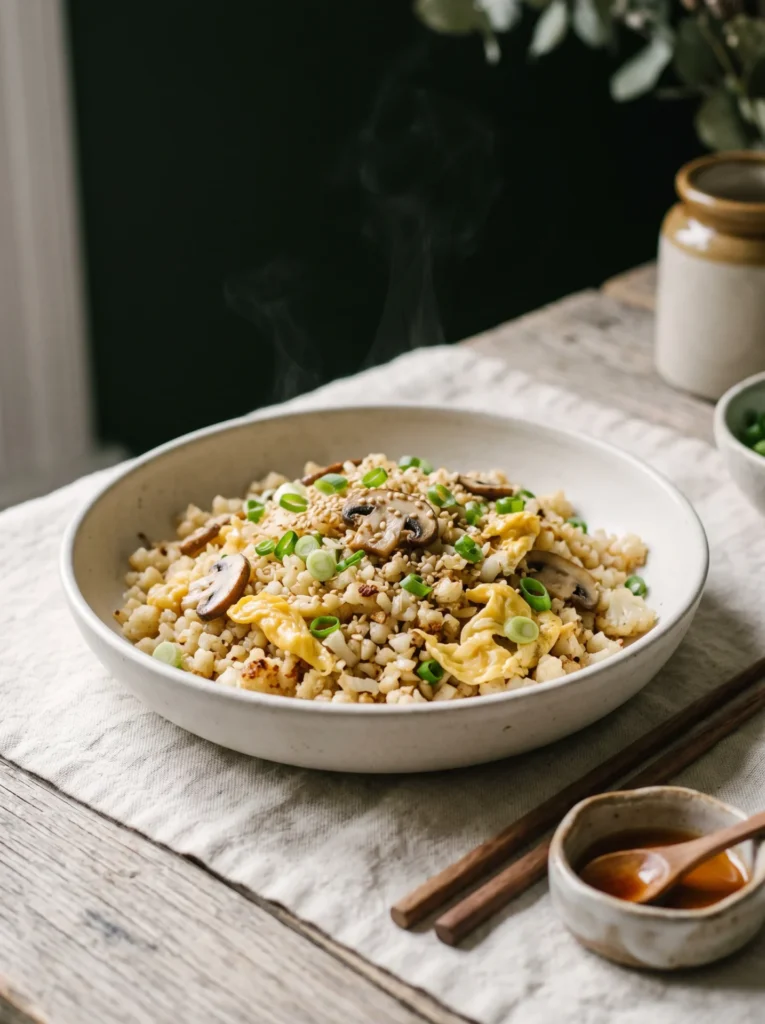
Most cauliflower fried rice fails in the same place: the pan turns into a steam bath and dinner arrives wet. This version fixes that with one deliberate step — the riced cauliflower goes into a hot dry pan on its own and stays there until the grains are visibly dry and freckled with gold, before anything else joins it. What comes out is savoury and separate, with soft egg, mushrooms, ginger and toasted sesame doing work that soy sauce alone cannot. At 8 g net carbs a serving it sits comfortably in the site’s keto recipe collection.
Table of Contents
Why this cauliflower fried rice works
- Dry heat comes before everything else. Cauliflower is about 92% water. Sent into the pan alongside sauce and vegetables it simply poaches in its own moisture; given a hot dry pan to itself it drives that water off and browns instead.
- The egg is cooked separately and folded back. Scrambling it into the pan mid-cook drops the surface temperature and coats every grain in a damp film. Cooked apart and returned off the heat, it stays in soft distinct ribbons.
- Aromatics carry the flavour, not salt. Fresh ginger, garlic, scallion and a finishing pour of toasted sesame oil give the dish its depth, so two tablespoons of tamari are enough rather than a puddle.
- A keto cauliflower rice base that stays genuinely low. No peas, no carrot, no sugar in the sauce — the whole batch lands at 8 g net carbs per serving, calculated from the quantities written below rather than borrowed from a similar dish.
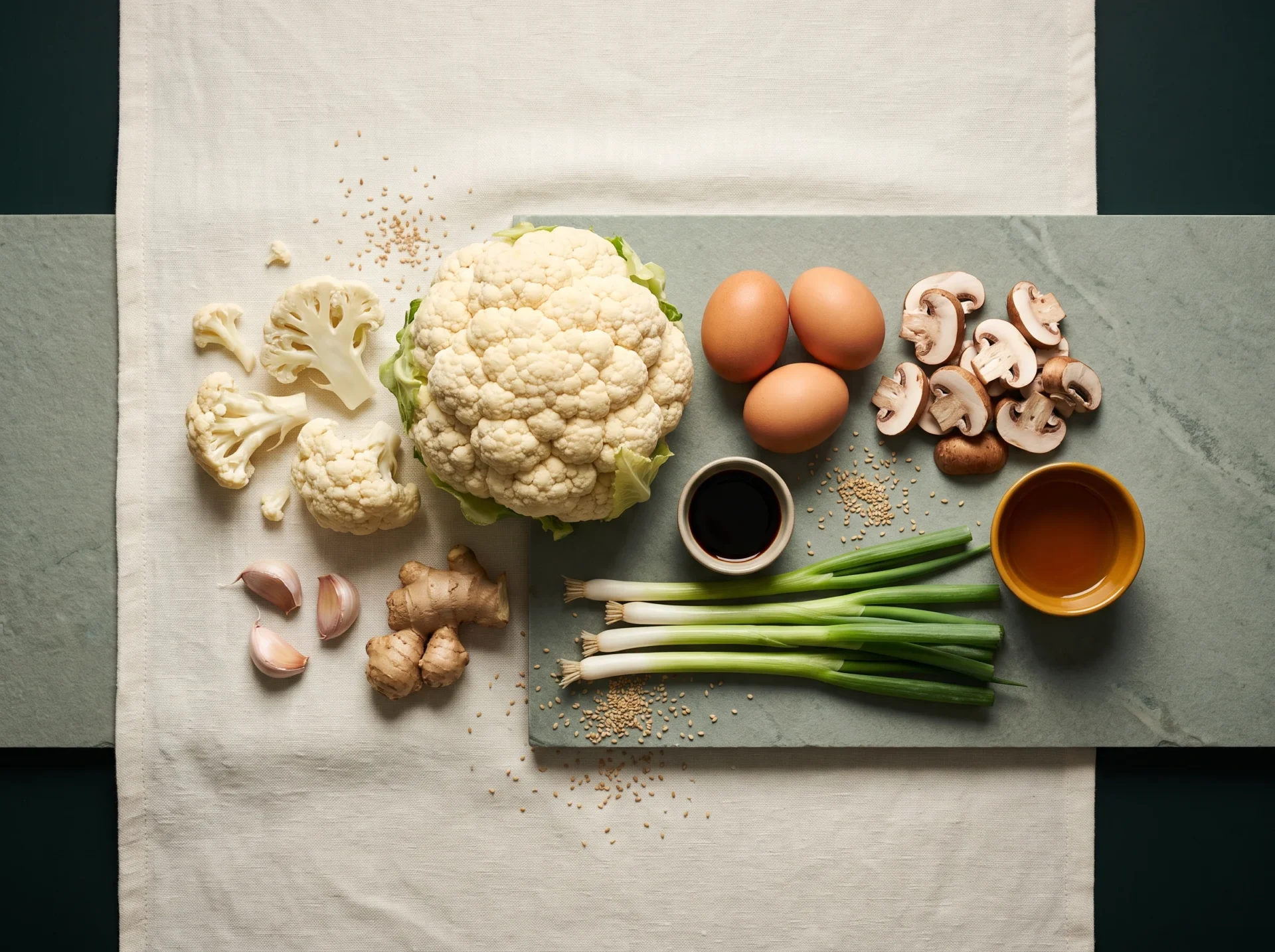
Ingredients
Makes 4 servings.
Equipment
How to make it
- Rice the cauliflower and press it dry. Cut the head into florets and work in two batches, 8 to 10 one-second pulses each, until the pieces are the size of couscous — running the processor continuously turns the bottom layer to paste. Tip the grains onto a clean kitchen towel, roll it up and press firmly for a few seconds. The towel should visibly darken. This is the step most cooks skip and the one that decides the texture.
- Scramble the eggs and get them out of the pan. Heat 1/2 tbsp of the avocado oil in the wok over medium. Pour in the beaten eggs, let them sit undisturbed for 20 seconds, then push them into loose folds for another 30 to 45 seconds until just set and glossy with no liquid pooling. Egg dishes should reach an internal temperature of 160°F (71°C) per USDA guidance, which folded scrambled egg passes as soon as it is set through. Slide onto a plate and break into bite-sized pieces.
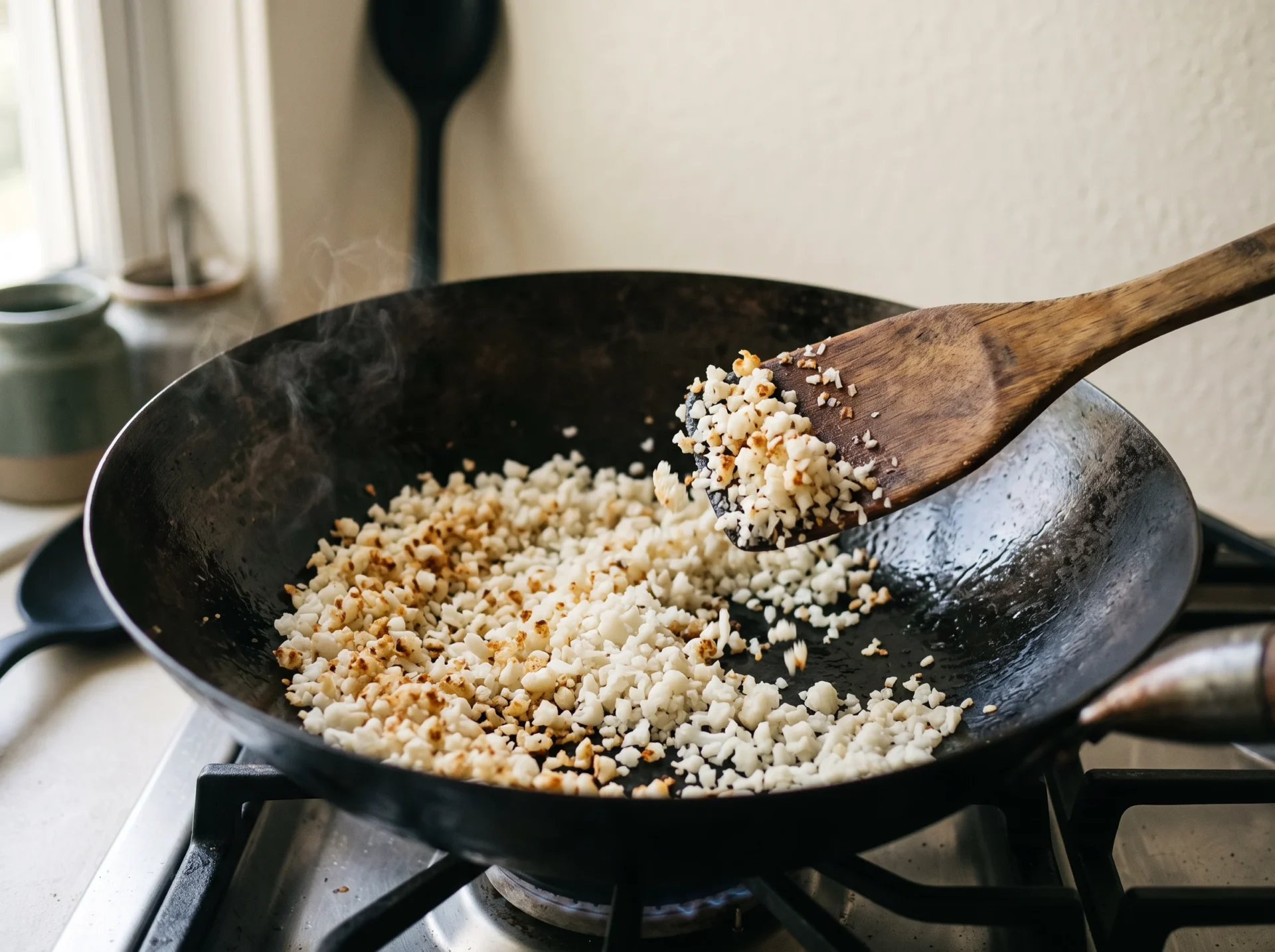
- Dry-sauté the cauliflower until it freckles. Wipe the wok, raise the heat to medium-high and add the remaining 1 tbsp oil. When it shimmers, add all the cauliflower and spread it into a single layer. Leave it undisturbed for 2 minutes to take colour, then stir every 30 seconds for 5 to 6 minutes more. It is ready when the grains move loosely against the spatula, several are freckled golden-brown, and the pan has stopped throwing off steam.
- Add the mushrooms and aromatics. Push the cauliflower to the sides, add the mushrooms and scallion whites to the centre and cook for 2 minutes, until they release their liquid and it evaporates. Add the garlic and ginger and stir for 30 seconds, just until fragrant — take the pan off the burner the moment they smell sweet rather than sharp, because they scorch in seconds at this heat.
- Season and finish off the heat. Pour the tamari around the hot rim of the pan rather than into the middle, so it hisses and reduces on contact instead of pooling. Toss for 30 seconds. Take the pan off the heat entirely, then fold in the egg, sesame oil, white pepper, scallion greens and sesame seeds. Taste and add salt only now — the tamari carries most of it.
Practical cooking tips
- A crowded pan is the most common failure. A 12-inch skillet is the minimum for 680 g of grains. In anything smaller the layer is too deep to release steam and you get a pale, damp result no amount of extra time fixes — cook it in two batches instead.
- A bagged cauliflower rice recipe shortcut needs longer. Pre-riced supermarket bags are cut coarser and hold more water, so add 2 to 3 minutes to the dry-sauté and never cover the pan.
- Toasted sesame oil is a finishing oil. Its aroma is volatile and cooks away over direct heat, which is why it goes in after the pan leaves the burner rather than at the start.
- No processor? Use the coarse side of a box grater. Grate the florets stem-side down over a towel; it takes about four minutes for one head and gives a slightly more uneven grain that browns well.
Swaps and variations
- Coconut aminos instead of tamari. Sweeter, soy-free and gluten-free, and it adds roughly 3 g of carbohydrate across the whole batch — under 1 g a serving.
- Make it a dinner plate. Fold in 8 oz (225 g) of cooked shrimp or diced chicken thigh at step 5. Shrimp adds about 13 g of protein and 56 calories per serving; it does not change the carb count.
- A leaner low carb fried rice. Drop the sesame seeds and use 1 tbsp of oil in total instead of 1 1/2, which saves about 24 calories and 2 g of fat a serving at the cost of some richness.
- Swap the flavour direction entirely. The same dry-sauté technique underpins the keto Mediterranean cauliflower rice bowl if you want lemon, oregano and olives rather than ginger and sesame.
Storage and meal prep
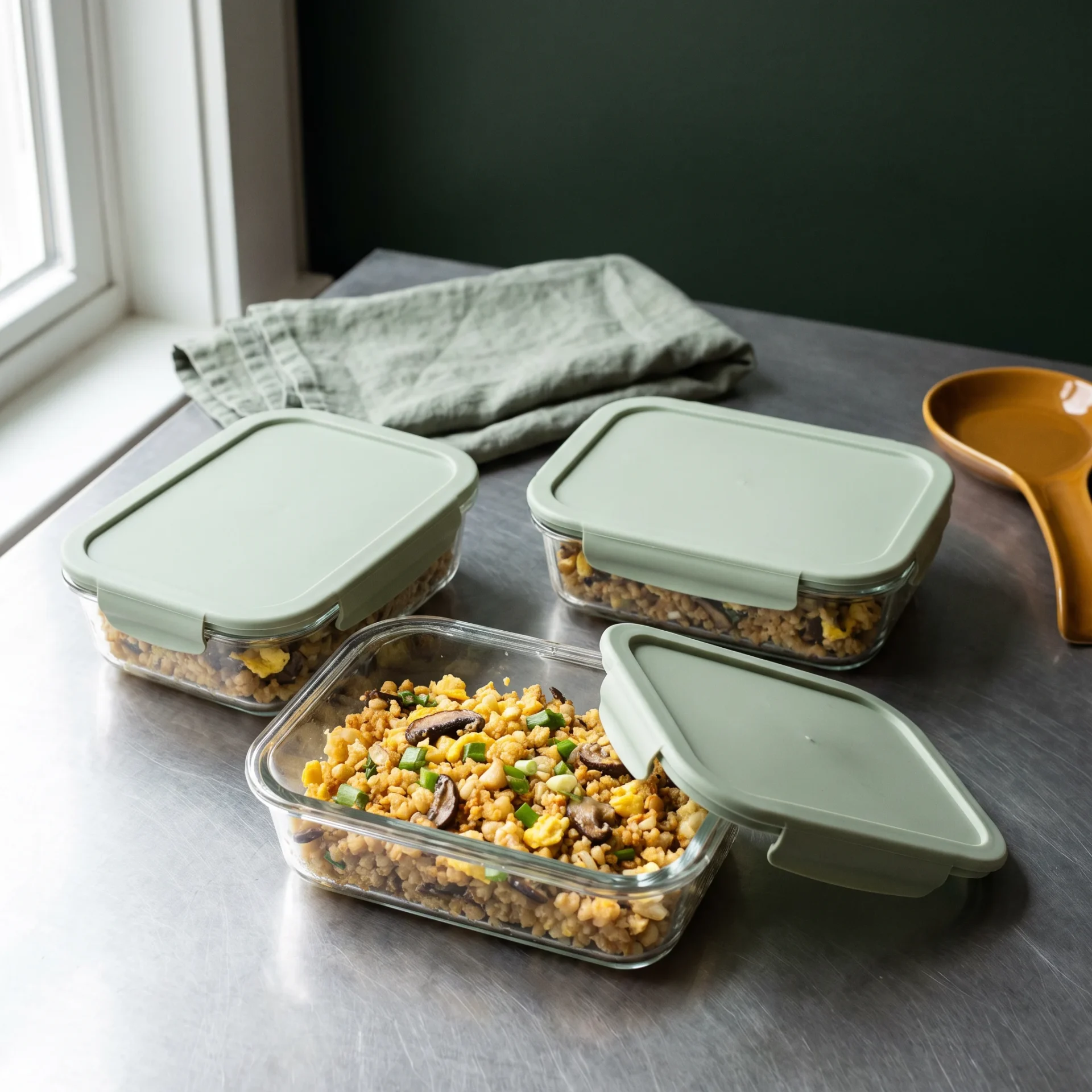
Cooled cauliflower fried rice keeps in an airtight container in the fridge for 3 to 4 days, the window USDA gives for cooked egg dishes, and it should be refrigerated within two hours of cooking. Reheat it in a dry skillet over medium-high for 2 to 3 minutes rather than in the microwave, which steams the grains soft again and undoes the whole point of the method. Freezing is the one thing that does not work: cauliflower cells rupture as the ice crystals thaw and the texture collapses to mush, so cook the amount you will actually eat within the week.
Nutrition per serving
| Nutrient | Per serving |
|---|---|
| Calories | 194 kcal |
| Protein | 10 g |
| Fat | 12 g |
| Total carbs | 12 g |
| Fiber | 4 g |
| Net carbs | 8 g |
Calculated per ingredient from USDA FoodData Central on raw weights, divided by four servings. Nutrition is an estimate and varies with brands and exact portion sizes.
Frequently asked questions
How to make cauliflower fried rice ahead for the week?
Cook it through, then spread it on a sheet pan so it cools quickly before it goes into containers — cooling slowly in the hot pan generates condensation that softens the grains you just dried out. Hold back the scallion greens and sesame seeds and add them after reheating instead.
Is cauliflower fried rice with egg enough for a full meal?
As written it is a generous side or a light lunch at 10 g of protein a serving. For a dinner-sized plate, fold in 8 oz of cooked shrimp, chicken thigh or firm tofu at the final step, which takes protein to roughly 23 g without moving the carb count.
Can I use frozen riced cauliflower?
Yes, and cook it straight from frozen. Thawing first lets the ice melt into the bag and guarantees a wet pan, which is the opposite of what the method needs. Add 3 to 4 minutes to the dry-sauté and expect a slightly softer grain than fresh.
Why does mine taste bitter?
Usually one of two things: garlic that caught on the pan bottom during the 30-second aromatic step, or sesame oil poured in while the pan was still on high heat. Both turn acrid quickly, which is why garlic goes in near the end and the sesame oil goes in off the heat.
Where can I find more low-carb dinners?
The full recipe archive lists everything on the site, and each recipe carries its per-serving macros so you can see where it fits before you start cooking.
Ratings and reviews
No ratings yet. If you have cooked this, your rating helps the next person decide.
Rate this recipe