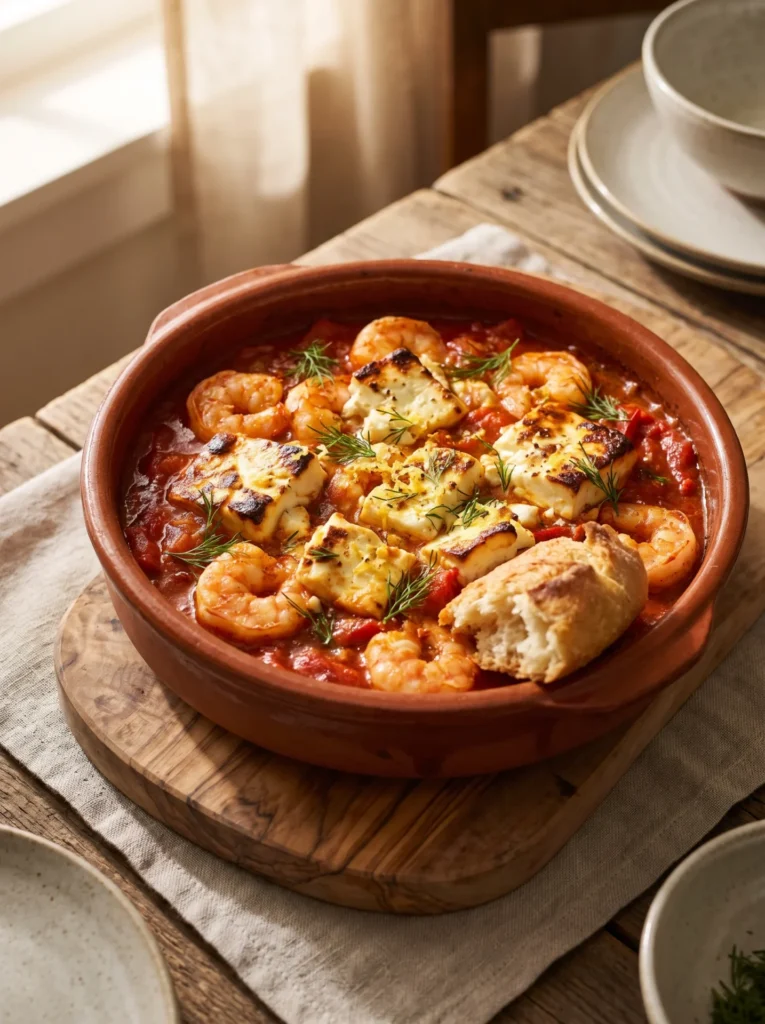
Greek baked shrimp with feta is the oven version of garides saganaki: a thick, garlicky tomato sauce, shrimp slid in near the end, and a layer of cheese that blisters under the broiler instead of melting quietly into a pan. The oven earns its place here — it cooks the shrimp gently from every side at once, and it gives the feta a browned, craggy top with real texture. It all happens in one dish. For more cooking in this style, browse our Mediterranean recipes or the full recipe archive.
Table of Contents
Why Greek baked shrimp with feta works
- The sauce reduces before the shrimp arrive. Canned tomatoes carry a lot of water. Fifteen minutes of uncovered simmering drives it off and concentrates the flavour, so the finished dish clings to bread instead of pooling around it.
- Raw shrimp go straight into the sauce. Searing them first and baking them again is two rounds of heat for a protein that needs one. Added raw, they poach in the sauce and finish exactly when the cheese does.
- The broiler does what a stovetop cannot. Two minutes under direct top heat blisters the feta into brown, chewy patches. On the hob the cheese only softens and disappears into the sauce.
- Feta is the salt. A block of brined sheep’s-milk feta is intensely salty, so the sauce gets seasoned lightly and tasted at the last moment rather than salted by habit.
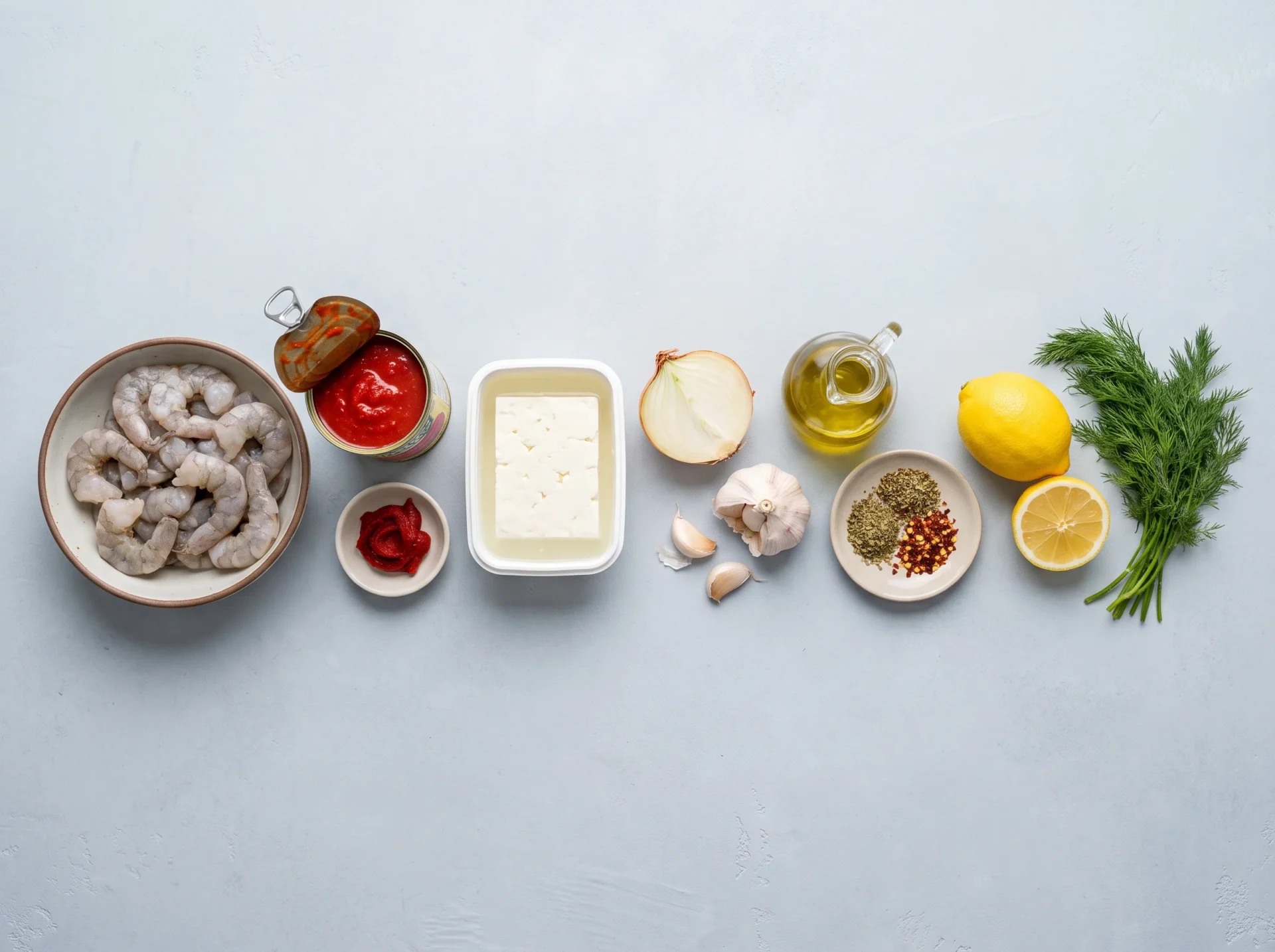
Ingredients
Equipment
How to make it
- Heat the oven to 425°F (220°C). Set a rack in the upper third, close enough to the element that the broiler will reach the cheese later but not so close that it scorches.
- Soften the onion and garlic. Warm the olive oil in the skillet over medium heat and cook the onion for about 5 minutes until translucent, then add the garlic for 1 minute more. Do not let either brown — browned garlic turns the whole sauce bitter.
- Cook out the tomato paste. Stir in the paste, oregano and red pepper flakes and cook for 60 seconds, until the paste darkens from bright red to brick and smells sweet rather than tinny.
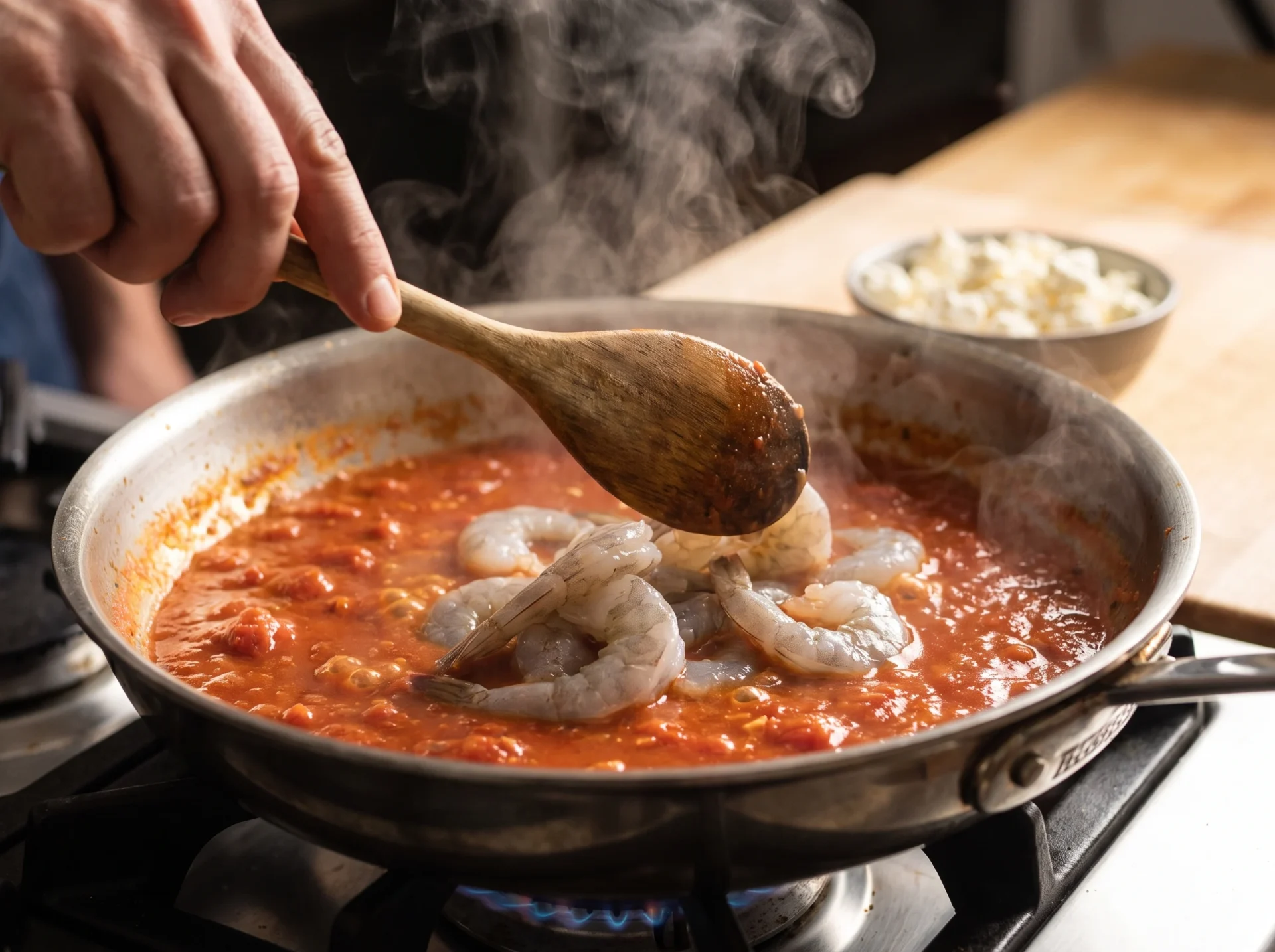
- Reduce the tomatoes. Pour in the crushed tomatoes and simmer uncovered over medium-low heat for 15 minutes, stirring now and then, until a spoon dragged across the base leaves a track that fills in slowly. This is the step that decides the texture of the finished dish.
- Season, then taste. Add the honey only if the tomatoes taste sharp. Season with black pepper and a small pinch of salt, remembering that the feta will add plenty more.
- Nestle in the shrimp. Pat the shrimp dry and press them into the sauce in a single layer so they are surrounded but not buried. Any liquid clinging to them thins the sauce you just reduced.
- Add the feta and bake. Scatter the feta over the top in large pieces rather than fine crumbles. Bake for 10 to 12 minutes, until the shrimp are opaque and pearly and register 145°F (63°C) at the thickest part.
- Broil, rest, finish. Switch the broiler to high for 1 to 2 minutes, watching constantly, until the feta is browned in spots. Rest for 5 minutes, then scatter over the lemon zest, lemon juice and dill.
Practical cooking tips
- Buy shrimp by count, not by adjective. A 16/20 or 21/25 count gives pieces large enough to survive 12 minutes of oven heat. Small shrimp overcook before the cheese has any colour.
- Use block feta in brine. Pre-crumbled feta is coated with anti-caking starch, which stops it browning and leaves a chalky texture under the broiler.
- 145°F is the number that matters. The USDA safe minimum internal temperature for shrimp is 145°F (63°C), and the flesh should read pearly and opaque. Past that point the texture tightens quickly.
- Never walk away from the broiler. The gap between golden and burnt feta is under 30 seconds. Stay at the oven door.
- Reach for no-salt-added tomatoes. Between the canned tomatoes and the feta this is already a salty easy Greek seafood dinner, and unsalted tomatoes give you back the control.
Swaps and variations
- Ouzo or white wine. Splash 2 tbsp into the pan after the tomato paste and let it cook off for a minute. Ouzo is the traditional choice and adds a faint anise note behind the tomato.
- Prefer the stovetop? Our shrimp saganaki skillet keeps everything on the hob and skips the broiled crust — faster, softer, and a different dish in the mouth.
- Add greens. A large handful of baby spinach stirred into the sauce before the shrimp wilts down to almost nothing and adds fibre without watering things down.
- Make it richer. Cubes of halloumi alongside the feta hold their shape and squeak; the dish becomes shrimp with tomatoes and feta plus something to chew on.
- Lower the carbs. Serve over cauliflower rice or courgette ribbons instead of orzo. The sauce itself carries roughly 18 g of net carbs per serving, mostly from the tomatoes.
Storage and meal prep
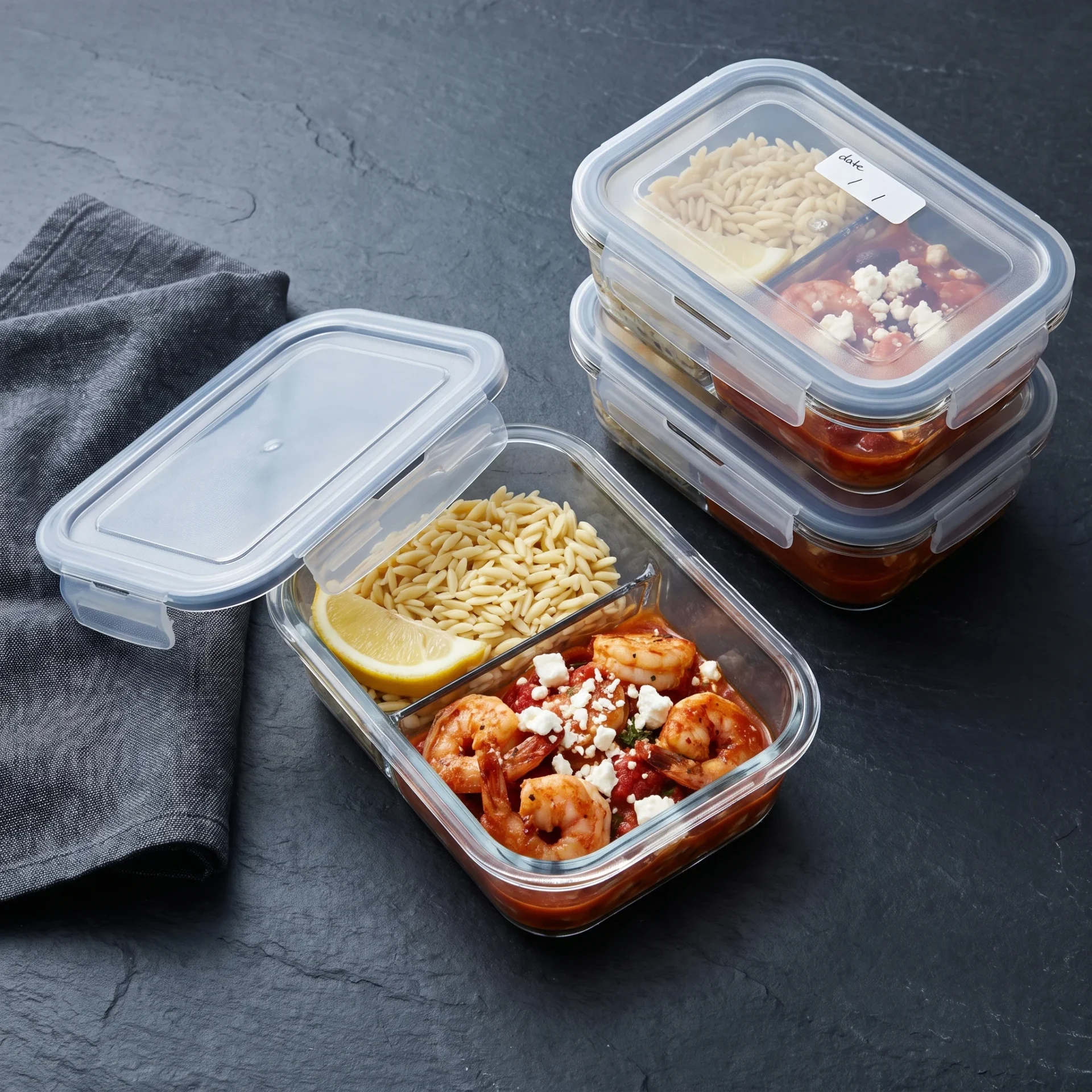
Greek baked shrimp with feta keeps better than most seafood dishes because the sauce insulates the shrimp. Cool it uncovered for no more than 30 minutes, then refrigerate within two hours of cooking and eat within 3 to 4 days, following USDA cold storage guidance. Reheat gently — covered, at 300°F, for about 12 minutes, or in short bursts in the microwave at half power. High heat is what turns leftover shrimp rubbery, not the storage.
For meal prep, portion the greek shrimp bake over orzo or rice in four containers while it is still warm and seal them once cool. Freezing is possible but costs you texture: the shrimp go soft and the feta turns grainy, so freeze the sauce alone if you want a head start and add fresh shrimp and cheese on the day.
Nutrition per serving
| Nutrient | Per serving |
|---|---|
| Serving size | 1/4 of the dish, about 1 cup with sauce |
| Calories | 440 kcal |
| Protein | 44 g |
| Total fat | 21 g |
| Total carbohydrates | 23 g |
| Dietary fiber | 5 g |
| Net carbs | 18 g |
| Sodium | approx. 1,050 mg |
Values are an estimate calculated from USDA FoodData Central entries for each raw ingredient at the quantities listed above, divided by four servings. Sodium depends heavily on your feta and whether the tomatoes are salted. This is a Mediterranean-pattern dish, not a treatment for any condition.
Frequently asked questions
What is garides saganaki?
Garides means shrimp, and saganaki is the name of the small two-handled pan the dish is cooked in. It is not the flaming cheese appetiser of the same family — nothing is set alight here. Traditionally it is a mezze plate served with bread, though a larger dish like this one works as a main course.
Can I use frozen shrimp?
Yes, and most shrimp sold at a fish counter was frozen anyway. Thaw them overnight in the fridge or in a sealed bag under cold running water, then dry them thoroughly on paper towel. Adding shrimp that are still wet or half-frozen releases water into the sauce and undoes your reduction.
Why did my sauce turn out watery?
Almost always the reduction was cut short. Fifteen minutes uncovered is a minimum, and some brands of crushed tomatoes need twenty. The second culprit is undried shrimp. If it happens, lift the shrimp out with a slotted spoon, boil the sauce down for a few minutes, and return them off the heat.
What do I serve with oven baked shrimp saganaki?
Crusty bread is the classic answer, because the sauce is the point. Orzo, plain rice or roast potatoes all work as a fuller plate, and a sharp green salad with red onion cuts the richness of the cheese.
Can I make it ahead?
Make the sauce up to three days ahead and refrigerate it. On the day, reheat it until it bubbles, then add the shrimp and feta and continue from the baking step. Greek baked shrimp with feta assembled this way takes about fifteen minutes from fridge to table.
Ratings and reviews
No ratings yet. If you have cooked this, your rating helps the next person decide.
Rate this recipe