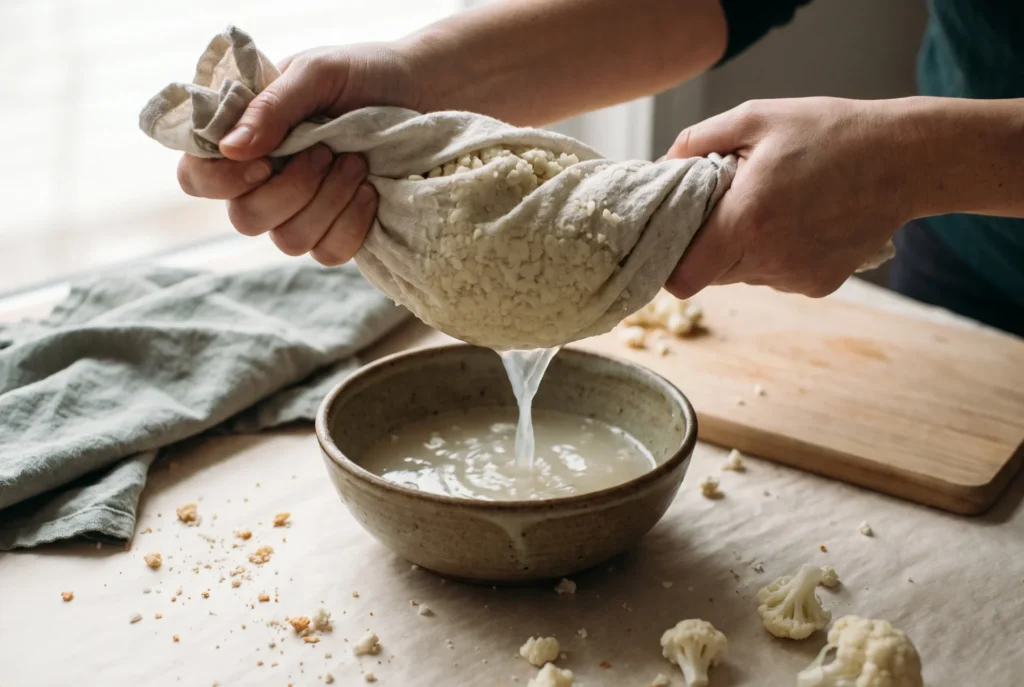
Here is how to prevent watery cauliflower rice casserole bakes: take the water out of the cauliflower before it goes into the dish, not after. Raw cauliflower is 92.1 g of water per 100 g, so a 900 g base carries roughly 829 g of water into the pan. Cheese cannot absorb that. Only heat can drive it off.
Key takeaways
- Riced cauliflower holds 92.1 g of water per 100 g (USDA FoodData Central, FDC 169986), so a 900 g casserole base brings about 829 g of water — roughly 3.5 cups — into the dish before anything else is added.
- Cooked white rice holds 68.4 g of water per 100 g and keeps it locked inside the swollen grain, which is why a grain casserole does not flood and a cauliflower one does.
- Heat removes water that squeezing cannot. A towel takes out free surface moisture and then stops; a dry pan or a hot oven keeps evaporating for as long as it runs.
- Bake uncovered and rest the dish for 10 minutes. A lid returns condensed steam to the surface, and resting lets the cheese and egg set so a portion lifts instead of sliding.
Where the water comes from
A casserole is a closed system. Everything you put in the dish is still in the dish when it comes out of the oven, minus the little that escapes from the surface. With a grain base that is fine, because dry rice or pasta absorbs liquid as it cooks. Cauliflower does the opposite: it arrives already full, and oven heat forces that water out of the cell walls and down to the bottom of the pan.
The amounts below are all 900 g of base, which is exactly what our keto Mediterranean cauliflower rice bowl uses, and a normal load for one 9×13 dish.
| Base, 900 g in one 9×13 dish | Water per 100 g | Water it carries in |
|---|---|---|
| Riced cauliflower | 92.1 g (FDC 169986) | 829 g, about 3.5 cups |
| Sliced zucchini | 94.8 g (FDC 169291) | 853 g, about 3.6 cups |
| Cooked white rice | 68.4 g (FDC 168878) | 616 g, already bound in the grain |
Split across six servings, the cauliflower base alone puts about 138 g of water into every portion — a little over half a cup. That is the puddle under the cheese. It was never the sauce that caused it, and no amount of thickening the sauce will make 829 g of water go somewhere else.

The water each base carries, compared
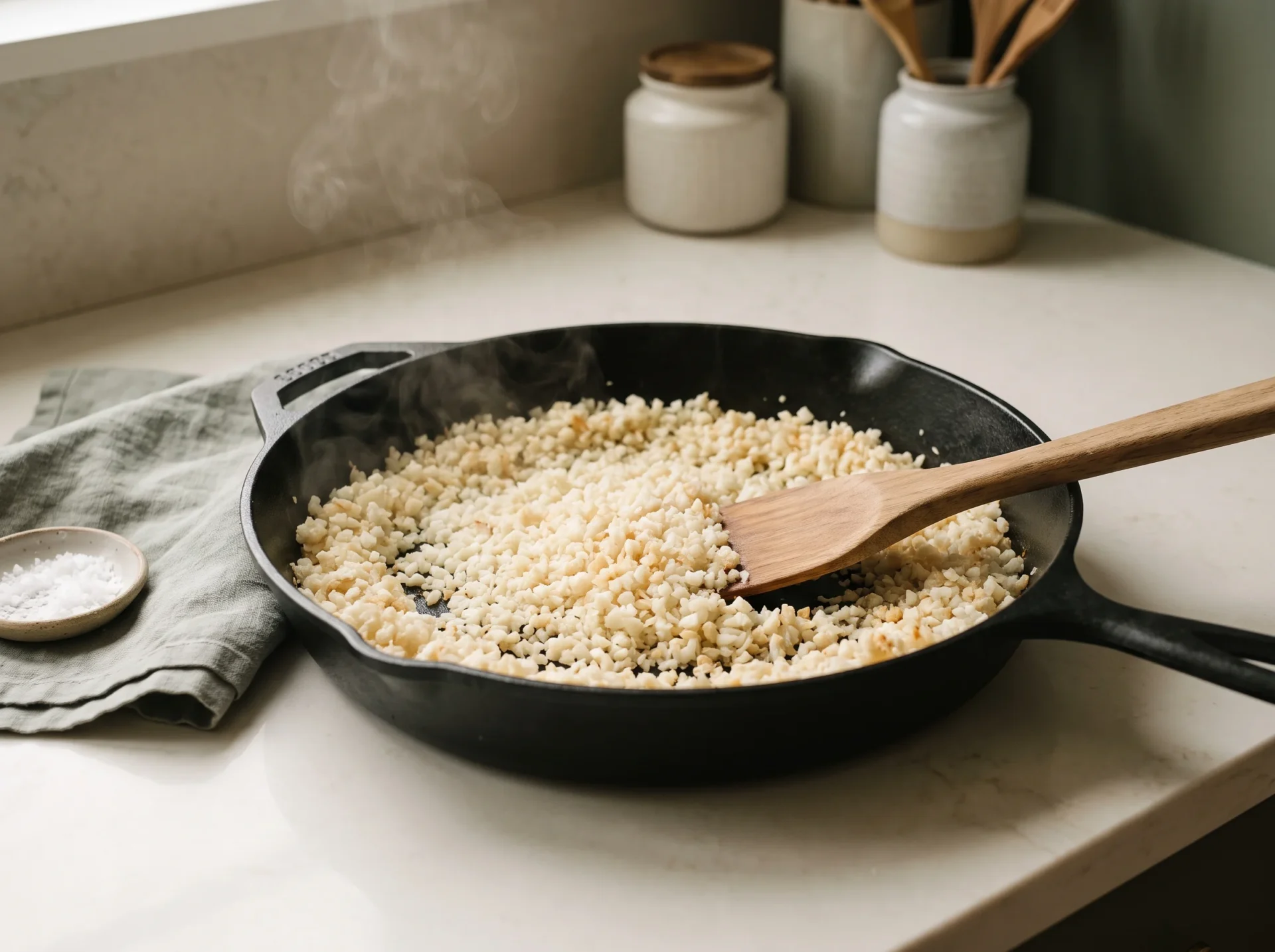
Zucchini is the wetter of the two vegetable bases, which is why the planks in our roasted zucchini noodle lasagna are salted, pressed and roasted before they are layered rather than going in raw. Cauliflower carries nearly as much and gives it up just as freely. Cooked rice sits well below both, and what it holds is already inside the grain, so it never leaves.
How to prevent watery cauliflower rice casserole, step by step
Start from frozen, and do not thaw it
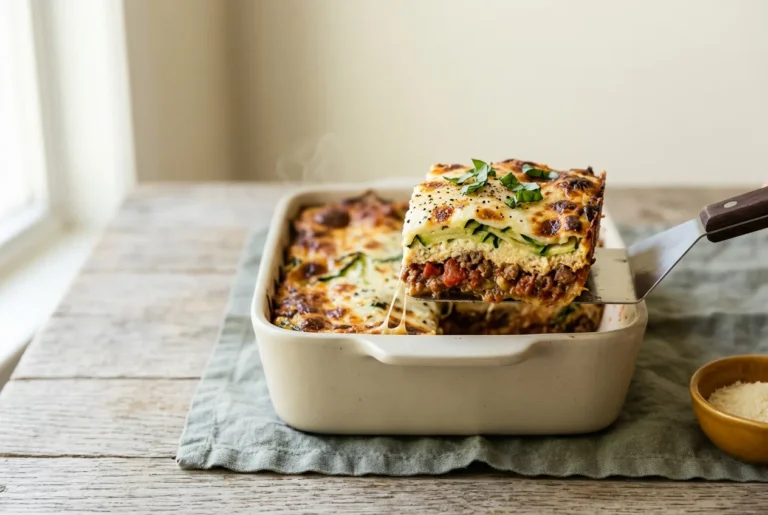
Frozen riced cauliflower goes into a hot dry pan straight from the bag. Thawing it on the counter lets the ice melt while the cauliflower sits in the resulting puddle, reabsorbing some of it, and you still have to remove the rest. Freezing ruptures the cell walls, so thawed cauliflower gives up water faster than fresh — useful in a hot pan, ruinous in a baking dish.
Dry it before you assemble anything
Spread it in a thin layer in a wide dry pan over medium-high heat, or on a sheet tray at 425F (220C), and leave it until the steam thins out and the grains separate and squeak against the spoon. The thin layer matters more than the method: piled up, cauliflower steams in its own moisture and never dries at all. Squeezing raw cauliflower in a towel is worth doing first, but it only reaches the free surface water.
Build the sauce from fat, not from thin liquid
Cream cheese, full-fat sour cream, shredded cheese and egg all set as they bake. Broth, milk, canned tomatoes and jarred sauce stay liquid and add to the load. Our cheesy bacon ranch bake is built entirely on the first group, which is why it holds its shape without a starch or a thickener anywhere in it.

Bake uncovered, then rest it
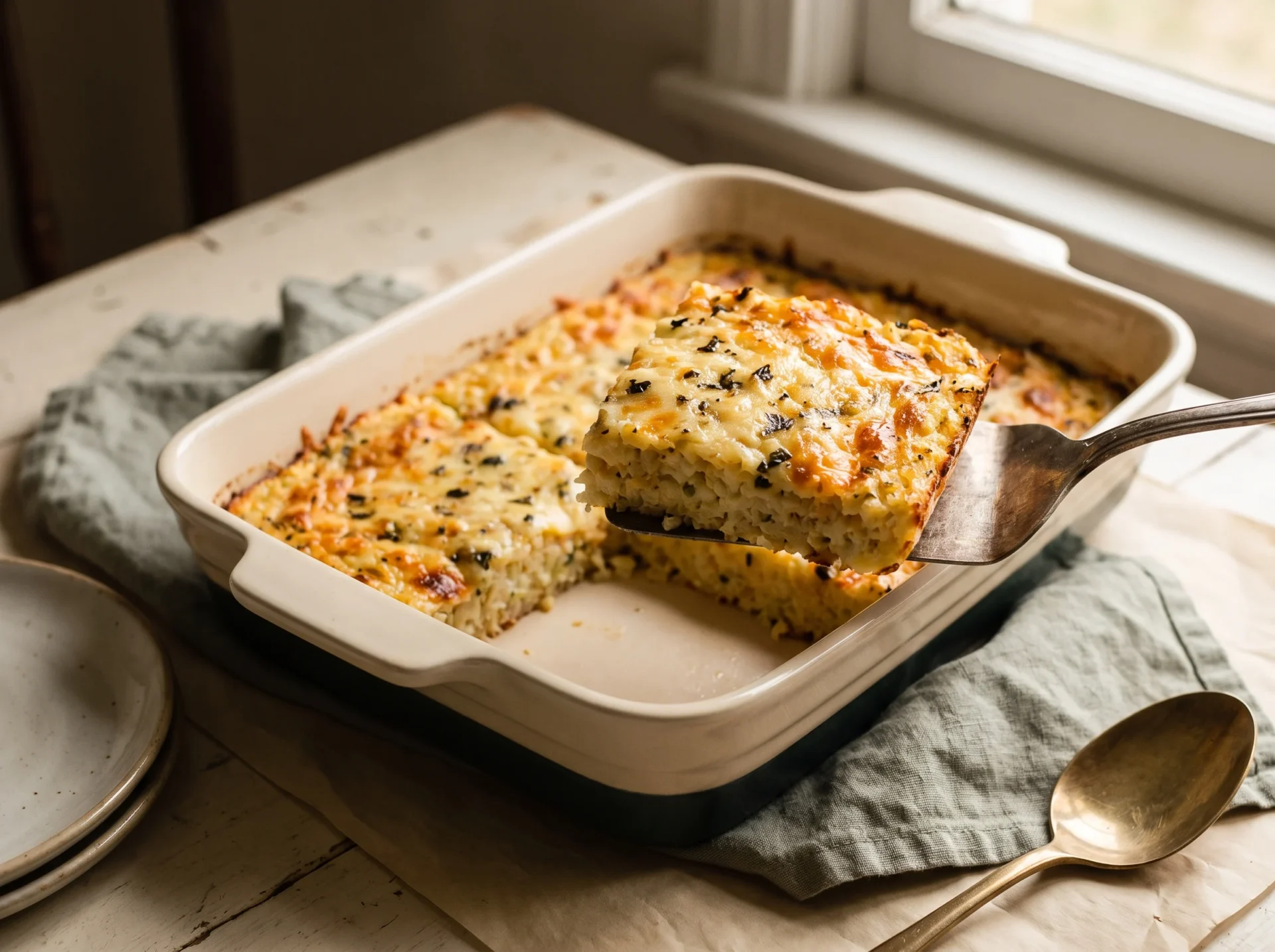
Leave the foil off. A cover traps steam and drips it straight back onto the surface, so the dish loses nothing at all over 40 minutes in the oven. Then give it 10 minutes on the counter before you cut it, which is long enough for the cheese and egg to firm up. More keto recipes on the site use the same uncovered-then-rested finish.
What to skip
Three fixes get recommended constantly and none of them earns its place.
- Xanthan gum and other thickeners. They turn free water into a slick gel. The water is still in the dish; it has only changed how it feels, and the texture goes slippery in exchange.
- Draining the finished dish. By the time you can tip a hot casserole, the cheese has loosened into the liquid, so you pour away the sauce along with the water.
- Adding more cheese. Cheese releases fat and its own water as it melts. It is a topping, not a sponge.
Frequently asked questions
Why is my cauliflower rice too watery?
Because cauliflower is mostly water and heat drives it out. Raw cauliflower holds 92.1 g of water per 100 g, so a full casserole base brings several cups with it. Drying the cauliflower in a pan or oven before assembly is the only step that removes a meaningful share of it.
What is the fastest way to dry cauliflower rice?
A wide dry pan over medium-high heat, uncovered, stirring now and then until the steam thins out. Knowing how to dry cauliflower rice is mostly about surface area: a thin layer in a big pan beats a long time in a crowded one, because a crowded pan steams instead of drying.
Should I thaw frozen cauliflower rice before baking?
No, cook it from frozen. Thawing releases the water into the bag or bowl and you still have to drive off whatever is left. Tipped straight into a hot dry pan, the ice turns to steam and leaves the kitchen instead of the casserole.
Can I rescue a soggy cauliflower rice casserole after baking?
Partly. Spoon off the standing liquid, then put the dish back into a 425F (220C) oven uncovered for 10 to 15 minutes so the surface can evaporate. The cauliflower will not firm up again, but the dish will stop swimming and it will cut properly.
Does a keto cauliflower rice casserole reheat well?
Yes, as long as you reheat it uncovered. An oven or air fryer drives off the water that a microwave traps as steam inside the portion. USDA guidance is to reheat leftovers to an internal 165F (74C).
Note: This article is for general information and is not medical advice. Nutrition figures are estimates that vary with brands, ripeness, and portion size. Talk to a doctor or registered dietitian before changing your diet, especially if you are pregnant, managing diabetes or kidney disease, or taking prescribed medication.