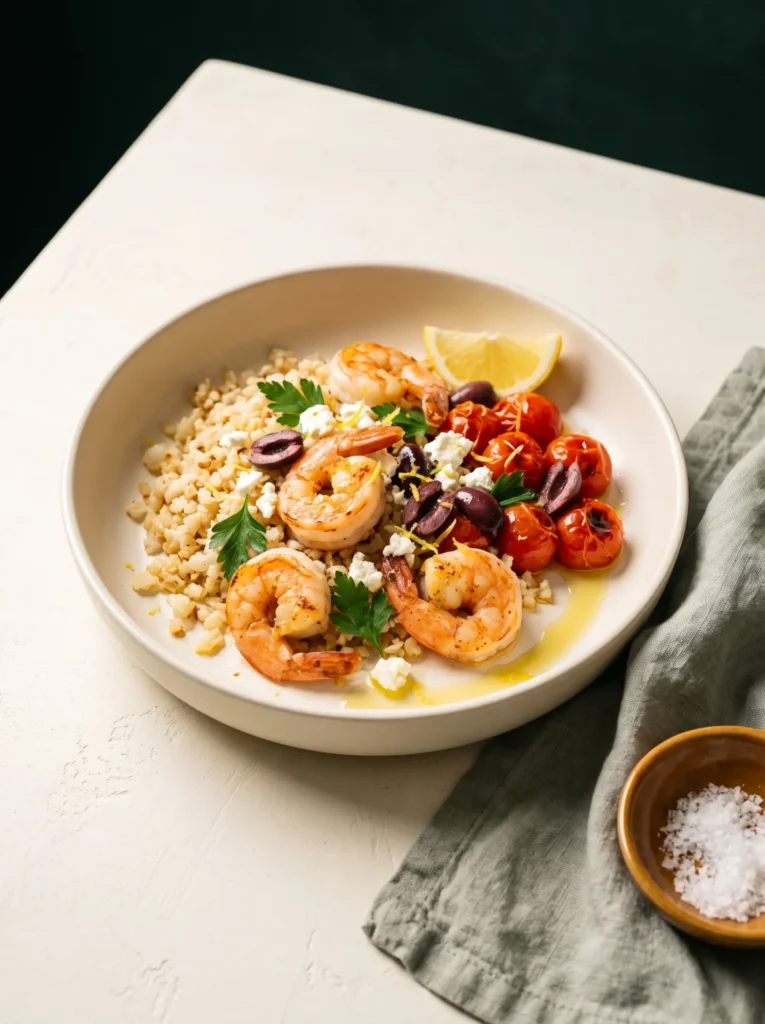
Keto Mediterranean shrimp with cauliflower rice tastes like a Greek seaside lunch and comes out of one skillet in about 25 minutes. Sweet shrimp, blistered cherry tomatoes, Kalamata olives, lemon and feta sit over cauliflower that is toasted dry before anything wet goes near it. That one step is the whole difference between fluffy separate grains and a grey, watery pan, and it is why this version still eats well on day three. If you are building out a week of keto recipes, this one earns its place on protein alone.
Table of Contents
Why this keto Mediterranean shrimp with cauliflower rice works
- Toasted, not steamed. Dry-toasting the cauliflower in a wide, hot, empty pan lets moisture leave as steam instead of pooling underneath it, so the grains stay loose and take on a faintly nutty flavour that raw-steamed cauliflower never develops.
- One pan, three turns. The rice, the shrimp and the sauce each use the same skillet in sequence, which keeps the browned bits in play and makes this a genuine one pan keto seafood dinner with a single thing to wash up.
- Protein leads the macros. At 39 g of protein against 7 g of net carbs, this low carb shrimp skillet gets its substance from the shrimp rather than from piled-on cheese and cream.
- Built around a four-minute window. Shrimp are done in roughly two minutes a side, so the vegetables and the rice are deliberately handled first and nothing sits waiting long enough to turn rubbery.
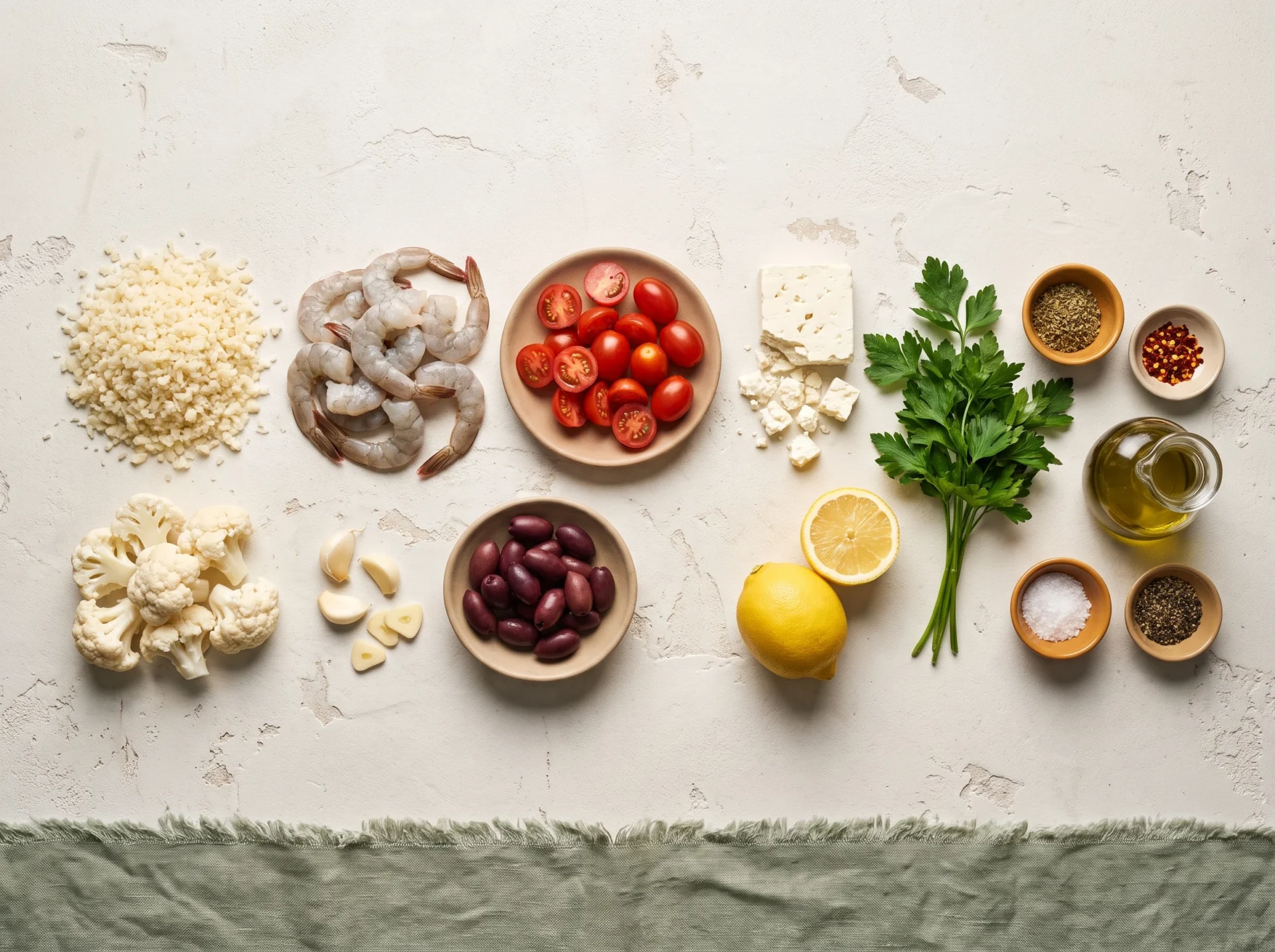
Ingredients
Makes 4 servings.
Equipment
How to make it
- Dry and season the shrimp. Pat the shrimp completely dry with paper towels, then toss them with ¼ tsp of the salt, the oregano and the red pepper flakes. Surface water is what stops shrimp browning, so do this properly rather than quickly.
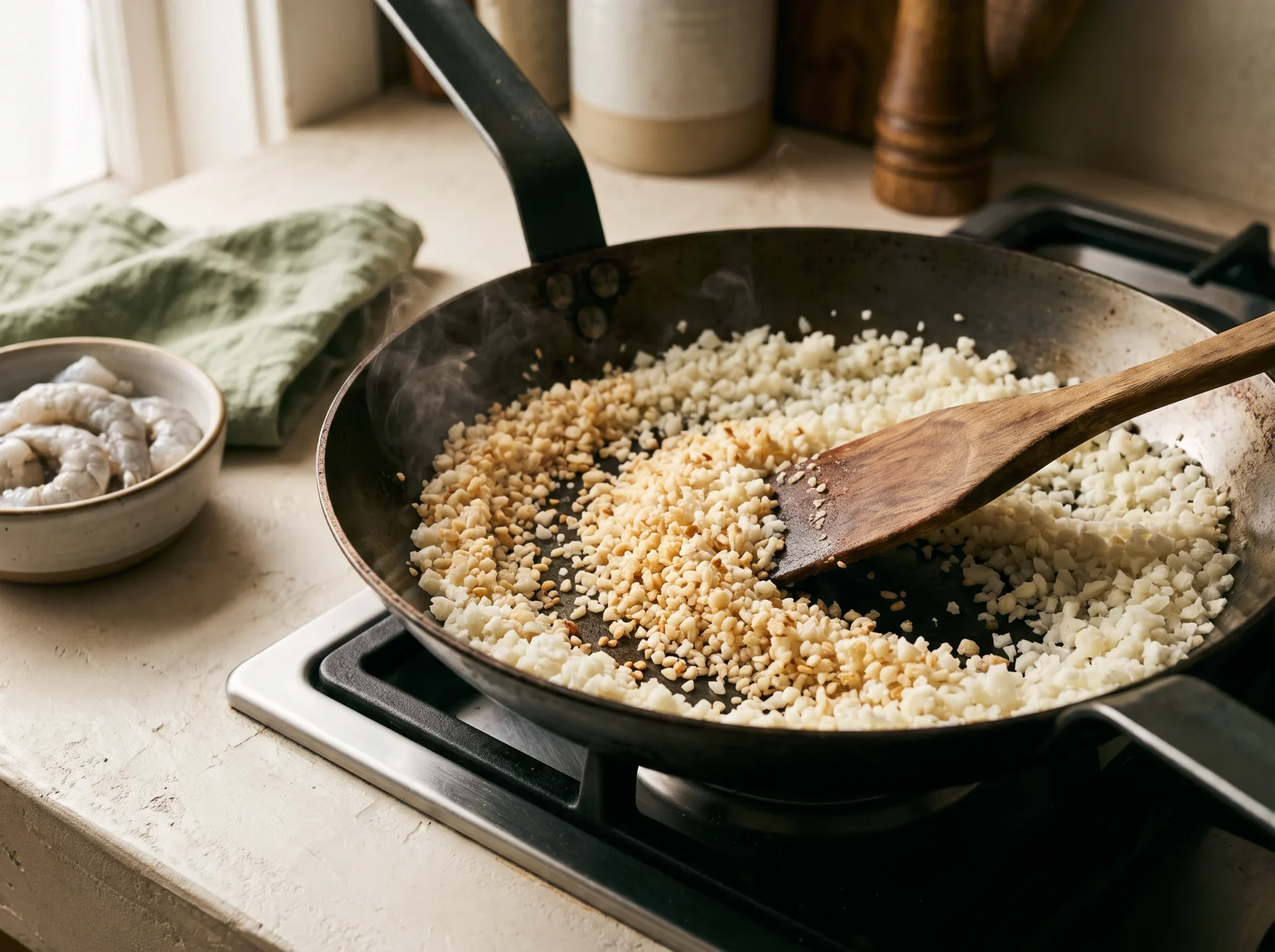
- Toast the cauliflower rice dry. Set the skillet over medium-high heat with no oil in it. Add the cauliflower rice, spread it into an even layer and leave it undisturbed for 3 minutes, then stir and cook 3 to 5 minutes more until it smells nutty, looks dry and has picked up pale golden freckles. Frozen rice goes in straight from the freezer — thawing only releases more water.
- Dress the rice and move it out. Stir in 1 tbsp of the olive oil, the lemon zest and the remaining ¼ tsp salt, then tip the rice into a bowl. The pan has to be empty again for the shrimp.
- Sear the shrimp. Return the skillet to medium-high, add 1 tbsp olive oil and lay the shrimp down in a single uncrowded layer. Cook 2 minutes, until the underside is opaque and lightly caramelised, then flip and cook 1 to 2 minutes more to an internal temperature of 145°F (63°C), when the flesh is firm and pearly instead of translucent. Move them to the bowl with the rice.
- Build the pan sauce. Lower the heat to medium, add the last 1 tbsp olive oil and the sliced garlic, and stir for about 30 seconds until it turns pale gold and fragrant — let it brown and the whole dish turns bitter. Add the cherry tomatoes and olives and cook 2 to 3 minutes, pressing the tomatoes gently until their skins split and their juice runs into the pan.
- Combine and finish. Return the rice and shrimp to the pan, add the lemon juice and toss for 30 seconds, just long enough to heat through. Off the heat, scatter over the feta and parsley and grind on black pepper. Serve straight away, while the feta still holds its shape.
Practical cooking tips
- The most common failure here is a crowded pan. If your skillet is smaller than 12 inches, sear the shrimp in two batches — piled shrimp steam in their own liquid and go grey and tough instead of browning.
- Buy raw shrimp, not pre-cooked. Pre-cooked shrimp only need warming through, and by the time they are hot they are already overdone.
- Hold back on salt at the end. Feta and Kalamata olives are both salty enough to carry the dish, so taste before you reach for the salt again.
- If you double the recipe, cook the shrimp and cauliflower rice in two pans rather than one. Twice the volume in a single skillet drops the pan temperature and you lose the toasting entirely.
- A thermometer takes the guesswork out of it: the FDA advises cooking most seafood to an internal temperature of 145°F.
Swaps and variations
- Push the fat higher. Add a fourth tablespoon of olive oil when you return everything to the pan. That adds about 30 kcal and 3.4 g of fat per serving and changes the carbs not at all, which helps if your macros want a fattier keto shrimp dinner.
- Dairy-free. Leave out the feta and the dish drops roughly 38 kcal, 2 g of protein and 3 g of fat per serving. Replace what the feta was doing with an extra squeeze of lemon and a pinch of dried mint rather than more salt.
- More brine. Doubling the Kalamata olives to ⅔ cup adds about 13 kcal and 1.2 g of fat per serving for only 0.5 g more net carbs, and it makes the Mediterranean cauliflower rice taste considerably more assertive.
- Noodles instead of rice. The same lemon-garlic pan sauce works over zucchini ribbons — our keto Mediterranean shrimp zoodles is the version built around zoodles, with its own macro breakdown.
Storage and meal prep
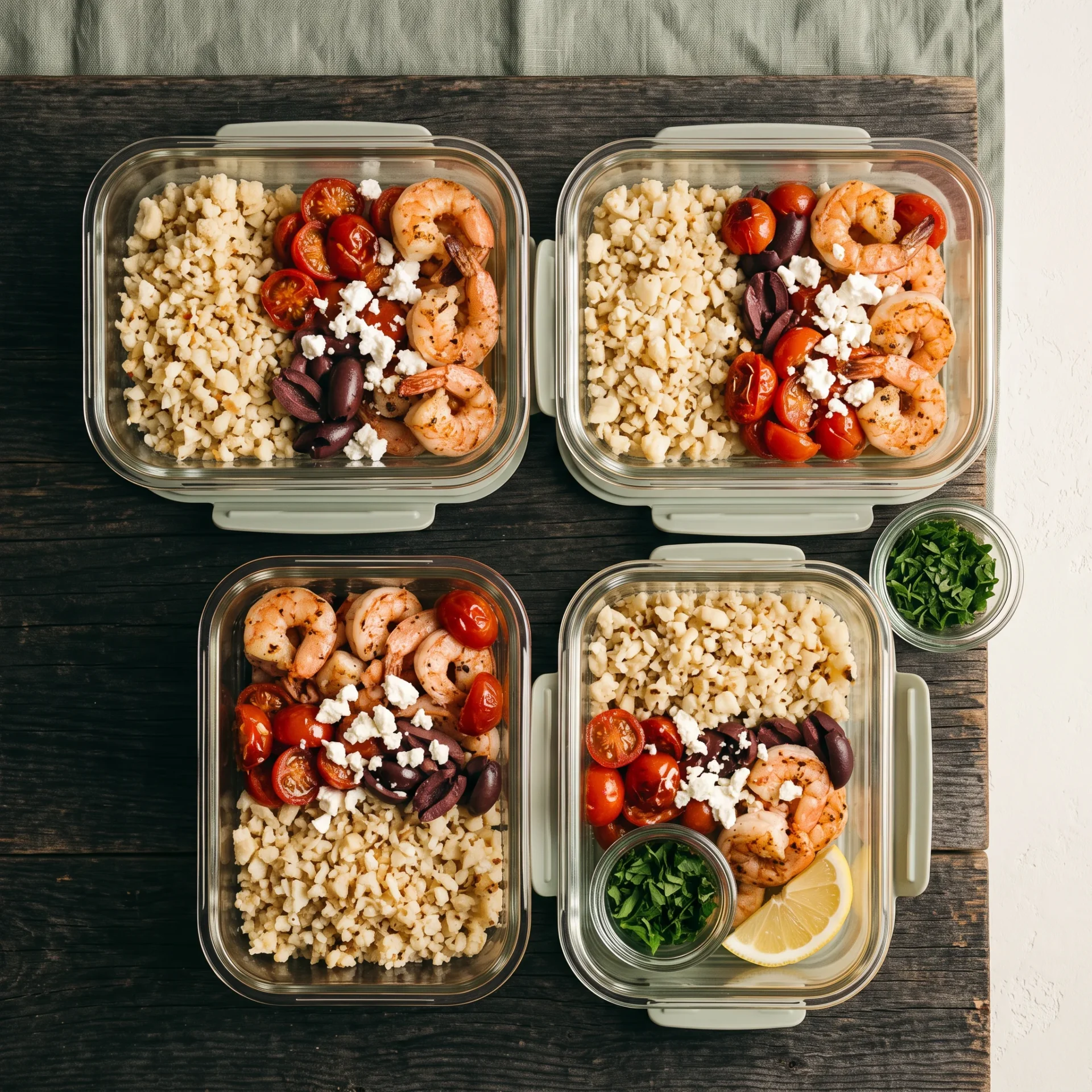
Cool the leftovers quickly and refrigerate them in an airtight container within two hours of cooking. The FDA’s refrigerator and freezer storage chart gives cooked fish 3 to 4 days in the fridge, and that is the window to work to here. Reheat gently — 60 to 90 seconds in the microwave at half power, or 2 minutes in a dry skillet over medium heat — because a second hard blast of heat is exactly what turns shrimp rubbery.
Freezing is not worth it: thawed shrimp weep, and the cauliflower gives back all the texture the toasting step bought you. If you are portioning ahead, keep the rice and the shrimp in separate compartments and combine them as you reheat. More make-ahead ideas live in the full recipe collection.
Nutrition per serving
| Nutrient | Per serving |
|---|---|
| Calories | 329 kcal |
| Protein | 39 g |
| Fat | 16 g |
| Total carbs | 10 g |
| Fiber | 3 g |
| Net carbs | 7 g |
Calculated from the quantities written above using USDA FoodData Central entries for raw shrimp, raw cauliflower, olive oil, feta and olives. Nutrition is an estimate and varies with brands and exact portion sizes.
Frequently asked questions
Can I use frozen cauliflower rice?
Yes, and it is the more reliable choice. Add it to the dry pan straight from the freezer and give it an extra two or three minutes. Thawing it first only lets the ice melt into the florets, and that water has to boil off in the pan anyway.
Why did my cauliflower rice turn out watery?
Almost always the pan. A deep or narrow pot traps steam over the food and that steam condenses straight back into the cauliflower, while a wide skillet gives it somewhere to go. Adding oil or lemon juice before the rice has dried out does the same thing.
How do I know when the shrimp are cooked?
They turn from translucent grey to opaque and pearly, and they curl into a loose C. A tight O means they have gone too far. The reliable check is an instant-read thermometer at 145°F (63°C) in the thickest part.
Is this low enough in carbs for keto?
At 7 g of net carbs per serving it fits comfortably inside a typical 20 to 50 g daily allowance. The carbs come almost entirely from the cauliflower and the tomatoes; if you are at the strict end, halve the tomatoes to bring it closer to 6 g.
Can I use a nonstick skillet?
You can, but you will get less colour. Nonstick surfaces are usually not meant for the sustained high heat that browns shrimp well, and without the browned bits the pan sauce is noticeably thinner in flavour. Carbon steel or stainless is the better pick here.
Ratings and reviews
No ratings yet. If you have cooked this, your rating helps the next person decide.
Rate this recipe