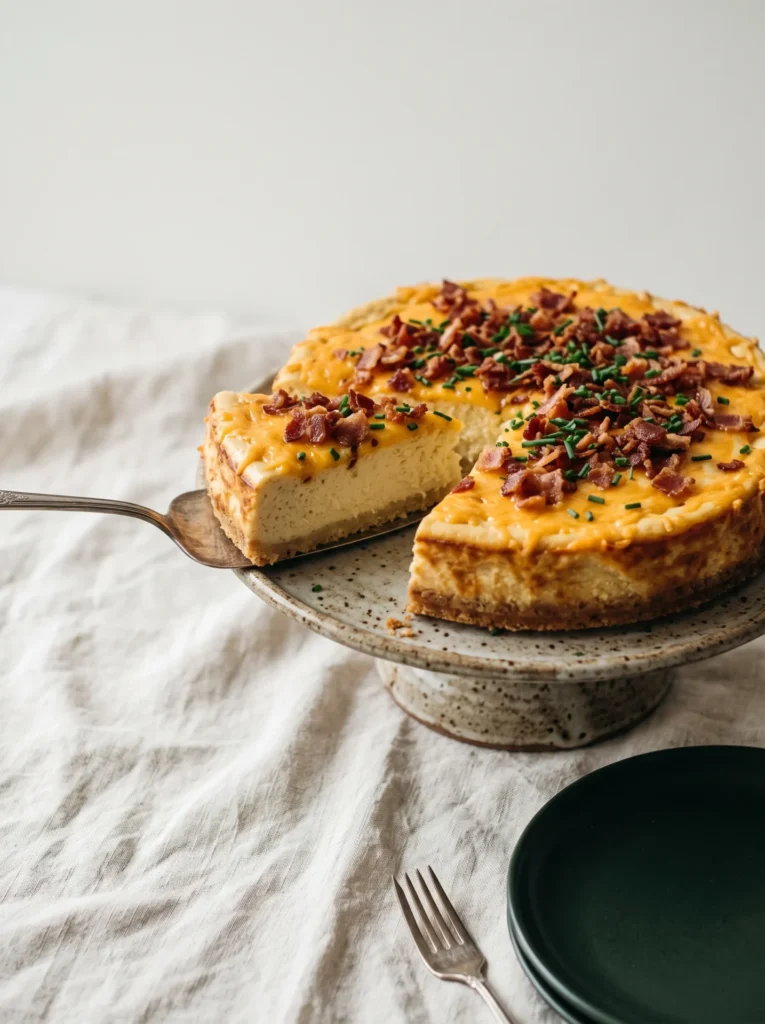
This savory keto cheesecake trades the graham-cracker crust and sugar of a dessert slice for an almond-Parmesan base, tangy cream cheese, sharp cheddar, and crisp bacon, baked low and slow in a water bath until silky and barely set. It works for the same occasions as a cheese board — a make-ahead brunch centerpiece or a slice-and-serve appetizer for a Keto table — at about 6 g of net carbs per serving. Treat it exactly like a sweet cheesecake: gentle heat, a water bath, and patience while it chills.
Table of Contents
Why this savory keto cheesecake works
- Rich, savory depth without any sugar. Cream cheese, sour cream, sharp cheddar, and bacon give this bacon cheddar cheesecake a deep, salty-savory flavor.
- A crust that actually holds together. Almond flour and Parmesan bind into a sturdy base under the water bath’s steam, unlike a crumbly no-bake crust.
- Crack-free texture from a classic technique. The water bath that makes sweet cheesecakes bakery-smooth keeps this savory version silky and even.
- One pan feeds a crowd. A single 9-inch springform makes 10 rich slices — a keto cheesecake appetizer platter instead of individual dishes.
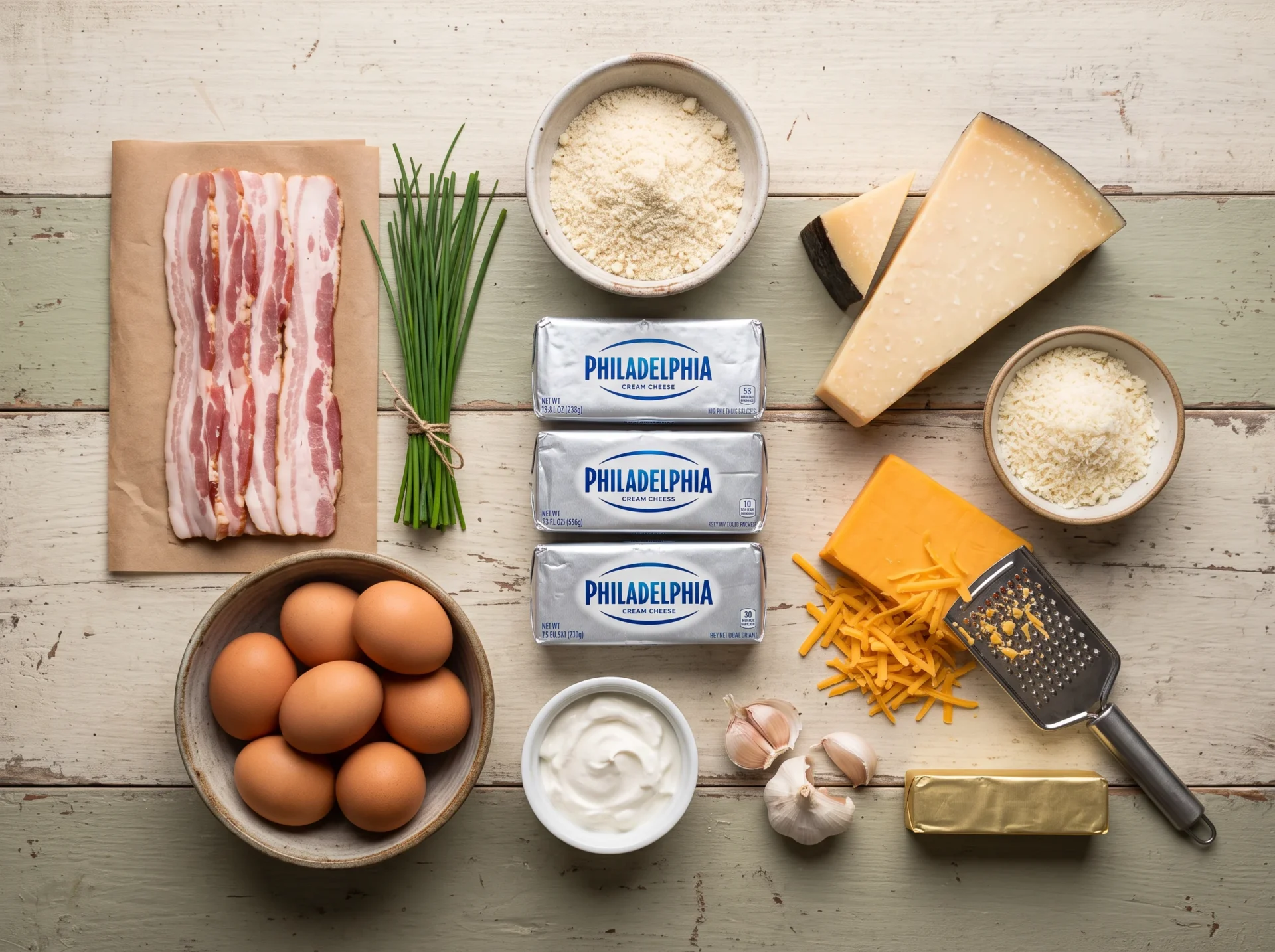
Ingredients
Makes 10 servings.
Equipment
How to make it
- Prep the pan and oven. Preheat the oven to 350°F (175°C). Wrap the outside of a 9-inch springform pan tightly in two layers of heavy-duty foil to keep water out during the bath later.
- Make the crust. Stir together the almond flour, Parmesan, melted butter, 1 egg, ½ teaspoon garlic powder, and ¼ teaspoon salt until it forms a damp, sandy dough. Press evenly into the pan bottom. Bake 10 minutes, until just set and lightly golden, then cool. Reduce the oven to 325°F (165°C).
- Beat the cream cheese smooth. Beat the cream cheese on medium speed 2–3 minutes until completely smooth, scraping the bowl once. A lumpy start stays lumpy — the eggs won’t fix it later.
- Add the wet ingredients gradually. Beat in the sour cream, then add the remaining 4 eggs one at a time on low speed, just until each is incorporated. Overbeating whips in air, the main cause of a cheesecake that puffs, then cracks as it deflates.
- Fold in the mix-ins. By hand, fold in 1 cup cheddar, three-quarters of the bacon, 2 tablespoons chives, the minced garlic, remaining 1 teaspoon garlic powder, pepper, and remaining ¼ teaspoon salt until just combined.
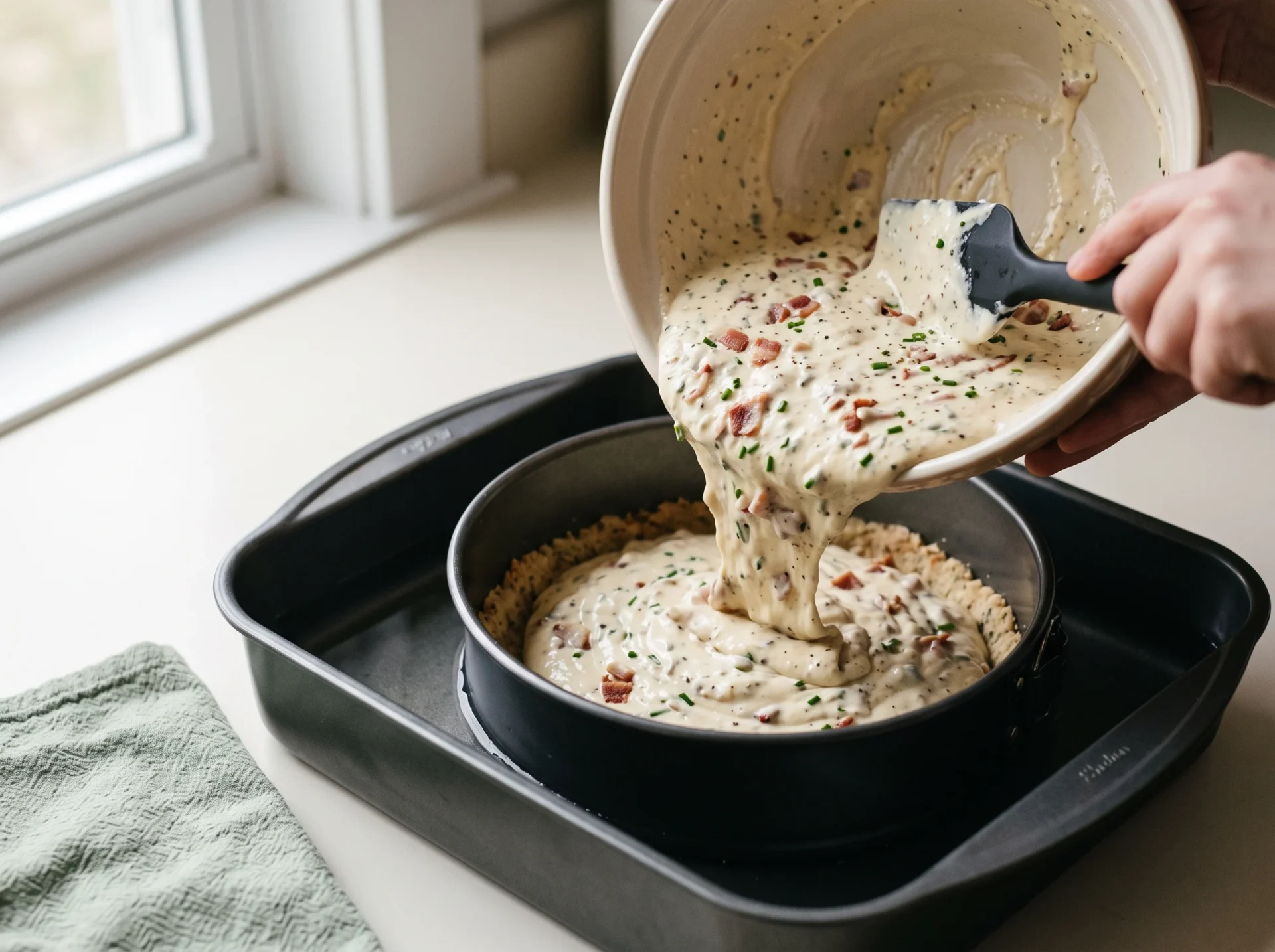
- Pour and set the water bath. Pour the filling over the cooled crust and smooth the top. Set the springform inside the roasting pan and pour hot water in until it reaches about 1 inch up the sides — this insulates the batter so the edges don’t overcook before the center sets.
- Bake low and slow. Bake at 325°F (165°C) for 50–55 minutes, until the edges are set and only the very center still holds a slight jiggle. Check with an instant-read thermometer in the center, avoiding the pan bottom, and pull it once it reads 155–160°F (68–71°C) — the safe range for a dish built on eggs and dairy.
- Rest, then chill. Turn off the oven, crack the door, and let the cheesecake sit inside 30 minutes — the single biggest defense against a cracked top. Lift it from the water bath, run a knife around the edge, and cool completely on a rack. Refrigerate uncovered at least 4 hours, ideally overnight, until fully set.
- Finish and serve. Release the springform ring. Top with the remaining cheddar, bacon, and chives. For a melted finish, broil 2–3 minutes until the cheddar bubbles, then cool 5 minutes before slicing with a knife wiped clean between cuts.
Practical cooking tips
- Bring the cream cheese, eggs, and sour cream fully to room temperature — cold ingredients cause lumps no amount of mixing fixes.
- Don’t skip the water bath. This savory keto cheesecake has less crust to hide surface cracks than a graham-crust dessert version.
- Weigh the almond flour if you can; scooped cups vary enough to turn a sturdy crust soggy under the water bath’s steam.
- A fully chilled cheesecake releases cleaner slices — cutting it warm gives a gummy texture even though the flavor is unaffected.
Troubleshooting tips
- The top cracked. Cause: oven temperature spiked or it cooled too fast. Fix: confirm oven temperature with an oven thermometer, and rest it in the turned-off oven, door cracked, before chilling.
- The center never fully sets. Cause: the cream cheese or eggs were still cold. Fix: bring dairy and eggs to room temperature, and extend baking in 5-minute increments while checking internal temperature.
- The crust turned soggy. Cause: water leaked into the foil wrap. Fix: double-wrap the pan, or nest the springform inside a slightly larger cake pan first.
- The filling tastes flat. Cause: cheese and bacon vary in saltiness by brand. Fix: taste the raw batter and adjust salt in small increments.
Swaps and variations
- Swap sharp cheddar for smoked cheddar or Gruyère — the macro profile stays essentially the same gram for gram.
- Leave out the bacon for a vegetarian version — this drops roughly 40 calories and 3 g of fat per serving.
- Swap the almond flour cheesecake crust for one made from crushed pork rinds and butter, for a nut-free, higher-protein base.
- Stir ¼ cup chopped roasted red peppers into the mix-ins for a Mediterranean-leaning twist — this adds roughly 1 g of carbs per serving.
Serving ideas
- Serve chilled as a keto cheesecake appetizer alongside cucumber rounds, celery sticks, or low-carb crackers.
- Pair a slice with a simple green salad for a light lunch built on protein and fat rather than carbs.
- Set it out as the centerpiece of a make-ahead spread for brunch — browse more ideas in the full recipe collection. For a sweet counterpart, the Classic Keto Cheesecake with Buttery Pecan Crust uses the same water-bath technique.
Storage and meal prep
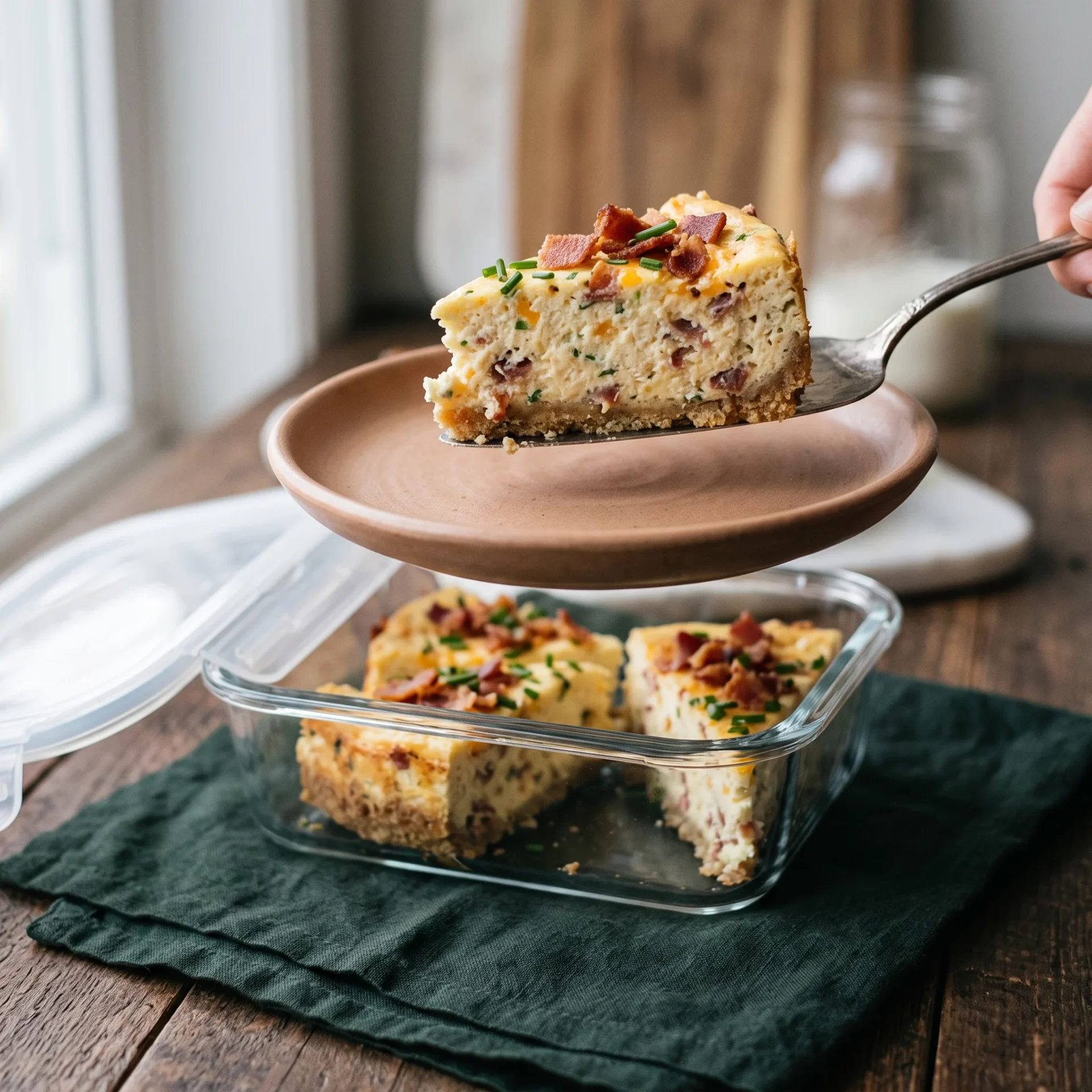
Refrigerate this savory keto cheesecake, covered, up to 5 days — the flavor improves after a day as the garlic and bacon settle in. For longer storage, wrap individual slices tightly and freeze up to 2 months; thaw overnight in the refrigerator, since microwaving from frozen turns the texture grainy. Bake this make-ahead keto appetizer up to 2 days before serving, and add the fresh topping the day you serve it. Do not leave slices at room temperature more than 2 hours.
Nutrition per serving
| Nutrient | Per serving |
|---|---|
| Calories | 542 kcal |
| Protein | 19 g |
| Fat | 50 g |
| Total carbs | 8 g |
| Fiber | 2 g |
| Net carbs | 6 g |
Nutrition is a calculated estimate from USDA FoodData Central values for these ingredients; it varies with brands and exact portion sizes.
Frequently asked questions
Is this savory keto cheesecake actually keto-friendly?
Yes — each slice has about 6 g of net carbs, well within a typical daily keto carb budget, making it a genuinely low carb cheesecake recipe rather than one that only sounds keto.
Can I make this savory cheesecake ahead for a party?
Yes, and it’s better that way. Bake it up to 2 days ahead, refrigerate covered, and add the fresh topping right before serving — one of the easier keto cheesecake appetizer options for a crowd since most of the work happens in advance.
Do I really need the water bath?
Yes — it’s the difference between a smooth, evenly baked filling and one with dry, cracked edges. The surrounding hot water keeps the oven’s heat gentle and even around the pan as the eggs set.
What can I serve this with instead of crackers?
Cucumber rounds, celery sticks, and bell pepper strips all work well, keeping this dish a low carb party appetizer without adding meaningful carbs.
Why did my crust turn out crumbly instead of holding together?
The almond flour cheesecake crust needs the melted butter and egg to bind it. If it still crumbles after pressing firmly, the almond flour was likely measured too dry — add another teaspoon of melted butter next time.
Ratings and reviews
No ratings yet. If you have cooked this, your rating helps the next person decide.
Rate this recipe