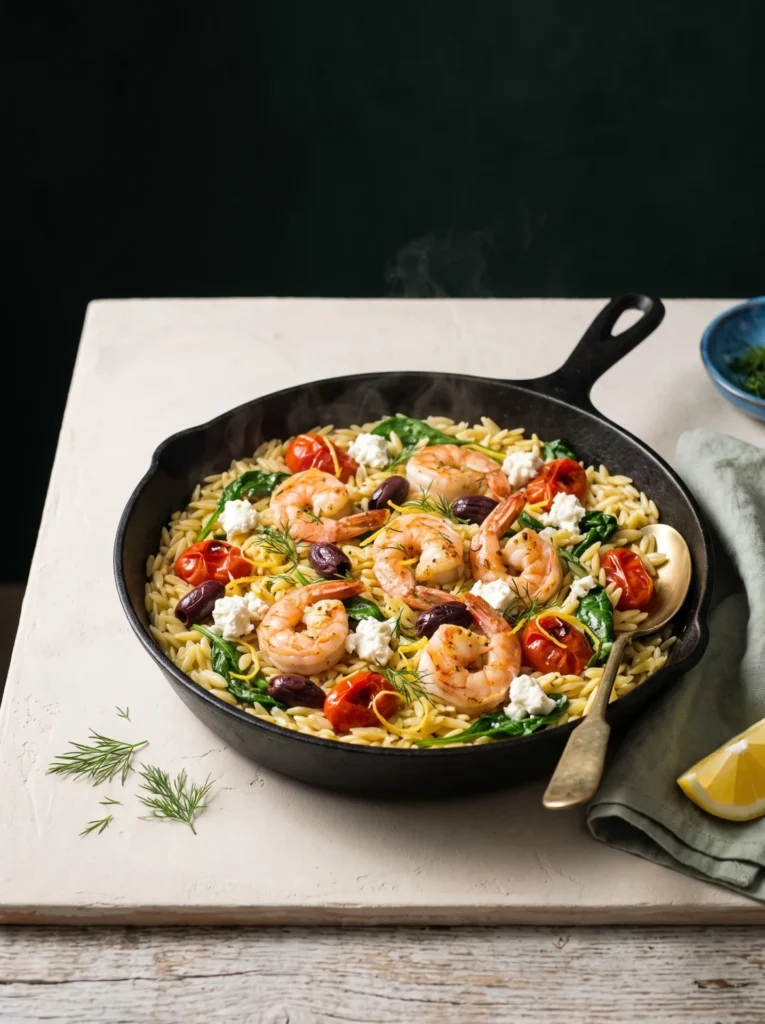
A one pan Mediterranean shrimp orzo skillet solves the problem every shrimp dinner runs into: the pasta wants ten minutes and the shrimp want four. Cooking the orzo directly in seasoned broth and laying the shrimp on top for the final stretch keeps both on their own clock without a second pot. It tastes like a taverna lunch and behaves like a Tuesday, and it sits comfortably inside the Mediterranean way of eating: olive oil, seafood, tomatoes, herbs, and just enough feta to season the whole pan.
Table of Contents
Why this one pan Mediterranean shrimp orzo skillet works
- The orzo is toasted before any liquid goes in. Two minutes of dry-ish heat in oil firms the outside of each grain, so the pasta drinks the broth without dissolving into starch. Skip it and you get porridge with shrimp on top.
- A 2:1 liquid ratio means no draining. Two cups of broth to one cup of orzo is absorbed almost exactly, which leaves every bit of the garlic, oregano and olive flavour in the pan instead of down the sink.
- The shrimp never wait around. They go in for the last four minutes only, on top of the orzo rather than in the liquid, so they steam gently to opaque instead of tightening into erasers.
- It is a genuinely balanced plate. Unlike most Mediterranean shrimp pasta, this one carries 41 g of protein and a real serving of vegetables per portion, from olive oil rather than butter or cream.
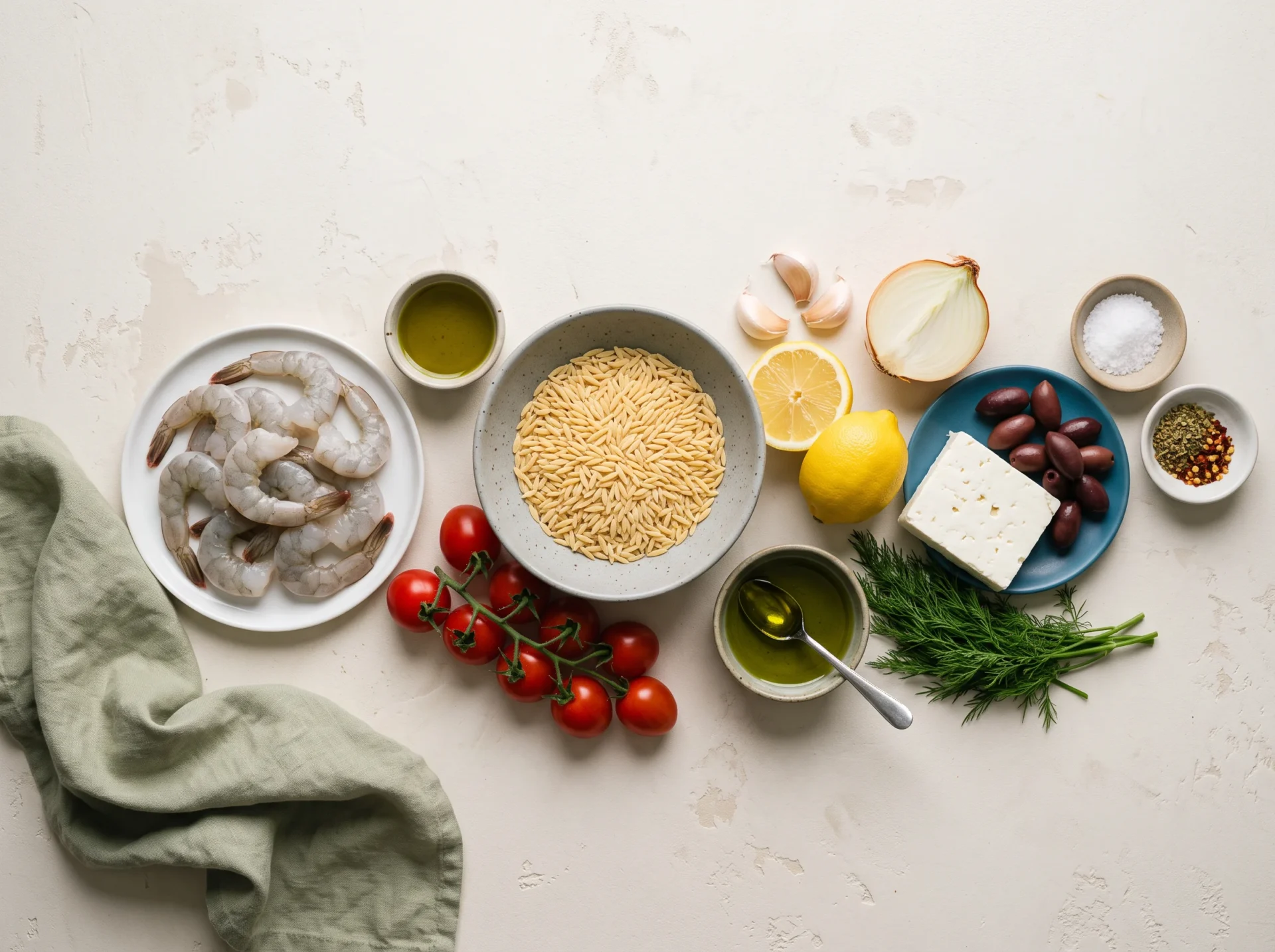
Ingredients
Makes 4 servings.
Equipment
How to make it
- Soften the aromatics. Heat 2 tbsp of the olive oil in a 12-inch skillet over medium. Add the onion and 1/4 tsp of the salt and cook 4 minutes, stirring, until it turns translucent and the edges just begin to gild. Add the garlic, oregano and red pepper flakes and cook 45 seconds more, until the garlic smells sweet rather than sharp.
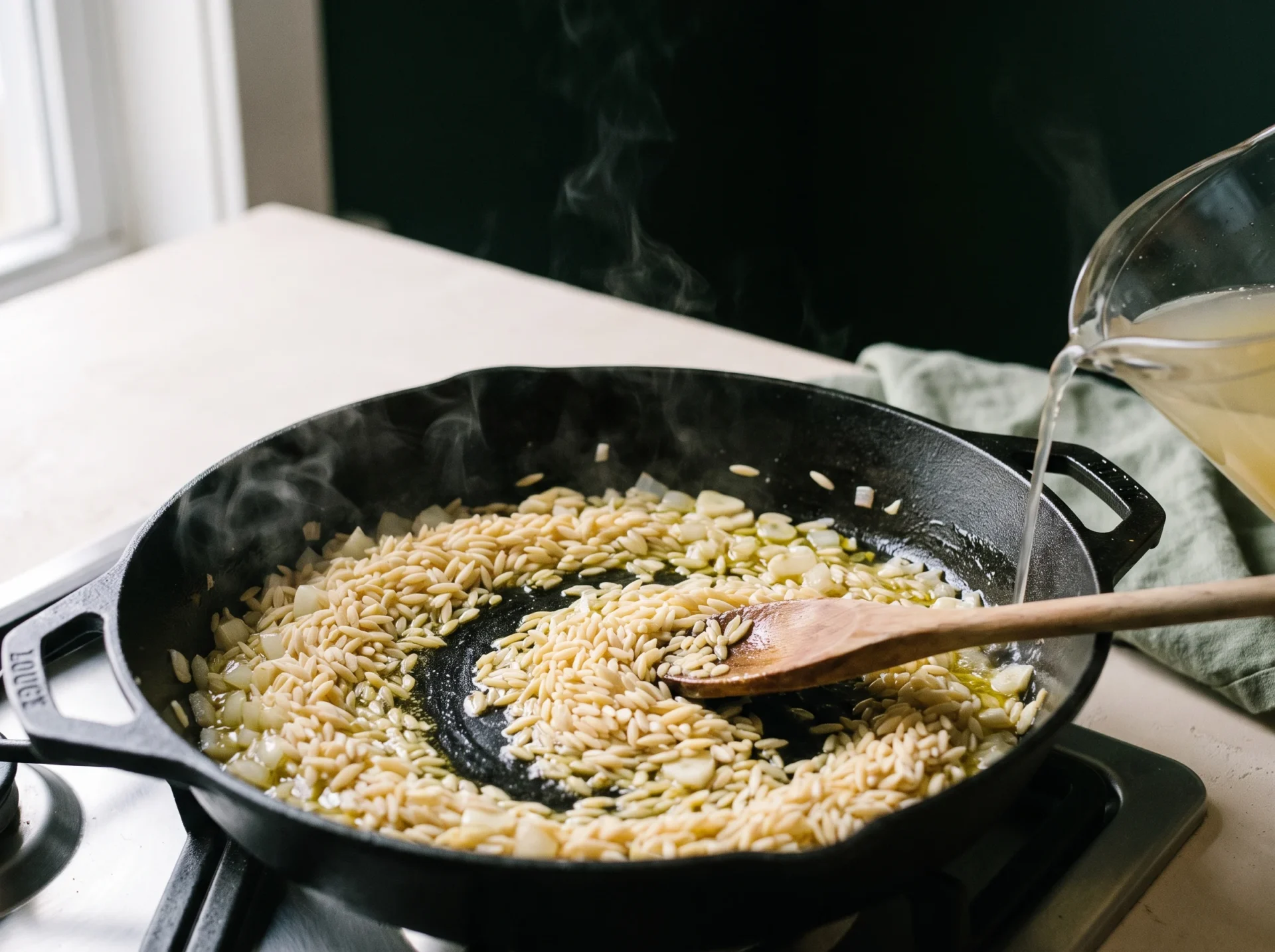
- Toast the orzo. Tip in the dry orzo and stir constantly for 2 minutes, until roughly a third of the grains have turned pale gold and the pan smells faintly of popcorn. Do not walk away here; orzo goes from toasted to scorched in about twenty seconds.
- Add the broth. Pour in the broth along with the remaining salt and the black pepper, and scrape the base of the pan clean with the spoon. Bring it to a steady simmer.
- Simmer covered. Lower the heat to medium-low, cover, and cook 9 to 10 minutes, stirring twice so nothing catches, until the orzo is just short of tender and a shallow pool of liquid still moves at the bottom of the pan.
- Fold in the tomatoes and olives. Stir in the halved grape tomatoes and Kalamata olives and cook uncovered for 2 minutes, until the tomato skins slacken and split but the halves still hold their shape.
- Cook the shrimp on top. Season the shrimp lightly, nestle them in a single layer over the orzo, cover, and cook 4 to 5 minutes, turning them once, until they are opaque and pearly, firm to a press, and register 145°F (63°C) at the thickest part on an instant-read thermometer, the minimum safe temperature the FDA gives for seafood.
- Finish off the heat. Pull the pan off the burner. Add the spinach, lemon zest, lemon juice and the last tablespoon of olive oil, and fold until the spinach collapses, about 30 seconds. Scatter over the feta and dill, let it rest 2 minutes so the last of the liquid is absorbed, and serve straight from the skillet.
Practical cooking tips
- Pan width matters more than the timer. In a 12-inch skillet the orzo sits in a thin layer and cooks evenly. Drop the same quantity into a 10-inch pan and the depth nearly doubles, so the middle stays chalky while the edges blow out.
- Pull the orzo one notch early. It keeps absorbing while the shrimp cook and again during the two-minute rest. Tender-with-a-bite at minute nine becomes perfect on the plate.
- Rubbery shrimp is the one failure worth guarding against. Buy raw, not pre-cooked; a pre-cooked shrimp has nowhere left to go but tough. Four to five minutes under a lid is enough for 26-30 count.
- Do not rinse anything. The starch shed by the orzo is what makes this shrimp orzo recipe glossy instead of watery. There is no cream in it and none is needed.
- Salt last, taste first. Broth, olives and feta all arrive salted. Season at the end, once the feta has melted slightly into the grains.
Swaps and variations
- Make it a lemon garlic shrimp orzo. Leave out the tomatoes and olives, double the garlic to eight cloves, and add the zest of a second lemon at the end. That drops roughly 35 calories and 3 g of fat per serving and takes total carbs down to about 44 g.
- Swap the shrimp for chicken thigh. Use 1 1/4 lb boneless thighs cut into 1-inch pieces, browned in step one and returned with the broth; cook to 165°F. Protein lands near 38 g per serving and fat rises to about 26 g.
- Use vegetable broth and skip the feta. The dish stays pescatarian and loses roughly 56 calories, 4.5 g fat and 3.5 g protein per serving. Add an extra tablespoon of lemon juice to replace the sharpness the feta was providing.
- Cooking for two instead of four? Halve everything and use a 10-inch pan, or make our Mediterranean shrimp skillet for two, which is built for that quantity rather than scaled down to it. More ideas live in the full recipe archive.
Storage and meal prep
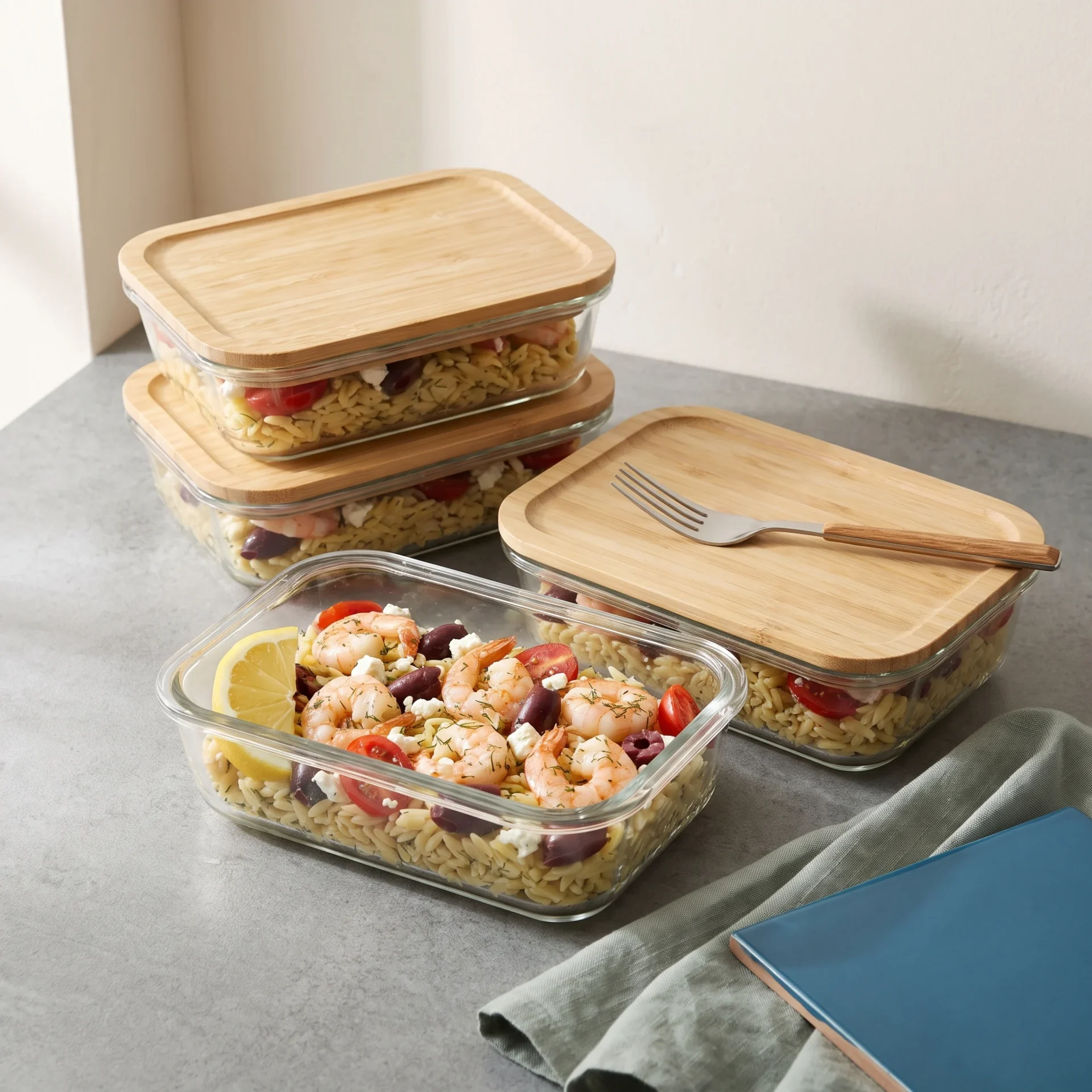
Cool the skillet contents in shallow containers and refrigerate within two hours of cooking. Cooked seafood keeps 3 to 4 days in the fridge according to USDA leftover guidance, and that is the honest window here. For shrimp orzo meal prep, portion it into four containers straight out of the pan while it is still loose; it firms up considerably once chilled.
Reheat gently in a covered pan over low heat with 2 tablespoons of water or broth per portion, stirring once, for about 4 minutes. A microwave works at 50% power in one-minute bursts. Freezing is the one thing to avoid: the orzo turns mealy and the shrimp weep on thawing. The spinach and dill also fade after day two, so hold a little back and add it fresh when you reheat.
Nutrition per serving
| Nutrient | Per serving |
|---|---|
| Calories | 518 kcal |
| Protein | 41 g |
| Fat | 19 g |
| Total carbs | 46 g |
| Fiber | 4 g |
| Net carbs | 42 g |
Values were calculated from the quantities written above using USDA FoodData Central entries matched to each ingredient’s raw state. Nutrition is an estimate and varies with brands and exact portion sizes.
Frequently asked questions
Can I make this one pot shrimp orzo with frozen shrimp?
Yes, but thaw them first. Move them to the fridge overnight, or seal them in a bag and sit them in cold water for 15 minutes. Adding frozen shrimp directly drops the pan temperature and releases enough water to loosen the sauce, and they overcook on the outside before the centre is done.
Why did my orzo turn out gluey?
Almost always one of three things: the orzo was not toasted, the heat stayed too high under the lid so the liquid boiled off before the grains softened, or the pan was too small. A gentle simmer and a wide pan fix it. If it happens mid-cook, add a splash of hot broth and stir once, not repeatedly.
Is this one pan Mediterranean shrimp orzo skillet gluten free?
No, orzo is wheat pasta. Gluten-free orzo works but absorbs faster, so start checking at minute seven and keep an extra half cup of broth warm. Short-grain white rice is the other option, though it needs closer to 18 minutes covered.
How do I tell the shrimp are done without a thermometer?
Look at the shape. A properly cooked shrimp curls into a loose C and turns evenly opaque with pink-orange edges. A tight O means it has gone too far. Slit the thickest one at the back: it should be white through, with no grey translucence at the centre.
What should I serve with it?
It needs very little. A sharp green salad with red wine vinegar cuts the richness, and warm pita is useful for the last of the pan juices. Skip a starchy side; the orzo is already doing that job.
Ratings and reviews
No ratings yet. If you have cooked this, your rating helps the next person decide.
Rate this recipe