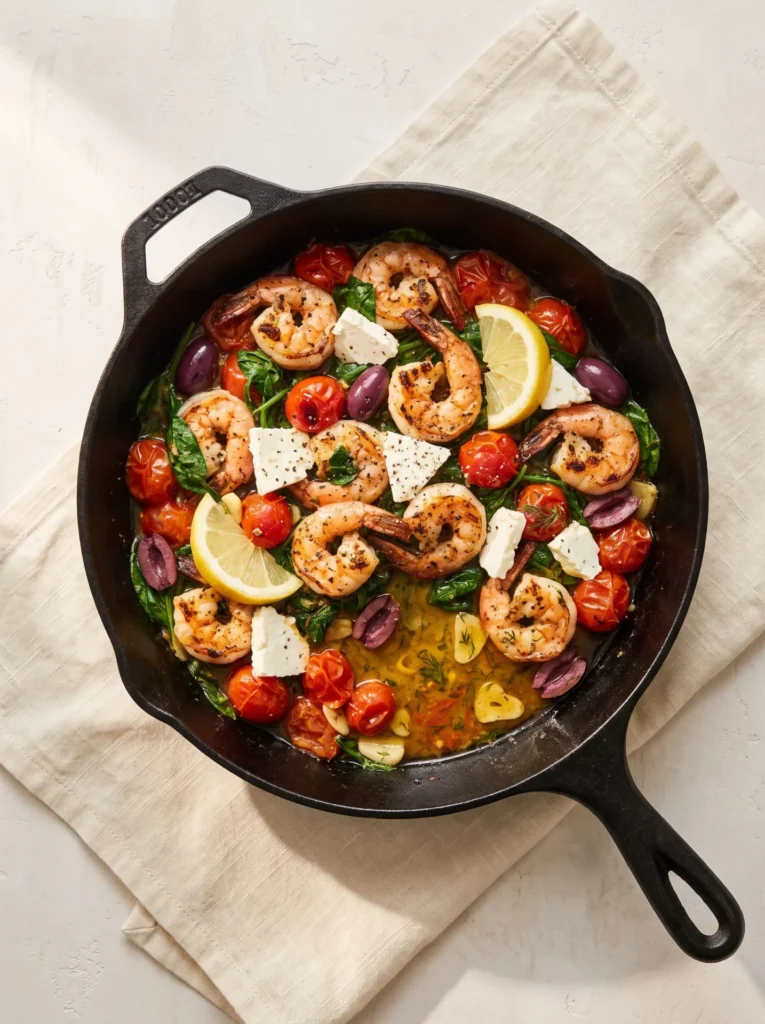
A Mediterranean shrimp skillet for two is what a weeknight actually needs: one pan, twelve ounces of shrimp, and cherry tomatoes that collapse into a sauce you never had to make separately. The shrimp go in last and stay in for barely four minutes, which is the whole trick — the sauce is built first so the seafood never sits waiting in the heat. It sits squarely inside the Mediterranean way of eating: olive oil, vegetables, seafood, and just enough feta to season the pan.
Table of Contents
Why this recipe works
- The tomatoes make their own sauce. Halved cherry tomatoes left cut side down in a hot pan slump and release their juice, which reduces with the olive oil into something glossy. No jar, no can, no simmering a sauce for twenty minutes first.
- One pan shrimp and tomatoes means one temperature curve. Everything is built in the same skillet in ascending order of heat tolerance, so the garlic never scorches and the shrimp meet a finished sauce rather than a raw one.
- The shrimp are the last thing in and the first thing off. Four minutes total, flipped once. Pulling the pan the moment the grey disappears is the difference between plump and rubbery.
- It is scaled honestly for two. A 10-inch skillet holds twelve ounces of shrimp in a single layer. Doubled into the same pan they would steam instead of sear, which is why most halved four-serving recipes disappoint.
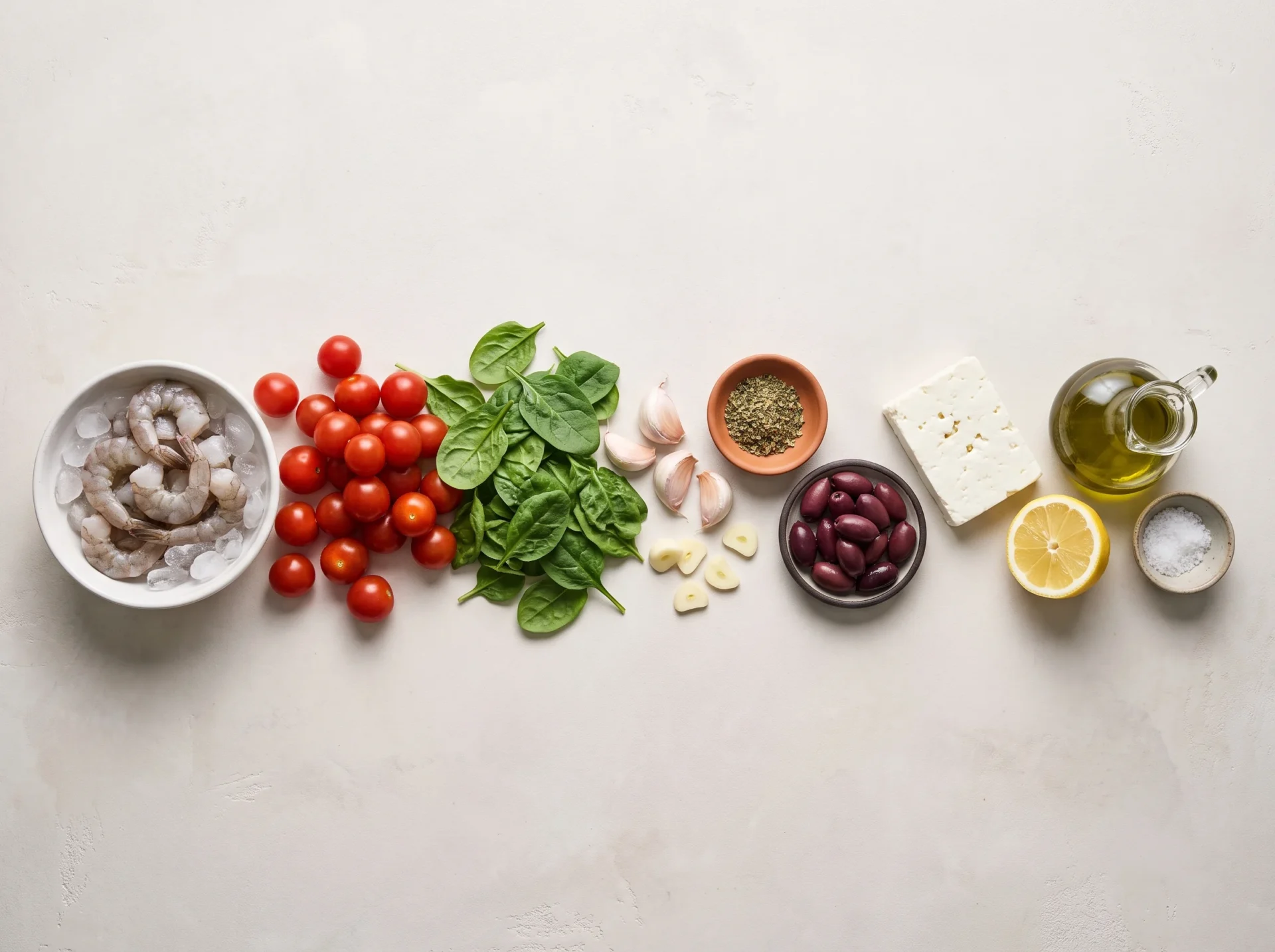
Ingredients
Makes 2 servings.
Equipment
How to make it
- Prep everything before the pan is hot. Pat the shrimp thoroughly dry with paper towels and season with the salt and pepper. Halve the tomatoes and olives, slice the garlic, break up the feta and chop the herbs. The cooking window is under twelve minutes, with no pause in it long enough to chop anything.
- Bloom the garlic. Warm 2 tbsp of the olive oil in the skillet over medium heat. Add the sliced garlic and red pepper flakes and cook 60 to 90 seconds, until the garlic turns pale gold at the edges and smells sweet rather than sharp. Do not let it brown — browned garlic turns the whole pan bitter and cannot be rescued.
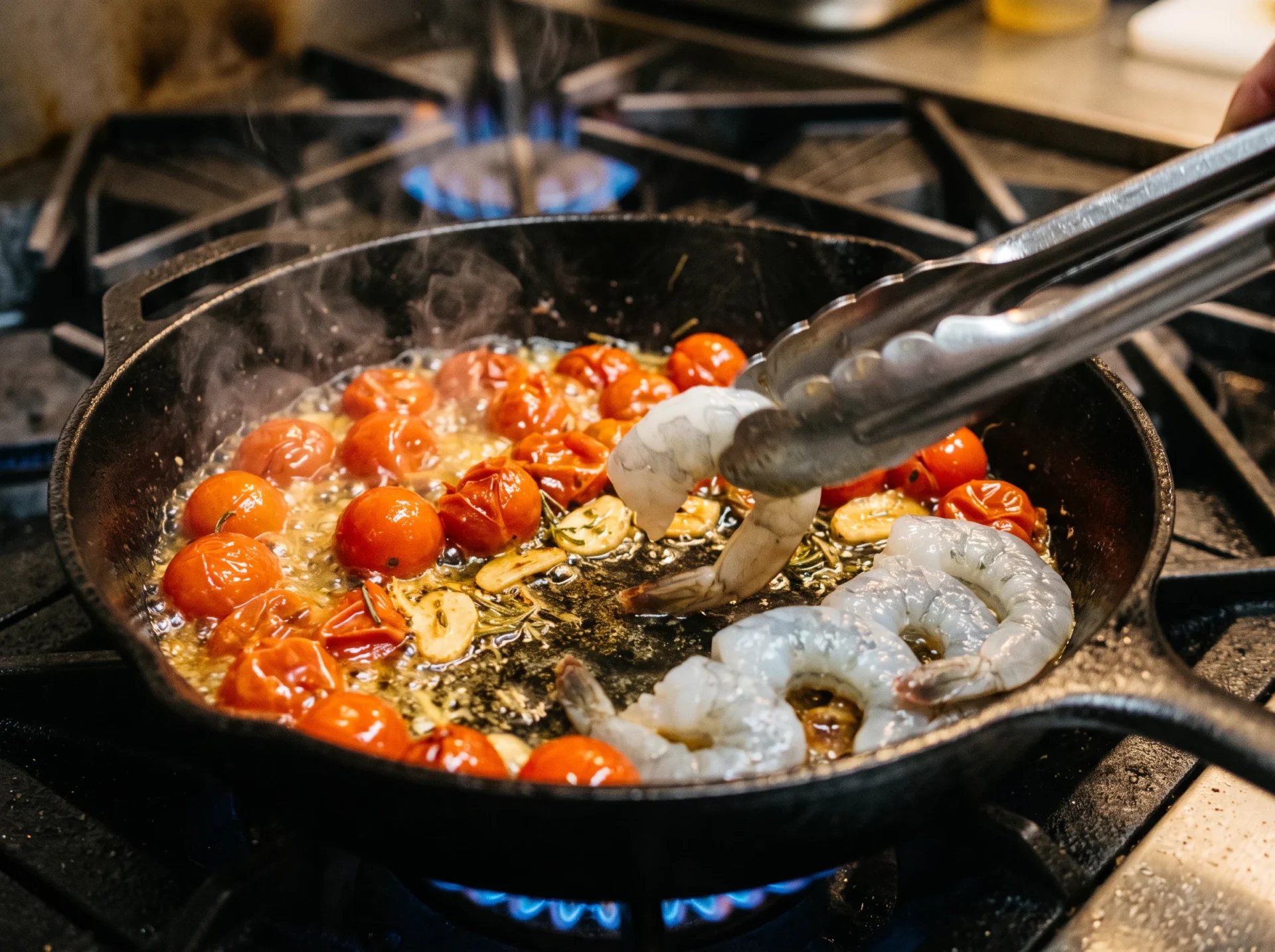
- Blister the tomatoes. Raise the heat to medium-high, add the tomatoes cut side down along with the oregano, and leave them undisturbed for 4 to 5 minutes. They are ready when the skins wrinkle, a few spots blacken, and the halves slump and release their juice into the oil.
- Deglaze the pan. Pour in the wine or broth and scrape the browned bits off the bottom with your tongs. Simmer 1 to 2 minutes, until the alcohol smell has gone and the liquid has thickened into a loose, glossy sauce that coats the back of a spoon.
- Add the shrimp. Lay the shrimp into the sauce in a single layer without crowding. Cook undisturbed for 2 minutes, then flip each one and cook 1 1/2 to 2 minutes more. The FDA’s doneness cue for shrimp is flesh that has become firm, pearly and opaque, at an internal temperature of 145°F (63°C). Take the pan off the heat the moment the last translucent grey disappears.
- Finish off the heat. With the burner off, fold in the spinach and let the residual heat wilt it, about 30 seconds. Scatter over the olives and feta, add the lemon juice and zest, the remaining 1 tbsp olive oil and the herbs. Taste, adjust the salt, and serve straight from the pan.
Practical cooking tips
- Dry shrimp are the whole game. The most common failure in any 20 minute shrimp recipe is wet shrimp: surface water boils off before the pan can sear, and you get pale, watery seafood in a thin sauce. Two minutes with paper towels changes the result more than any ingredient will.
- Buy 21/25 count, not small shrimp. Larger shrimp hold their texture through the four-minute window. Small ones overcook before the outside has any colour, which is why size matters more here than in a slow-simmered dish.
- Season late. Feta and kalamata olives both arrive already salted, so taste before adding any more salt at the end.
- Leave the tomatoes alone. Stirring them keeps the cut faces off the metal and they never blister — they just soften and go watery. Undisturbed contact is what builds the colour and the sauce.
- If you are using frozen shrimp, thaw them fully first. Thaw overnight in the refrigerator, or seal them in a bag and submerge in cold water. Ice crystals melting into a hot pan will flood the sauce.
Swaps and variations
- No wine. Low-sodium chicken broth deglazes just as well and removes about 25 calories per serving. A tablespoon of the tomatoes’ own juice plus water works in a pinch, though the sauce stays thinner.
- Swap the spinach for kale or chard. Both need real cooking rather than residual heat — add the chopped leaves with the tomatoes instead of at the end. Macros barely move, within a gram or two of carbs and calories.
- Leave out the feta. Skipping it drops the serving to roughly 411 calories, 37 g protein and 23 g fat, and takes out most of the sodium. Add an extra squeeze of lemon so the pan still tastes finished. For the opposite direction — feta baked into a proper tomato sauce — see the shrimp saganaki with tomato and feta.
- Serve it as Greek shrimp with feta and spinach over something. A slice of crusty bread, a scoop of orzo or a bed of cauliflower rice each turn it into a fuller plate. Browse the rest of the recipe archive for a side that fits the way you are eating.
Storage and meal prep
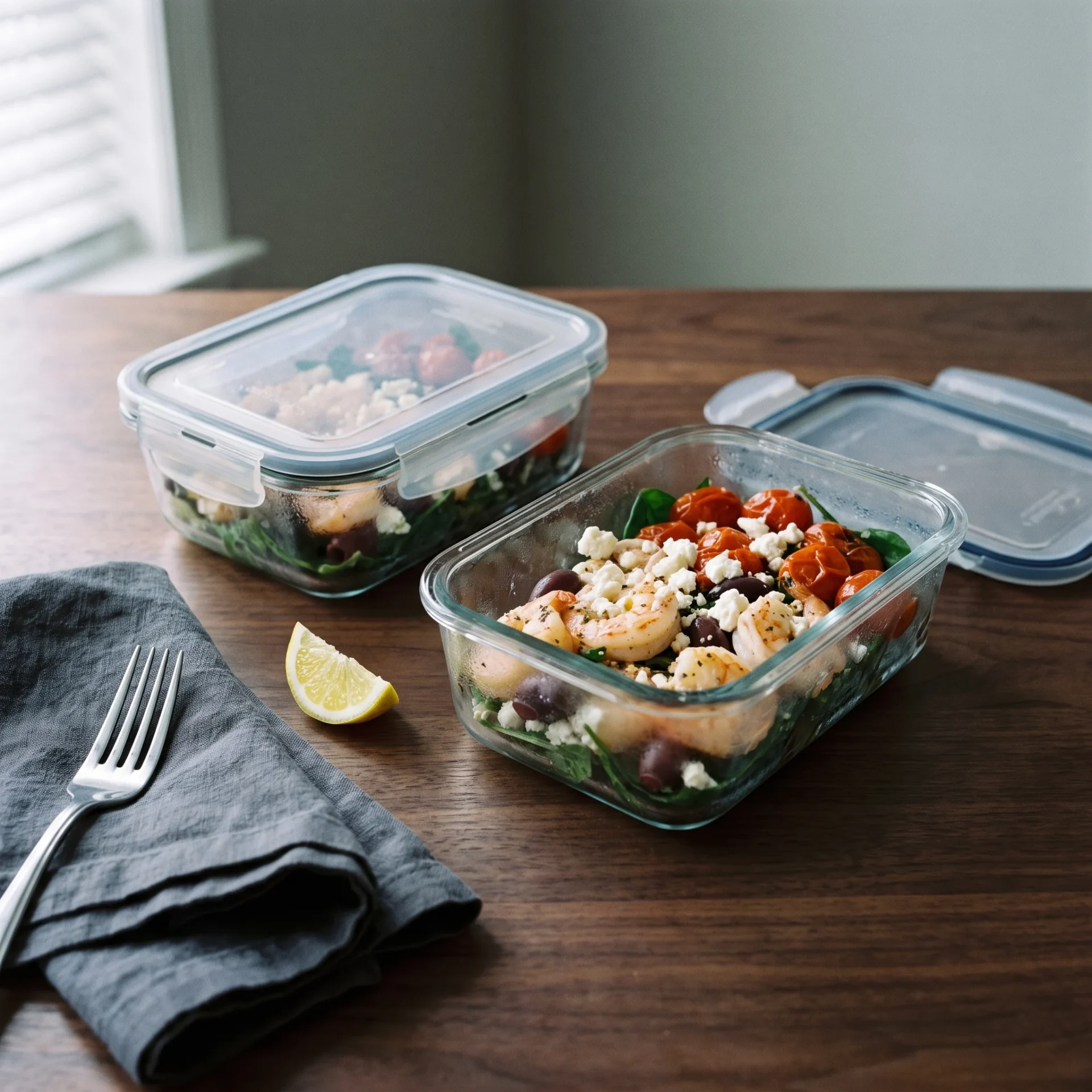
Cooked shrimp keep 3 to 4 days in a sealed container in the refrigerator at 40°F (4°C) or below. Get leftovers in there within two hours of cooking — one hour if the kitchen is above 90°F — following the FDA’s guidance on serving seafood safely. Reheat gently in a covered pan over low heat, or eat it cold; a microwave on full power will turn the shrimp rubbery in under a minute. Freezing is not worth it — the shrimp go mealy and the tomatoes collapse to liquid on thawing. This Mediterranean shrimp skillet for two is best treated as a small batch Mediterranean dinner cooked the day you want it, with any leftovers going into a lunch container rather than the freezer.
Nutrition per serving
| Nutrient | Per serving |
|---|---|
| Calories | 486 kcal |
| Protein | 41 g |
| Fat | 29 g |
| Total carbs | 12 g |
| Fiber | 3 g |
| Net carbs | 9 g |
Nutrition is an estimate and varies with brands and exact portion sizes. The figures for this Mediterranean shrimp skillet for two were calculated from the quantities written above using USDA FoodData Central entries for raw shrimp, feta and canned ripe olives.
Frequently asked questions
Can I double this Mediterranean shrimp skillet for two?
Not in the same pan. Twelve ounces of shrimp is what a 10-inch skillet holds in one layer; double that and they stack, steam, and never sear. Use a 12-inch skillet and cook the shrimp in two batches, returning the first batch at the very end.
How do I know when the shrimp are done without a thermometer?
Look at the shape and the colour. Cooked shrimp are firm, pearly and opaque, and they curl into a loose C. A tight O means they have gone too far. If any part still looks translucent grey, give them another 30 seconds.
Is this an easy shrimp dinner for two on a weeknight?
Yes — about 10 minutes of prep and 12 minutes at the stove, in one pan. The only real demand is that everything is chopped before the oil goes in, because there is no pause once the tomatoes start blistering.
Does this fit a low-carb diet?
At 12 g total carbs and 9 g net carbs per serving it fits most low-carb approaches comfortably, as long as you serve it on its own rather than over bread or orzo. It is written as a Mediterranean recipe rather than a ketogenic one, and the tomatoes carry most of those carbs.
What makes a dish Mediterranean rather than just Greek?
The Mediterranean diet is a broad eating pattern — olive oil as the main fat, plenty of vegetables, regular seafood, moderate dairy — rather than a fixed national cuisine. This pan borrows Greek flavours specifically, but the structure is what puts it in the pattern.
Ratings and reviews
No ratings yet. If you have cooked this, your rating helps the next person decide.
Rate this recipe