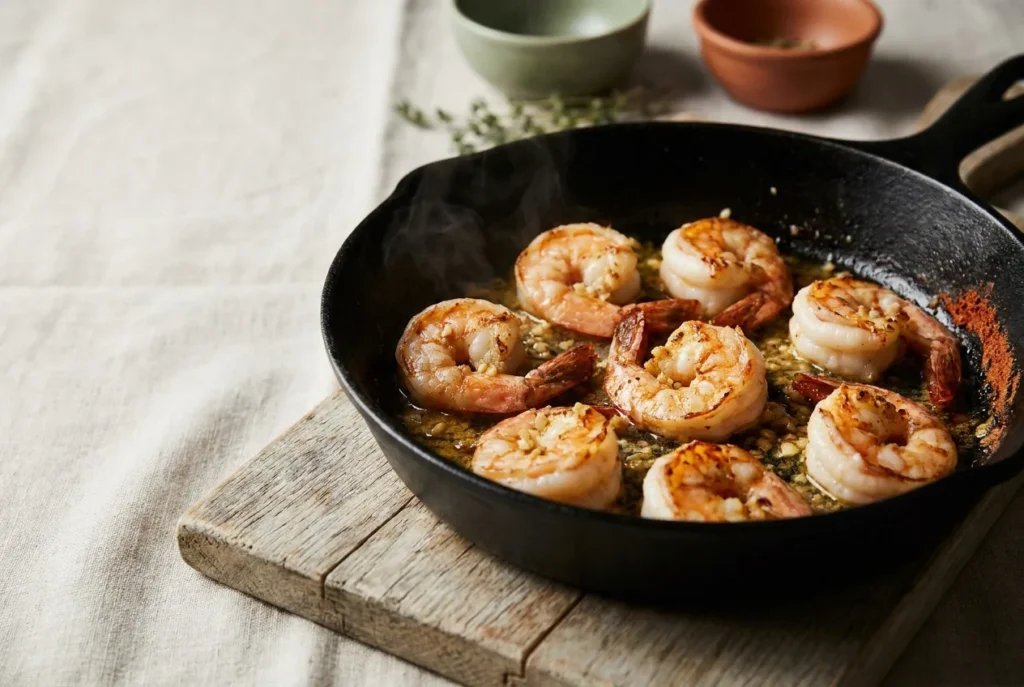
Carnivore garlic butter shrimp is what happens when you stop treating shrimp as delicate and give it a properly hot pan, real butter and eight minutes of undivided attention. They go in bone-dry and come out with rust-brown edges and a springy snap, while the butter finishes as an emulsified pan sauce rather than a greasy slick. It sits at the animal-based end of carnivore diet recipes, with garlic as the single plant concession — and there is a strict, garlic-free version below.
Table of Contents
Why carnivore garlic butter shrimp works
- A dry surface is the whole trick. Shrimp are roughly 75% water. Dried and dropped into a hot pan they sear; wet, they poach in their own liquid and turn out pale and rubbery.
- Two batches, not one. Two pounds will not fit in a 12-inch skillet in a single layer, and searing in halves keeps the pan above browning temperature.
- The butter goes in last, off the heat. Butter added at searing temperature scorches its milk solids. Added at the end it stays sweet, and cold cream holds it together as a sauce.
- The macro split is almost entirely protein and fat. Shrimp is among the leanest high-protein animal foods there is, so the butter carries the energy without adding carbohydrate.
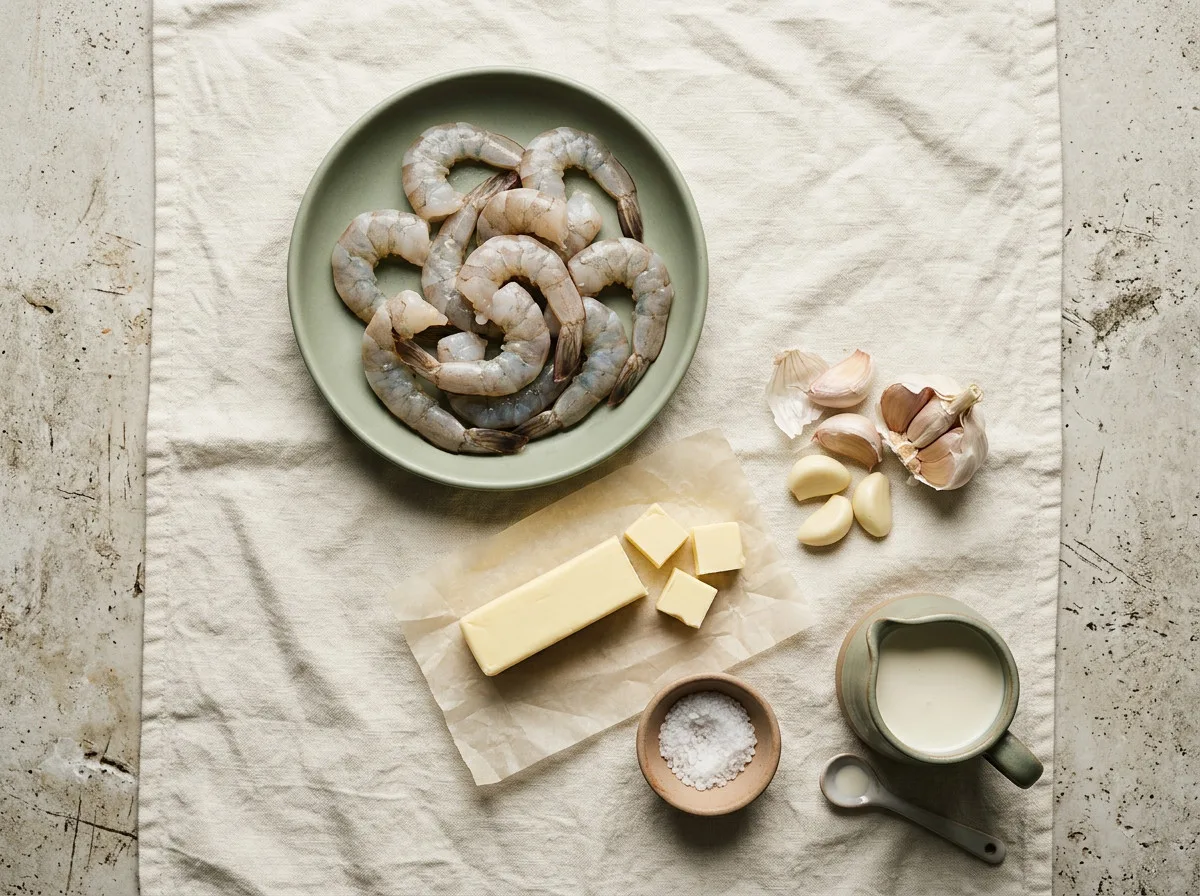
Ingredients
Makes 4 servings.
Equipment
How to make it
- Dry the shrimp hard. Spread them on a towel-lined tray in one layer, blot the tops, then leave them uncovered for 5 minutes. The surface should look dull and matte, not glossy — that dullness is the sear you are about to get.
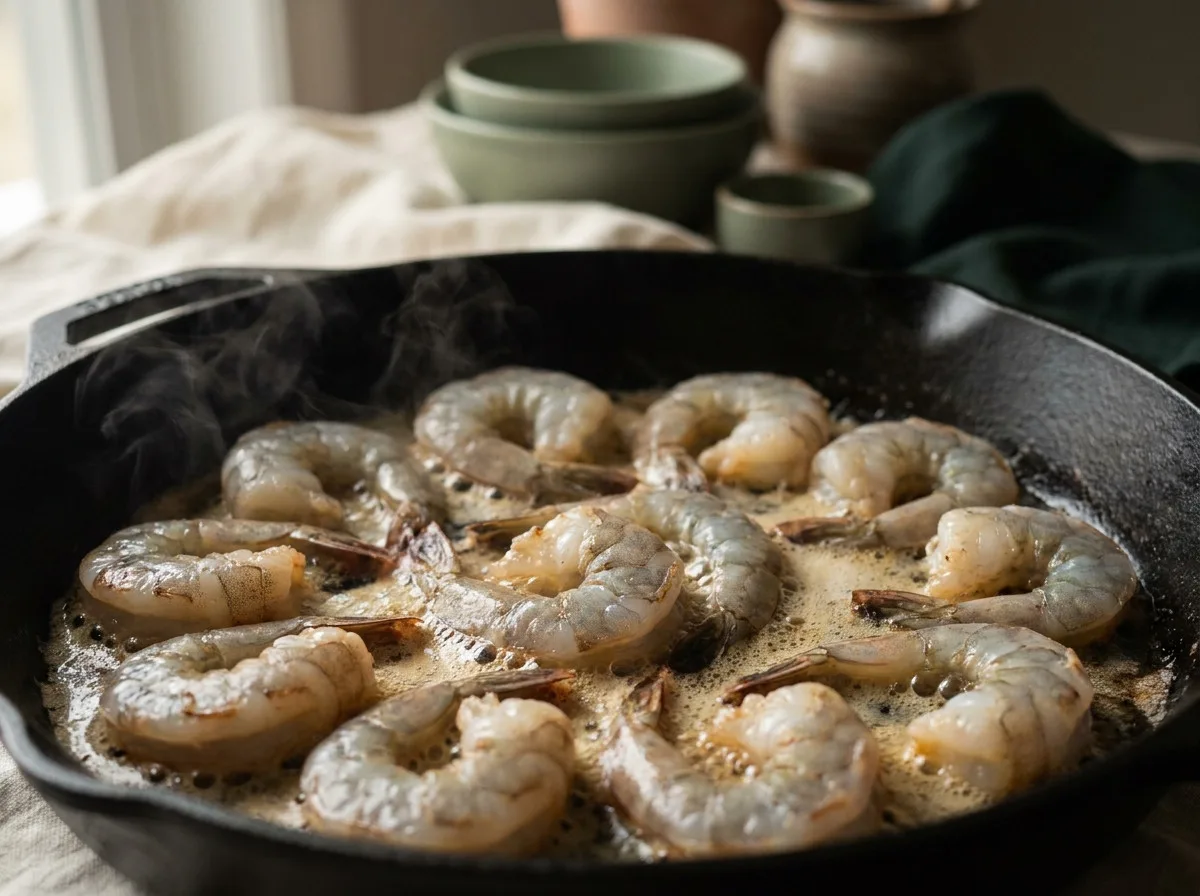
- Salt and preheat. Toss with the salt immediately before cooking, or it will pull water back to the surface. Heat the skillet over medium-high for 3 minutes, add 2 tbsp of the butter, and swirl until the foam subsides and it smells faintly nutty.
- Sear the first batch. Lay in half the shrimp, spaced so none touch. Leave them for 90 seconds, until the underside turns opaque with a light rust-brown rim and each shrimp relaxes into a loose C. Flip for 45 seconds more, then move to a plate.
- Sear the second batch. Let the pan recover for 30 seconds, then repeat. Pull these slightly underdone; they finish in the sauce.
- Bloom the garlic off the heat. Take the skillet off the burner entirely, add the remaining 4 tbsp butter and the grated garlic, and swirl 45–60 seconds. Residual heat is enough: the garlic should smell sweet and turn barely blond, never brown.
- Emulsify with cold cream. Pour in the cream and swirl steadily for about 20 seconds, until the sauce tightens from thin and separated into something glossy that coats a spoon.
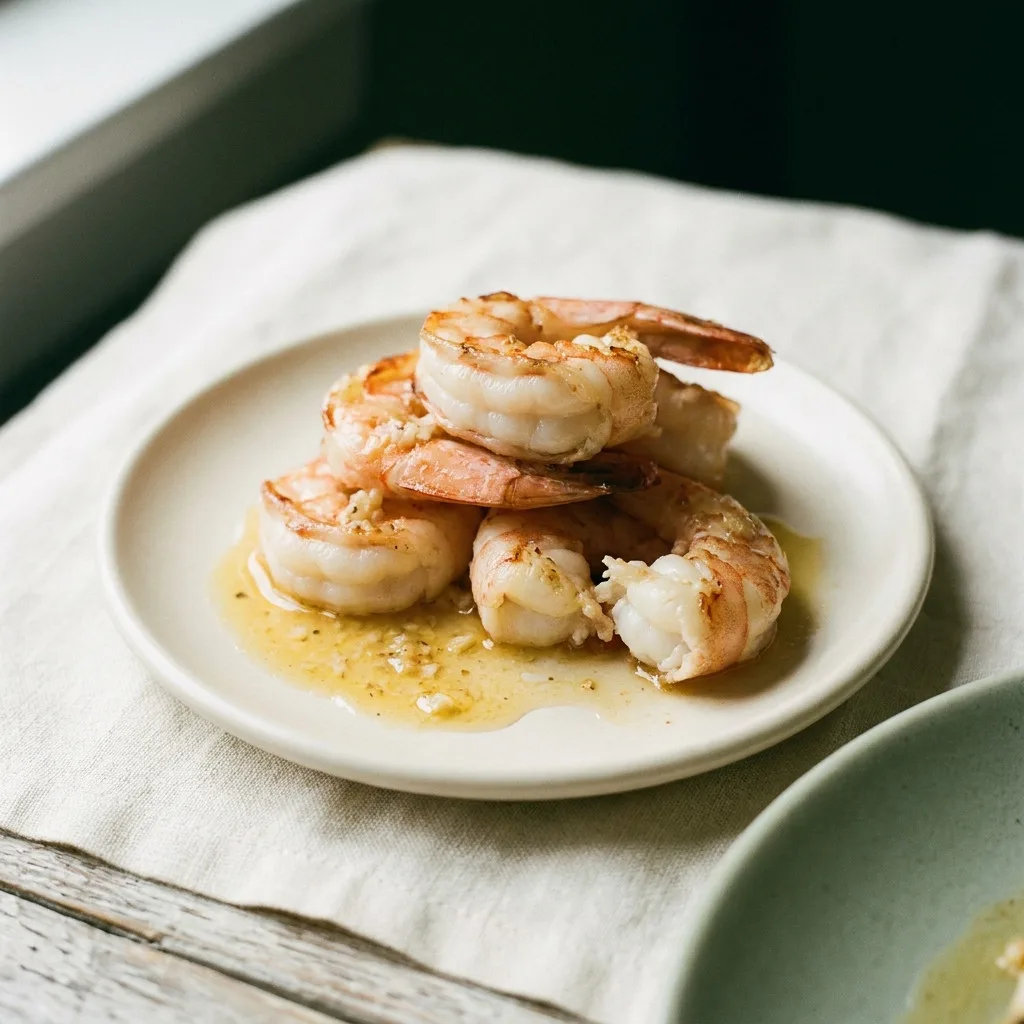
- Return the shrimp and check the temperature. Toss everything, plate juices included, for 30 seconds. FDA guidance for shellfish is 145°F (63°C) internal, with flesh pearly and opaque throughout. Serve straight from the pan.
Tips from the test kitchen
- The failure that ruins most attempts is crowding. Shrimp packed shoulder to shoulder drop the pan temperature in seconds and the batch steams grey instead of browning. If in doubt, do three batches rather than two.
- Read the curl, not the clock. A loose C is cooked. A tight O, tail curled around to meet the head end, is overcooked and will be chewy whatever the sauce does.
- Grate the garlic, do not chop it. Grated garlic dissolves into the butter and seasons every shrimp; chopped pieces sit on the pan floor and scorch bitter.
- Carnivore garlic butter shrimp waits badly. Cook it when people are already sitting down; ten minutes on a warm stovetop and it keeps cooking in the residual heat.
Swaps and variations
- Strict carnivore, no garlic. Leave it out and brown the final 4 tbsp of butter instead, until the milk solids turn amber. That removes about 6 g of carbohydrate across the batch, bringing each serving to roughly 2 g, and the nutty butter carries the dish on its own.
- Ghee instead of butter. A straight swap for anyone avoiding dairy solids. Calories and fat land within a gram or two per serving, and ghee tolerates the sear well enough to add all at once at the start.
- Skip the cream. Swirl in 1 tbsp of cold butter off the heat instead — it emulsifies almost as well and drops each serving by about 6 calories and 1 g of fat.
- Sea scallops in place of shrimp. Use 2 lb of dry-packed scallops, seared 2 minutes per side. Protein falls to roughly 39 g per serving and carbs rise slightly, since scallops carry more glycogen. More seafood ideas sit in the full recipe archive.
Storage and meal prep
Cold, this one pan shrimp skillet is as good as it is hot, which makes it the carnivore diet seafood dish worth doubling on a Sunday.
Cooled quickly and sealed, leftovers keep 2 days in the fridge — cooked shellfish has a shorter safe window than red meat, so treat that as a firm limit. Get them into a shallow container within an hour so they chill fast. Reheat gently in a covered skillet over low with a splash of water, stopping the moment they are warm; a microwave turns them to rubber in under a minute. Carnivore garlic butter shrimp does not freeze well: the flesh goes mealy on thawing and the sauce splits into oil and solids that will not recombine. The raw shrimp freezes fine, so buy frozen, thaw only what you need, and cook to order.
Nutrition per serving
| Nutrient | Per serving |
|---|---|
| Calories | 425 kcal |
| Protein | 47 g |
| Fat | 24 g |
| Total carbs | 4 g |
| Fiber | 0 g |
| Net carbs | 4 g |
Figures are calculated from the quantities above against USDA FoodData Central reference values. Nutrition is an estimate and varies with brands and exact portion sizes.
Frequently asked questions
Does this carnivore shrimp recipe also work on keto?
It does. Garlic butter shrimp keto and animal based shrimp are the same plate here, at 4 g of carbohydrate a serving, so nothing needs changing.
Is garlic allowed on a carnivore diet?
Not on a strict reading — garlic is a plant, and strict carnivore is meat, seafood, eggs and animal fat only. Animal-based and relaxed carnivore approaches usually allow small amounts of aromatics, which is the tier this recipe is written for. The garlic-free variation above is the strict-compliant build.
Can I make carnivore garlic butter shrimp with frozen shrimp?
Yes, and frozen is usually the better buy. Thaw overnight in the fridge or under cold running water for 10 minutes, never at room temperature. After that only the drying matters: thawed shrimp hold more surface water than fresh and will steam if you rush.
Why did my butter sauce split into oil?
The pan was too hot when the butter went in. A butter-and-cream emulsion holds only below a simmer; once it boils the fat separates and will not recombine. Pull the skillet off the burner first, and use cold cream — the temperature drop is doing real work.
How do I know when shrimp are properly cooked?
The flesh turns from translucent grey to pearly and opaque and the body relaxes into a loose C. An instant-read thermometer in the thickest part should show 145°F (63°C). Shrimp go from perfect to overcooked in about 30 seconds, so pull them early and let carryover heat finish.
Do I have to use heavy cream?
No — it is there to stabilise the emulsion, not for flavour. Cold butter swirled in off the heat does nearly the same job, and skipping both leaves you with melted butter that pools rather than clings.
Ratings and reviews
No ratings yet. If you have cooked this, your rating helps the next person decide.
Rate this recipe