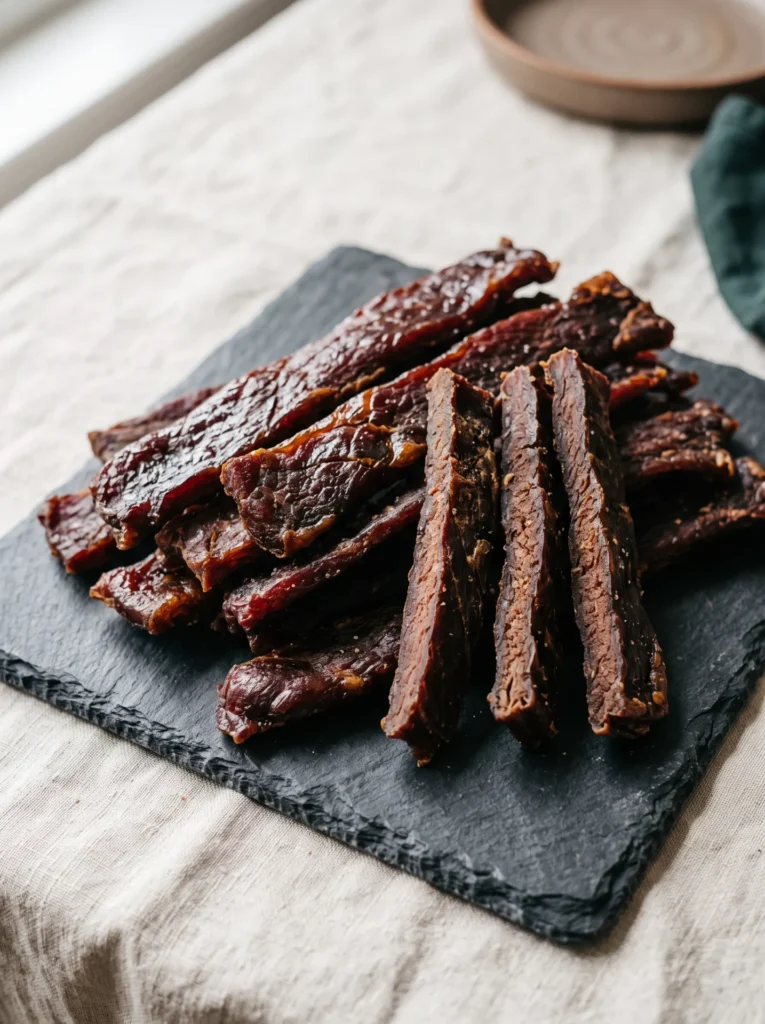
This carnivore beef jerky recipe turns two ingredients — lean beef and salt — into chewy, shelf-stable protein with zero carbs and no dehydrator required. It’s strict carnivore because nothing but meat and salt goes into it, no sugar, no cure, no liquid marinade, which keeps every ingredient inside the carnivore diet. The oven method below hits the USDA’s internal safety temperature before the jerky is called done, so you get real jerky texture without guessing whether it’s safe to eat.
Table of Contents
Why this carnivore beef jerky recipe works
- Two ingredients, one technique: no sugar, no cure, no liquid marinade — just salt-cured beef dried low and slow until it’s chewy, not brittle.
- Zero net carbs and about 27 g of protein per 1 oz serving, so it fits carnivore and strict keto macros without any tracking.
- An oven does the whole job — no dehydrator to buy, store, or find counter space for.
- A short high-heat finish brings every strip to a safe internal temperature, the one step most home jerky recipes skip.
Ingredients
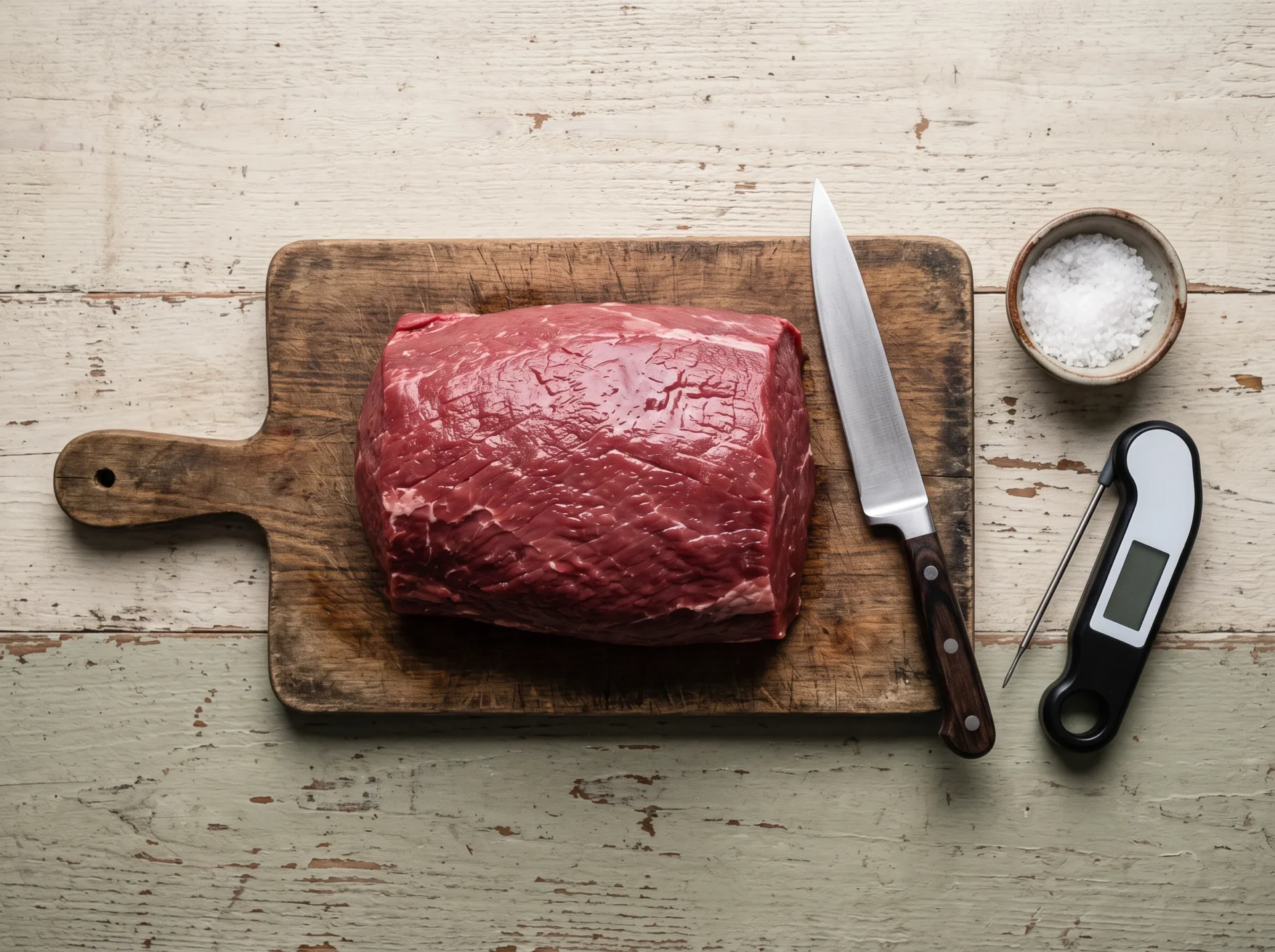
Makes 8 servings (about 8 oz / 227 g finished jerky).
Equipment
How to make it
- Partially freeze the beef. Wrap the trimmed beef and freeze for 60–90 minutes, until firm but not solid. Meat this firm slices into thin, even strips instead of tearing under the knife.
- Slice against the grain. Cut the beef into strips 1/8 to 1/4 inch thick, against the grain, for a more tender chew. Slicing with the grain gives the classic tougher, stringier bite instead — either is safe, it’s a texture choice.
- Salt the strips. Toss the strips with the kosher salt in a bowl until every piece is coated — no liquid marinade needed, which is what keeps this recipe strict carnivore. Spread on a plate so they aren’t stacked while they rest.
- Rest 30 minutes. Let the salted strips sit at room temperature for 30 minutes, or up to 2 hours in the fridge, so the salt penetrates instead of just sitting on the surface.
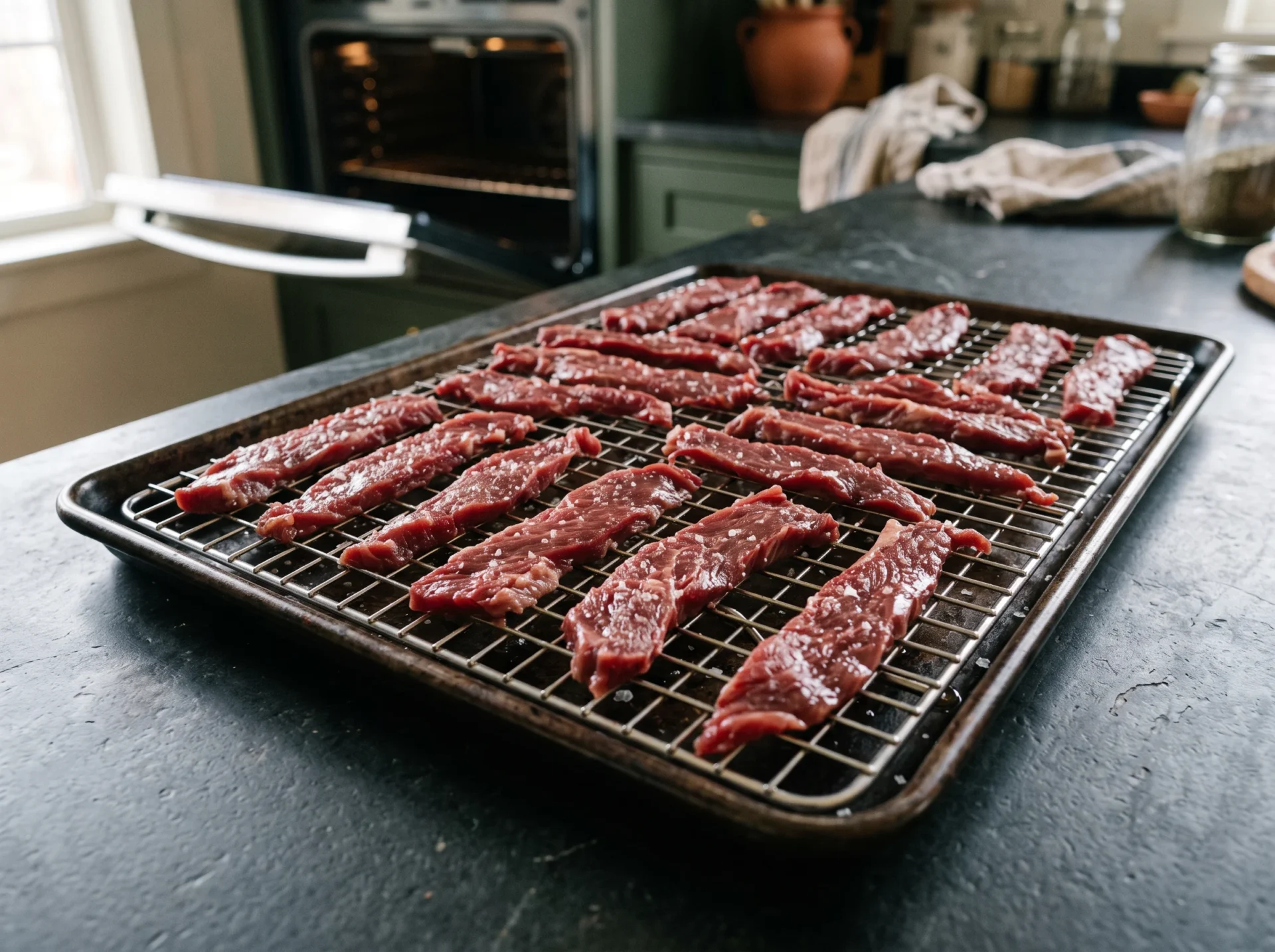
- Arrange on racks. Set the wire racks inside the baking sheets and lay the strips in a single layer, without touching, so hot air reaches all sides of every piece.
- Dry at 175°F (80°C) for 3–4 hours. Place both racks in the oven and prop the door open an inch with a wooden spoon to let moisture escape. Rotate the sheets top-to-bottom and front-to-back halfway through. The jerky is ready when strips are deep red-brown, bend without snapping, and crack slightly at the edges.
- Finish at 300°F (150°C) for 10 minutes. This step matters: USDA guidance on jerky safety calls for heating home-dried strips to 160°F internal at some point to kill bacteria, and a 175°F oven over several hours doesn’t reliably hold every strip there. Move the racks to a fully preheated 300°F oven for 10 minutes and check thick strips with an instant-read thermometer to confirm 160°F.
- Cool completely, then store. Let the jerky cool fully on the racks, uncovered, about 30 minutes, before packing it into an airtight container. Packing warm jerky traps steam inside the container and shortens how long it keeps.
Practical cooking tips
- This carnivore beef jerky recipe needs the salt weighed, not eyeballed — 9 g of salt across a whole 2 lb batch means a few unsalted strips are common if you just sprinkle by feel, so toss thoroughly until every piece looks coated.
- Slice with the beef still cold or semi-frozen; room-temperature meat squashes under the knife instead of cutting into clean, even strips.
- Trust the bend test over the clock: a properly dried strip cracks white at the bend but doesn’t snap in half. If it snaps clean, it’s over-dried and will taste brittle.
- Rotate the baking sheets top-to-bottom halfway through drying — most home ovens run hotter in one spot, and jerky near the back or a hot element dries faster than the rest of the batch.
Troubleshooting tips
- Jerky is still leathery after 4 hours — the oven is likely running cooler than the dial says. Verify with an oven thermometer and extend drying in 30-minute increments until strips pass the bend test.
- Some strips taste under-salted — the salt wasn’t tossed evenly. Next time, salt in two smaller additions, mixing by hand between each.
- Jerky feels tacky after cooling instead of dry — humidity got trapped by overcrowded racks. Leave more space between strips and keep the oven door propped the whole time.
- Strips curl instead of lying flat — normal, as fat and connective tissue tighten during drying. Press a second rack lightly on top for the first hour for flatter pieces.
Swaps and variations
- Swap in lean ground beef for a ground beef jerky version: press 93/7 ground beef into a thin sheet between parchment, salt it, and dry the same way. Pre-cook the sheet in a skillet to 160°F before dehydrating, since bacteria can be mixed throughout ground meat rather than sitting only on the surface — the nutrition numbers above don’t apply once you switch cuts, since ground beef carries more fat than trimmed eye of round.
- Add cracked black pepper or crushed red pepper flakes to the dry rub for a relaxed carnivore or keto version; it doesn’t change the macros meaningfully, but it’s no longer zero-ingredient carnivore.
- Swap the cut for flank steak or sirloin tip if eye of round isn’t available — both trim to near-zero visible fat, though flank has more connective tissue and benefits from thinner slicing.
- Pair it with our carnivore garlic butter shrimp for a two-protein snack board that’s still zero-carb start to finish.
Serving ideas
- Pack it straight into a bag for a zero-carb, protein-dense snack that doesn’t need refrigeration for a few hours out of the house.
- Build a carnivore snack board with jerky, hard cheese, and boiled eggs for entertaining, or browse more carnivore diet recipes to round out the spread.
- Crumble a strip over a fried-egg breakfast for a salty, chewy protein boost that doesn’t add carbs to the plate.
Storage and meal prep
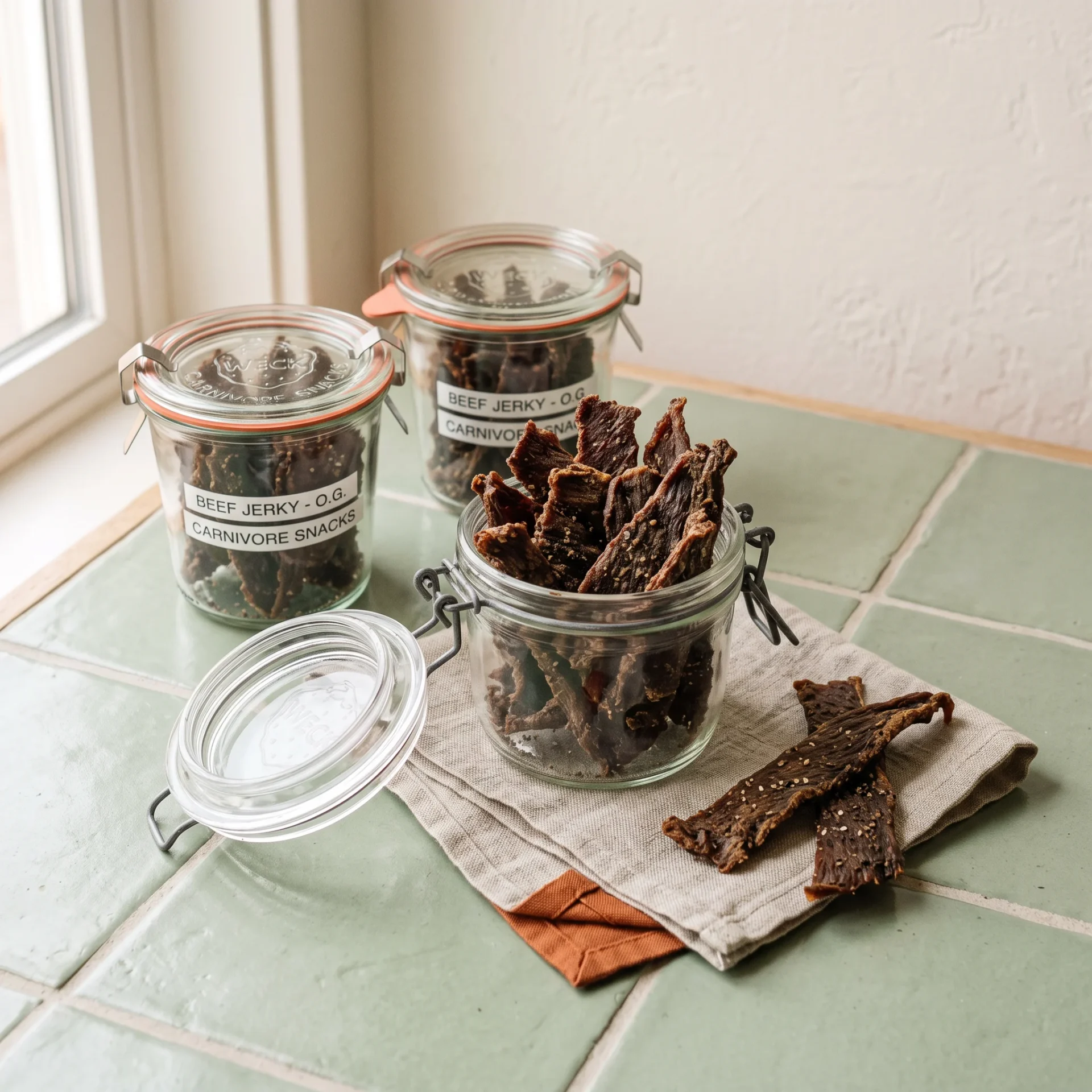
Store cooled jerky in an airtight container at room temperature for up to 2 weeks, in the refrigerator for up to 1 month, or vacuum-sealed in the freezer for up to 6 months. Homemade jerky lacks the sodium nitrite and preservatives in most commercial jerky, so how long does homemade beef jerky last comes down mostly to how completely it was dried and how well it’s sealed — if you notice mold, an off smell, or unexpected softening, discard it. This carnivore beef jerky recipe makes one full batch at a time, so portion it into snack-size bags right after it cools for grab-and-go servings.
Nutrition per serving
| Nutrient | Per serving |
|---|---|
| Calories | 137 kcal |
| Protein | 27 g |
| Fat | 3 g |
| Total carbs | 0 g |
| Fiber | 0 g |
| Net carbs | 0 g |
Nutrition is an estimate based on USDA FoodData Central values for raw, trimmed eye of round beef, and varies with the exact cut, trim, and portion size; one serving is about 1 oz (28 g) of finished jerky.
Frequently asked questions
Is beef jerky carnivore?
Plain beef jerky is carnivore-friendly only if it’s just meat and salt, with no sugar, honey, soy sauce, or spice blends — which is what makes this carnivore beef jerky recipe strict-compliant. Most store-bought jerky contains at least one of those additions, so check the label or make your own.
Can I make beef jerky without a dehydrator?
Yes — an oven set to 175°F with the strips on a wire rack does the same job as a dehydrator, usually faster, since a home oven runs hotter than most dehydrators’ 130–140°F range. This is a full oven beef jerky without a dehydrator method, including the food-safety finishing step most oven recipes skip.
How long does homemade beef jerky last?
Properly dried and sealed, homemade beef jerky lasts about 1–2 weeks at room temperature, up to a month refrigerated, and up to 6 months frozen. Because it has no added nitrites, it won’t hold as long on the counter as commercial jerky does — when in doubt, refrigerate it.
Can I use ground beef for carnivore jerky?
Yes, but treat it as a different recipe: ground beef needs to be pre-cooked to 160°F before drying, since bacteria can spread throughout ground meat rather than sitting only on the surface. Whole-muscle strips like the ones here skip that pre-cook step, since the interior of an intact muscle is naturally low in bacteria.
Is this recipe keto as well as carnivore?
Yes — this keto beef jerky recipe angle works too, since it comes out to 0 g net carbs per serving. Carnivore is essentially keto with all plant foods removed, so anything strict carnivore is automatically keto-compliant.
Do I need pink curing salt for oven jerky?
No. Curing salt (sodium nitrite) is mainly for extending shelf life and preserving color in jerky that will sit unrefrigerated for a long time or that’s smoked at low temperatures. For oven-dried jerky that reaches a safe internal temperature and then gets refrigerated or frozen promptly, plain salt is enough, and it keeps the recipe strict carnivore.
Ratings and reviews
No ratings yet. If you have cooked this, your rating helps the next person decide.
Rate this recipe