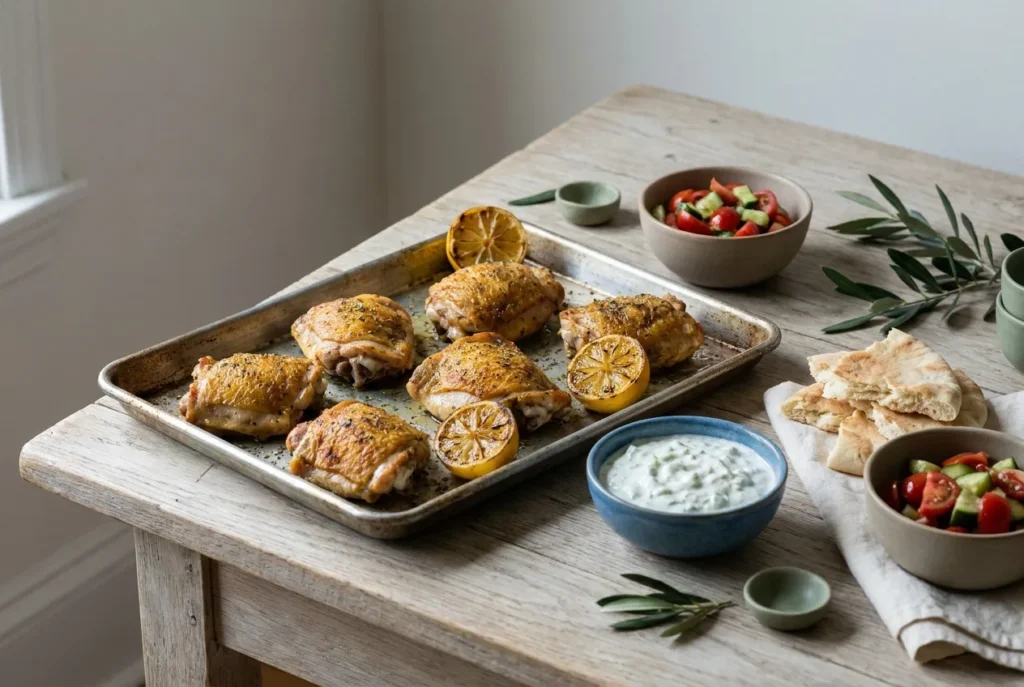
What to serve with Greek chicken comes down to one thing: the chicken already arrives lemony, herb-heavy and slick with olive oil, so the plate needs contrast rather than more of the same. Cool dairy, sharp acid, one starch. That is the whole answer, and everything below is the detail behind it.
Key takeaways
- Build the plate from three roles, not three dishes: something cool, something sharp, one starch.
- Tzatziki is the highest-value pairing on the list. It needs no cooking and it is the only side that actually cools the chicken.
- A half portion of lemony brown rice adds roughly 14 g of carbs to the plate; the same portion of zucchini noodles adds about 7 g.
- Skip creamy, breaded or heavily cheesy sides. They compete with the lemon instead of balancing it.
On this page
What to serve with Greek chicken: the short answer
Three sides carry almost all the weight: tzatziki, a raw tomato and cucumber salad, and one starch — lemon rice, potatoes or warm pita. The best sides for Greek chicken each cover one of those three jobs, and a fourth dish earns its place only when you are feeding a crowd. A roasted chicken like Sheet Pan Greek Chicken with Lemon and Oregano already lands at 610 calories and 47 g of protein a serving, so the sides are there to add texture and freshness, not another heavy dish.
About the numbers below. Every figure is per full serving of the linked recipe. Eaten as a side next to chicken you are realistically taking half of that, so halve the number when you plan the plate. Nutrition figures are estimates that vary with brands and portion size; reference values follow USDA FoodData Central.
Fresh and light sides
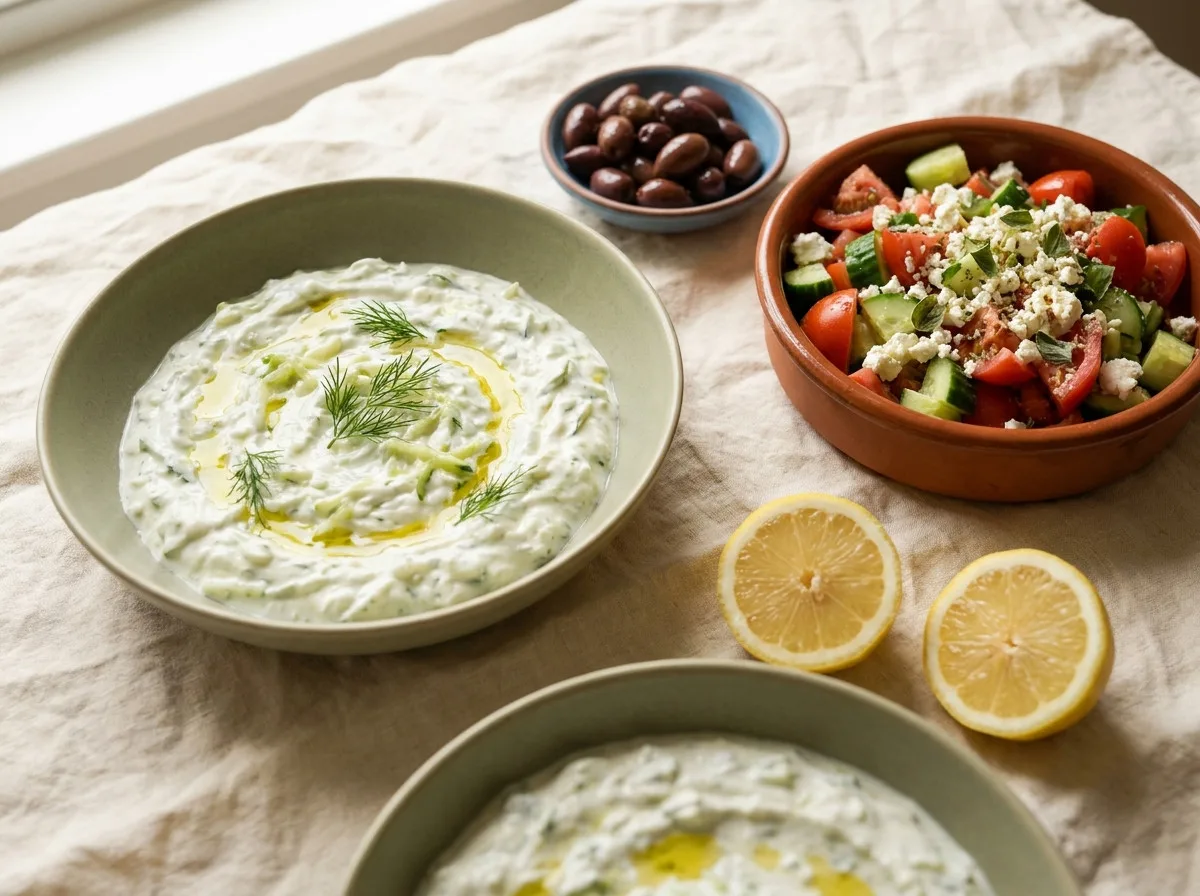
Tzatziki, and why it goes first
Greek chicken is roasted, salty and fatty. Tzatziki is cold, sour and thin. That temperature and texture contrast is the single biggest improvement you can make to the plate, and it takes five minutes with thick yoghurt, grated cucumber squeezed dry, garlic and lemon. Squeezing the cucumber is not optional — skip it and the sauce turns watery within the hour.
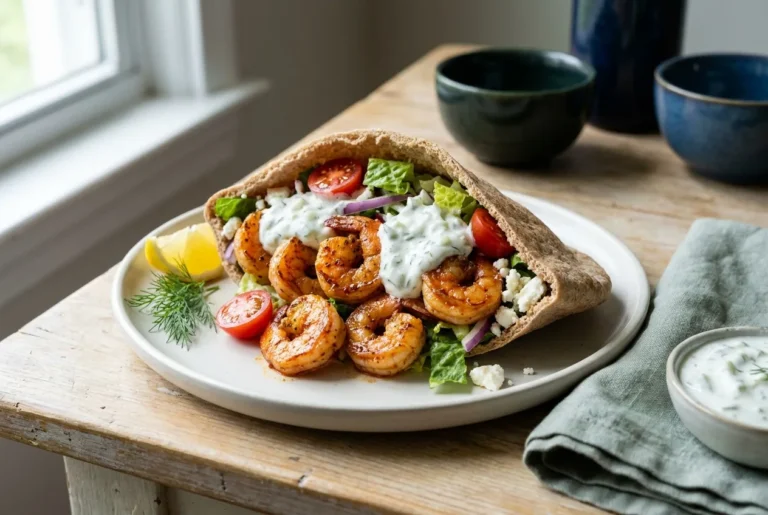
If you want the sauce and the bread together as a meal in their own right, this one already pairs them:
Tomato and cucumber salad
No lettuce, no dressing bottle. Ripe tomatoes, cucumber in thick half-moons, red onion softened in the lemon juice for ten minutes, olive oil, oregano, feta on top. The acid is doing the same job as the tzatziki from a different direction, which is why both can sit on the plate without repeating each other.
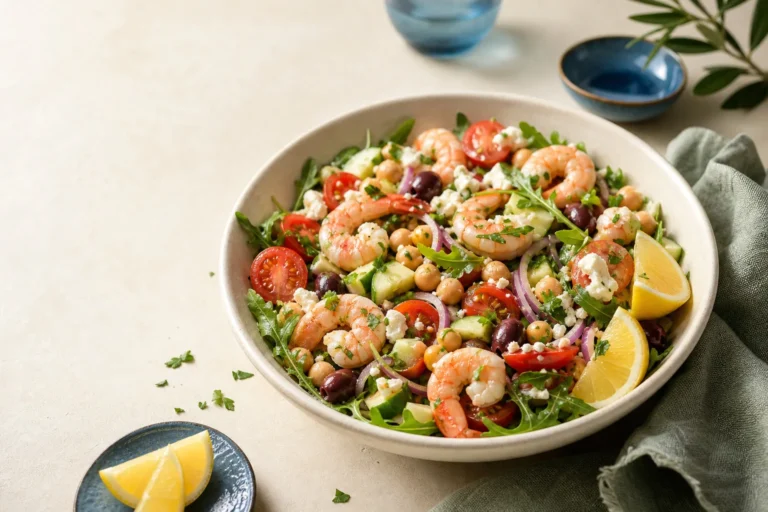
For a cold salad substantial enough to stand next to the chicken rather than beside it, No Cook Mediterranean Shrimp Salad with Chickpeas works at 370 calories and 24 g of carbs a serving, and needs 15 minutes and no oven.
Hearty and filling sides
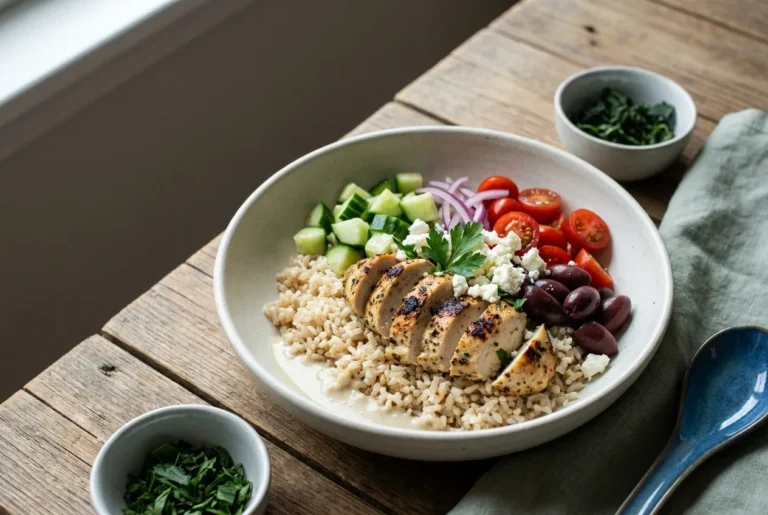
Lemony brown rice
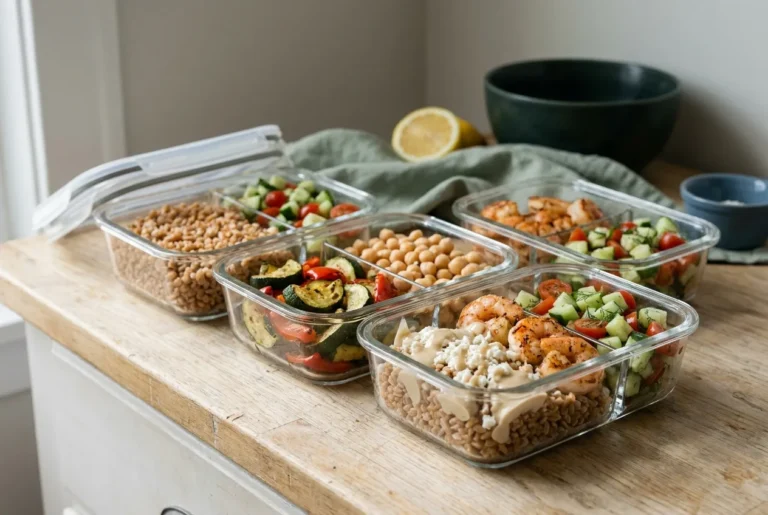
The default starch, and the one that soaks up the pan juices best. Brown rice finished with lemon zest and a handful of dill holds its texture next to a roasted thigh where white rice goes soft. A full serving of this bowl is 413 calories with 28 g of carbs; as a side you are adding around 14 g.
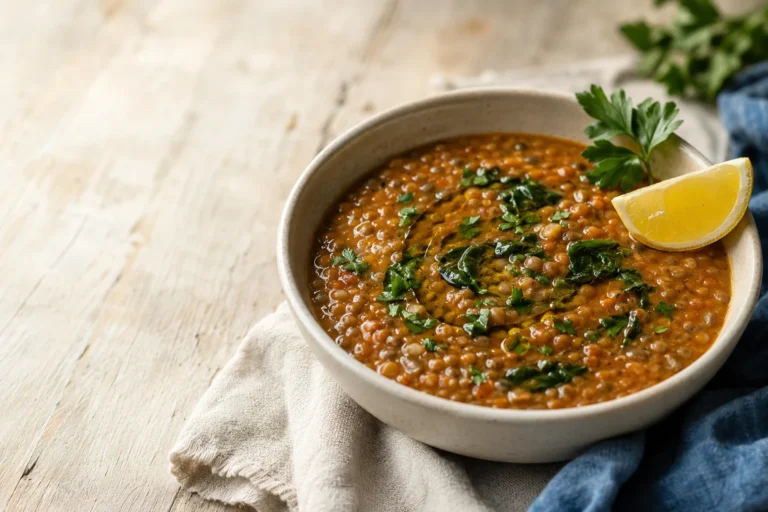
Lentil soup as a first course
Serving soup before the chicken is closer to how the meal is actually eaten around the Mediterranean than lining everything up at once. A lemon-and-cumin lentil soup at 325 calories a bowl slows the meal down and means less starch is needed on the main plate.
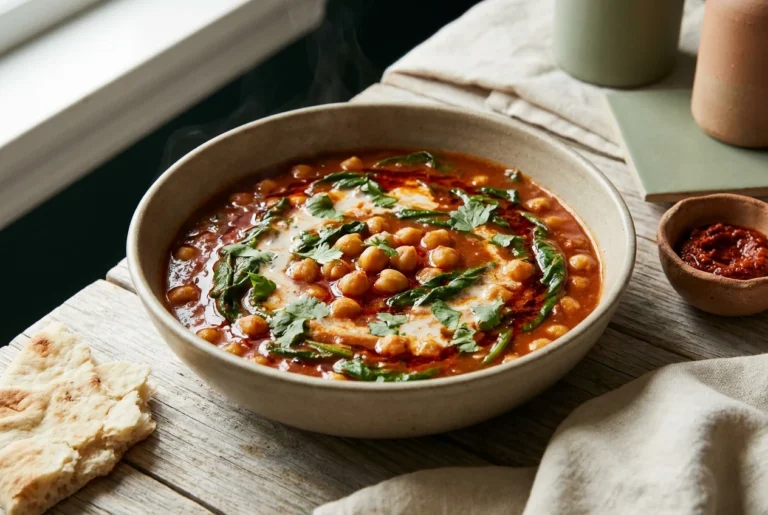
A warm vegetable side with some heat
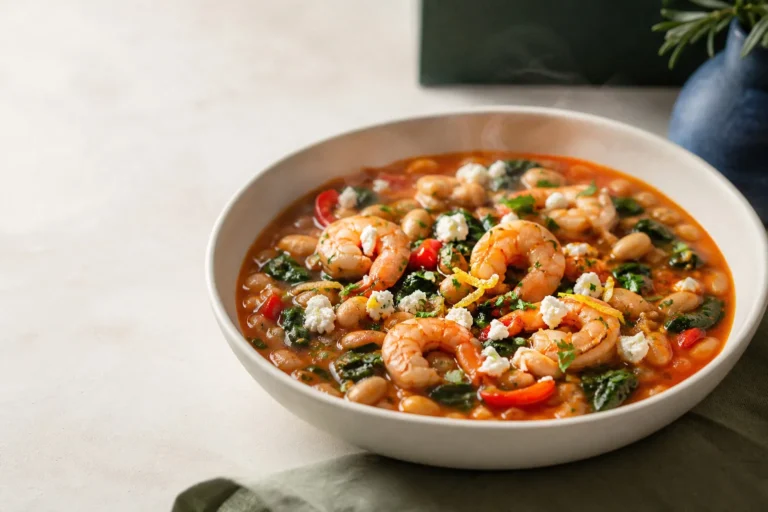
Lemon and oregano leave the plate very much on one note. A chilli-forward chickpea stew is the one side here that adds a different kind of intensity rather than another version of bright. It is also the option that turns the meal into something a vegetarian at the table can eat properly.
Low-carb swaps that still taste Greek
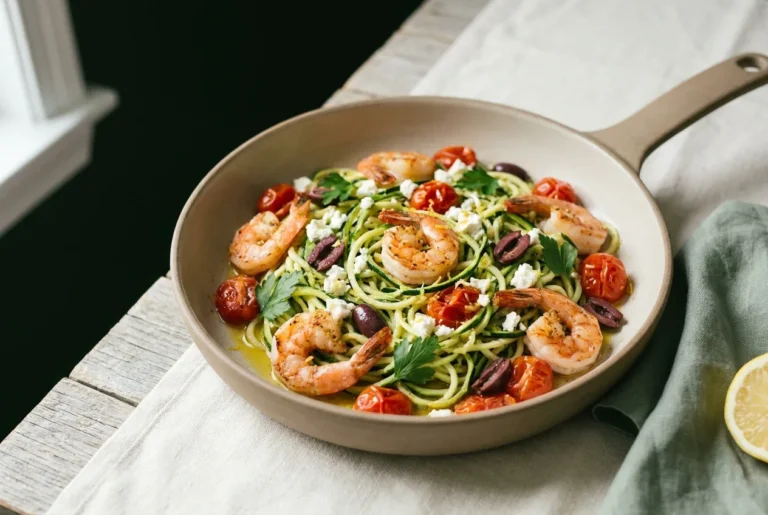
Zucchini noodles instead of rice
The straight swap. Salt the zucchini, let it drain twenty minutes, squeeze it, then warm it through for no more than two minutes — any longer and it collapses into water on the plate. A full serving of this version comes in at 13 g of carbs against the rice bowl’s 28 g, and it still carries feta, olives and lemon so it does not read as a diet substitution.
A second protein instead of a starch
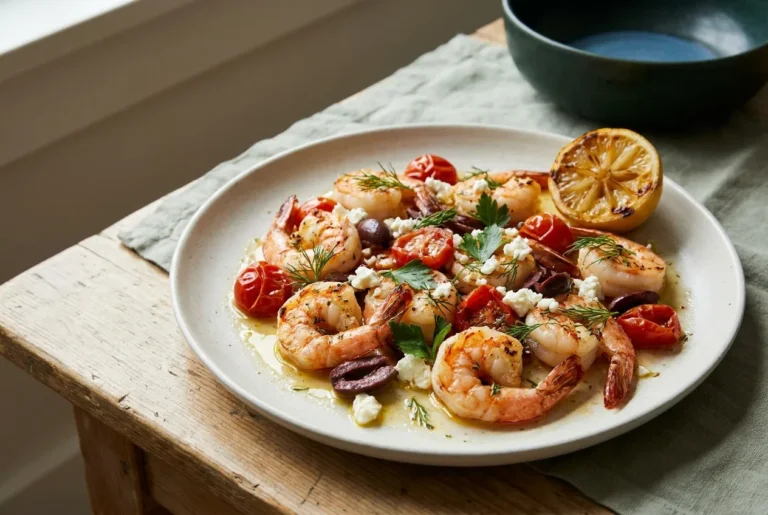
Dropping the starch entirely and adding a small plate of shrimp is the most common move on a Greek table that nobody writes down. At 292 calories and 6 g of carbs a serving, it adds interest to the plate without adding bulk.
Turn it into a mezze spread
For six people or more, stop thinking about sides and start thinking about a table. Put the chicken in the middle, surround it with three or four small dishes, and let people build their own plates. Nothing needs to be hot at the same moment, which is the real reason this works for entertaining. Most Mediterranean side dishes are built to sit out at room temperature anyway, so a spread is less work than a plated dinner rather than more. Browse the rest of the Mediterranean recipes for the full set.
Building the full plate
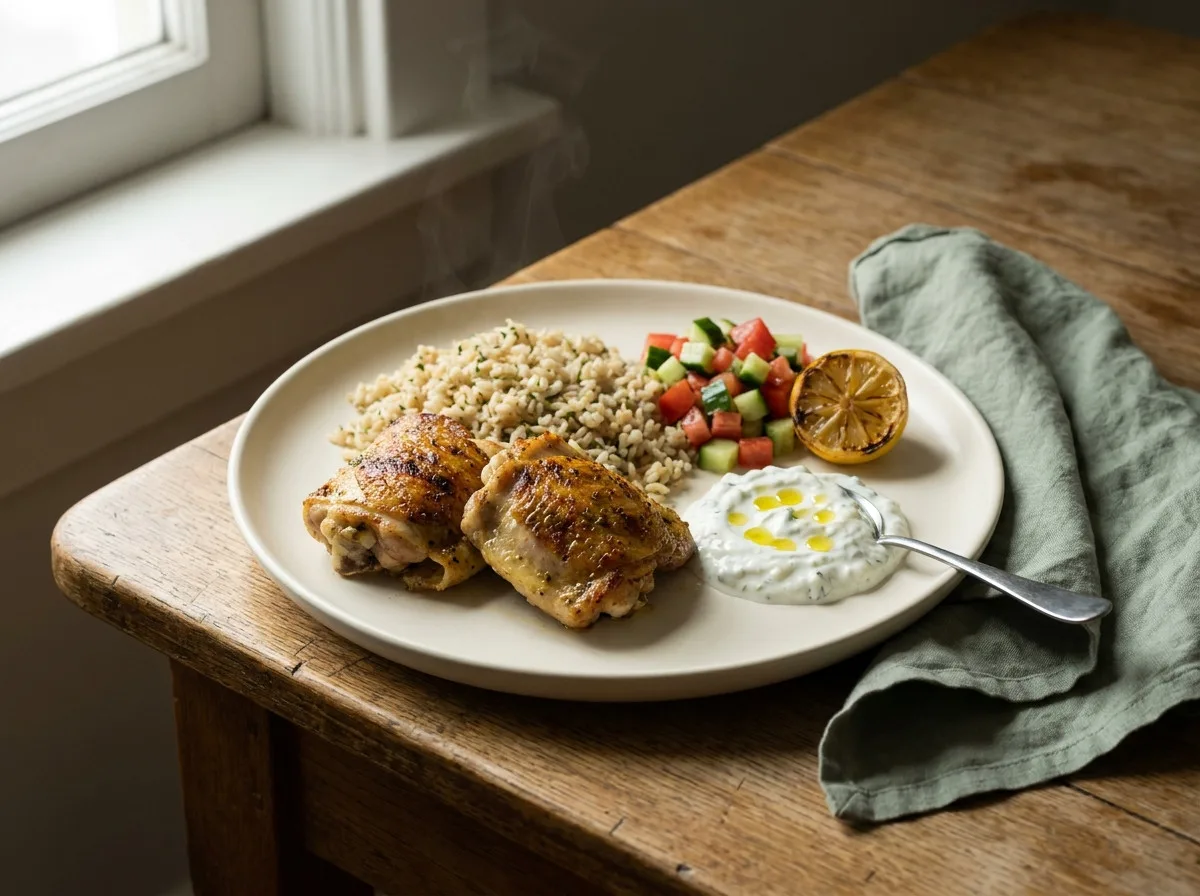
Three ways to put a Greek chicken dinner together, using half portions of the recipes above alongside one serving of the chicken:
- The classic. Chicken, half a portion of lemony brown rice, tzatziki, tomato salad. Roughly 820 calories and 56 g of carbs.
- The light one. Chicken, half a cold chickpea and shrimp salad, tzatziki. Roughly 795 calories and 54 g of carbs.
- The low-carb one. Chicken, half a portion of zucchini noodles, tzatziki. Roughly 840 calories and 49 g of carbs.
The chart below is the part worth keeping: how much each side actually adds to the plate at a realistic half portion. Broad guidance on balancing a plate is set out by the Harvard Nutrition Source, but the figures here come from the recipes themselves.
What to skip
Most round-ups of Greek chicken side dishes only tell you what to add. These are the four that quietly ruin the plate, and they turn up on more tables than any of them admit.
- Creamy pasta or potato salad. Mayonnaise and lemon-oregano chicken cancel each other out. You lose the brightness that made the chicken worth roasting.
- Anything breaded. The chicken skin is already the crisp element. A second one turns the plate into texture with nothing to cut it.
- A heavy cheese bake. Feta on a salad is right. A baked cheese dish next to it is the same salt and fat twice.
- Two starches. Rice and potatoes and pita is the most common mistake here. Pick one and make it the good one.
Frequently asked questions
What is the easiest side to serve with Greek chicken?
Tzatziki, in about five minutes with no cooking. Thick yoghurt, grated cucumber squeezed dry, garlic, lemon and salt. It also keeps three days in the fridge, so it is the one side worth making the night before.
How many sides do I actually need?
Two for a weeknight, three for guests. One cool, one sharp, one starch covers every role on the plate. A fourth dish adds work without changing how the meal tastes.
Can I make the sides ahead?
Tzatziki and lentil soup improve overnight. Rice reheats well with a splash of water. Tomato salad does not — dress it within twenty minutes of serving or the tomatoes go soft and the plate turns watery.
What to serve with Greek chicken on a low-carb plan?
Zucchini noodles in place of rice, tzatziki, and a tomato and cucumber salad. That plate lands near 49 g of carbs including the chicken, against 56 g for the rice version.
What wine or drink goes with it?
Anything with acid rather than oak — an unoaked white or a dry rosé. For a non-alcoholic option, sparkling water with lemon and a bruised mint sprig does the same job of cutting the olive oil.