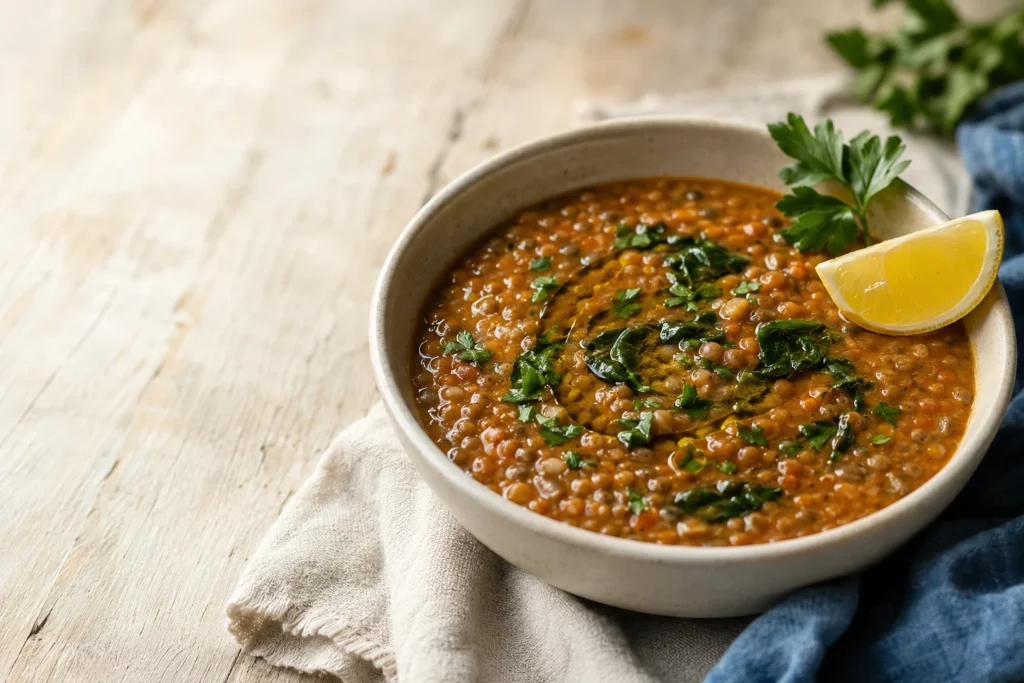
This Mediterranean lentil soup tastes like it simmered all afternoon, and it did not. Brown lentils hold their shape in a broth built on bloomed cumin and smoked paprika, and the whole pot is woken up at the very end with lemon juice and a raw pour of olive oil. That last step is the entire recipe — acid and good fat added off the heat, never boiled.
It sits squarely in the Mediterranean pattern of eating: legumes, vegetables, and extra-virgin olive oil as the primary fat, the shape of the diet described by Harvard T.H. Chan School of Public Health. Browse the full recipe archive for more in the same register.
Table of Contents
Why this Mediterranean lentil soup works
- The spices are bloomed, not stirred in. Sixty seconds in hot oil with tomato paste turns raw cumin and paprika into something roasted and deep. Dumped into liquid, they stay dusty.
- Acid goes in last. Lemon added early keeps lentil skins tough no matter how long you simmer. Off the heat, it lands bright instead of stewed.
- This Mediterranean lentil soup hits the pattern squarely — legumes as the protein, extra-virgin olive oil as the fat, vegetables as the bulk. 15g of plant protein and about 8g of fiber per bowl, no animal products required.
- One pot, pantry-stable. Everything but the greens and the lemon keeps for months.
Ingredients
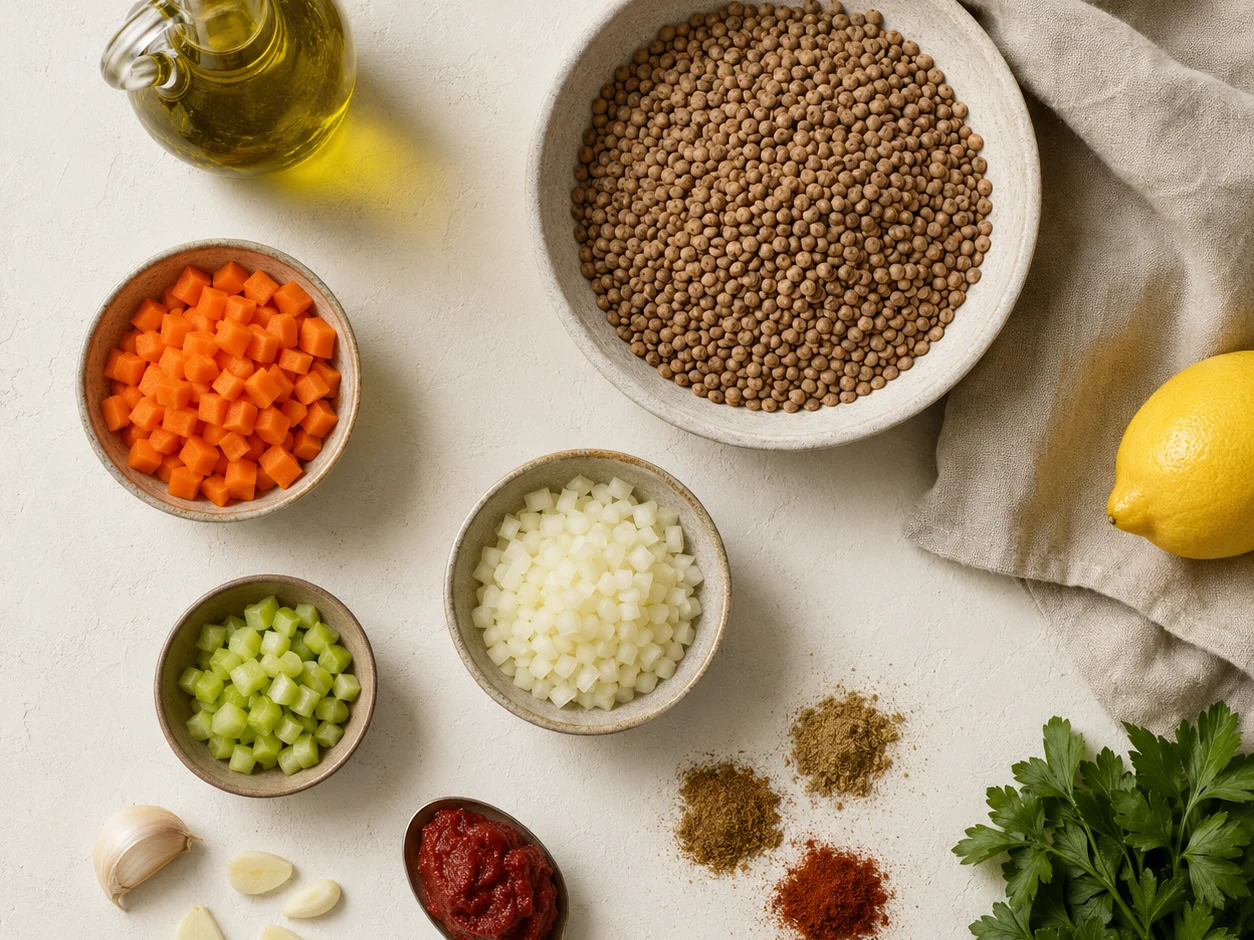
75,”sizeSlug”:”large”,”linkDestination”:”none”} –>Makes 6 servings.
Equipment
How to make it
76,”sizeSlug”:”large”,”linkDestination”:”none”} –>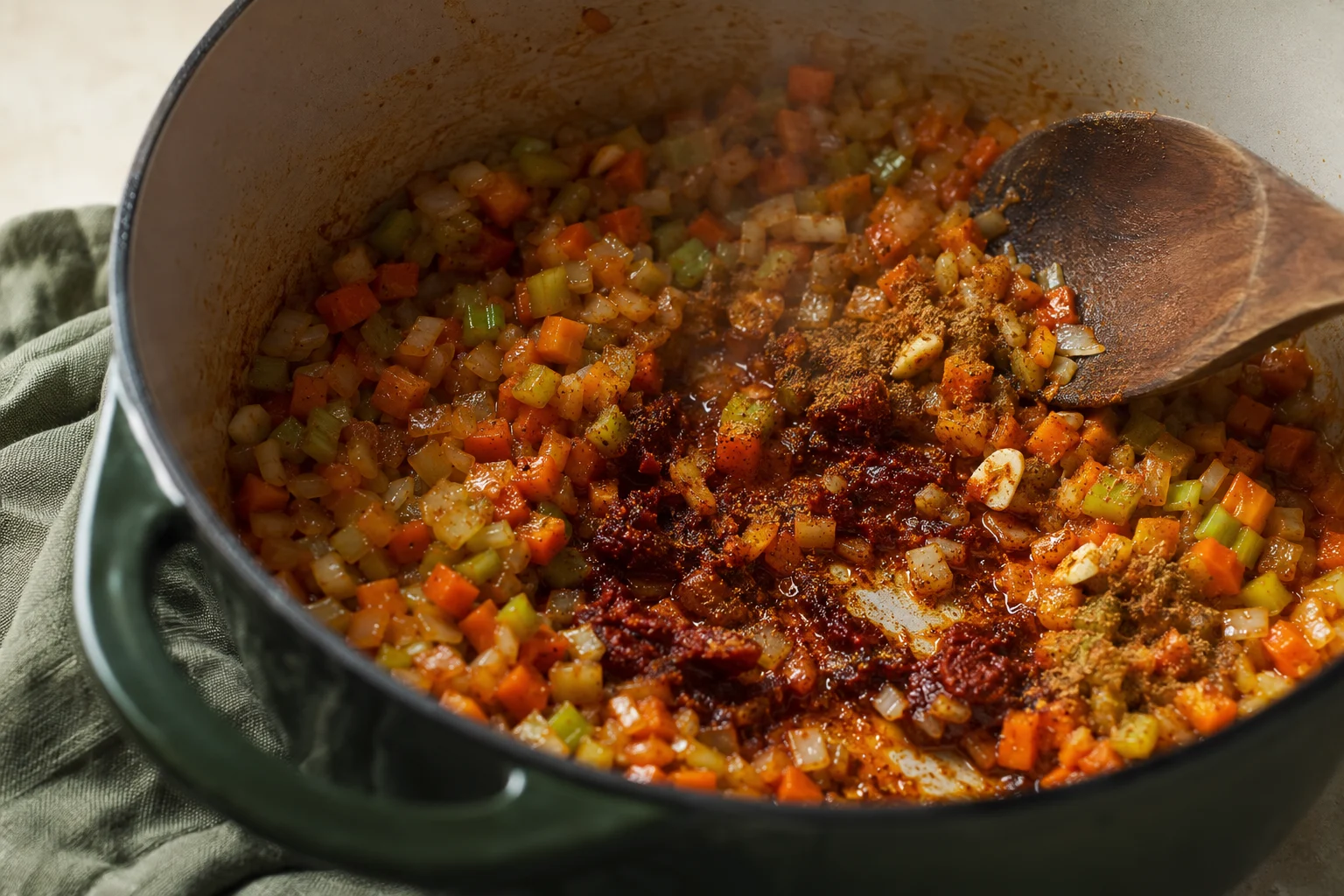
- Build the base. Warm 3 tbsp olive oil in the pot over medium heat. Add the onion, carrot, celery, and ½ tsp salt. Cook 8 to 10 minutes, stirring now and then, until the onion is translucent and slipping off the spoon and the carrot has lost its squeak. Don’t rush this into browning — you want sweet, not toasted.
- Bloom the spices. Add the garlic, tomato paste, cumin, coriander, smoked paprika, and Aleppo pepper. Stir constantly for 60 to 90 seconds. The paste will darken from bright red to brick and the kitchen will smell toasted. If anything starts to stick or smell sharp, move to the next step immediately.
- Add the lentils and liquid. Stir in the lentils, tomatoes with their juice, broth, and bay leaf. Scrape the bottom of the pot clean as it comes up to a boil.
- Simmer low. Drop the heat until you see lazy bubbles breaking the surface every second or two — never a rolling boil, which shreds the lentils into mush. Partially cover and cook 25 to 30 minutes, until a lentil crushes easily against the roof of your mouth but still holds its lens shape.
- Wilt the greens. Fish out the bay leaf. Stir in the spinach or chard a handful at a time; it collapses in 2 to 3 minutes. Chard stems need an extra 5 minutes, so add those with the lentils instead.
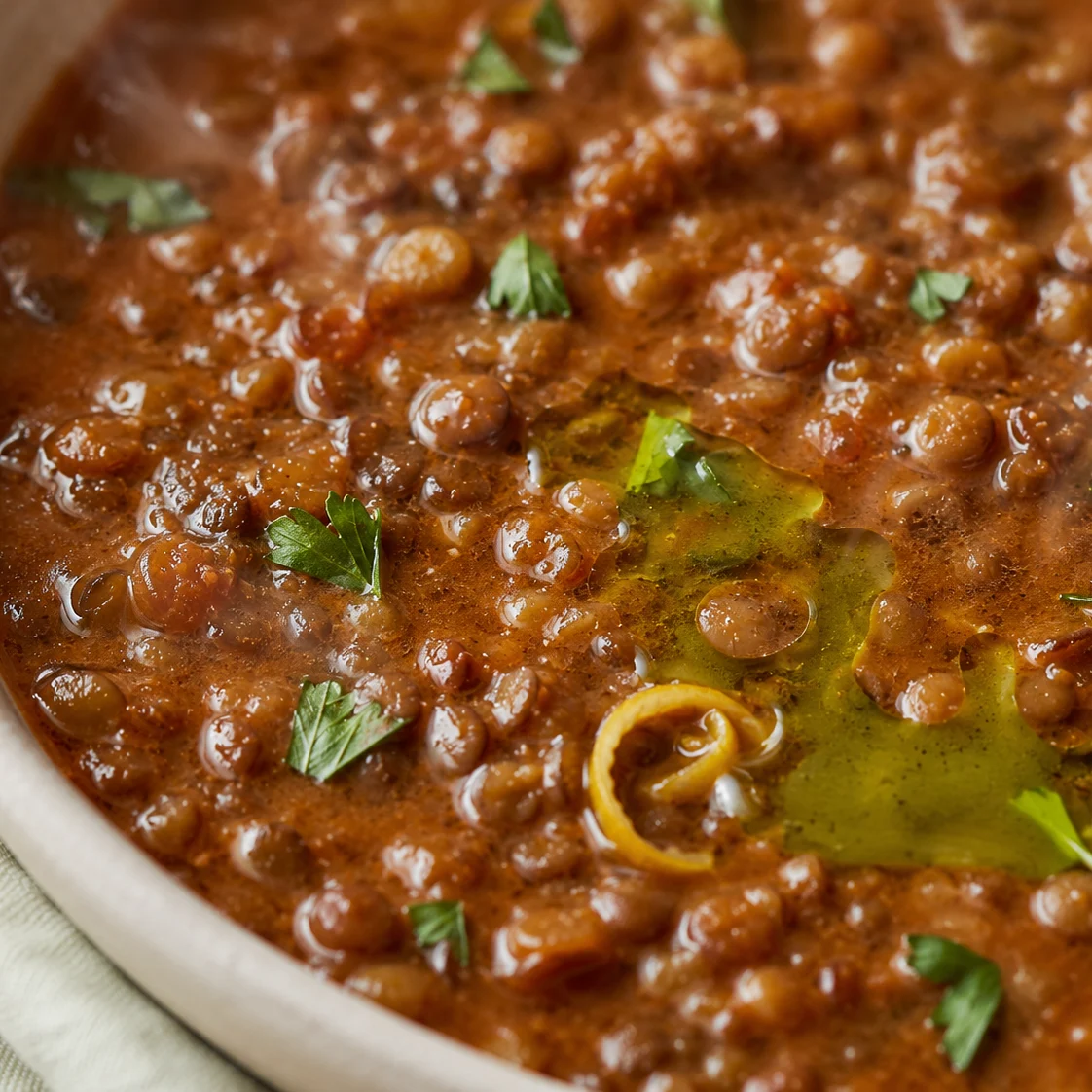
- Finish off the heat. Take the pot off the burner. Stir in the lemon juice, the parsley, and the remaining 1 tbsp raw olive oil. Taste and correct with salt and black pepper — it will need more salt than you expect, and the soup should taste sharp at the edges, not flat. Serve with lemon wedges.
Practical tips
- The most common failure is lentils that never soften. Nine times out of ten the lentils are simply old — dried legumes past about a year will stay chalky through any amount of simmering. The tenth time, acid went in too early.
- Use brown or green lentils, not red. Red lentils have no skin and dissolve into purée in about 15 minutes. That is a different, perfectly good soup — see the variations below — but it isn’t this one.
- Salting early is fine. The old warning that salt toughens legumes doesn’t hold up; salting the base seasons the lentils from the inside out.
- Want it creamier without cream? Blend about 2 cups of the finished soup with an immersion blender, or purée and stir it back in. The starch does all the work.
- Buy the good olive oil for the finishing tablespoon. It is uncooked and you will taste it directly — this is where a peppery, grassy oil earns its price.
Swaps and variations
- Red lentils — swap one for one, cut the simmer to 15 minutes, and expect a thick, smooth purée. Macros are nearly identical; texture is not.
- Kale instead of spinach — stir it in 8 minutes before the end so it softens. Adds about 1g fiber per serving.
- A spoon of harissa stirred in with the tomato paste adds heat and smoke for roughly 10 kcal and 1g fat per serving.
- Crumbled feta on top — about 2 tbsp per bowl adds roughly 50 kcal, 3g protein, and 4g fat, and makes the soup vegetarian rather than vegan.
- Half a cup of cooked farro or brown rice per pot turns it from a starter into a full dinner, adding about 30 kcal and 6g carbs per serving.
Storage and meal prep
As a one pot lentil soup it reheats better than almost anything else here: the brown lentil soup thickens overnight, so loosen it with a splash of water and the texture comes straight back.
Divide the Mediterranean lentil soup into shallow containers and refrigerate it within two hours. Keep it sealed in the refrigerator for 3 to 4 days, or freeze it for 3 to 4 months; the USDA FSIS leftovers guidance recommends rapid cooling and these storage windows. Leave an inch of headroom when freezing, and freeze it before adding the greens and lemon if you can, since both suffer badly. The lentils keep drinking liquid as they sit, so expect the soup to set almost stew-thick overnight; loosen it with a splash of broth or water when reheating over medium-low heat. Always finish a reheated bowl with a fresh squeeze of lemon and a drizzle of raw olive oil. If you added farro or rice, skip freezing — the grains go pasty.
Nutrition per serving
| Nutrient | Per serving |
|---|---|
| Calories | 325 kcal |
| Protein | 15 g |
| Fat | 10 g |
| Total carbs | 45 g |
| Fiber | 8 g |
| Net carbs | 37 g |
Nutrition is an estimate and varies with brands and exact portion sizes; the ingredient-based calculation is documented against USDA FoodData Central records.
Frequently asked questions
Is this a good high fiber soup to batch cook?
This lentil soup recipe is a useful batch-cooking option. Each serving carries 45 g of carbohydrate and about 8 g of fibre from the lentils. With a vegan vegetable broth and no dairy garnish, it is also a vegan Mediterranean soup.
Do I need to soak the lentils first?
No. Unlike dried beans, lentils cook through in 25 to 30 minutes straight from the bag. Rinse them in a sieve and pick out any small stones or shrivelled ones — that is the whole preparation.
Why are my lentils still hard after 40 minutes?
Almost always because the lentils are old. Dried lentils stored longer than about a year develop skins that never fully soften. The other cause is adding lemon, vinegar, or extra tomato before the lentils are tender — acid sets the skins. Nothing rescues either situation, so buy from a shop with turnover and add acid at the end.
Is this Mediterranean lentil soup genuinely diet-friendly?
Yes, and squarely so. The Mediterranean pattern is built on legumes, vegetables, and extra-virgin olive oil as the primary fat, with meat pushed to the margins. This recipe uses all three; with a vegan vegetable broth and no dairy garnish, it also works as a vegan meal.
Can I make it in a pressure cooker or slow cooker?
Both work. In an electric pressure cooker, sauté through step 2, then cook on high pressure for 10 minutes with a 10-minute natural release. In a slow cooker, do steps 1 and 2 in a skillet first — do not skip the blooming — then cook everything on low for 6 hours. Add the greens, lemon, and finishing oil at the very end either way.
How do I make it thicker?
Blend about 2 cups of the soup and stir it back in, or simply simmer it uncovered for an extra 10 minutes. Avoid adding flour or cornstarch; lentil starch thickens perfectly well on its own and keeps the flavor clean.
Can I double the batch?
Yes, in an 8-quart pot or larger. Keep the spice quantities at 1.75× rather than 2× — cumin and smoked paprika scale aggressively — and add 5 to 8 minutes to the simmer since the larger volume takes longer to come to temperature.
Ratings and reviews
No ratings yet. If you have cooked this, your rating helps the next person decide.
Rate this recipe