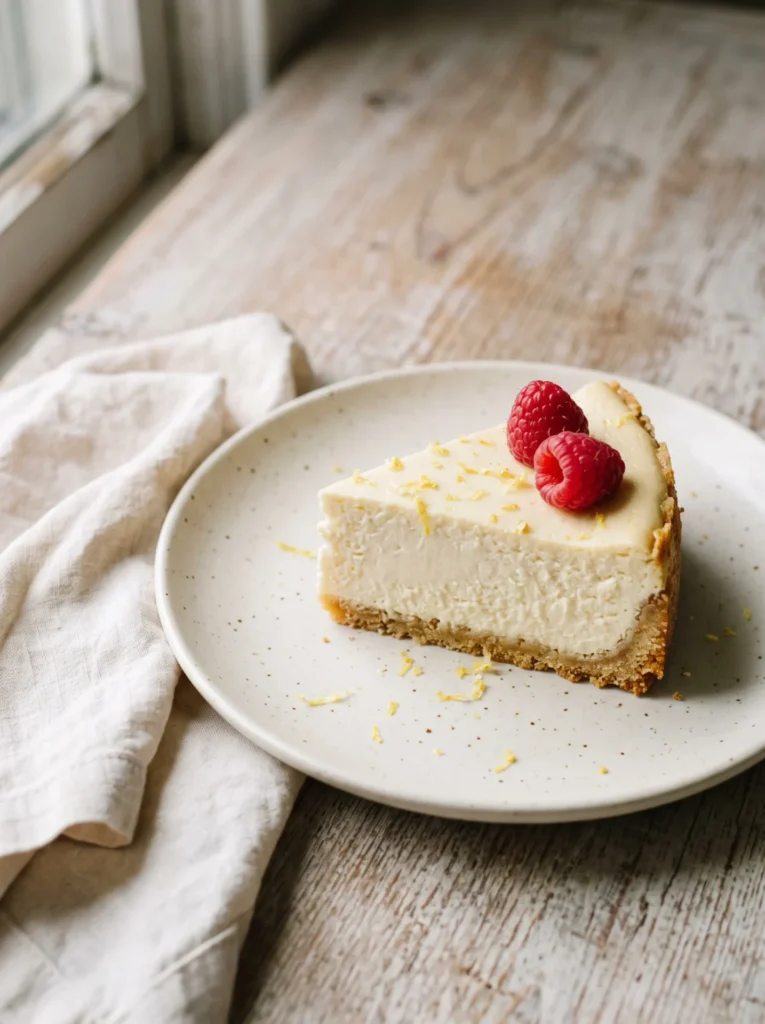
This keto cheesecake without erythritol swaps the polyol out completely, using granulated allulose so you get the same dense, tangy New York-style filling without the cooling aftertaste or gritty crust some erythritol bakes leave behind. It’s built on a toasted almond flour crust, baked low and slow in a real water bath, and finished with a splash of lemon to keep the cream cheese from tasting flat. Part of our full lineup of keto recipes, it’s for anyone avoiding erythritol for taste, digestion, or curiosity about the newer research on sugar alcohols.
Table of Contents
Why this recipe works
- No erythritol anywhere. A genuine keto cheesecake without erythritol — no crystallizing in the crust, no cooling aftertaste in the filling.
- Allulose bakes like real sugar. It caramelizes and holds moisture, so the crust browns properly and the filling bakes silky instead of drying out.
- A real keto cheesecake water bath. Combined with a 150°F pull temperature, it sets the filling custardy and keeps the top from cracking.
- One bowl. A hand mixer on low speed is all you need — no stand mixer, no special equipment beyond a thermometer.
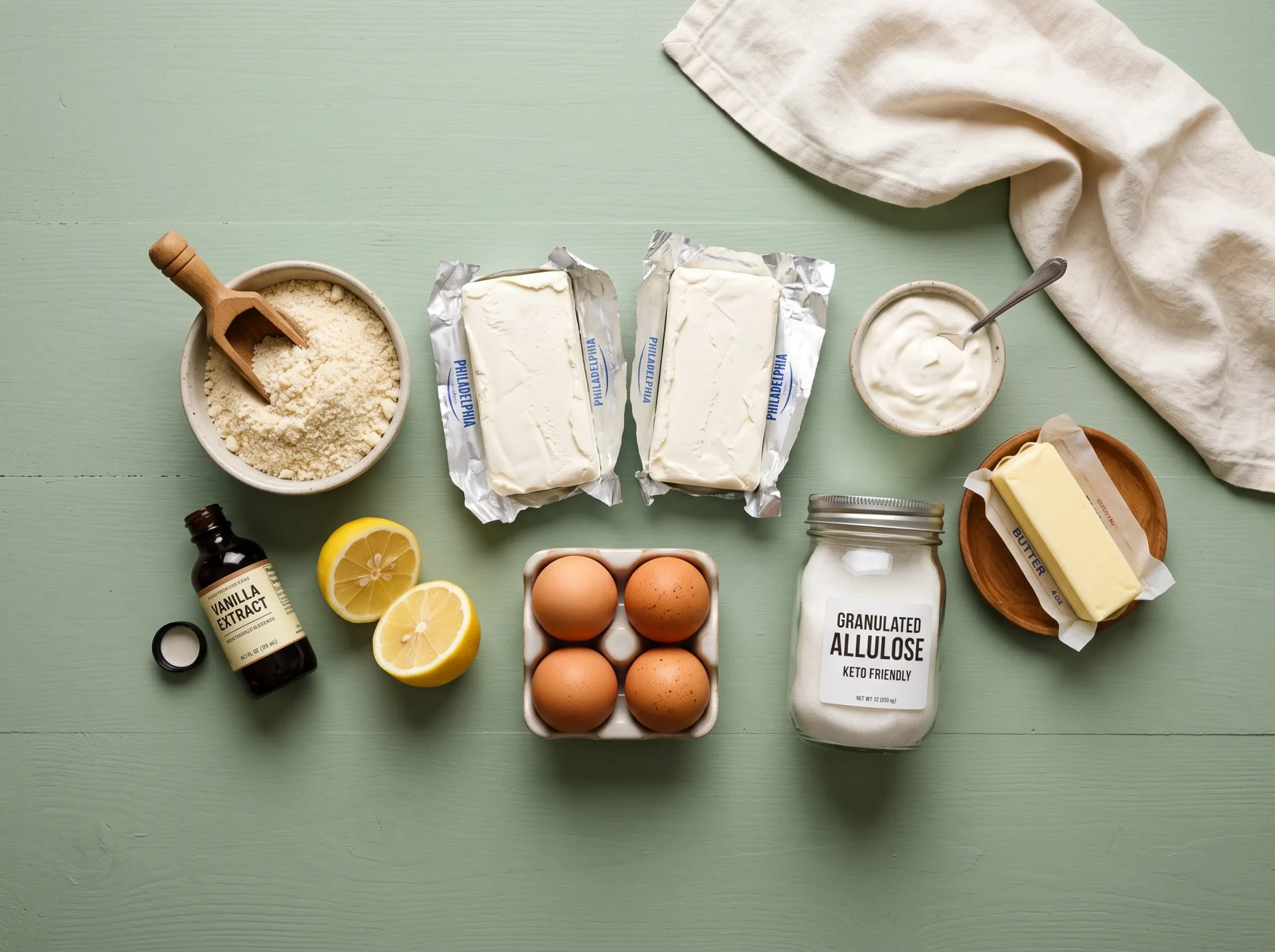
Ingredients
Makes 12 servings.
Equipment
How to make it
- Preheat and prep the pan. Preheat to 325°F (163°C). Wrap a 9-inch springform pan in two layers of heavy-duty foil, up the sides, so water can’t seep in.
- Build the crust. Stir together the almond flour, melted butter, allulose, and salt until it looks like wet sand. Press it firmly and evenly into the pan bottom with a measuring cup.
- Pre-bake the crust. Bake alone for 10 minutes, until just golden at the edges. Set it on a rack while you make the filling.
- Beat the cream cheese smooth. Beat on low-medium speed for 2 to 3 minutes, scraping often, until there isn’t a single lump left — rushing this is the most common cause of a lumpy filling.
- Add sweetener and eggs. Beat in the allulose, then add the eggs one at a time on the lowest speed, just until each disappears — overbeating whips in air that makes the top puff and crack.
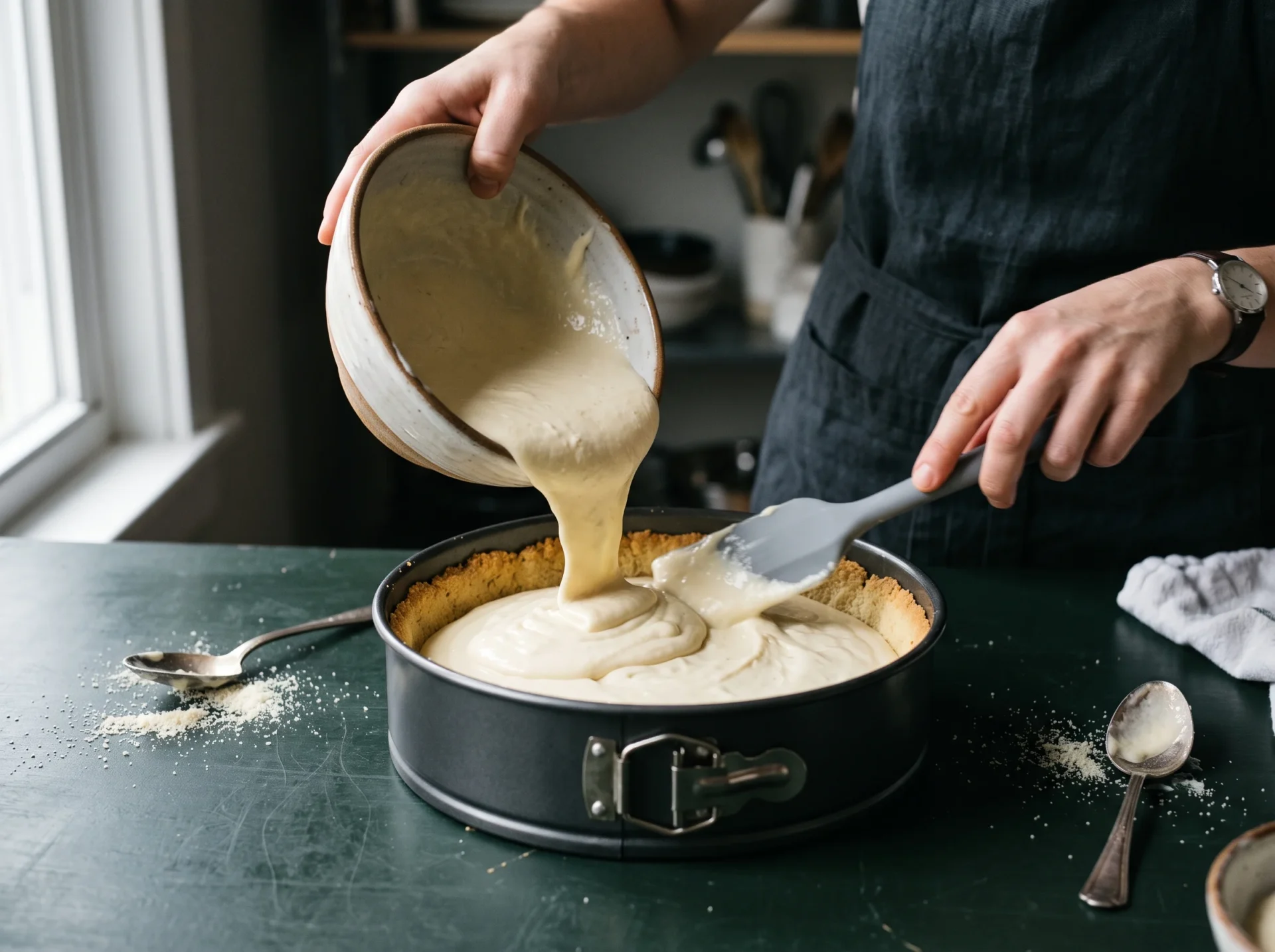
- Finish the filling. Beat in the sour cream, vanilla, lemon juice, and salt until just smooth. Pour over the crust and smooth the top.
- Water bath and bake. Set the springform inside the roasting pan and pour boiling water in until it reaches about 1 inch up the sides. Bake 55 to 65 minutes, until the edges are set but the center still jiggles slightly, and an instant-read thermometer at the center reads 150°F (65°C).
- Cool slowly, then chill. Turn off the oven, crack the door open, and let it sit inside for 1 hour — this prevents cracking. Move to a rack to cool fully, then refrigerate at least 6 hours, ideally overnight, before releasing the springform.
Practical cooking tips
- Room-temperature cream cheese isn’t optional — cold cream cheese won’t fully smooth out, and you’ll see the lumps in every slice.
- Allulose dissolves more slowly than erythritol, so give the initial beating an extra minute rather than assuming the batter is grainy.
- Not sure which keto cheesecake sweetener to buy — plain allulose or a monk fruit allulose blend? Either works here; the blend tastes a touch rounder.
- A wet knife, wiped dry between cuts, gives cleaner slices than a dry one once fully chilled.
Troubleshooting tips
- The top cracked. Almost always from overbeating the eggs or cooling too fast. Mix eggs on the lowest speed and always cool in the turned-off oven with the door ajar.
- The center never firmed up. Usually pulled too early — an allulose keto cheesecake filling can look looser than an erythritol version at the same visual doneness, so trust the 150°F thermometer reading over how jiggly it looks.
- The crust is soggy on the bottom. Water leaked through the foil seam — double-wrap the pan, or nest it inside a second pan before adding the water.
- The filling tastes flat. Allulose alone reads slightly less rounded than sugar. The lemon juice and salt are there to fix that — don’t skip either one.
Swaps and variations
- Swap the allulose 1:1 for a monk fruit allulose blend — same quantity, same net carbs, a slightly rounder sweetness.
- Allulose is a reliable erythritol alternative baking swap because it caramelizes and browns instead of staying pale or crystallizing as it cools.
- For a nuttier crust, replace 1/4 cup almond flour with crushed pecans — about 1 g more fat, negligible carbs per slice.
- If erythritol doesn’t bother you, our Classic Keto Cheesecake with Buttery Pecan Crust uses a powdered erythritol sweetener instead.
Serving ideas
- Serve chilled, straight from the fridge — this filling is dense enough that it doesn’t need to come to room temperature first.
- A spoonful of a sugar-free berry compote or a few fresh raspberries adds acidity that balances the rich filling without meaningfully changing the carb count.
- For a dinner-party plate, dust the top with a little unsweetened cocoa powder or a few toasted pecans just before serving.
- Browse more of our recipes for what to serve alongside a low-carb dessert course.
Storage and meal prep
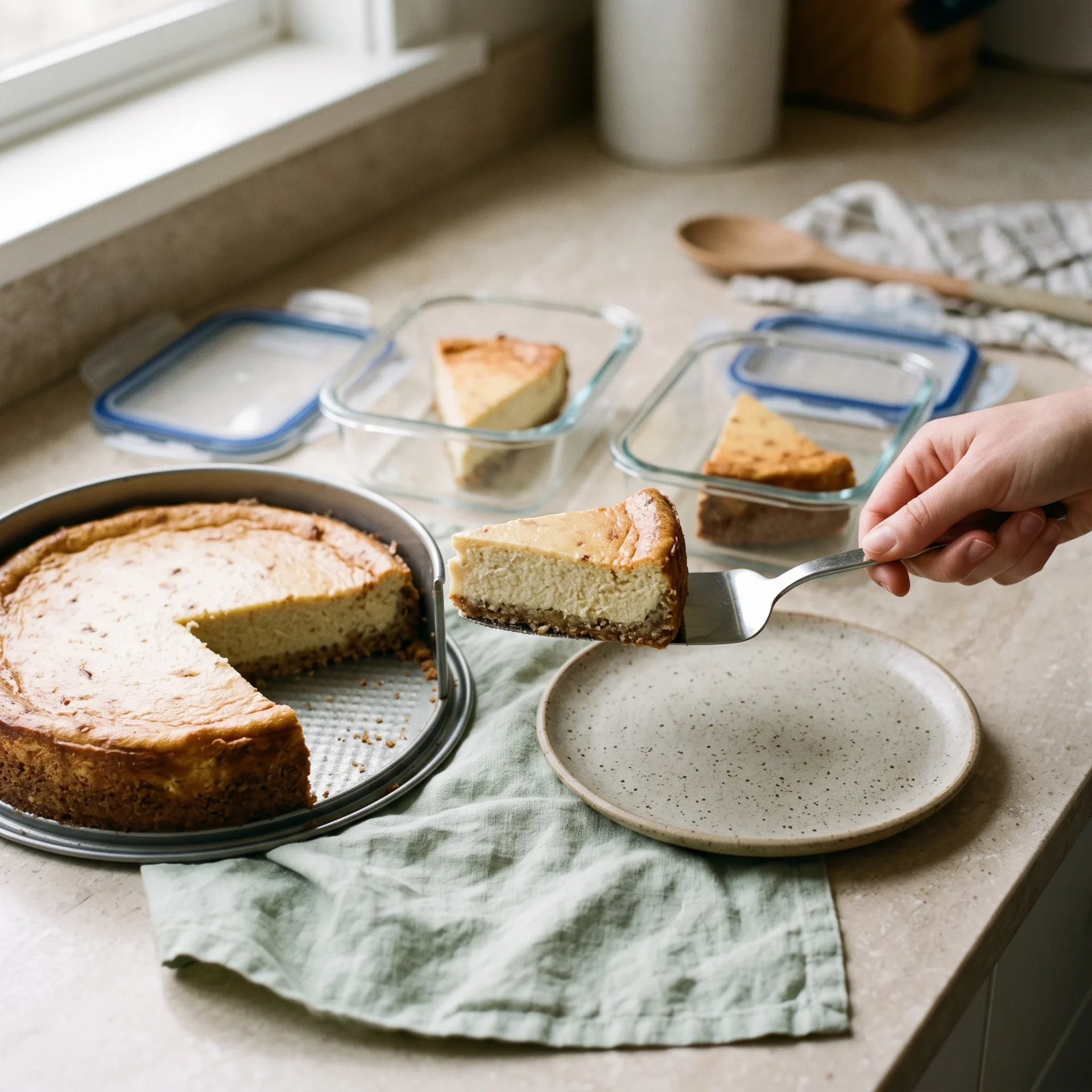
Store leftover slices covered in the refrigerator for up to 5 days — the flavor improves after the first full day. To freeze, wrap slices tightly in plastic wrap and foil for up to 2 months; thaw overnight in the fridge, since a fast thaw makes the texture watery. Make the full cheesecake up to 2 days ahead and hold it covered in the pan until ready to serve. Because this contains eggs and dairy, don’t leave slices at room temperature for more than 2 hours.
Nutrition per serving
| Nutrient | Per serving |
|---|---|
| Calories | 459 kcal |
| Protein | 10 g |
| Fat | 43 g |
| Total carbs | 7 g |
| Fiber | 2 g |
| Net carbs | 5 g |
Nutrition is an estimate calculated from the ingredients above using USDA FoodData Central values, and it varies with brands and exact portion sizes.
Frequently asked questions
Is this keto cheesecake without erythritol actually keto-friendly?
Yes — each slice has about 5 g net carbs from a full-fat cream cheese filling and almond flour crust, with no wheat flour or added sugar. FDA guidance confirms most allulose is absorbed and excreted rather than metabolized, so it has very little blood-sugar impact even though it’s still counted in total carbohydrate on the label.
Why avoid erythritol in a cheesecake in the first place?
Taste and digestion, mostly. Erythritol has a cooling, minty aftertaste some people find out of place in a cream cheese filling, and it can cause bloating or a laxative effect at the amount a full cheesecake needs. Allulose largely avoids both, though anyone new to rare sugars should start with a modest serving.
Can I use a monk fruit allulose blend instead of plain allulose?
Yes, 1:1 by volume in both the crust and the filling. It won’t change the net carb count, since the monk fruit extract itself contributes almost no carbohydrate or calories.
Can I make this without a water bath?
You can, but expect more surface cracking and a slightly less even texture. If you skip it, drop the oven temperature to 300°F, add about 10 minutes to the bake time, and watch the internal temperature just as closely.
How many net carbs does this have compared to one made with erythritol?
About 5 g keto cheesecake net carbs per slice — close to an erythritol version, but for a different reason: erythritol is usually excluded entirely from the carb count, while this recipe’s allulose is included in total carbs and only excluded from net carbs based on its low absorption. Sweetener labels vary, so check the one you buy.
Ratings and reviews
No ratings yet. If you have cooked this, your rating helps the next person decide.
Rate this recipe