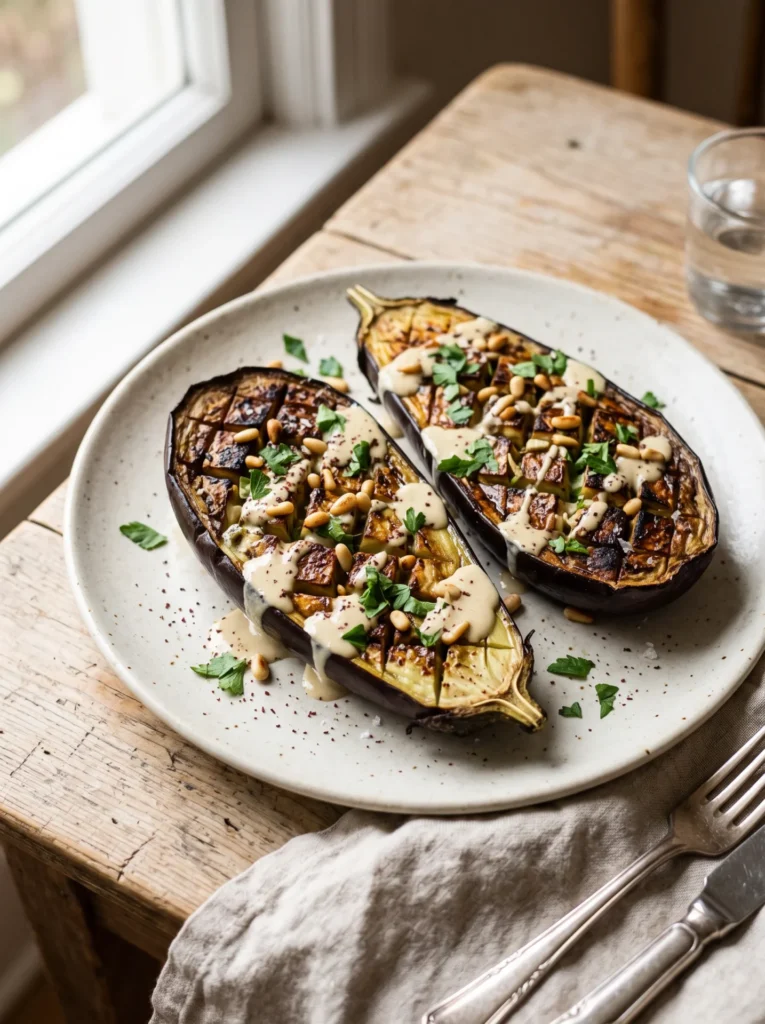
Roasted eggplant with lemon tahini is one of the simplest ways to turn a plain vegetable into a genuinely craveable Mediterranean side dish. The eggplant halves get a deep crosshatch score, roast until the flesh turns silky and the cut surface caramelizes to a deep golden brown, then get finished with a garlicky lemon tahini sauce that turns creamy the moment it hits the warm eggplant. It’s naturally vegan, comes together with pantry staples, and works as a side dish, a mezze spread, or a light vegetarian main over grains — browse more ideas in the full recipe collection if you’re building out a spread.
Table of Contents
Why this roasted eggplant with lemon tahini works
- Salting is optional, not required. Modern grocery-store eggplant is rarely bitter enough to need it — score and roast straight from the cutting board and save 20 minutes.
- High heat does the caramelizing. Roasting at 425°F browns the cut surface into something closer to grilled than steamed, with a soft, custardy center underneath.
- The tahini sauce seizes on purpose. Whisking lemon juice into tahini clumps it before it turns silky — that’s normal, not a mistake, and warm water fixes it in seconds.
- One pan, mostly hands-off. Thirty-five minutes of unattended roasting is enough time to make the sauce, toast the nuts, and set the table.
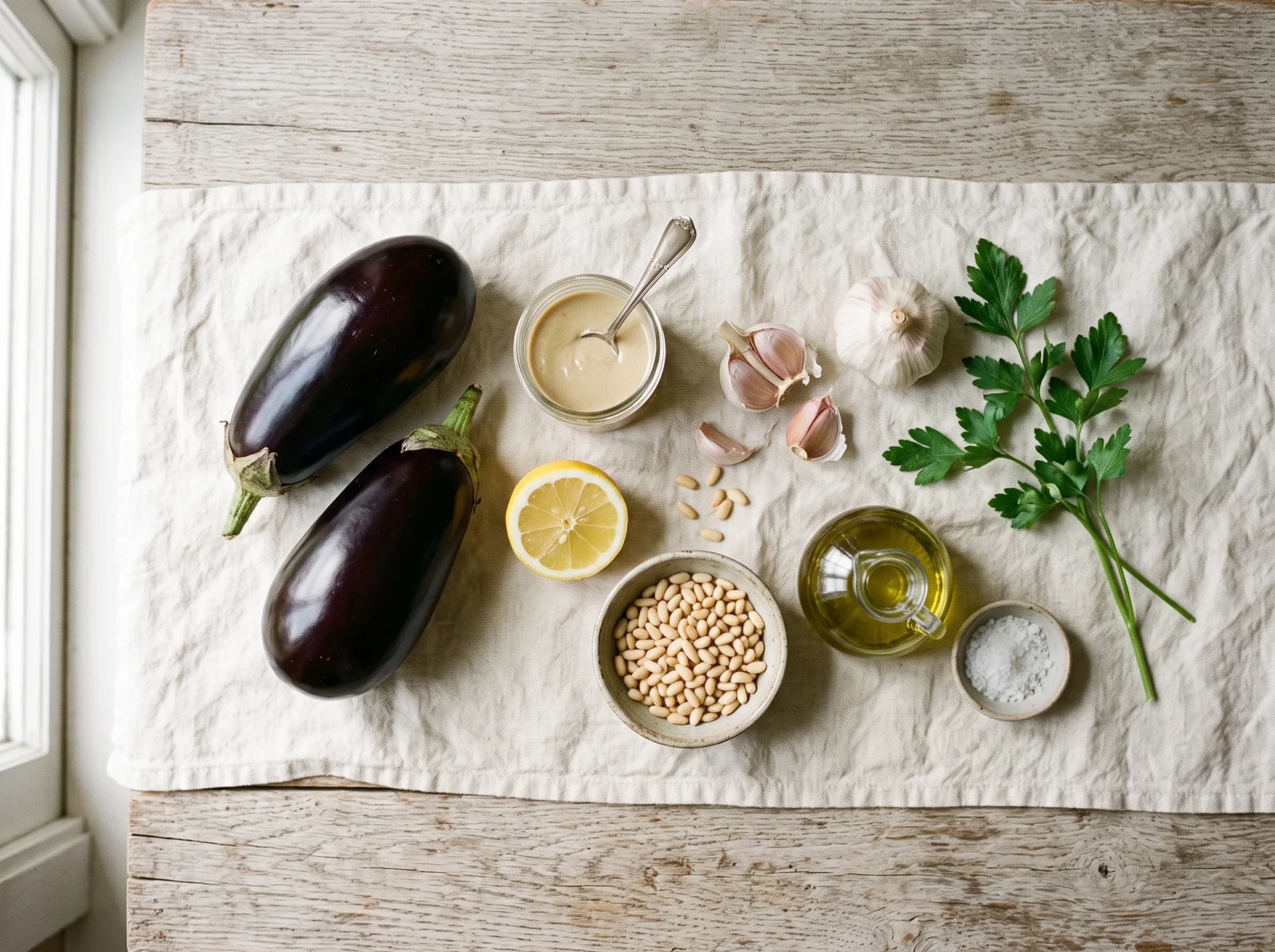
Ingredients
Makes 4 servings.
Equipment
How to make it
- Preheat and prep the sheet. Preheat the oven to 425°F (220°C) and line a rimmed baking sheet with parchment paper.
- Score and oil the eggplant. Lay the eggplant halves cut-side up and score each in a 1-inch diamond pattern, cutting about three-quarters of the way through the flesh without piercing the skin. Brush the cut sides with 2 tablespoons of the olive oil and season with ¾ teaspoon of the salt and the black pepper.
- Roast until deeply tender. Arrange the halves cut-side up on the prepared sheet and roast for 35–40 minutes, until a paring knife slides into the center with no resistance and the scored surface is deep golden brown at the edges. Larger eggplants may need up to 10 minutes more.
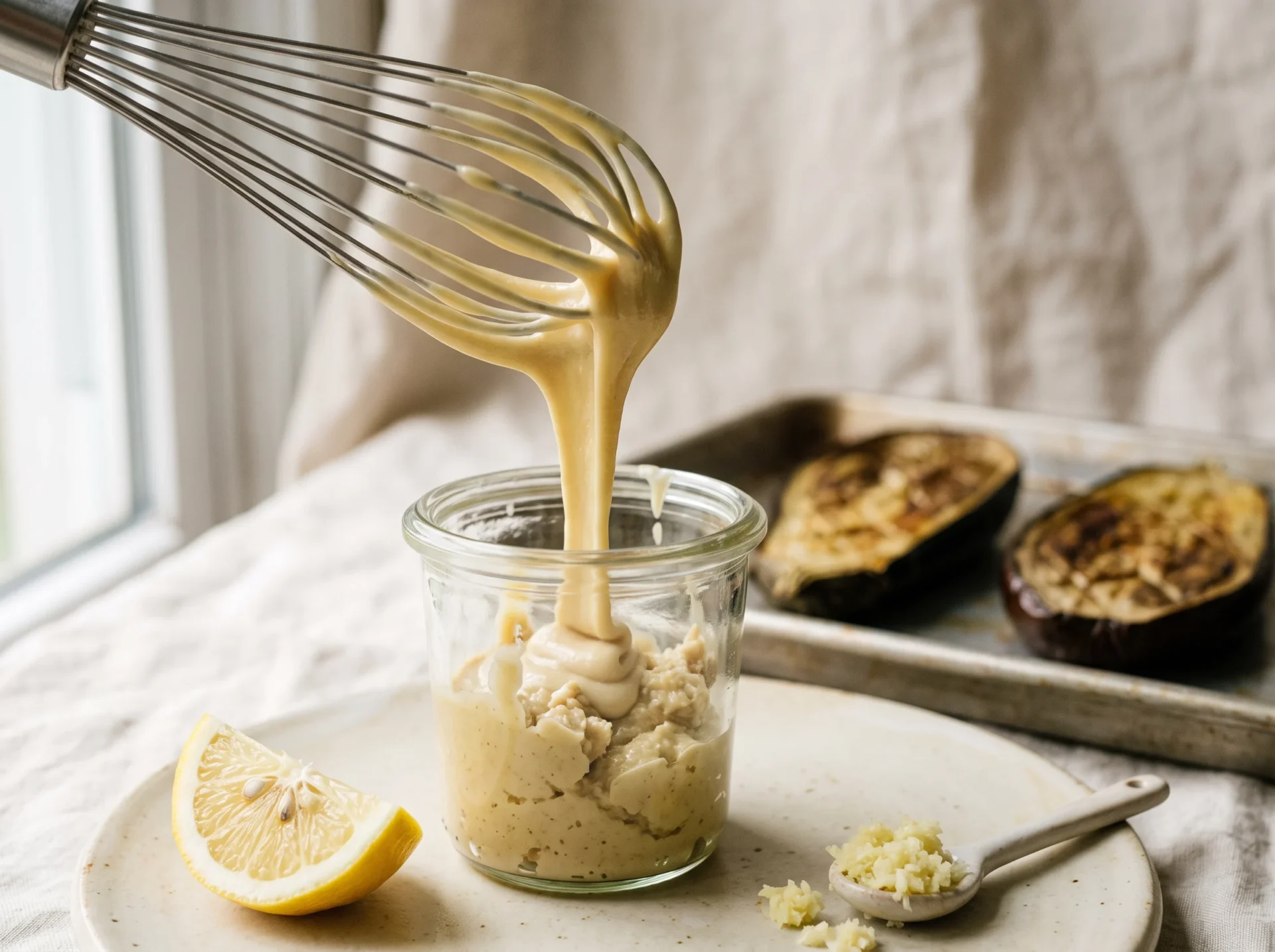
- Make the lemon tahini sauce. While the eggplant roasts, whisk the tahini, lemon juice, garlic, and remaining ¼ teaspoon salt in a small bowl — the mixture will seize into a stiff paste. Whisk in warm water, 1 tablespoon at a time, until the sauce ribbons smoothly off the whisk; if it stays too thick, add water a teaspoon at a time until it pours.
- Toast the nuts. In the last 5 minutes of roasting, toast the pine nuts or almonds in a dry skillet over medium heat for 1–2 minutes, stirring constantly, until fragrant and just golden; pull them from the heat immediately since they burn fast.
- Assemble and serve. Transfer the warm eggplant to a platter, drizzle generously with the lemon tahini sauce, and finish with the remaining 1 tablespoon olive oil, the toasted nuts, and the parsley. Serve warm or at room temperature.
Practical cooking tips
- Score deep, not through. A 1-inch diamond pattern cut about three-quarters of the way into the flesh lets heat and oil penetrate without the halves falling apart on the sheet.
- Add the water slowly. Tahini seizes into a stiff paste the instant lemon juice hits it — that’s expected. Whisk in warm water a tablespoon at a time until it ribbons off a spoon; too much water thins the sauce past the point of clinging to the eggplant.
- Use the top oven rack for extra color. A rack in the upper third of the oven puts the cut side closer to direct heat, which deepens the caramelization in the same 35–40 minutes.
- Don’t crowd the sheet. This roasted eggplant with lemon tahini caramelizes best when the halves have space around them; crowding traps steam and the cut surface stays pale instead of browning.
Troubleshooting tips
- Eggplant is still firm at 35 minutes. Size varies a lot — a larger or older eggplant can need up to 45–50 minutes. Keep roasting until a knife meets zero resistance rather than watching the clock.
- Sauce tastes sharp or bitter. Raw garlic and over-reduced lemon juice both read as harsh; start with a small clove and taste before adding more garlic, and stir in the water gradually rather than all at once.
- Eggplant itself tastes bitter. Larger, older eggplants with visible seeds are more likely to be bitter. Choose smaller, firm eggplants with glossy, unblemished skin, or salt the cut sides for 15 minutes and blot dry before oiling if you want extra insurance.
- Sauce separates on the plate. Tahini sauce thickens and can break as it sits. Whisk in a teaspoon of warm water right before serving to bring it back together.
Swaps and variations
- Swap tahini for Greek yogurt. Replace the tahini sauce with ½ cup plain Greek yogurt whisked with the same lemon juice and garlic for a lighter, higher-protein sauce — this drops fat by roughly 15 g per serving and adds about 4 g of protein.
- Make it a spiced Mediterranean eggplant recipe. Add ¼ teaspoon ground cumin or za’atar to the oil before brushing the eggplant for a warmer, earthier flavor with no change to the macros.
- Add pomegranate seeds for a sweet-tart finish. Scatter 2 tablespoons of pomegranate arils over the plated eggplant; they add about 15 kcal and 3 g of carbs per serving with no fat or protein.
- Turn it into a full meal. Spoon the finished eggplant over cooked bulgur or farro and add a scoop of chickpeas; this roughly doubles the calories and adds 6–8 g of protein per serving from the chickpeas.
Serving ideas
- Serve warm as a mezze spread with warm pita, hummus, and olives for a full Mediterranean appetizer spread.
- Plate alongside grilled chicken or roasted salmon for a low-effort vegetable side that needs no last-minute attention.
- Spoon over labneh or thick Greek yogurt swirled onto the plate first, for extra tang and protein.
- This lemon tahini sauce recipe isn’t limited to eggplant — spoon extra over roasted cauliflower, falafel, or grilled chicken.
- Pair it with our Mediterranean chickpea bowl with lemon tahini sauce for a heartier plant-based spread that shares the same sauce base.
Storage and meal prep
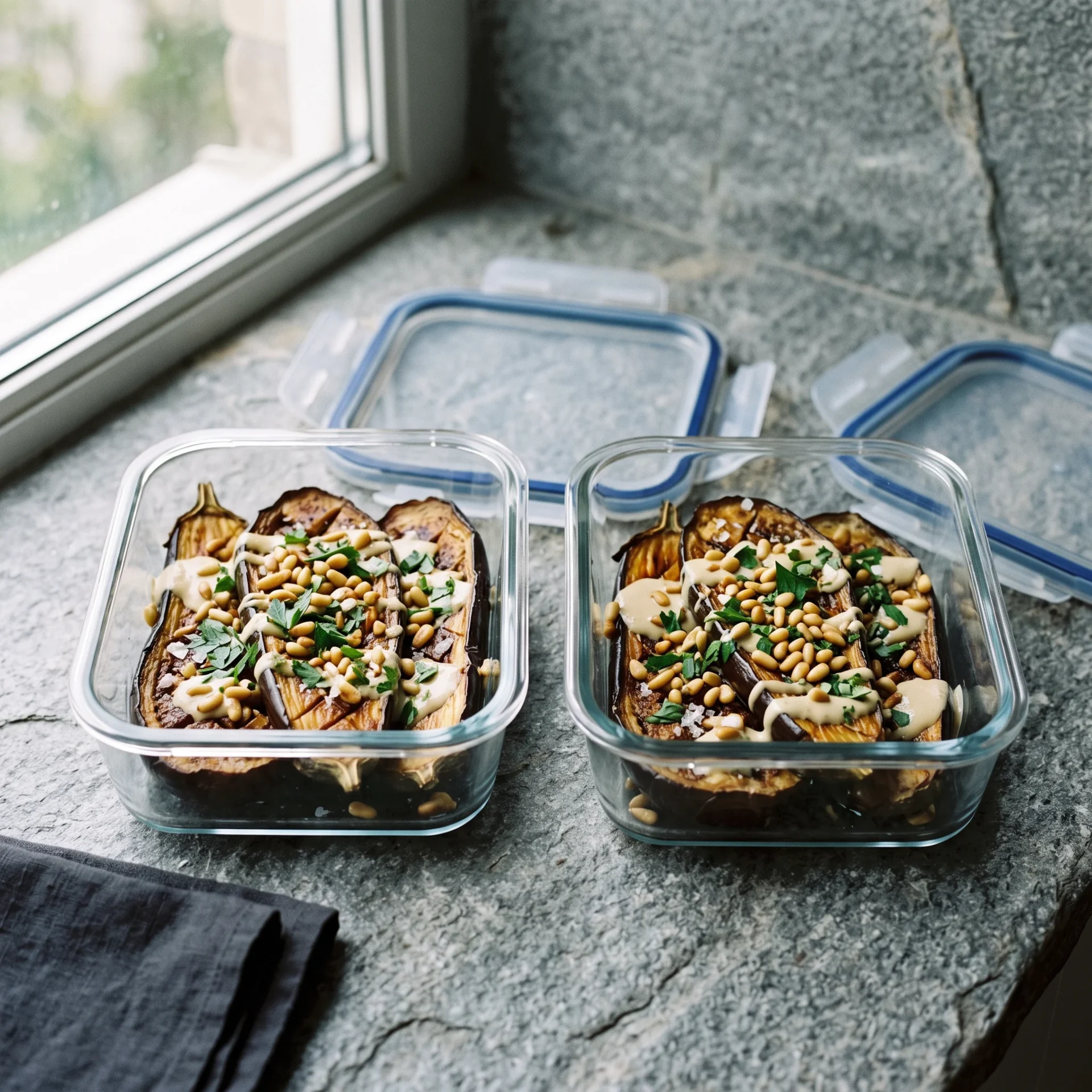
Store the roasted eggplant and the tahini sauce in separate airtight containers in the refrigerator for up to 4 days; keeping them apart stops the sauce from turning the eggplant soggy. The tahini-garlic sauce contains raw garlic, so refrigerate it promptly and treat the same 4-day window as a food-safety boundary rather than a flavor preference — raw garlic held in an oil-based mixture at room temperature is a documented botulism risk according to the National Center for Home Food Preservation. Reheat the eggplant uncovered in a 350°F oven or air fryer for 5–8 minutes to recrisp the edges; the microwave works in a pinch but leaves the surface soft. The sauce thickens in the fridge, so whisk in a teaspoon of warm water to loosen it before serving. This dish does not freeze well — eggplant’s high water content turns mushy and watery after thawing, so plan to finish it within the fridge window instead.
Nutrition per serving
| Nutrient | Per serving |
|---|---|
| Calories | 255 kcal |
| Protein | 5 g |
| Fat | 21 g |
| Total carbs | 15 g |
| Fiber | 7 g |
| Net carbs | 8 g |
Nutrition is a calculated estimate based on the ingredients and quantities above; it varies with brands and exact portion sizes.
Frequently asked questions
Do I need to salt the eggplant before roasting?
No, not usually. Most eggplant sold in grocery stores today has been bred to be much less bitter than older varieties, so scoring and roasting straight away works fine. Salt the cut sides for 15 minutes and blot them dry first only if your eggplant is large, older, or has a lot of visible seeds.
Why is my tahini sauce clumping up?
That’s a normal stage of making this eggplant tahini sauce, not a mistake. Lemon juice makes tahini seize into a stiff, dry-looking paste before it loosens back into a smooth sauce. Keep whisking and add warm water a tablespoon at a time until it turns pourable again.
Is this recipe vegan?
Yes. This roasted eggplant with lemon tahini is entirely plant-based — olive oil, tahini, lemon, and garlic — with no dairy, eggs, or other animal products, so it fits a vegan roasted eggplant menu as easily as a Mediterranean one.
How do I know when the eggplant is fully roasted?
A paring knife should slide into the thickest part of the flesh with no resistance, and the scored cut surface should be deep golden brown at the edges. That typically takes 35–40 minutes at 425°F, longer for larger eggplants.
Can I make this ahead for a party?
Yes. Roast the eggplant up to a day ahead and reheat it in a 350°F oven for about 8 minutes before serving. The tahini sauce can be made up to 2 days ahead and refrigerated; whisk in a little warm water to loosen it just before you plate.
How do I roast eggplant without bitterness?
The short answer for how to roast eggplant without bitterness is to start with the right eggplant: choose smaller, firm ones with glossy, unblemished skin and few visible seeds, since those traits correlate with a milder flavor. If you’re still unsure, salting the cut sides for 15 minutes and blotting them dry before oiling draws out excess moisture along with any bitterness.
Ratings and reviews
No ratings yet. If you have cooked this, your rating helps the next person decide.
Rate this recipe