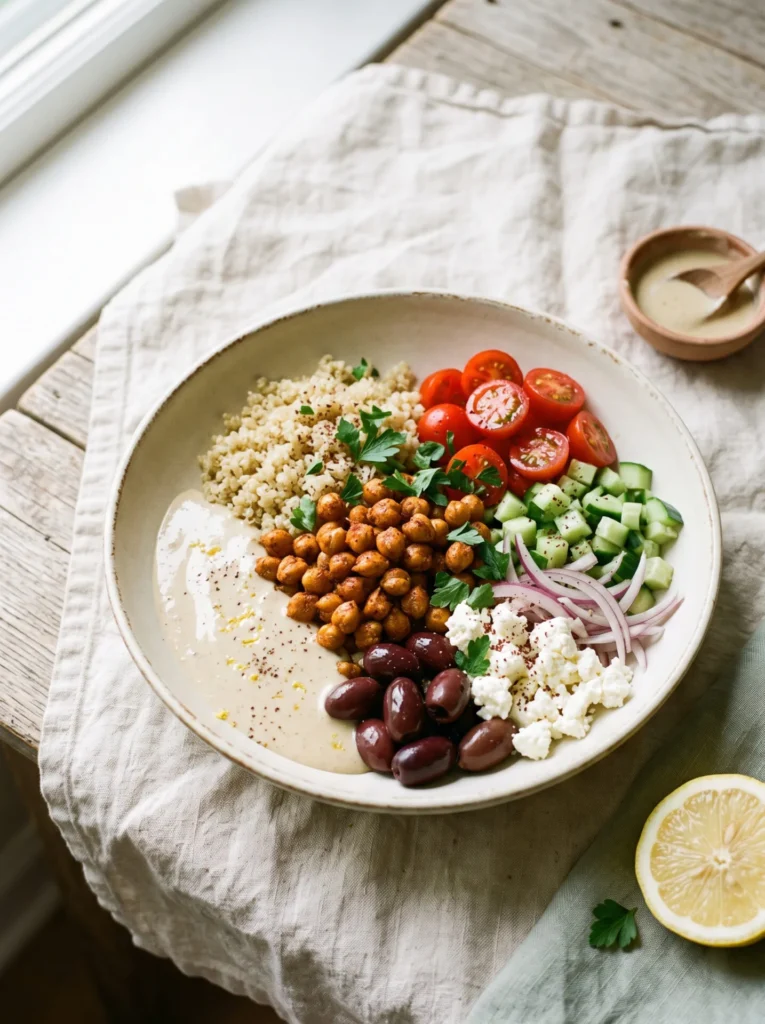
This Mediterranean chickpea bowl rests on one small decision: the chickpeas get roasted until they rattle, not tipped straight from the can into a salad. That single move turns a cold assembly job into a warm, textured dinner — crackling golden chickpeas over fluffy quinoa, cool cucumber and tomato, salty feta and olives, and a lemon tahini sauce loose enough to run into every gap. It takes about 50 minutes, most of it hands-off oven time. For more meals built the same way, browse our Mediterranean recipes and the full recipe archive.
Contents
Why this Mediterranean chickpea bowl works
- Roasting does what dressing cannot. Canned chickpeas are soft and slightly mealy straight from the tin. Thirty-five minutes on a bare hot pan drives off the surface water and collapses the skins into something that snaps, so the bowl has a crunch that is not just raw vegetables.
- The sauce is the binder, not a drizzle. Tahini thinned with lemon and cold water coats quinoa and vegetables evenly instead of sliding to the bottom, which is what stops a bowl from tasting like separate piles of food sharing a dish.
- It is built from pantry staples. Two cans, a bag of grain, a jar of tahini and whatever is crisp in the drawer. Nothing here needs a specialty shop or a same-day trip.
- Every component stores on its own terms. Because the chickpeas, grain, vegetables and sauce are finished separately, they can be packed separately — which is the whole reason this reheats and repacks better than a tossed salad.
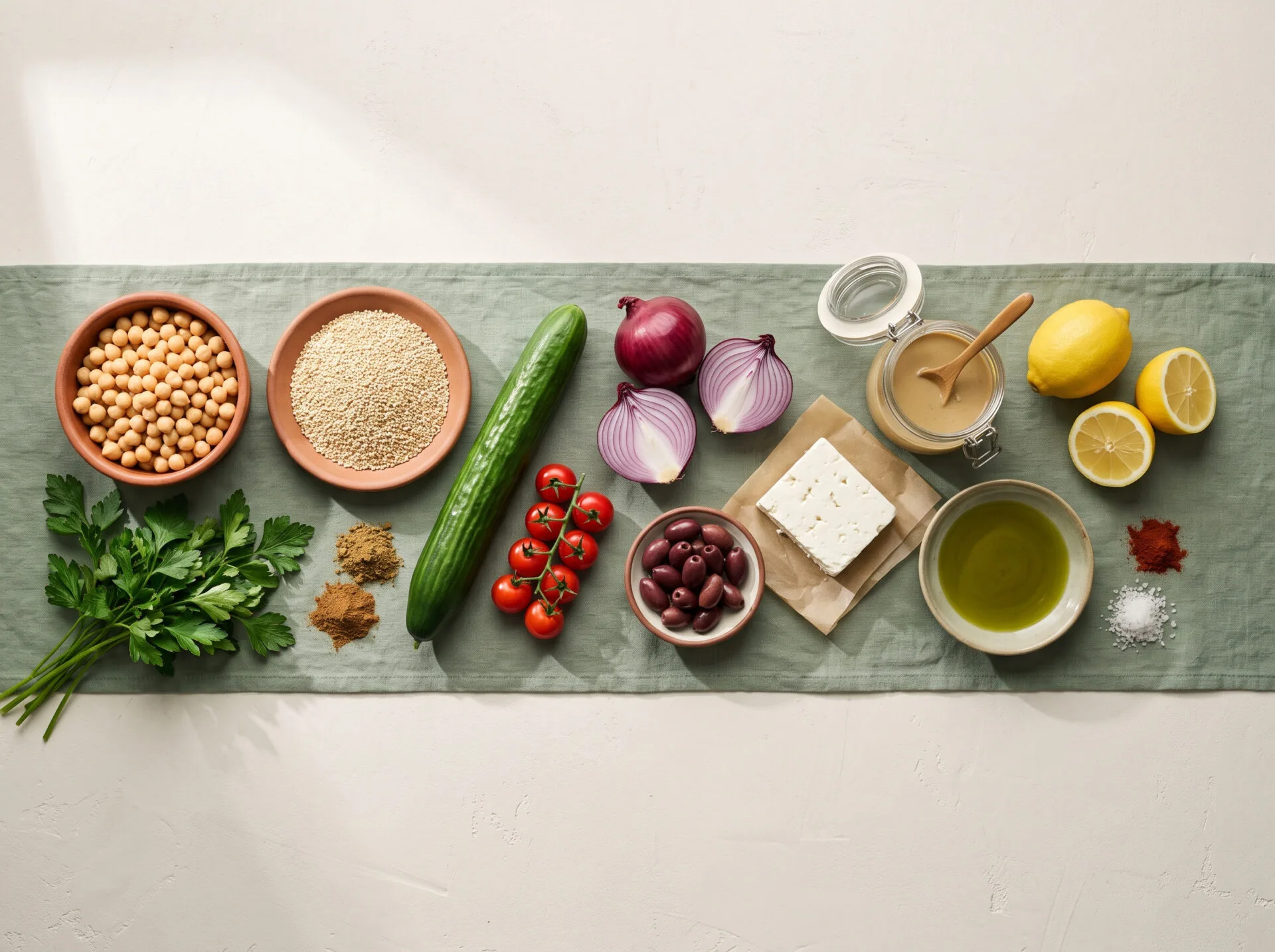
Ingredients
Makes 4 servings.
Equipment
How to make it
- Heat the oven and dry the chickpeas thoroughly. Heat the oven to 400°F (205°C). Drain and rinse both cans, tip the chickpeas onto a clean towel, and roll them gently until the surface looks matte rather than glossy. Discard any skins that slip off. Give this a full two minutes — surface water is the single reason roasted chickpeas turn out chewy.
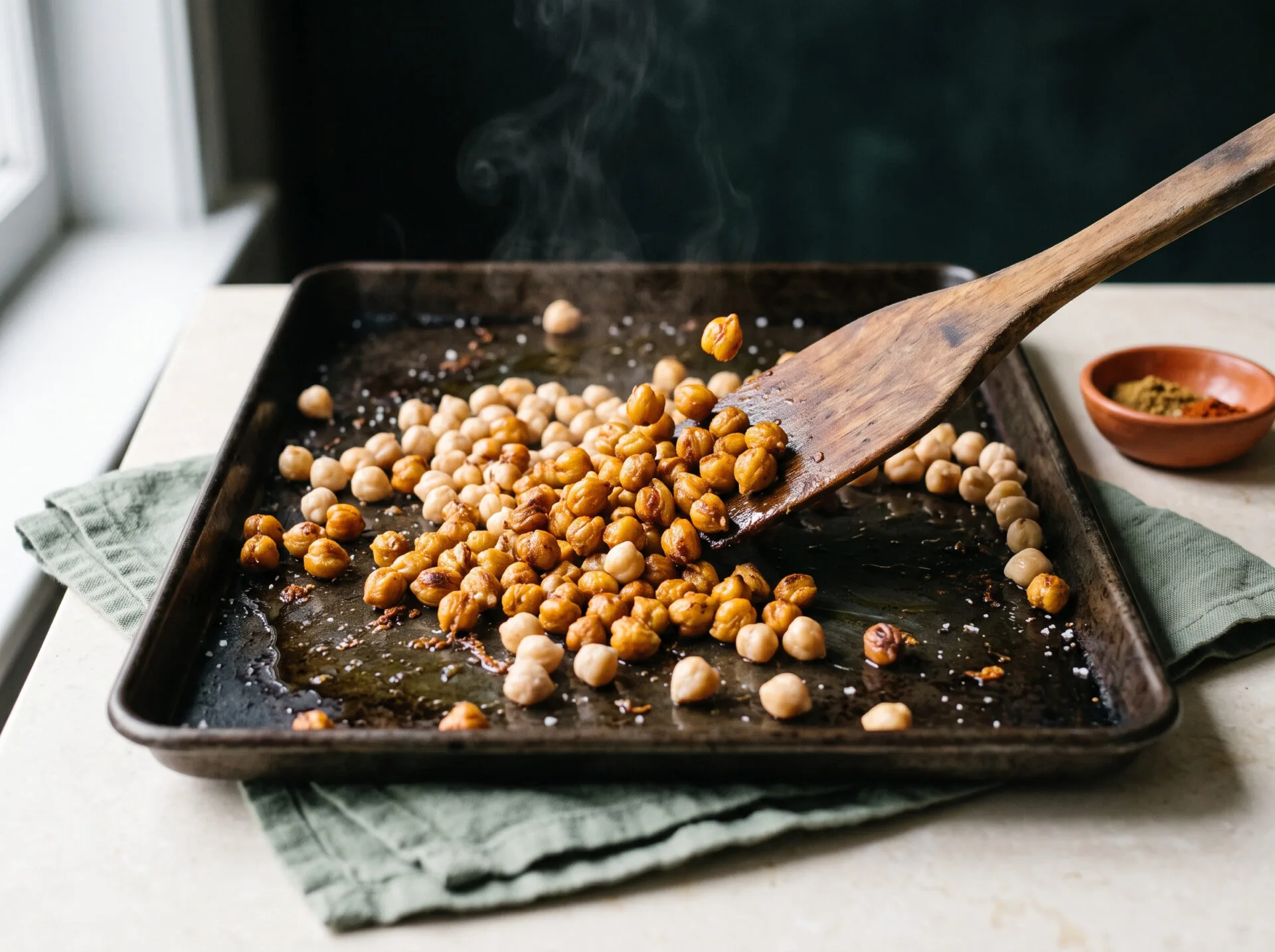
- Roast on a bare pan in one loose layer. Toss the dried chickpeas with 2 tablespoons of the olive oil, ½ teaspoon of the salt and the black pepper, then spread them across an unlined sheet pan with visible space between them. Roast 30 to 35 minutes, shaking the pan every 10 minutes, until they are deep golden and rattle audibly when you shake it.
- Season them hot, straight out of the oven. Tip the pan’s contents into a bowl and toss immediately with the cumin, smoked paprika and garlic powder. Spices added before roasting scorch and turn bitter over 35 minutes; added now, the residual heat and oil bloom them instead.
- Cook the quinoa while the chickpeas roast. Rinse the quinoa under cold water for 30 seconds to wash off its bitter saponin coating. Combine with the water and ¼ teaspoon salt, bring to a boil, cover, and simmer on low for 15 minutes. Off the heat, leave it covered for 5 minutes, then fluff with a fork — the grains should be separate with a visible curled germ.
- Whisk the lemon tahini sauce. Whisk the tahini, lemon juice, grated garlic and remaining ¼ teaspoon salt together. It will seize into a stiff paste — this is expected. Keep whisking and add the cold water one tablespoon at a time until it loosens into a pourable cream that ribbons off the whisk.
- Prepare the cold layer. Dice the cucumber, halve the tomatoes and olives, and slice the red onion as thinly as you can. If raw onion is sharp for you, soak the slices in cold water for 10 minutes and drain.
- Build the bowls, chickpeas last. Divide the quinoa among four bowls and drizzle with the remaining tablespoon of olive oil. Arrange the cucumber, tomatoes, onion and olives in sections around the edge, scatter the feta, then add the roasted chickpeas at the very end so they meet the sauce as late as possible. Spoon over the sauce and finish with parsley.
Practical cooking tips
Nearly everything that goes wrong with a Mediterranean chickpea bowl goes wrong on the sheet pan, so these five notes concentrate there.
- Skip the parchment. A liner insulates the chickpeas from the pan and they steam instead of roasting. Bare metal, preheated with the oven if you have the patience, gives the best crust.
- Do not crowd the pan. Two cans need a full half-sheet. If the chickpeas touch on all sides they trap steam and stay pale — use two pans rather than one heaped one.
- Trust the sound, not the clock. Ovens vary by 25°F or more. The chickpeas are ready when they rattle like small stones against the pan, which may happen at 28 minutes or at 38.
- Rub the skins off for the crispiest result. Rolling them firmly in the towel loosens a good number of skins, and the ones you remove crisp harder than the ones you leave. It is optional, and it is the difference between good and very good crispy roasted chickpeas.
- Thin the sauce further than feels right. Tahini thickens as it sits. A sauce that looks slightly too loose in the bowl will be exactly right by the time it reaches the table.
Swaps and variations
Treat the Mediterranean chickpea bowl as a template rather than a fixed recipe: keep a crisp element, a soft grain, something acidic and a fatty sauce, and the balance survives most substitutions.
- Make it a vegan Mediterranean bowl. Leave out the feta entirely. That removes about 50 calories, 2.5 g of protein and 4 g of fat per serving, and everything else in the recipe is already plant-based.
- Swap the grain. Pearl couscous, farro or brown rice all work in the same 3-cup cooked quantity. Brown rice adds roughly 15 g of carbohydrate per serving over quinoa and drops the protein by about 5 g, so the bowl leans more toward a side dish than a main.
- Lean on a spicier chickpea. Add ½ teaspoon of harissa paste to the sauce, or if you want the heat as the whole point of the meal rather than an accent, our harissa chickpea stew takes the same legume in the opposite, saucier direction.
- Add a second protein. Grilled chicken or a soft-boiled egg sits well on top without fighting the tahini. Skip anything already heavily sauced — two sauces in one bowl muddies both.
Storage and meal prep
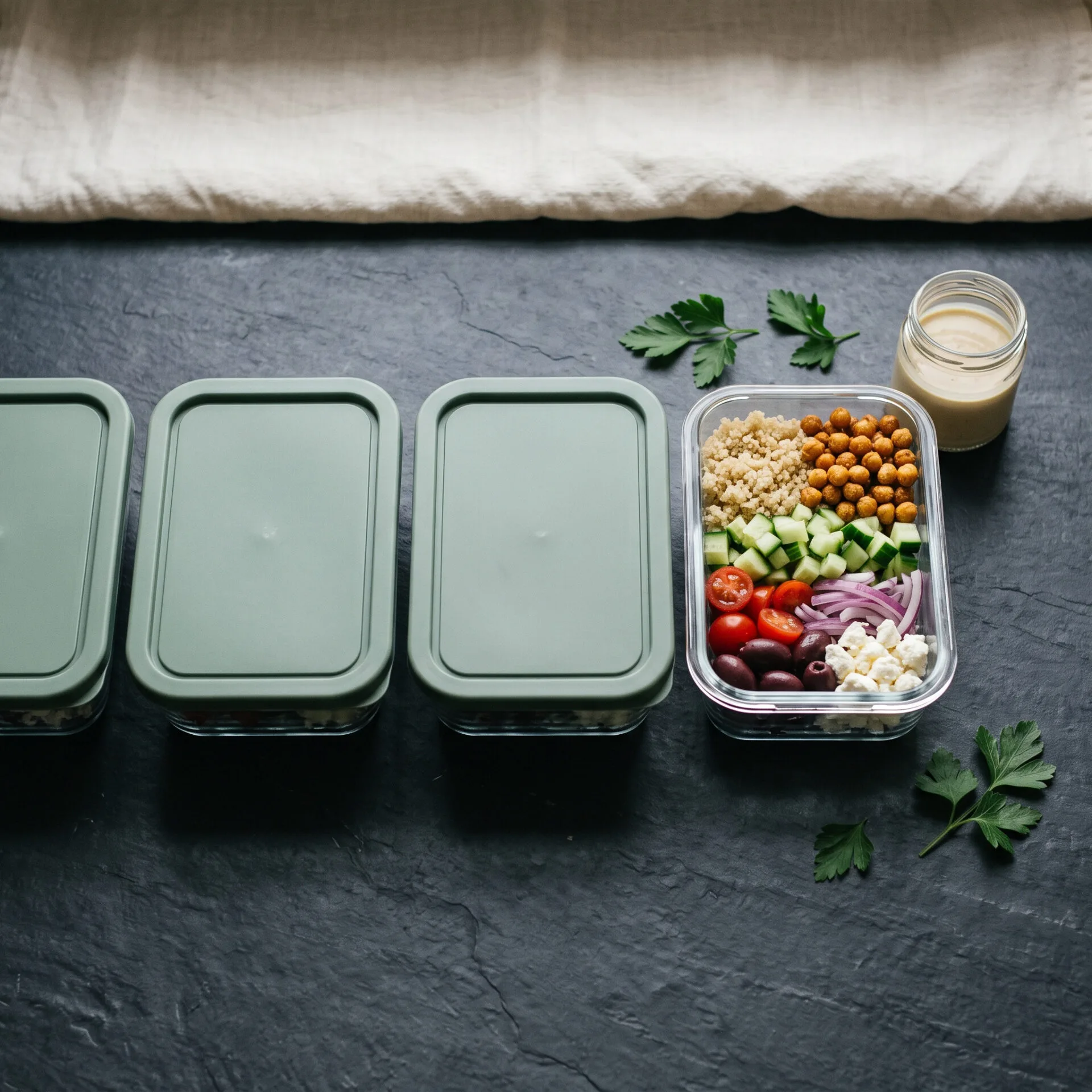
This Mediterranean chickpea bowl was designed to be packed rather than plated. Store the components in separate airtight containers and refrigerate within two hours of cooking; the quinoa, vegetables and feta keep 4 days, in line with the 3-to-4-day window FoodSafety.gov gives for cooked leftovers. The lemon tahini sauce keeps a week and will thicken in the cold — loosen it with a splash of water before serving.
The chickpeas are the one component that does not survive storage well. Sealed in a container they soften overnight, so keep them loosely covered at room temperature for up to 2 days and refresh them in a 375°F (190°C) oven for 5 minutes before eating. If you are building chickpea meal prep bowls for the week, roast the chickpeas fresh in two smaller batches rather than all at once on Sunday. Quinoa freezes well for 3 months; the cucumber and tomato do not freeze at all.
Nutrition per serving
| Nutrient | Per serving |
|---|---|
| Calories | 646 kcal |
| Protein | 23 g |
| Fat | 33 g |
| Total carbs | 70 g |
| Fiber | 15 g |
| Net carbs | 55 g |
Nutrition is an estimate calculated from USDA FoodData Central entries for each ingredient as written, and varies with brands and exact portion sizes.
Frequently asked questions
Can I use dried chickpeas instead of canned?
Yes, and they roast slightly better. You need about 1 cup (180 g) dried, soaked overnight and simmered until tender, which yields roughly the 500 g of cooked chickpeas this recipe calls for. Drain them and let them air-dry for 15 minutes before oiling, because they hold more surface water than canned.
Why did my roasted chickpeas turn out chewy instead of crisp?
Almost always moisture or crowding. Chickpeas that go into the oven damp spend the first 15 minutes steaming rather than roasting, and a heaped pan does the same thing. Dry them properly, spread them out, and give them the full 35 minutes if they have not started rattling.
Can I make this chickpea quinoa bowl ahead for the week?
Yes, with one caveat. The quinoa, chopped vegetables and sauce can all be made up to 4 days ahead and stored separately. The chickpeas are the exception — roast them in smaller batches through the week, or accept that day-three chickpeas are tender rather than crunchy.
Is this recipe keto-friendly?
No. At 55 g of net carbohydrate per serving, this Mediterranean chickpea bowl sits far outside a ketogenic range, and chickpeas and quinoa are both carbohydrate-dense by nature. It belongs to the Mediterranean pattern rather than a low-carb one; for a genuinely low-carb version you would need to replace both the chickpeas and the grain, at which point it is a different dish.
My tahini sauce turned into a solid paste. Did I ruin it?
No — that seizing is normal and temporary. Tahini tightens dramatically when acid first hits it, then relaxes as water is added. Keep whisking and adding cold water a tablespoon at a time and it will turn smooth and pourable within a minute.
What can I use instead of tahini?
Thick Greek yogurt thinned with lemon juice is the closest swap and keeps the bowl Mediterranean, though it makes the dish no longer vegan. Sunflower seed butter works for a sesame allergy but is noticeably sweeter, so add an extra squeeze of lemon to balance it.
Ratings and reviews
No ratings yet. If you have cooked this, your rating helps the next person decide.
Rate this recipe