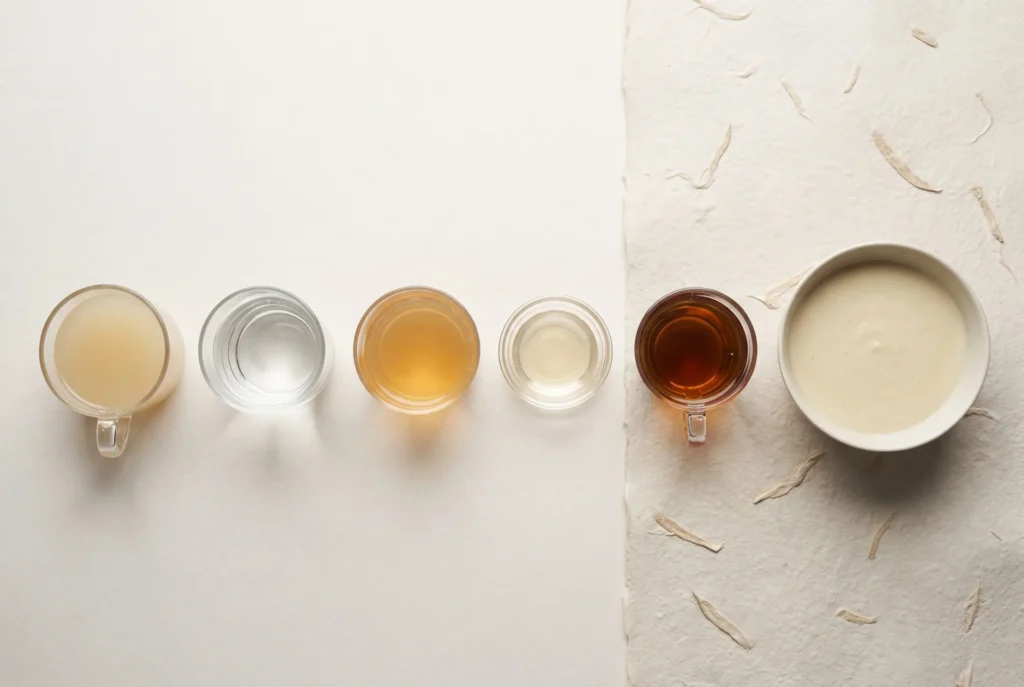
A five day liquid diet should be treated as a short, clinician-directed plan—not a general cleanse or do-it-yourself weight-loss program. The right menu depends on whether your written instructions say clear liquids or full liquids.
Key Takeaways
- Clear liquids are transparent options such as water, clear broth, pulp-free juice, tea, coffee without milk, and plain gelatin.
- Full liquid diet foods can include smooth soups, milk, yogurt drinks, pudding, and other foods that become liquid at room temperature.
- A five day liquid diet plan should follow the exact instructions from your clinician, especially when it follows surgery, a procedure, or swallowing problems.
- Do not improvise a transition back to solid food; ask when and how to advance the texture of meals.
The short answer
A five day liquid diet is not one universal menu. It is a temporary pattern that may mean clear liquids only, or a broader full-liquid order that allows smooth foods. MedlinePlus explains that a full liquid diet is used in situations such as medical tests, surgery recovery, or difficulty chewing and swallowing. Your own care team’s instructions take priority over any online list.
The phrase “liquid diet” also does not automatically mean fasting. A clear-liquid order can include fluids and foods that are see-through or leave little residue, while a full-liquid order may include milk-based drinks and strained soups. Confusing the two can make a menu either too restrictive or too broad for the reason it was prescribed.
What a liquid diet includes
| Type | Usually described as | Examples to confirm against your instructions |
|---|---|---|
| Clear liquid | Transparent or pulp-free; no milk or solid pieces | Water, clear broth, pulp-free apple juice, tea, black coffee, plain gelatin |
| Full liquid | Liquids plus foods that melt or become liquid at room temperature | Milk, yogurt drinks, smooth shakes, strained cream soup, pudding |
| Pureed or soft | Thicker textures that may still be excluded from a liquid order | Blended meals, mashed foods, soft solids—only if specifically approved |
A clear liquid diet menu is a starting point, not permission to add an item. For example, a juice with pulp, a smoothie with seeds, or a soup containing vegetables may fail a clear-liquid instruction even though it is served in a glass or bowl. If swallowing safety is part of the reason for the order, texture and thickness need individual guidance.
For a full liquid diet, a broader menu can make it easier to vary flavor and texture, but it can still be low in fiber and may not supply every vitamin or mineral. The NCBI Bookshelf review of therapeutic diets describes clear liquids as a short-term clinical tool and emphasizes monitoring, nutritional adequacy, and a timely move toward a more complete diet when appropriate.
Choosing between clear and full liquids
Use the narrowest interpretation that matches the written order. If the instruction says clear liquids, choose see-through drinks and approved clear foods; do not upgrade yourself to milk, cream soup, or a protein shake. If it says full liquids, ask whether smooth dairy, blended drinks, strained soups, and liquid supplements are allowed.
The reason for the diet matters. NIDDK procedure guidance gives a specific clear-liquid pattern before a lower gastrointestinal series and tells patients to follow the timing supplied by their health professional. That is different from a postoperative full-liquid order or a plan for swallowing difficulty, even though the labels sound similar.
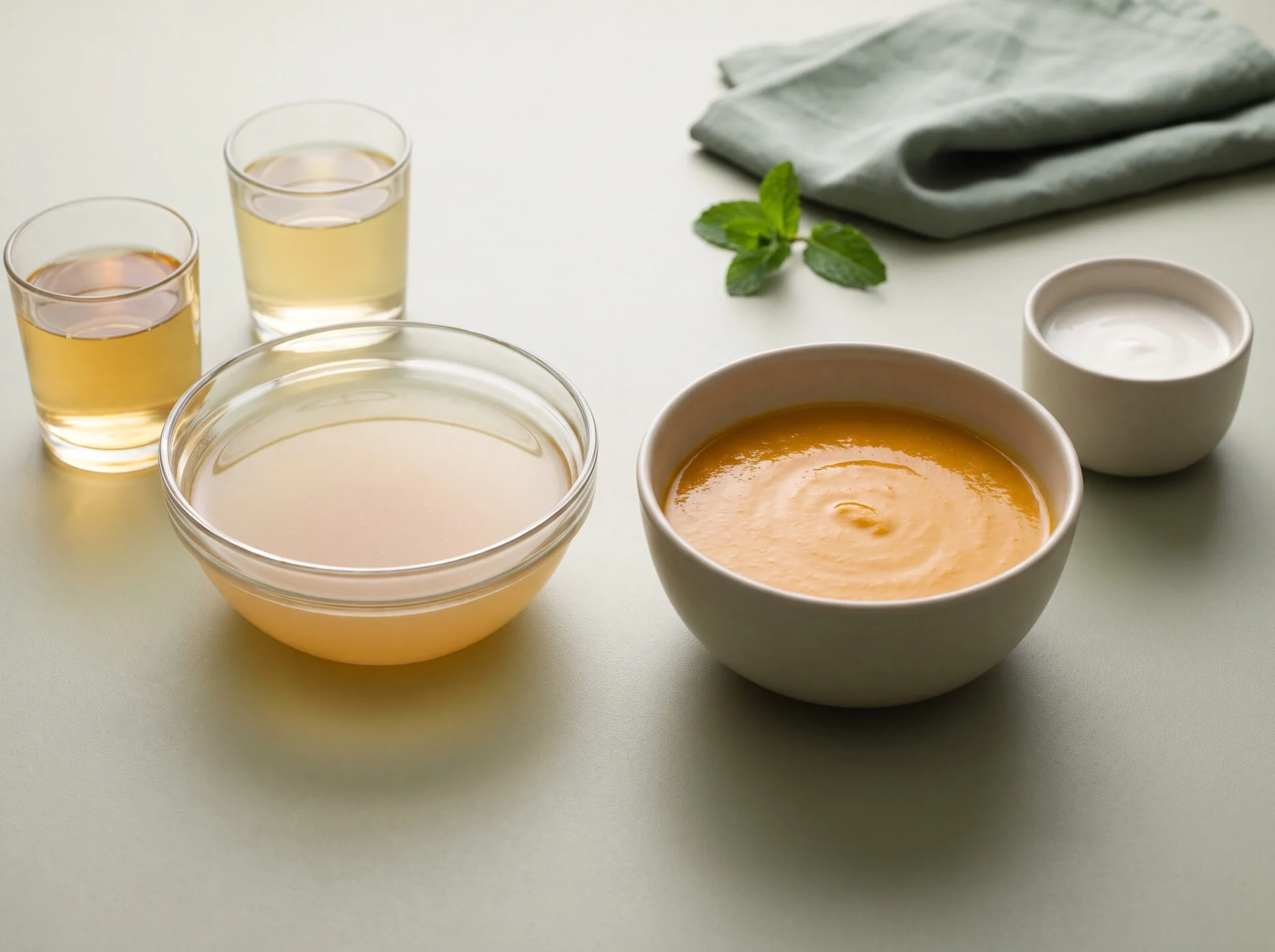
The five-day framework
Day 1 — Confirm the order. Write down the exact category, permitted drinks, foods to avoid, medication instructions, and the point when your care team expects a change. If the instructions are vague, call before shopping.
Day 2 — Build variety from approved items. Rotate the flavors you are allowed rather than relying on one drink. For clear liquids, that may mean alternating water, broth, tea, and an approved pulp-free drink. For full liquids, it may mean using smooth soups, dairy or fortified drinks, and other items your clinician has approved.
Day 3 — Check tolerance. Notice whether nausea, vomiting, diarrhea, pain, coughing during drinks, or trouble keeping fluids down is developing. These are reasons to contact your care team, not signals to make the diet more extreme.
Day 4 — Protect the transition. Do not turn a prescribed liquid order into a calorie challenge or a test of willpower. If the plan is lasting longer than expected, ask whether a dietitian should review the menu and whether a more complete liquid formula is appropriate.
Day 5 — Follow the next instruction. The final day is not automatically the day to return to a normal plate. Some people need a staged texture progression; others receive a procedure-specific schedule. Ask for the next step in writing if you do not already have it.
What to skip
- Do not use a juice cleanse, “detox” kit, or supplement bundle as a substitute for a prescribed liquid diet.
- Do not assume a smoothie is clear liquid; dairy, seeds, fiber, or pulp can change the category.
- Do not add solid toppings, chia, nuts, fruit pieces, or unstrained vegetables without approval.
- Do not use a five day liquid diet as a general weight-loss experiment, especially if you are pregnant, living with diabetes or kidney disease, recovering from surgery, or taking prescribed medication.
- Do not ignore symptoms that make drinking unsafe or impossible.
A systematic review in PMC found that less restrictive low-residue approaches can be considered in some colonoscopy-preparation settings, but that does not give you permission to replace your own clinician’s instructions. The point is simple: the best plan depends on the procedure and the person, not just the label.
How to use RecipesDiet recipes
Most RecipesDiet recipes are written as complete meals and are not automatically suitable for a liquid order. Browse the recipe archive for context, or explore the Mediterranean recipe archive for strained-soup inspiration only when your clinician permits it. If your clinician approves a strained soup, you can use the method behind Mediterranean Lentil Soup with Lemon and Cumin as inspiration, but the published recipe contains ingredients and textures that may not fit clear-liquid instructions. Do not treat a recipe card as medical clearance.

Returning to regular food
Transitioning off liquids is part of the plan, not an afterthought. Follow the texture sequence supplied by your surgeon, physician, dietitian, or speech-language pathologist. If you were given a full-liquid order after surgery, ask which foods come next and whether you should start with smooth, soft, or low-fiber options.
Seek prompt medical guidance if you cannot keep fluids down, develop worsening pain, feel faint, have new breathing or swallowing difficulty, or notice signs of dehydration. People with diabetes, kidney disease, swallowing disorders, or higher nutrition needs should not extend a restrictive plan without direct supervision. The NCBI review links prolonged restriction with nutritional risk and supports early movement toward a more complete intake when tolerated.
Frequently asked questions
Is a five day liquid diet safe?
It can be appropriate when a qualified clinician prescribes and monitors it for a specific reason, but it is not a universal self-guided plan. Safety depends on the liquid category, your health history, medications, hydration, and the transition instructions.
What can you drink on a liquid diet?
It depends on whether your order is clear or full liquid. Clear orders commonly allow water, clear broth, pulp-free juice, tea, black coffee, and plain gelatin, while full orders may also allow smooth dairy drinks and strained soups.
Is a smoothie a clear liquid?
No, not automatically. Milk, yogurt, pulp, seeds, fiber, or blended food can make a smoothie a full-liquid item or exclude it altogether, so check the written instructions before drinking one.
Can you follow a liquid diet after surgery?
Yes, some patients receive a liquid diet after surgery, but the timing and texture progression are procedure-specific. Follow the discharge instructions and ask the surgical team before changing the plan.
What should you eat after five days of liquids?
Eat the next texture your care team approves, rather than choosing a generic “day six” menu. The correct step may be smooth, soft, low-fiber, or regular food depending on why the liquid diet was prescribed.
Note: This article is for general information and is not medical advice. Nutrition figures are estimates that vary with brands, ripeness, and portion size. Talk to a doctor or registered dietitian before changing your diet, especially if you are pregnant, managing diabetes or kidney disease, or taking prescribed medication.