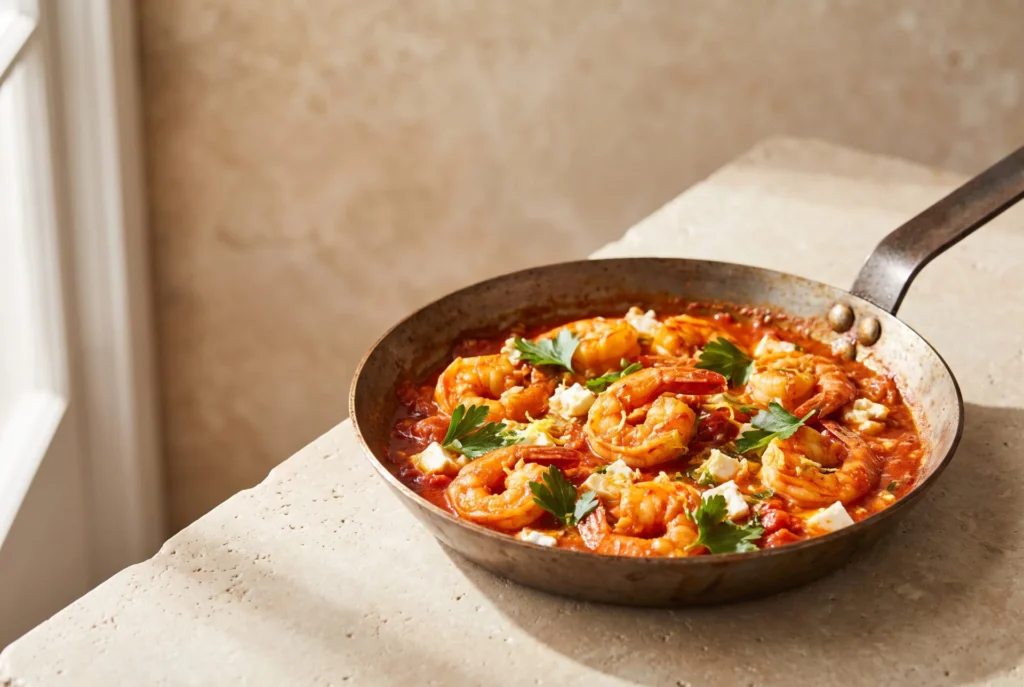
Shrimp saganaki is a bright Greek-style skillet of tender shrimp, jammy tomato sauce, garlic, oregano, and salty feta—a Greek shrimp with feta that stays saucy rather than heavy. It is an easy Mediterranean shrimp dinner with enough sauce for warm bread, rice, or a spoon, and the key is reducing the tomatoes before the shrimp go in. For more meals in the same style, browse our Mediterranean recipes and the full recipe archive.
Table of Contents
Why this recipe works
- Layered flavor. Onion, garlic, oregano, and red pepper build a savory base before the tomatoes are reduced, so the sauce tastes concentrated rather than watery.
- Feta stays distinct. The cheese softens and browns at the edges without disappearing, giving each bite a salty, tangy contrast to the sweet shrimp.
- One-pan seafood dinner. The sauce starts on the stovetop and the shrimp finish in the same oven-safe skillet, keeping cleanup simple.
- Timing is deliberate. The tomato base gets its head start, while the shrimp cook only until opaque so they remain springy instead of rubbery.
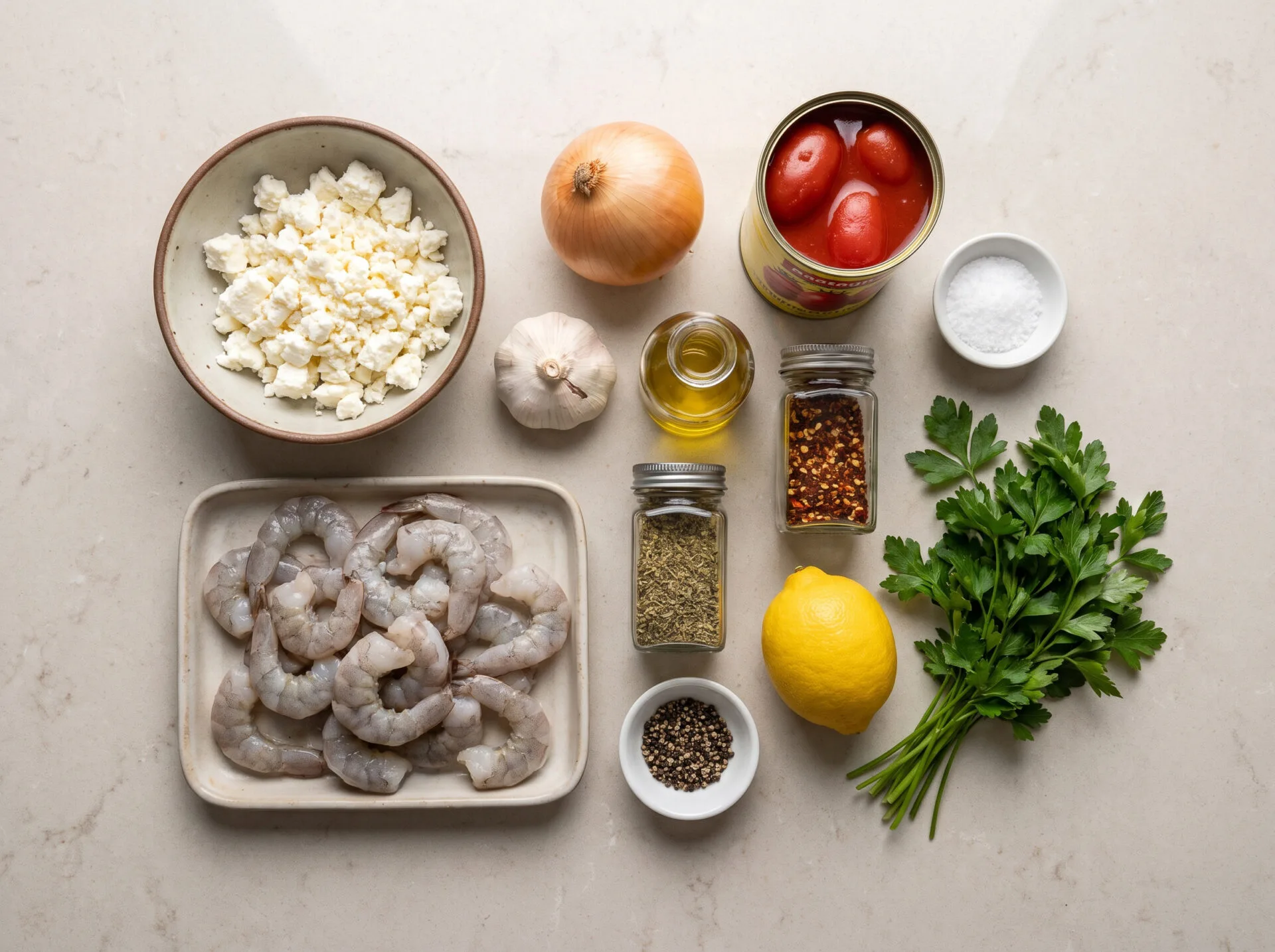
Ingredients
Makes 4 servings.
Equipment
How to make it
- Soften the aromatics. Heat the olive oil in the oven-safe skillet over medium heat. Add the onion and cook for 5 to 6 minutes, stirring, until translucent and soft. Add the garlic, oregano, and red pepper flakes; stir for 30 seconds, just until fragrant.
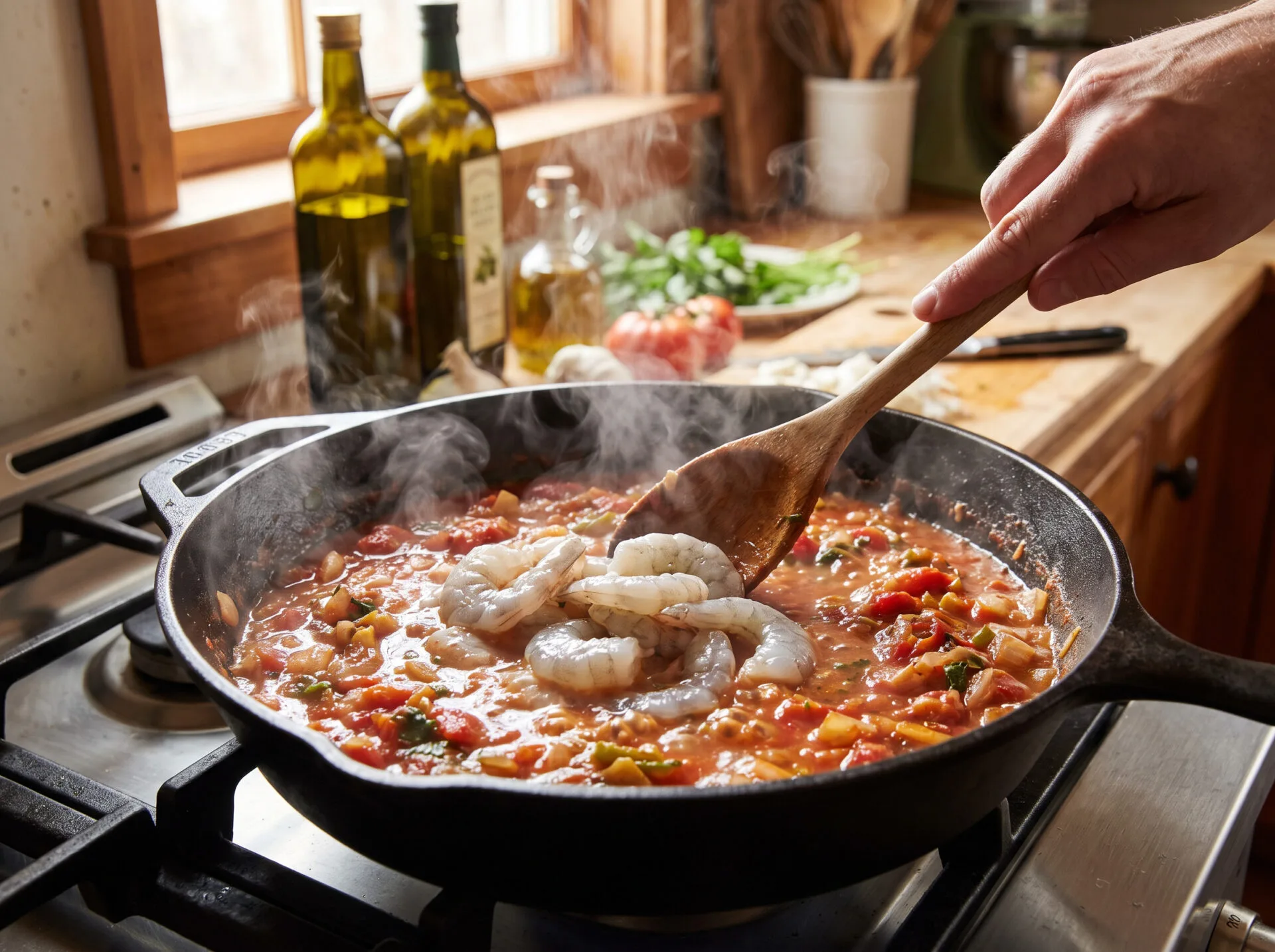
- Concentrate the tomato base. Stir in the tomato paste and cook for 1 minute, then add the crushed tomatoes, salt, and several grinds of black pepper. Simmer uncovered for 12 to 15 minutes, stirring occasionally, until the sauce thickens enough that a spatula briefly leaves a trail across the pan.
- Arrange the shrimp. Pat the shrimp dry with paper towels and nestle them in a single layer over the sauce. Avoid piling them up; even spacing helps the smaller pieces finish at the same time as the larger ones.
- Add the feta and bake. Heat the oven to 425°F (220°C). Scatter the feta over the skillet, then bake for 8 to 10 minutes, until the shrimp are opaque and firm and the sauce is bubbling at the edges. The FDA’s seafood guidance also uses opaque flesh as the visual cue for cooked shrimp.
- Brown the top. Switch the oven to broil and return the skillet for 1 to 2 minutes, watching closely, until the feta has a few golden spots and the tomato sauce is actively bubbling. Use oven mitts; the handle will be hot.
- Finish and serve. Remove the skillet and let it stand for 2 minutes. Spoon over the lemon juice, scatter with parsley, and taste before adding more salt. Serve immediately with warm bread, rice, or a crisp salad for contrast.
Practical cooking tips
- Reduce before adding seafood. If the tomato sauce is thin, the shrimp will release more moisture and the finished shrimp with tomato sauce can turn soupy. Give the base another few minutes first.
- Keep salt in check. Feta brings a lot of seasoning, so salt the sauce lightly and make the final adjustment after the cheese and lemon are added.
- Do not chase a fully melted topping. Feta softens and browns rather than turning into a smooth cheese blanket. That texture is part of the dish.
- Watch the broiler. One minute can take the feta from lightly golden to scorched, especially in a shallow skillet.
Swaps and variations
- Make it milder. Leave out the red pepper flakes; calories and macros stay essentially unchanged.
- Add greens. Fold in 2 packed cups (60 g) of baby spinach with the tomatoes. It adds volume and a small amount of fiber without changing the cooking method.
- Use fresh tomatoes. Replace the canned tomatoes with about 900 g ripe tomatoes, chopped; simmer until the pieces collapse and the liquid reduces before adding shrimp.
- Keep the shrimp theme going. For a faster air-fryer version, try Air Fryer Mediterranean Shrimp with Feta and Lemon; the lower-sauce method gives a firmer, more roasted finish.
Storage and meal prep
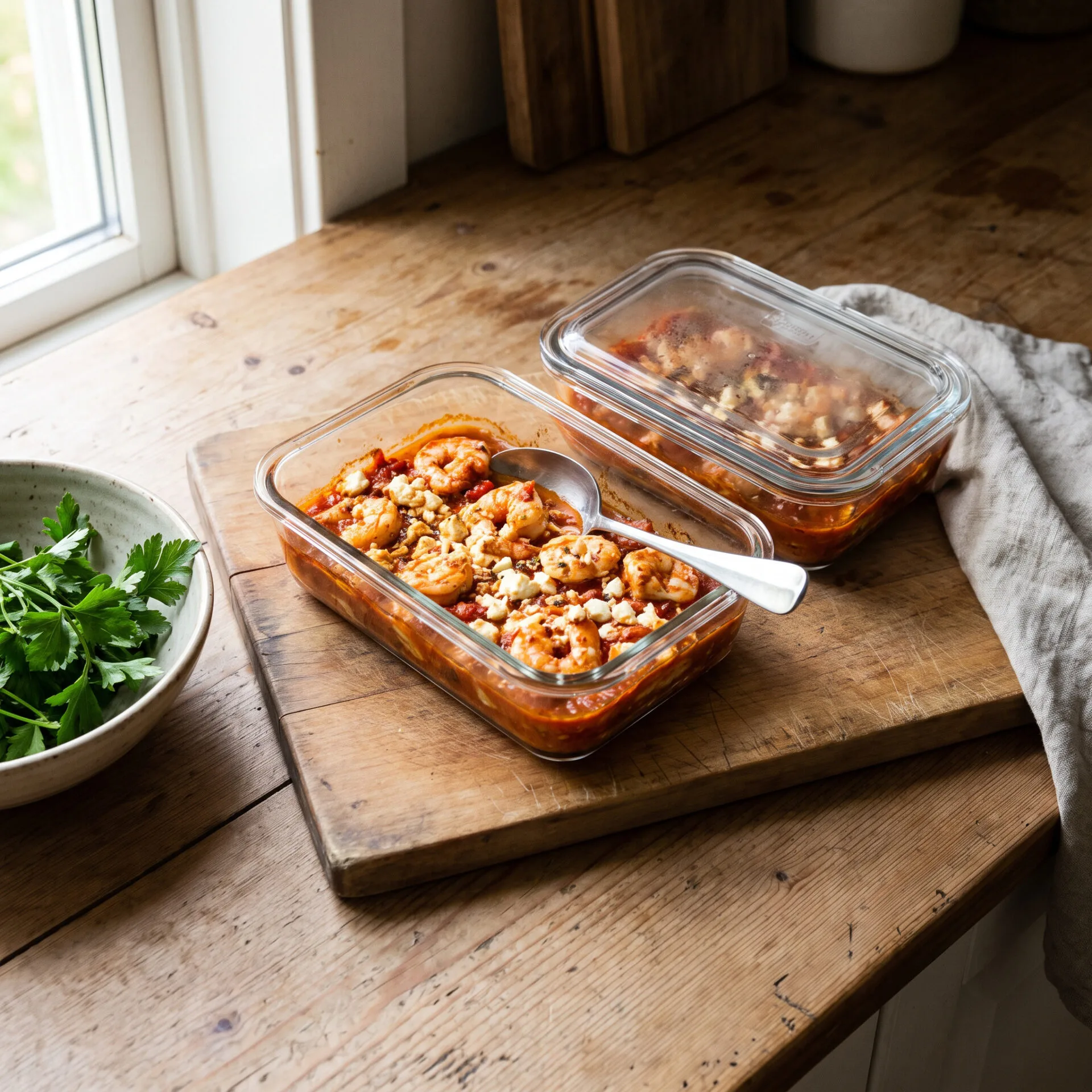
Refrigerate leftovers within 2 hours in a shallow, covered container and use them within 3 to 4 days, following USDA FSIS leftovers guidance. Freeze portions for up to 2 months for best quality, but expect the feta to soften and the shrimp to lose some spring. Reheat gently in a covered skillet over low heat with a splash of water; stop as soon as the center is hot. The broiled feta topping will not return to its original texture, so this dish is best freshly made.
Nutrition per serving
| Nutrient | Per serving |
|---|---|
| Calories | 271 kcal |
| Protein | 30 g |
| Fat | 11 g |
| Total carbs | 15 g |
| Fiber | 4 g |
| Net carbs | 11 g |
Nutrition is an estimate based on the written ingredients and USDA FoodData Central entries for raw shrimp and feta; brands, drained weights, and exact portions can change the result. See USDA FoodData Central for the underlying food-composition database.
Frequently asked questions
What is shrimp saganaki?
Shrimp saganaki is a Greek-style dish of shrimp cooked in tomato sauce and finished with feta. A skillet is traditional, but any oven-safe pan works; the defining combination is sweet tomato, briny cheese, herbs, and tender seafood.
Can I make shrimp saganaki without an oven-safe skillet?
Yes, make the sauce in a regular skillet, transfer it to a shallow baking dish, arrange the shrimp and feta on top, and bake as directed. Broil only if the baking dish is rated for broiler heat.
What can I serve with baked shrimp and feta?
Baked shrimp and feta is especially good with warm bread, rice, or a crisp cucumber salad. Choose something mild that can catch the tomato sauce without competing with the salty cheese.
How do I keep the shrimp from becoming rubbery?
Reduce the sauce first, use a single layer of dry shrimp, and pull the pan when the flesh is opaque and firm. Shrimp continue cooking briefly in the hot sauce, so extra oven time works against a tender result.
Is shrimp saganaki an easy Mediterranean shrimp recipe?
Yes, it is an easy Mediterranean shrimp recipe because the sauce and seafood finish in one pan with a short ingredient list. The only timing detail to protect is the reduced sauce and the brief shrimp bake.
Ratings and reviews
No ratings yet. If you have cooked this, your rating helps the next person decide.
Rate this recipe