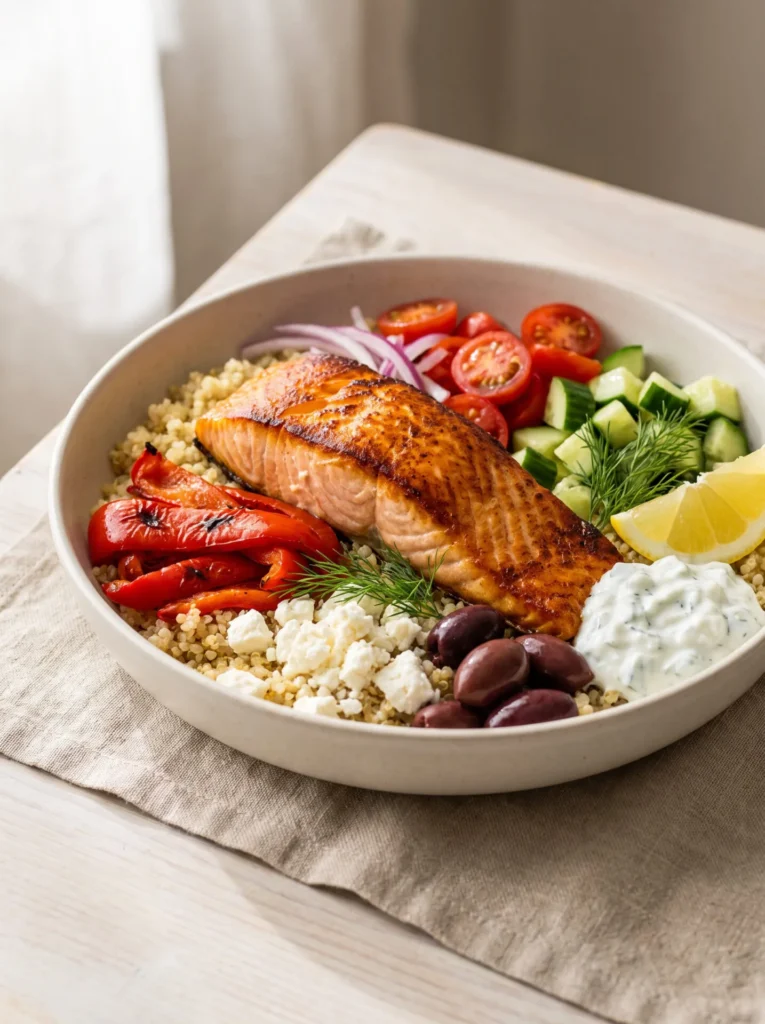
This Mediterranean salmon bowl builds a whole dinner out of one sheet pan and one small saucepan: roasted salmon and blistered pepper strips, warm lemon quinoa, cold crunchy vegetables, and a thick cucumber tzatziki spooned over the top. Timing is the whole trick, because the quinoa steams while the fish roasts, so a salmon quinoa bowl that looks carefully composed still lands on the table in about forty minutes. For more meals in the same style, browse our Mediterranean recipes and the full recipe archive.
Table of Contents
Why this Mediterranean salmon bowl works
- One pan and one pot. The fish and the pepper strips roast together on a single rimmed sheet, the grain steams under a lid, and nothing needs turning, basting, or a second round in the oven.
- The quinoa is dressed while hot. Olive oil, lemon juice, and salt go in while the grains are still steaming and open, so the seasoning is absorbed rather than left sitting on the surface.
- Hot and cold in the same bowl. Warm fish and warm grain against chilled cucumber, raw tomato, and cold yogurt sauce keeps every mouthful from flattening out, which is also why the bowl holds up eaten cool.
- It matches how the pattern actually eats. Extra-virgin olive oil is the main added fat, vegetables arrive by volume rather than as garnish, and Oldways puts seafood on the plate twice a week.
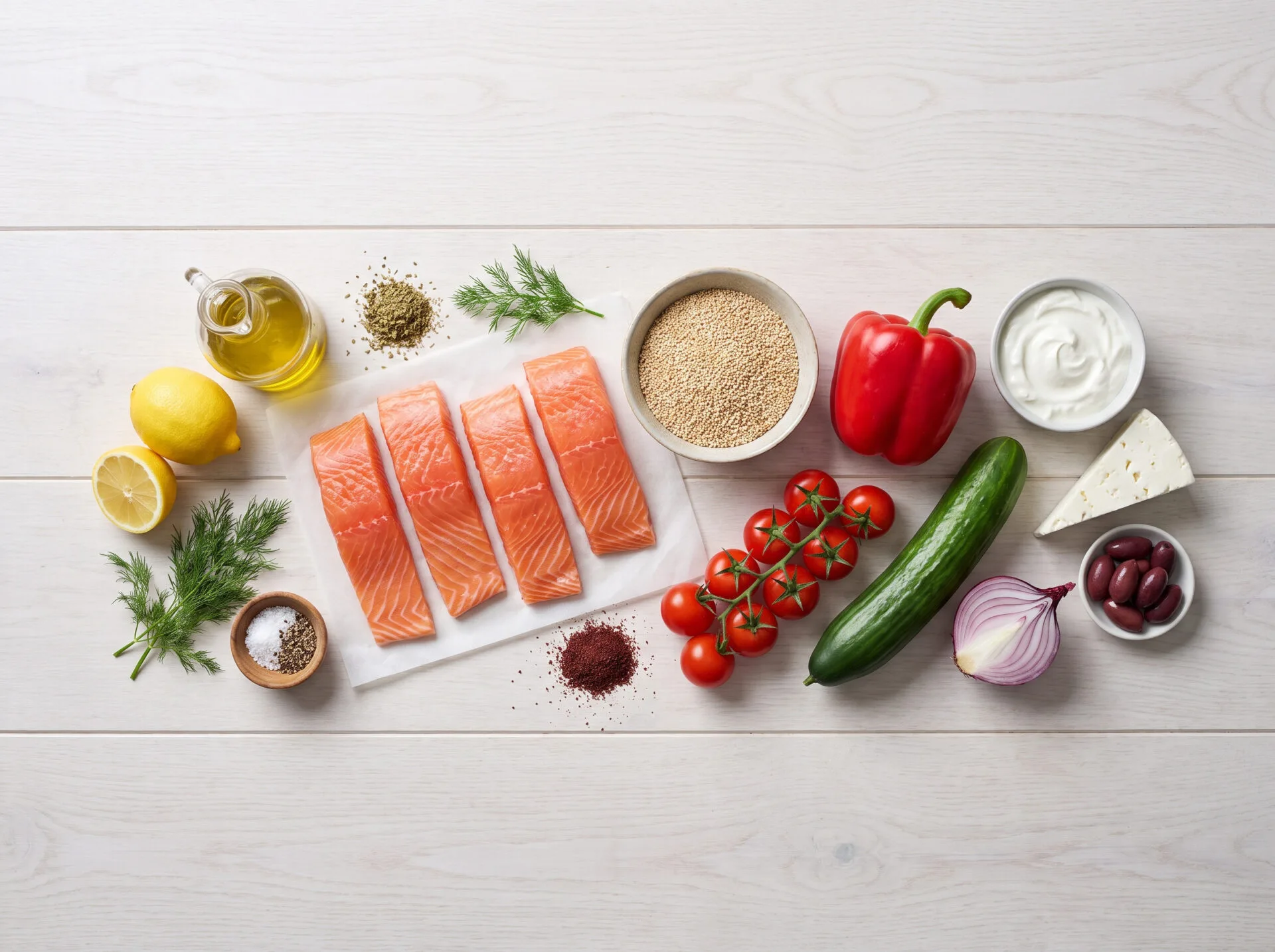
Ingredients
Equipment
How to make it
- Start the quinoa and heat the oven. Heat the oven to 425 F (220 C). Rinse the quinoa under cold water for 30 seconds, then bring it to a boil with the water and a pinch of salt. Cover, lower the heat, and simmer 15 minutes.
- Season the fish and the peppers. Pat the fillets completely dry. Toss the pepper strips with 1 tablespoon of the olive oil on the sheet pan and push them to one side. Rub the fillets with another tablespoon of oil, the oregano, sumac, lemon zest, 1/2 teaspoon salt, and the black pepper.
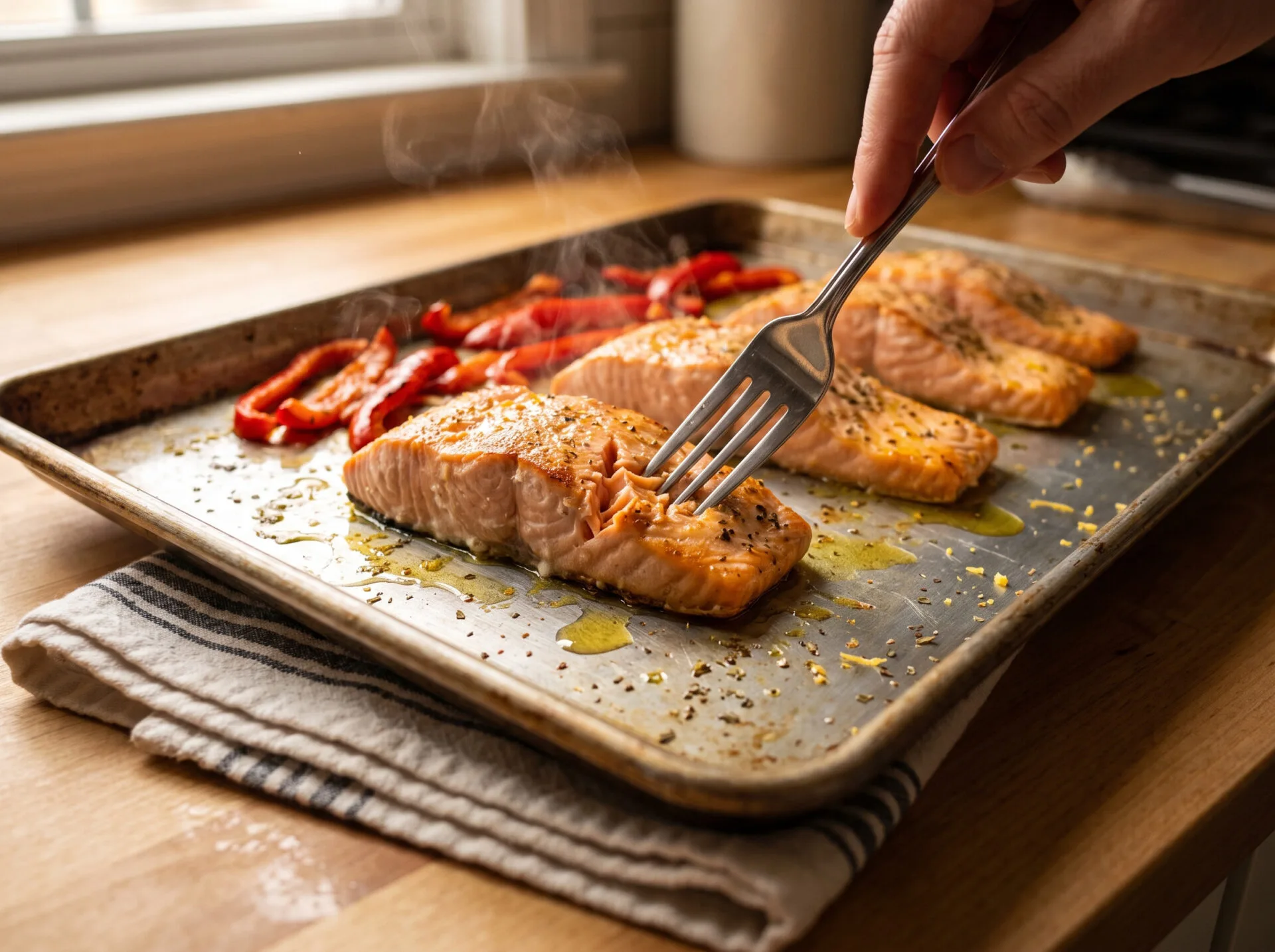
- Roast until just set. Roast 12 to 14 minutes for fillets about 1 inch thick. The FDA puts the safe internal temperature for seafood at 145 F (63 C); pull the pan the moment the thickest point reads there.
- Mix the tzatziki. Coarsely grate about a third of the cucumber (roughly 100 g), squeeze it hard in a clean towel, and stir it into the yogurt with the garlic, 1 tablespoon lemon juice, the chopped dill, and a pinch of salt. Chill until serving.
- Dress the quinoa hot. Take the pan off the heat, rest it covered for 5 minutes, then fluff with a fork and fold in the last tablespoon of olive oil, the remaining lemon juice, and 1/4 teaspoon salt.
- Cut the cold vegetables. Dice the remaining cucumber, halve the cherry tomatoes, and slice the red onion as thinly as you can so it reads as sharp seasoning rather than raw onion.
- Build the bowls. Divide the quinoa between four bowls. Each Mediterranean salmon bowl gets a fillet, a share of roasted peppers, tomatoes, cucumber, onion, olives, and feta, then a spoonful of tzatziki, a few dill fronds, and a squeeze of lemon.
Practical cooking tips
- Buy fillets of one thickness. A tapered tail piece next to a thick centre cut guarantees one dry portion. Ask the counter for centre-cut pieces, or fold the thin end under itself before roasting.
- Squeeze the cucumber harder than feels reasonable. Grated cucumber holds a surprising amount of water, and it is the single reason a baked salmon bowl ends up with tzatziki running across the quinoa.
- Do not lift the lid on the quinoa. The steam trapped under it is doing the cooking; a peek at minute eight leaves you with crunchy grains and a longer wait.
- Rest the fish for three minutes. Carryover heat finishes the centre while the flakes relax, so the fillet lifts off the pan in one piece instead of shattering.
Swaps and variations
- Change the grain. Farro, pearl couscous, or brown rice all work; cook them separately and dress them the same way, as in our Mediterranean brown rice bowl with lemon chicken.
- Skip the dairy. Replace the yogurt sauce with a lemon tahini drizzle of 3 tablespoons tahini, 2 tablespoons lemon juice, and water to loosen, and leave out the feta.
- Add a legume. A drained 400 g tin of chickpeas roasted alongside the peppers adds about 6 g of fibre per serving and turns four bowls into six.
- Cook it outside. Grill the fillets skin-on over medium-high heat for 4 minutes a side instead of roasting; the smoke suits the oregano and sumac.
Storage and meal prep
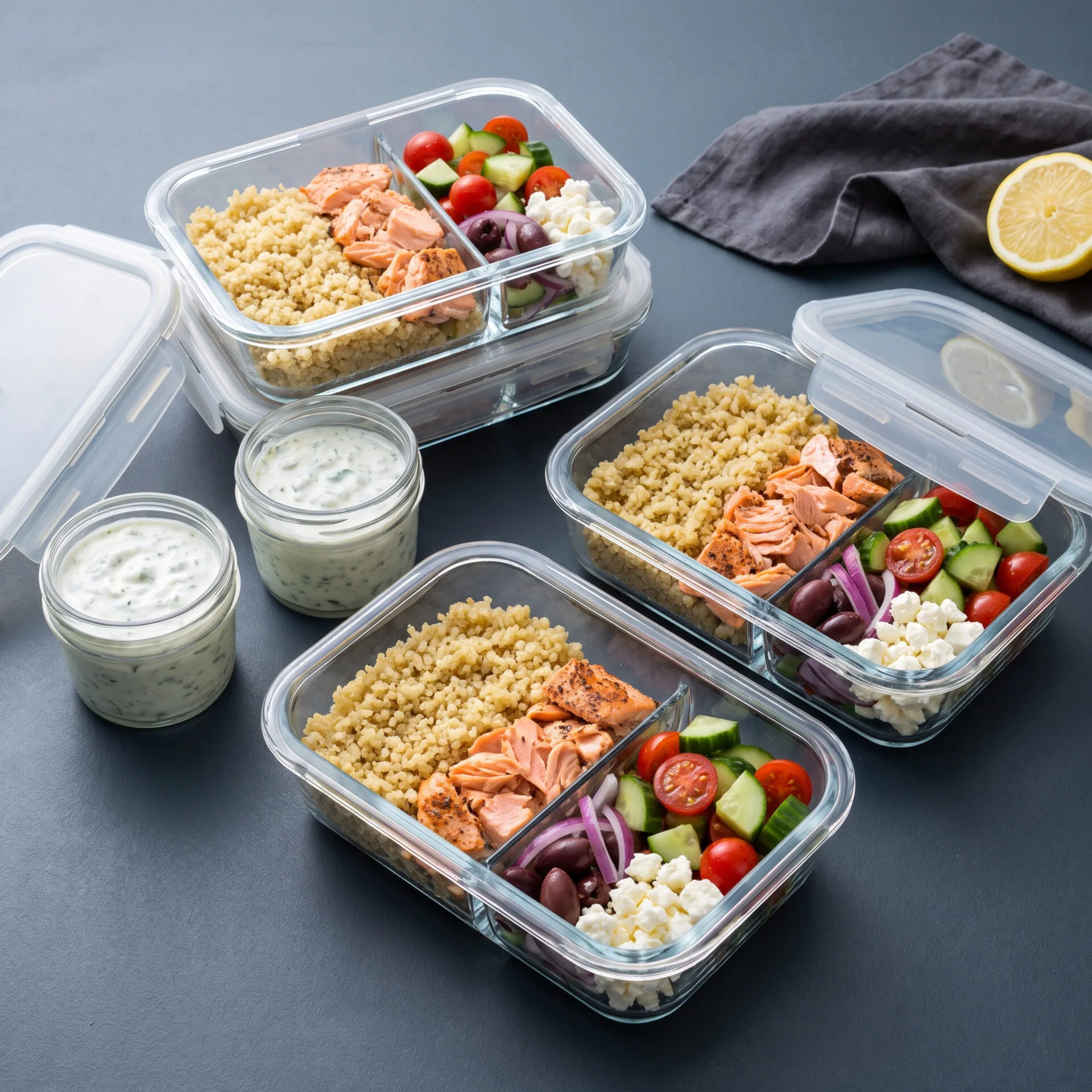
- Pack the parts, not the bowl. For salmon meal prep bowls, keep quinoa and fish on one side, raw vegetables on the other, and the tzatziki in its own small jar so nothing goes soggy before Thursday.
- Chill it quickly. The FDA advises never leaving seafood out of the refrigerator for more than two hours, and storing it at 40 F or below, so portion the fish while it is still warm and get it into the fridge.
- Three days is the useful window. Cooked salmon holds its texture for about three days refrigerated; after that it turns dry and chalky even when it is still safe.
- Eat it cold, or barely warm it. A cold bowl is genuinely good. If you want it warm, microwave only the quinoa and fish at half power for 60 seconds and add the cold components after.
Nutrition per serving
| Nutrient | Per serving |
|---|---|
| Calories | 730 kcal |
| Protein | 50 g |
| Total fat | 41 g |
| Total carbohydrate | 41 g |
| Dietary fibre | 6 g |
| Net carbs | 35 g |
| Serving size | 1 bowl, about 480 g |
These figures are an estimate, calculated from USDA FoodData Central entries for each ingredient at the raw weights listed above, totalled for the batch and divided by four. Brands of feta, olives, and yogurt vary, so treat the numbers as a close guide rather than a measurement of your own bowl.
Frequently asked questions
Is a Mediterranean salmon bowl good for the Mediterranean diet?
It fits the pattern closely. The Mediterranean diet is an eating style rather than a treatment, and Oldways describes it as built on vegetables, whole grains, olive oil as the primary fat, and seafood roughly twice a week. A Mediterranean diet salmon recipe like this one covers all four in a single dish, which is why it works as a weeknight default rather than an occasional effort.
What makes this a Greek salmon bowl?
The seasoning and the toppings. Oregano, lemon, Kalamata olives, feta, and a cucumber-yogurt sauce are the Greek half of the bowl; the quinoa base is a modern addition rather than a traditional one. Swap the quinoa for warm pita and you have something much closer to a taverna plate.
Can I use frozen salmon fillets?
Yes, and frozen-at-sea fillets are often fresher than the chilled counter. Thaw them overnight in the refrigerator, as the FDA recommends, then pat them very dry; thawed fish releases more water, and a wet surface steams instead of browning. Do not roast them from frozen in this recipe, because the peppers will burn before the centre is done.
How do I know the salmon is cooked without a thermometer?
Press the tip of a fork into the thickest part and twist gently. Cooked fish is opaque and separates into flakes; raw fish resists and stays translucent in the middle. The thermometer is still the reliable answer, since the visual cue arrives a minute or two after the fish has passed its best texture.
Can I make this Mediterranean salmon bowl ahead for the week?
Make three days of it rather than five. Cook the quinoa and the fish, mix the tzatziki, and store the three elements separately; cut the tomatoes and cucumber on the morning you plan to eat them, because salted raw vegetables weep overnight and dilute the sauce.
Ratings and reviews
No ratings yet. If you have cooked this, your rating helps the next person decide.
Rate this recipe