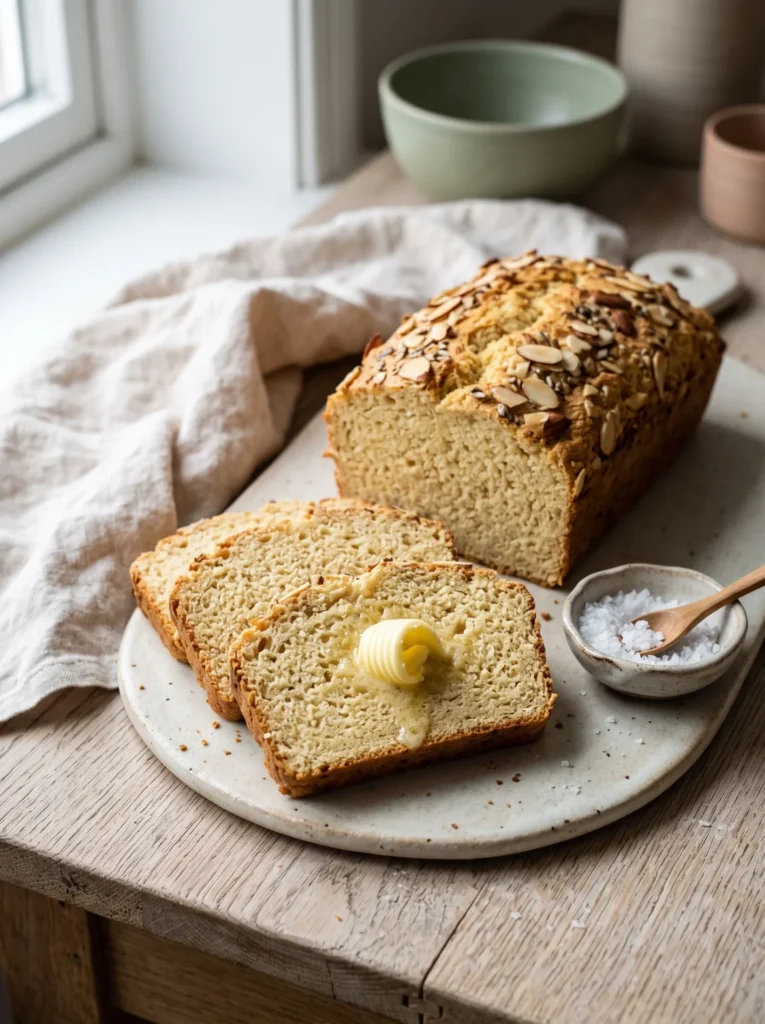
This almond flour keto bread solves the one problem that sends most low-carb loaves to the bin: the eggy taste. The usual fix is to add more eggs for structure, and the usual result is a loaf that smells like an omelette. This version uses four eggs with two of the yolks left out, which keeps the lift and drops the sulphur, and it bakes into a sliceable sandwich loaf at 2 g net carbs a slice. If you are new to keto cooking, this is the recipe worth getting right first.
Table of Contents
Why this almond flour keto bread works
- Two yolks, not four. Yolk is where the egg flavour concentrates. Whites still set and still lift, so removing two yolks loses almost no structure and most of the taste problem.
- No psyllium husk. Most low-carb loaves lean on psyllium for chew, and it is the ingredient readers most often mis-measure — whole husks and powder are not interchangeable. This is a keto bread without psyllium husk, so there is nothing to get wrong.
- A rested batter. Five minutes of hydration before baking is the difference between a crumb that holds a sandwich and one that falls apart under butter.
- Five ingredients, one bowl. Nothing here is a specialist order; almond flour and baking powder are ordinary supermarket items.
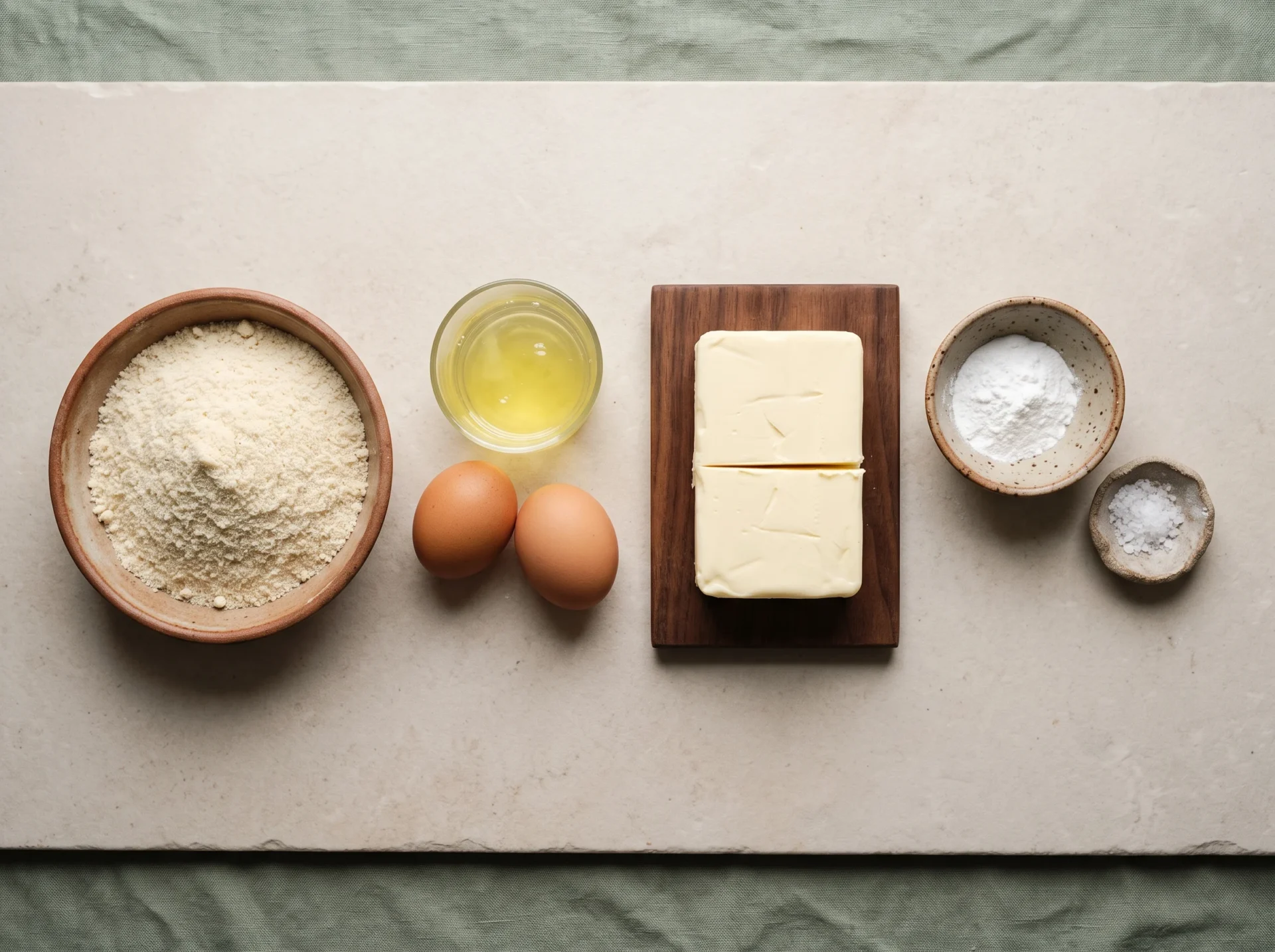
Ingredients
Makes 12 slices.
Equipment
How to make it
- Heat the oven and line the tin. Heat the oven to 350°F (175°C) and line a 9×5-inch loaf tin with parchment, leaving an overhang on the long sides. Almond batter sticks to bare metal far more than wheat dough does, and the overhang is how you lift the loaf out without tearing the crust.
- Separate two of the eggs. Crack two whole eggs into a bowl. Crack the other two and keep only the whites, saving the yolks for another use. This is the step that decides the flavour: four eggs with two yolks removed give the same lift as four whole eggs without the sulphurous edge that too much yolk leaves behind.
- Whisk the wet ingredients. Whisk the two whole eggs and two whites together for about 30 seconds until pale and slightly foamy, then whisk in the melted and cooled butter. If the butter is still hot it will cook the egg into visible threads, so let it sit off the heat for five minutes first.
- Combine and rest. Stir the almond flour, baking powder and salt together, then fold them into the eggs until no dry pockets remain. Let the batter stand for 5 minutes. It will thicken noticeably as the flour hydrates, and a rested batter bakes into a tighter, less crumbly crumb.
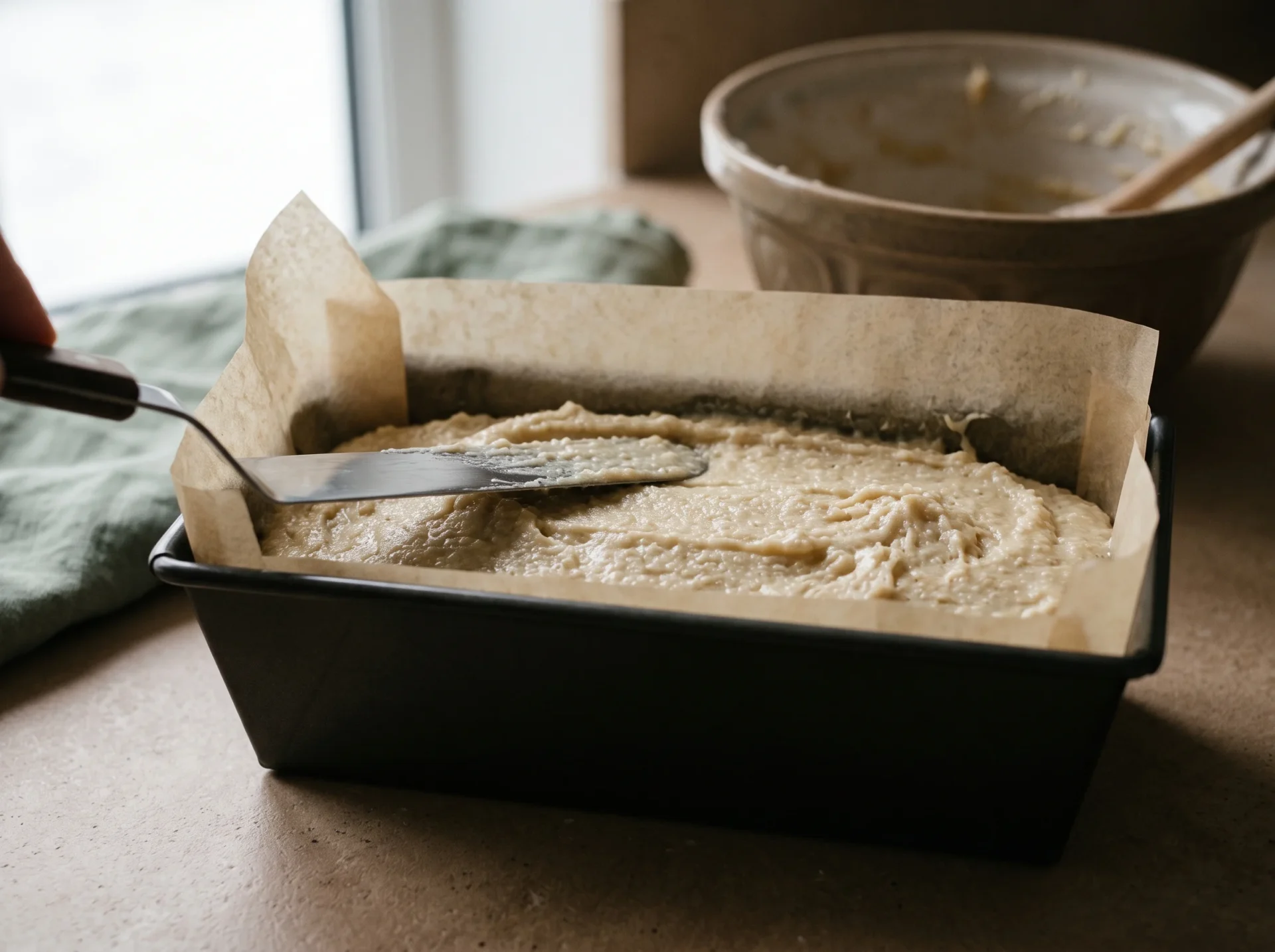
- Smooth it into the tin. Scrape the batter into the lined tin and smooth the top level with an offset spatula. Unlike wheat dough this batter will not settle on its own, so whatever shape you leave is the shape that bakes.
- Bake until set and deeply golden. Bake for 38 to 45 minutes, until the top is deep golden and a skewer in the centre comes out clean. An instant-read thermometer should show about 200°F (93°C) in the middle, the standard doneness benchmark for quick breads; under-baking is the single most common cause of a damp centre.
- Cool completely before slicing. Lift the loaf out by the parchment and cool it on a rack for at least 90 minutes. Cutting a warm almond loaf compresses it into a dense strip, and the crumb firms up substantially as it cools.
Practical cooking tips
- Use super-fine blanched almond flour. Almond meal is ground with the skins on and leaves a gritty, speckled crumb that no amount of mixing will smooth out.
- Weigh the flour if you can. A packed cup can carry 30 g more than a spooned one, and in a gluten free keto bread that difference shows up as dryness rather than as volume.
- Room-temperature eggs emulsify with the melted butter instead of seizing it into flecks.
- Resist opening the oven before the 35-minute mark. The structure here is egg, and egg sets on a schedule that a draught interrupts.
Troubleshooting tips
- Damp, heavy centre. Almost always under-baking. Bake to an internal 200°F (93°C) rather than to the clock, and remember that ovens run cooler than their dials claim.
- Loaf sank after cooling. Too much baking powder, or the batter sat too long before going into the oven. Five minutes of rest is right; twenty is not.
- Crumbles when sliced. It was cut warm. Cool it fully, then use a serrated knife and a sawing motion rather than pressure.
- Still tastes eggy. Check your egg size. Two extra-large eggs plus two extra-large whites push the ratio back towards the problem this recipe was built to avoid.
- Top browned before the middle set. Tent loosely with foil at the 25-minute mark and finish baking.
Swaps and variations
- Dairy-free. Swap the butter for the same weight of refined coconut oil. The crumb stays identical; the flavour turns faintly sweet.
- Seeded top. Press a tablespoon of sesame or sunflower seeds into the surface before baking. It adds roughly 0.3 g carbs a slice and a considerable amount of crunch.
- Herb and cheese. Fold in 2 tsp dried rosemary and 40 g grated microbial-rennet hard cheese for a savoury almond flour loaf that eats well beside soup.
- Smaller batch. Halve everything and bake in a 1 lb tin for 28 to 32 minutes.
Serving ideas
- Toasted hard with butter and flaky salt — toasting drives off surface moisture and is the single best thing you can do to any low carb bread.
- As a keto sandwich bread with sliced turkey, lettuce and mustard; the crumb is firm enough to hold a filling without tearing.
- Alongside a bowl of soup, cut thick and griddled in butter.
- As the base for avocado and a soft-boiled egg at breakfast.
Storage and meal prep
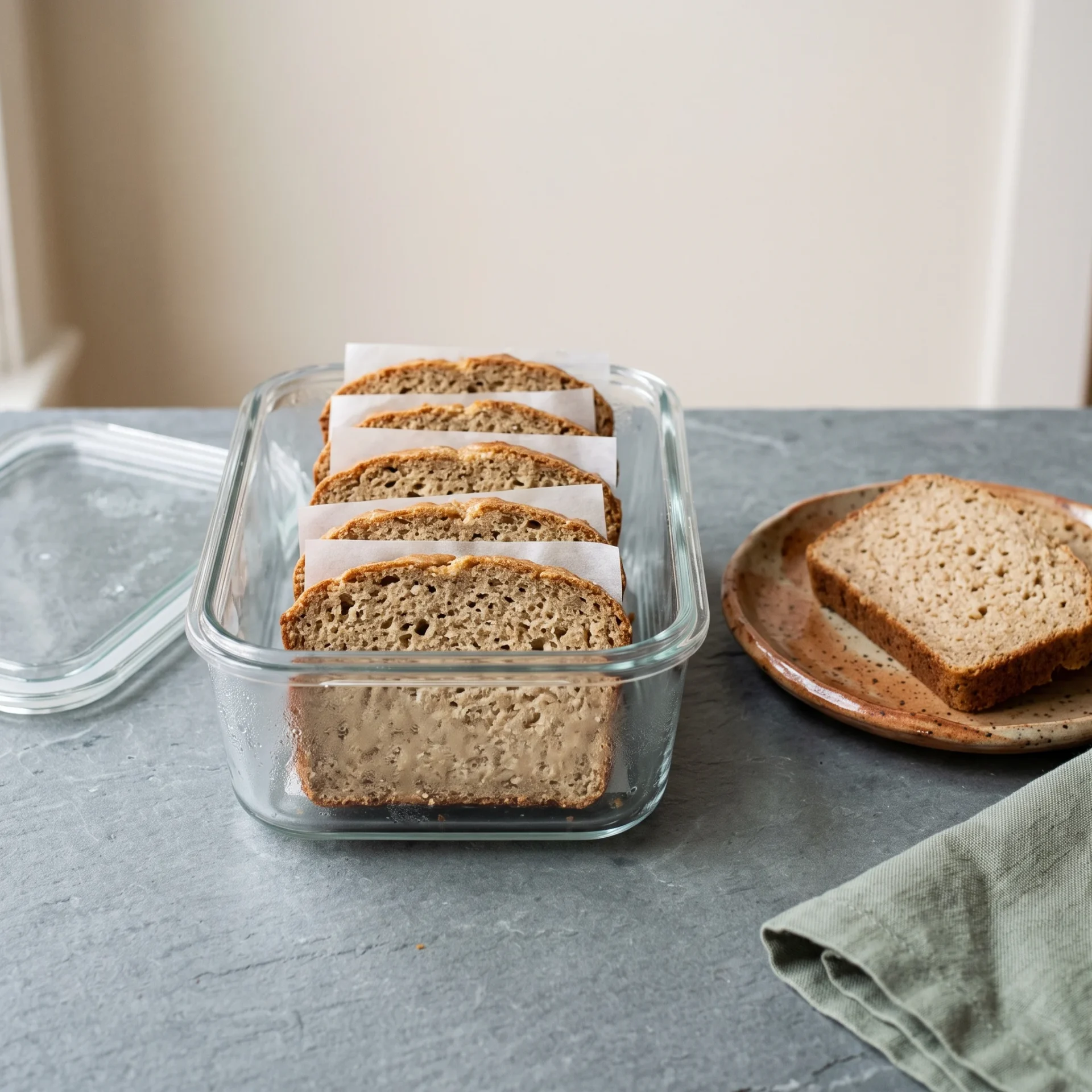
Cool the loaf completely, then keep it in an airtight container in the fridge for up to 5 days; almond flour bread holds too much moisture to sit safely on the counter. For longer storage, slice the whole loaf first, place small squares of parchment between the slices, and freeze for up to 3 months — you can then toast single slices straight from frozen, which is the most useful way to keep almond flour keto bread on hand. Do not freeze the loaf whole unless you plan to thaw all of it at once; it does not slice cleanly half-thawed.
Nutrition per serving
| Nutrient | Per serving |
|---|---|
| Calories | 159 kcal |
| Protein | 6 g |
| Fat | 14 g |
| Total carbs | 4 g |
| Fiber | 2 g |
| Net carbs | 2 g |
Nutrition is an estimate calculated from the stated ingredients using USDA FoodData Central values, and varies with brands and exact portion sizes.
Frequently asked questions
Why does my almond flour keto bread taste like eggs?
Because of the yolks, not the whites. Most low-carb loaves use five to seven whole eggs for structure, and yolk carries the sulphur compounds responsible for that smell. Dropping two yolks while keeping their whites removes most of the flavour and almost none of the lift.
Can I make this without eggs entirely?
Not this recipe. Egg is the only structure here, and removing it leaves nothing to hold the crumb together. An egg-free version needs a psyllium or flax gel as a replacement binder, which is a different recipe with a different method and a different crumb.
Can I use coconut flour instead of almond flour?
No, not one-for-one. Coconut flour absorbs several times its weight in liquid, so substituting it directly produces a dry, dense brick. It needs roughly a quarter of the weight and considerably more egg, which again is a separate recipe rather than a swap.
How many net carbs are in a slice?
2 g net carbs a slice, from 4 g total carbohydrate minus 2 g fibre, at 12 slices a loaf. Cutting the loaf into 10 thicker slices raises that to roughly 2.4 g each, so slice count matters if you are counting tightly.
Why is my loaf wet in the middle even after 45 minutes?
Either the oven runs cool or the loaf needed longer. Bake to temperature rather than to time: about 200°F (93°C) in the centre. If the top is already dark, tent it with foil and keep going rather than pulling it early.
What else can I bake with almond flour on keto?
Plenty — the same flour base carries flatbreads, bagels and sweet loaves. Browse the full recipe library for the rest of the low-carb baking set.
Ratings and reviews
No ratings yet. If you have cooked this, your rating helps the next person decide.
Rate this recipe