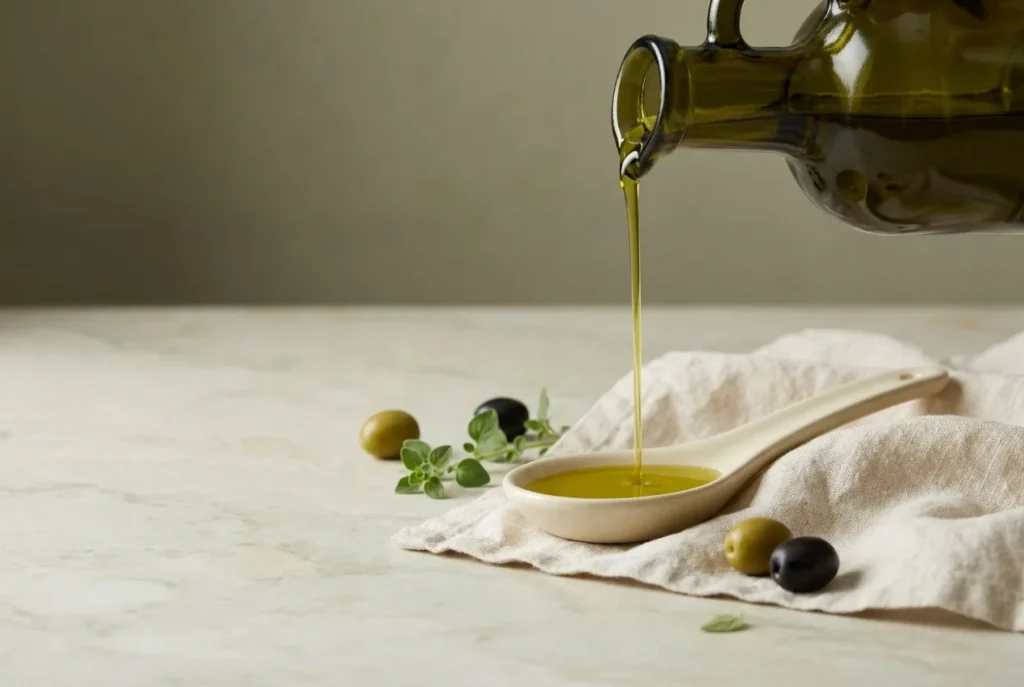
Yes. Extra-virgin olive oil is the defining fat of the pattern, so asking is olive oil Mediterranean diet friendly is really asking how much belongs on a plate. The working answer is 2 to 4 tablespoons a day.
Key takeaways
- Olive oil is not merely permitted on the Mediterranean diet; it is the pattern’s primary added fat, and the trials that made the diet famous supplied it deliberately.
- One tablespoon carries 119 calories and 13.5 g of fat, three-quarters of it monounsaturated, so 4 tablespoons is about 476 calories.
- Across the twelve published Mediterranean recipes on this site, the average serving contains 0.51 tablespoons of added olive oil, roughly a quarter of the low end of the daily target.
- For most home cooks the realistic error is using too little olive oil at dinner, not too much.
- Choose extra-virgin in dark glass and treat it as a budgeted ingredient you measure, not a free pour.
The short answer
Olive oil is not a food this diet tolerates. It is the food the diet is organised around: the pattern replaces butter, cream and most seed oils with one fat. When people ask is olive oil Mediterranean diet friendly, they are usually carrying over a habit from low-fat eating, where all added oil is something to minimise. This pattern does the opposite. It spends its fat budget in one place and cuts elsewhere. The number that decides the question is the daily amount, and everything below follows from it.
Olive oil nutrition per tablespoon
The olive oil calories per tablespoon figure governs every portion decision, so read it from the source rather than a label. These values come from USDA FoodData Central, entry Oil, olive, salad or cooking, FDC ID 171413, converted at the USDA portion weight of 13.5 g per tablespoon.
| Nutrient | Per 1 tbsp (13.5 g) | Per 100 g |
|---|---|---|
| Calories | 119 kcal | 884 kcal |
| Total fat | 13.5 g | 100 g |
| Monounsaturated fat | 9.9 g | 73.0 g |
| Saturated fat | 1.9 g | 13.8 g |
| Polyunsaturated fat | 1.4 g | 10.5 g |
| Carbohydrate | 0 g | 0 g |
| Vitamin E | 1.9 mg | 14.4 mg |
| Vitamin K | 8.1 mcg | 60.2 mcg |
Three-quarters of that fat is monounsaturated, and there is no carbohydrate and no protein at all. Olive oil is pure added fat, which is why the amount matters more than the permission.
Why olive oil fits the Mediterranean diet
The extra virgin olive oil benefits most often cited trace back to one trial. In PREDIMED, 7,447 adults at high cardiovascular risk in Spain were randomly assigned to a Mediterranean diet supplemented with extra-virgin olive oil, the same diet with nuts, or a reduced-fat control diet. After a median 4.8 years the olive oil group had a lower rate of major cardiovascular events than the control group (Estruch et al., 2018, full text). That paper is a re-analysed version of the 2013 report, reissued after problems were found in how some participants were randomised, which is worth stating alongside the result.
An observational analysis in the same cohort reported that higher olive oil intake was associated with lower cardiovascular and all-cause mortality (Guasch-Ferré et al., 2014). Observational data cannot establish cause, and those participants were older Spanish adults already at high risk. The mechanism is simpler and better established: substituting unsaturated fat for saturated fat lowers LDL cholesterol, as the Harvard T.H. Chan Nutrition Source sets out. Olive oil earns its place by what it displaces.
How much olive oil per day
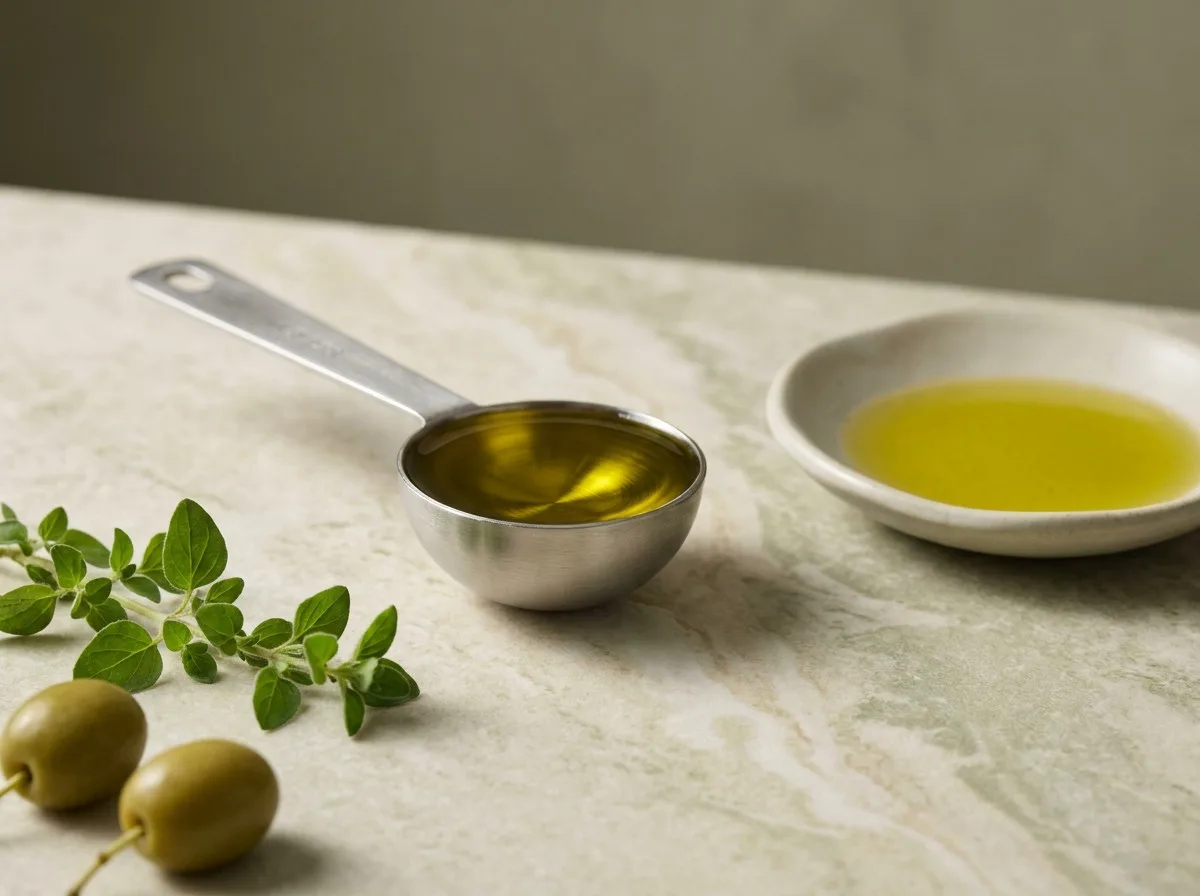
Work it against a calorie budget rather than a rule. At 119 calories a tablespoon, 2 tablespoons is 238 calories and 4 tablespoons is 476, roughly an eighth and a quarter of a 2,000-calorie day. That is a large share of one day’s energy in a single ingredient, which is why the pattern removes butter, cream and fried food to make room rather than adding oil on top of them.
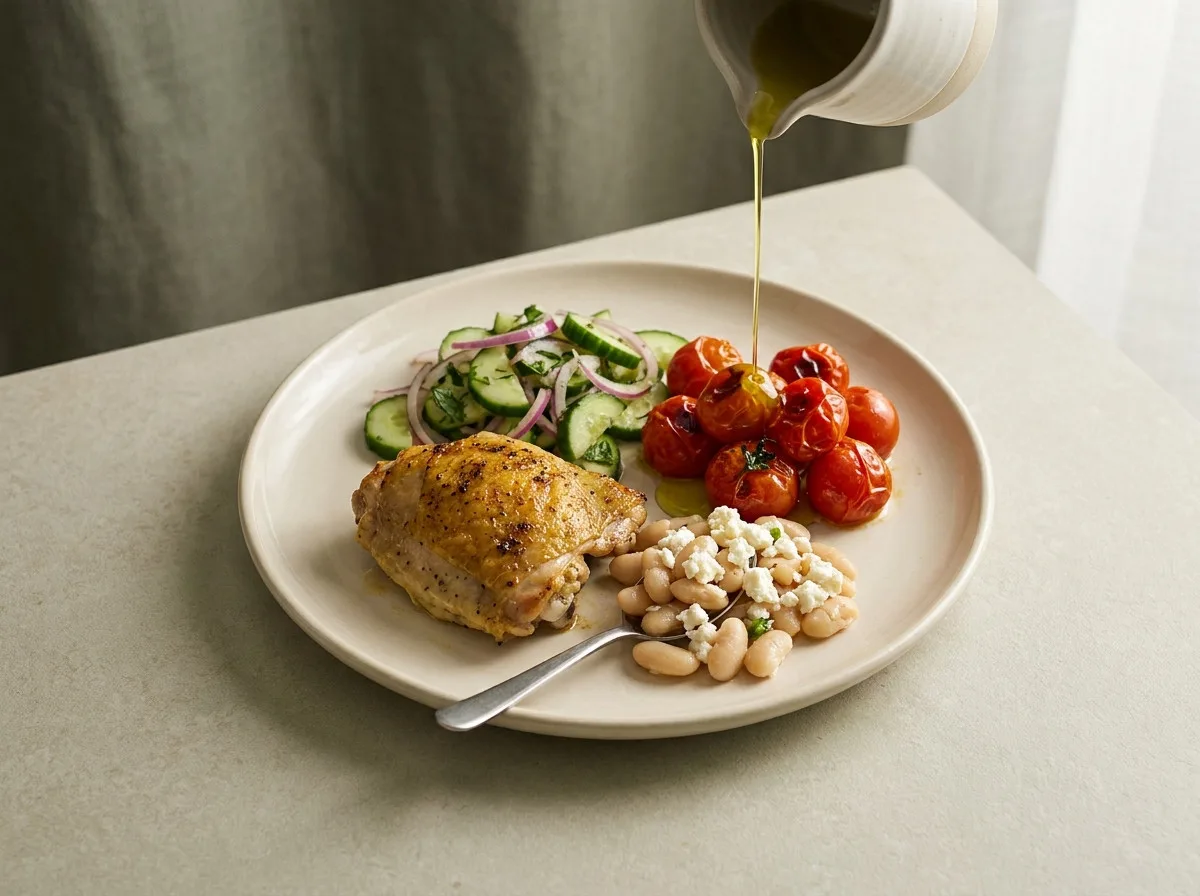
A practical split for 3 tablespoons: one to cook with, one in a dressing, one raw over the finished plate. PREDIMED asked its olive oil group for at least 4 tablespoons daily, but those participants were replacing fat, not adding it. If you eat fewer calories, or already get fat from nuts, cheese and oily fish, 1 to 2 tablespoons is a reasonable target. Measure it for a week; almost nobody pours what they think they pour.
What our own Mediterranean recipes actually use
Nobody writing about olive oil on Mediterranean diet menus measures what a real dinner contains, so we measured ours. The table reads the oil quantity out of the live ingredient list of every published recipe in the Mediterranean recipe archive and divides it by the stated servings.
| Recipe | Olive oil per serving | Calories from that oil |
|---|---|---|
| Sheet Pan Greek Chicken | 1.00 tbsp | 119 kcal |
| No-Cook Mediterranean Shrimp Salad | 0.75 tbsp | 89 kcal |
| Mediterranean Shrimp Pita with Tzatziki | 0.75 tbsp | 89 kcal |
| Mediterranean Lentil Soup | 0.67 tbsp | 79 kcal |
| Greek Ground Beef Gyro Bowl | 0.50 tbsp | 60 kcal |
| Shrimp and White Bean Stew | 0.50 tbsp | 60 kcal |
| Shrimp Meal Prep Bowls | 0.50 tbsp | 60 kcal |
| Air Fryer Mediterranean Shrimp | 0.50 tbsp | 60 kcal |
| Ground Beef Zucchini Boats | 0.33 tbsp | 40 kcal |
| Shrimp Saganaki | 0.25 tbsp | 30 kcal |
| Mediterranean Brown Rice Bowl | 0.25 tbsp | 30 kcal |
| Air Fryer Beef Kofta Kebabs | 0.17 tbsp | 20 kcal |
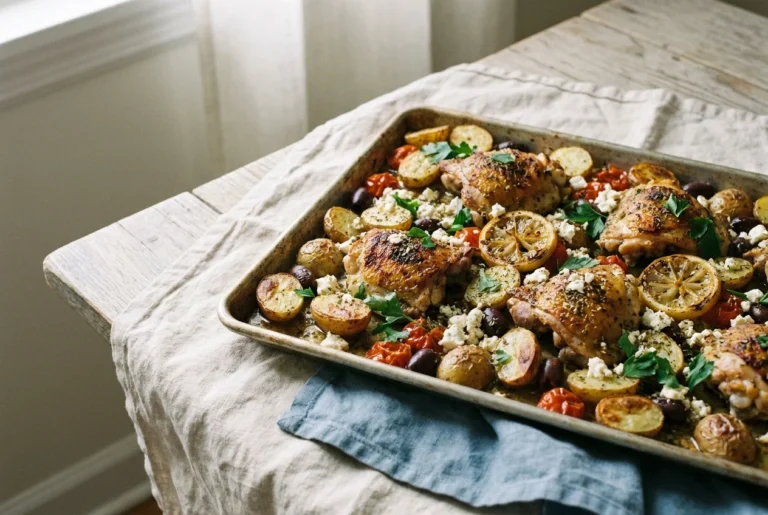
The mean is 0.51 tablespoons per serving, about 61 calories. The most generous recipe on the site, a sheet-pan tray using a quarter cup across four portions, still delivers only half of a 2-tablespoon day. That inverts the usual advice: a normal Mediterranean dinner does not overshoot the olive oil target, it undershoots it badly. The rest has to arrive through dressings, dips and the raw pour at the table, which is exactly where most home cooks quietly skip it.
Better and worse olive oil choices
The best olive oil for Mediterranean diet cooking is plain extra-virgin, sold in dark glass or tin, with a harvest date on the label. Extra-virgin is mechanically pressed and unrefined, which is why it keeps the polyphenols and the peppery catch at the back of the throat.
What to skip: anything labelled light, extra light or pure, which describes flavour and refining rather than calories. Skip clear plastic bottles, since light degrades oil on the shelf, and skip any bottle with no harvest date. Skip the idea that an expensive oil belongs in a hot pan; buy one good oil for finishing and a cheaper extra-virgin for cooking if the price gap bothers you.
How to use it
The highest-oil recipe on the site is the clearest demonstration of the principle: a quarter cup of extra-virgin oil doing all the work butter would otherwise do, across chicken and two trays of vegetables. To build the plate out further, see what to serve with Greek chicken.
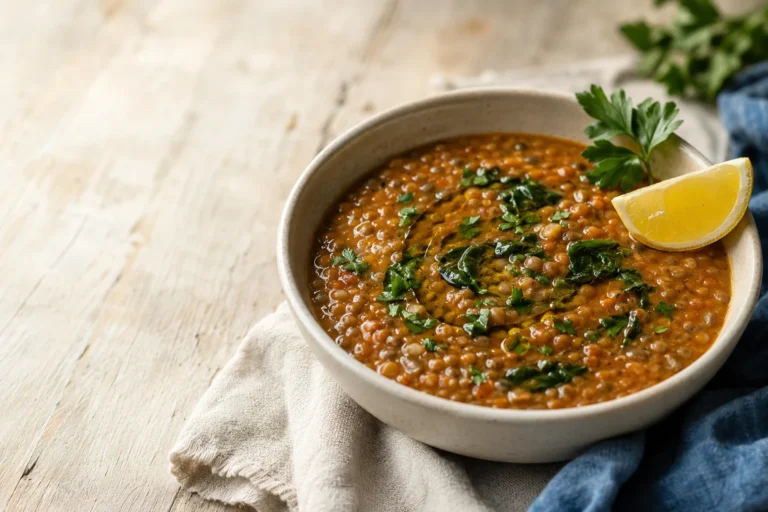
The other habit worth copying is the raw finishing pour, added off the heat so the flavour survives. A lentil soup is the easiest place to learn it: one tablespoon stirred in at the end changes the whole bowl.
When olive oil is the only added fat, the macros stay unremarkable: Air Fryer Mediterranean Shrimp with Feta and Lemon lands at 292 calories with 37 g of protein. Browse the full recipe archive for more in the same register.
Frequently asked questions
Is olive oil Mediterranean diet friendly if you are watching calories?
Yes, but it has to be measured rather than poured. At 119 calories a tablespoon it is the densest thing on the plate, so keep to 1 to 2 tablespoons a day on a reduced-calorie diet and take the fat out of somewhere else first.
Can you cook with extra-virgin olive oil or only use it raw?
You can cook with it, including roasting and pan-searing at normal home temperatures. Its smoke point sits comfortably above typical sauteing heat. Keep the most expensive bottle for raw finishing, where you actually taste what you paid for.
Is light olive oil the same thing?
No. Light refers to colour and flavour after refining, not to calories, and refined oils lose much of the polyphenol content that distinguishes extra-virgin. Per USDA data the energy is effectively identical. Buy extra-virgin.
How should olive oil be stored?
Cool, dark and sealed, away from the stove. Light and heat are what turn oil stale, which is why dark glass and tin exist. Do not refrigerate it; it clouds and thickens without gaining shelf life. Use an opened bottle within a few months.
Olive oil or butter on the Mediterranean diet?
Olive oil, as the everyday default. The pattern keeps butter occasional because substituting unsaturated fat for saturated fat is the change associated with lower LDL cholesterol. Butter is not banned; it is simply not the working fat.
Note: This article is for general information and is not medical advice. Nutrition figures are estimates that vary with brands, ripeness, and portion size. Talk to a doctor or registered dietitian before changing your diet, especially if you are pregnant, managing diabetes or kidney disease, or taking prescribed medication.