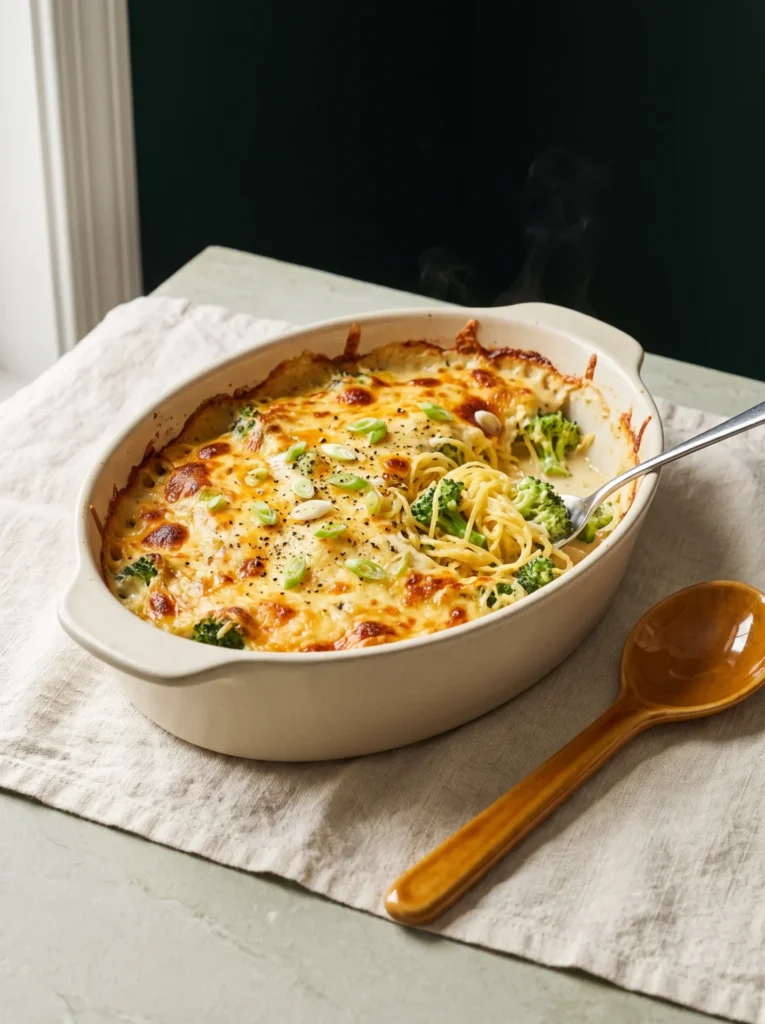
This broccoli cheddar spaghetti squash bake rebuilds a diner cheese-and-broccoli casserole on roasted squash strands instead of pasta, which is what holds it to 10 g net carbs a serving. The sauce is a flourless cheddar cream that clings to the strands rather than sliding off them, finished under a lid of browned cheddar. It is among the more forgiving things in our keto recipes collection, because the squash does most of the work while the oven is already on.
Table of Contents
Why this recipe works
- Roasting beats microwaving. Cut side down at 400°F drives moisture out instead of trapping it in the cavity, so the strands stay separate rather than collapsing into mash.
- No flour, no roux. Cream cheese and heavy cream do the thickening, which keeps roughly 12 g of carbs out of the batch and stops the sauce splitting on reheat.
- The broccoli barely cooks first. Two minutes of blanching and no more, so it finishes in the oven with bite left instead of turning olive-grey.
- One dish, six portions. A keto spaghetti squash casserole that still has texture on day four is worth more on a Tuesday than one that has to be eaten hot.
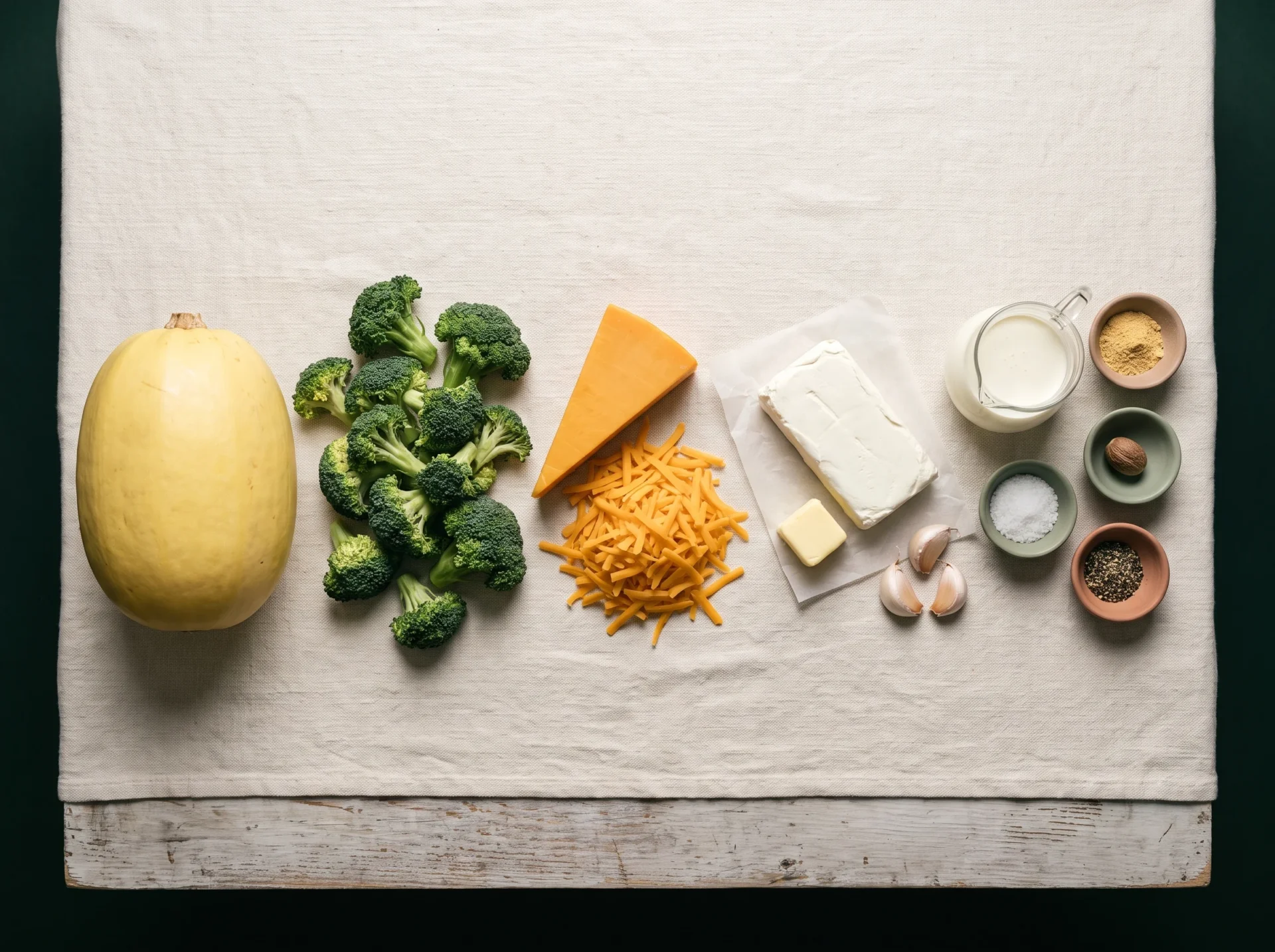
Ingredients
Makes 6 servings.
Equipment
How to make it
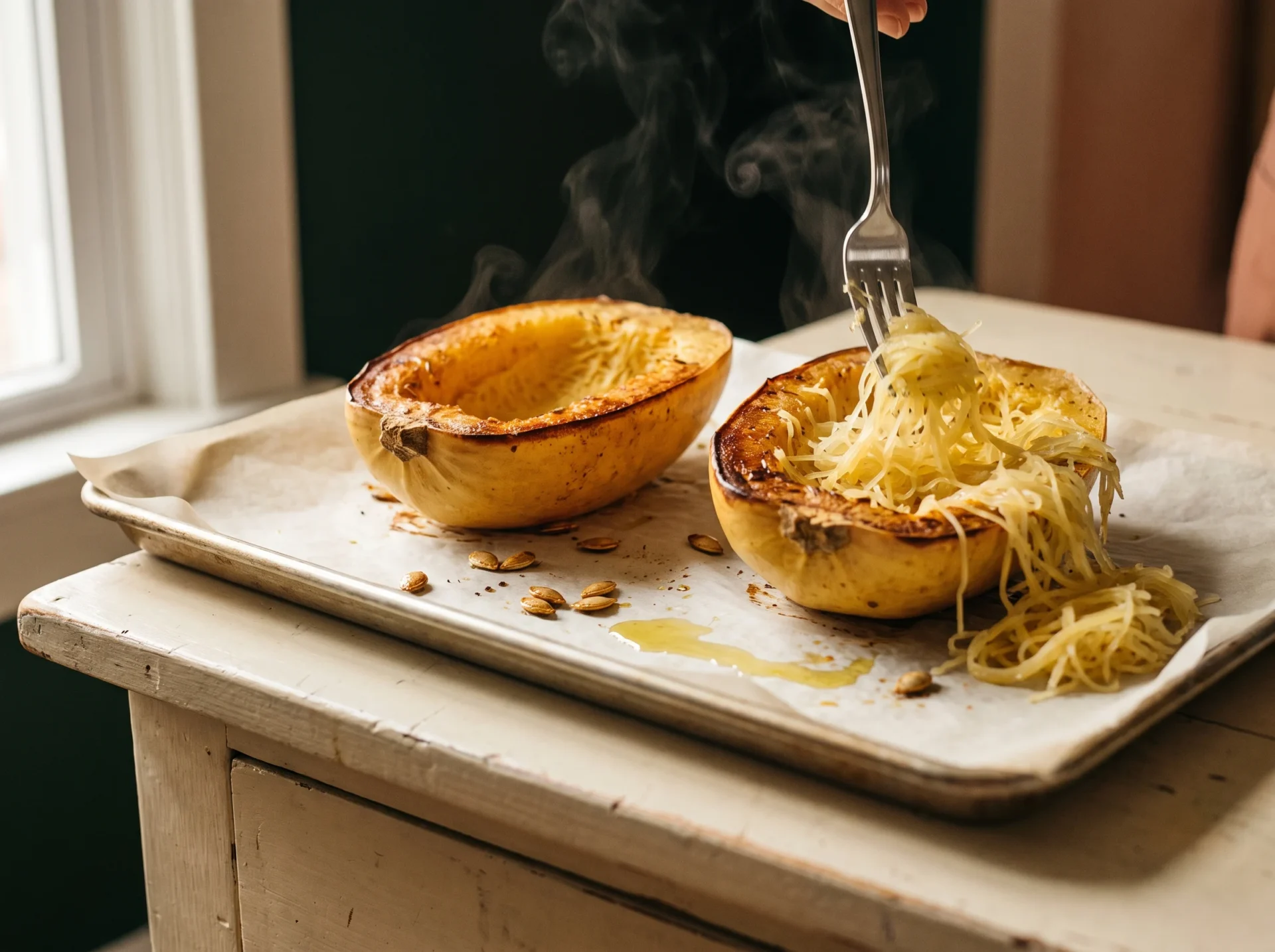
- Roast the squash cut side down. Heat the oven to 400°F (200°C). Rub the cut faces with the olive oil, season them lightly, and lay both halves cut side down on the lined sheet. Roast 40 to 45 minutes, until a knife slides through the skin without resistance. Cut side down is the whole trick: steam escapes into the pan instead of pooling in the cavity.
- Blanch the broccoli briefly. While the squash roasts, drop the florets into salted boiling water for 2 minutes, then drain them hard and spread them on a towel. Any longer and they will be army-green by the time the bake comes out.
- Shred the strands, then drain them. Let the halves sit 10 minutes, then drag a fork lengthwise through the flesh to pull it into strands. Tip them into a colander, salt lightly, and leave them to drain while you make the sauce. Expect a few tablespoons of liquid, which is water you are not putting into the dish.
- Build the cheddar cream off the heat. Melt the butter over medium-low heat, add the garlic and cook 30 seconds until fragrant but not coloured. Whisk in the cream cheese and heavy cream until smooth, then take the pan off the burner entirely before adding 6 oz of the cheddar in handfuls. Cheddar splits into oil and curd above roughly 160°F (71°C), so residual heat is all you want.
- Fold, season, and taste it now. Stir the mustard powder, nutmeg, salt and pepper into the sauce, then fold in the drained strands and the broccoli. Correct the salt at this stage; once it is baked, the only salt you can add is on top.
- Bake until the edges bubble. Spread the mixture into the baking dish, scatter the remaining 2 oz of cheddar over the surface, and bake at 375°F (190°C) for 20 to 25 minutes, until the top is patchy gold and the sauce bubbles at the rim. Rest it 10 minutes before cutting so the portions hold their shape.
Practical cooking tips
- The usual failure is a watery bake. It comes from skipping the drain in step 3, or from roasting cut side up. If the finished dish still weeps, run it 3 minutes under the broiler and the surface will set.
- Shred your own cheddar. Bagged shreds are dusted with potato starch or cellulose to stop them clumping, and that coating is what makes a cream sauce grainy.
- Steady the squash before you cut it. Slice a thin coin off one long side so it sits flat, then halve it lengthwise. A squash rocking under a knife is the real hazard here.
- Cheesy spaghetti squash browns fast. Start checking at 20 minutes; the gap between gold and bitter is about four minutes.
Swaps and variations
- Gruyère or smoked gouda for half the cheddar. Swapping 4 oz moves the macros by under 1 g in any direction, and the smoke reads as bacon without adding a step.
- Add cooked chicken or crumbled sausage. Eight ounces of shredded rotisserie chicken adds about 9 g protein and 45 kcal per serving and turns a side dish into a main.
- Cauliflower for a stricter low carb broccoli casserole. Replacing the squash with 1 lb of riced cauliflower drops net carbs from 10 g to about 5 g per serving, at the cost of the strand texture that makes this dish what it is.
- Use the same sauce elsewhere. The off-heat cheddar cream works over roasted courgette too, the way our keto lasagna with roasted zucchini noodles handles its cheese layer, and there are more low-carb bakes in the full recipe archive.
Storage and meal prep
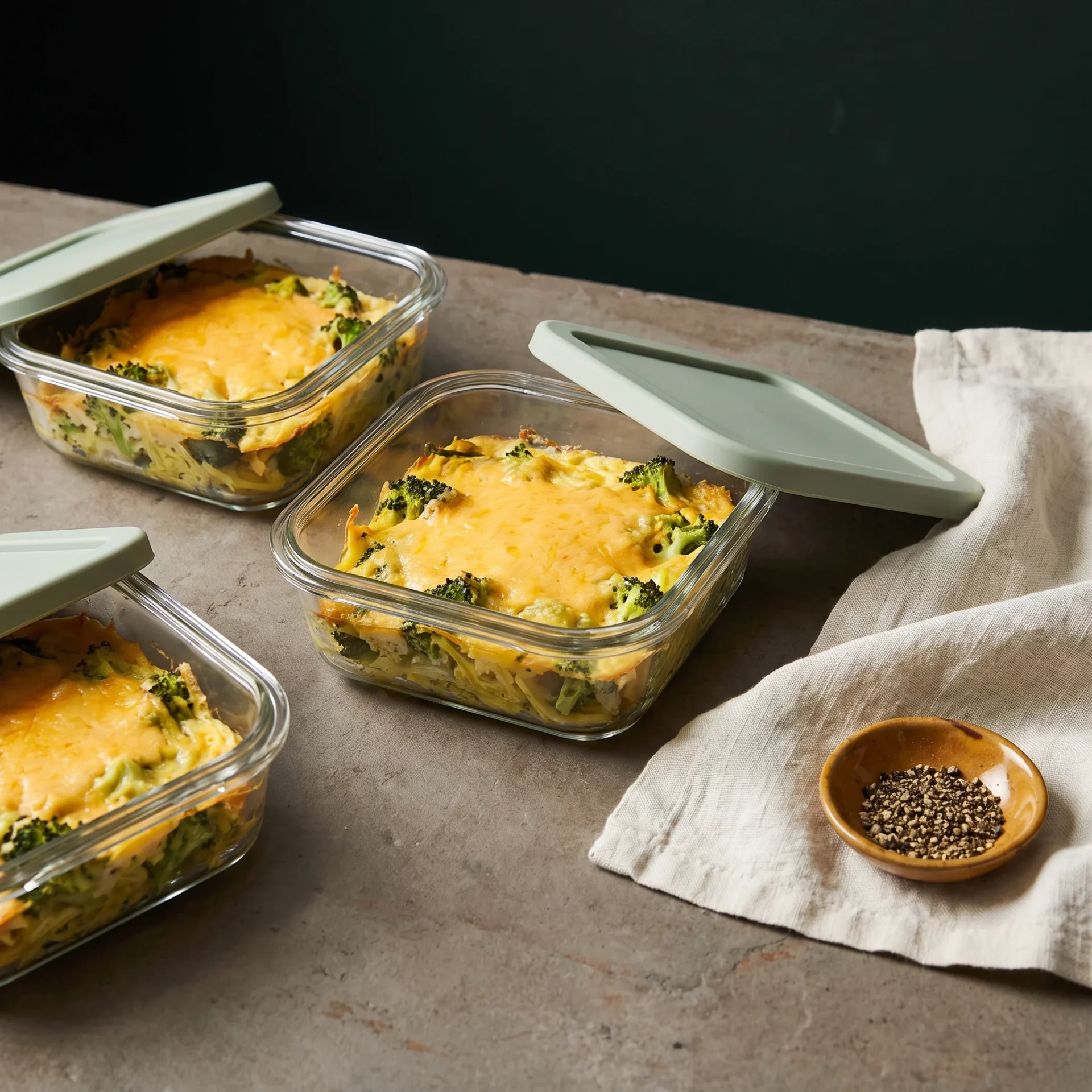
Cool the bake to room temperature within two hours, then portion it into airtight containers and refrigerate for 3 to 4 days, the window USDA FSIS gives for cooked leftovers. Reheat portions to 165°F (74°C), covered, in a 350°F oven for about 12 minutes or in the microwave at 70% power in 90-second bursts; full power drives the fat out of the cheddar and leaves a slick on the surface. This broccoli cheddar spaghetti squash bake freezes for up to two months but not gracefully, since the strands soften on thawing. The broccoli fades first, going drab around day three while the dish is still perfectly safe.
Nutrition per serving
| Nutrient | Per serving |
|---|---|
| Calories | 386 kcal |
| Protein | 13 g |
| Fat | 33 g |
| Total carbs | 13 g |
| Fiber | 3 g |
| Net carbs | 10 g |
One serving of this broccoli cheddar spaghetti squash bake is one sixth of the dish, about 1 cup (215 g). Nutrition is an estimate calculated from USDA FoodData Central entries for the exact quantities listed above, and it varies with brands and portion sizes.
Frequently asked questions
Is broccoli cheddar spaghetti squash keto friendly?
Yes, at 10 g net carbs per serving. That sits inside a 30 to 50 g daily target but uses half of a strict 20 g day in one meal. The squash carries almost all of those carbs; the cheddar, cream and butter carry close to none. At the strict end, halve the portion and put it beside a plain protein.
How to roast spaghetti squash without it turning watery?
Roast it cut side down at 400°F on a bare parchment-lined sheet, uncovered, not in a dish. Foil and the microwave both trap steam against the flesh, which is what produces limp strands. Then drain the shredded strands in a colander with a pinch of salt for 10 minutes before they touch any sauce.
Can I make this spaghetti squash broccoli cheddar bake ahead?
Yes. Assemble it through step 5, cover it, and refrigerate for up to 24 hours, then bake it straight from cold and add 8 to 10 minutes. Do not bake it fully and reheat the whole dish instead; the second full bake is what dries the strands out.
Why did my cheese sauce turn grainy?
Almost always heat. Cheddar breaks above roughly 160°F (71°C), so the pan has to come off the burner before the cheese goes in. The other common cause is pre-shredded cheese, whose anti-caking starch will not dissolve into a cream base.
Can I use frozen broccoli?
Yes, and skip the blanching entirely. Thaw it, squeeze it dry in a towel, and fold it in raw at step 5. Frozen broccoli is blanched before freezing, so a second pre-cook is what turns it to mush in the oven.
What size squash should I buy?
About 2 1/2 lb (1.1 kg), which yields roughly 3 1/2 cups of strands. A 3 lb squash works but pushes the dish toward 11 g net carbs per serving and thins the sauce, so if that is what the shop has, hold back a handful of strands rather than crowding the dish.
Ratings and reviews
No ratings yet. If you have cooked this, your rating helps the next person decide.
Rate this recipe