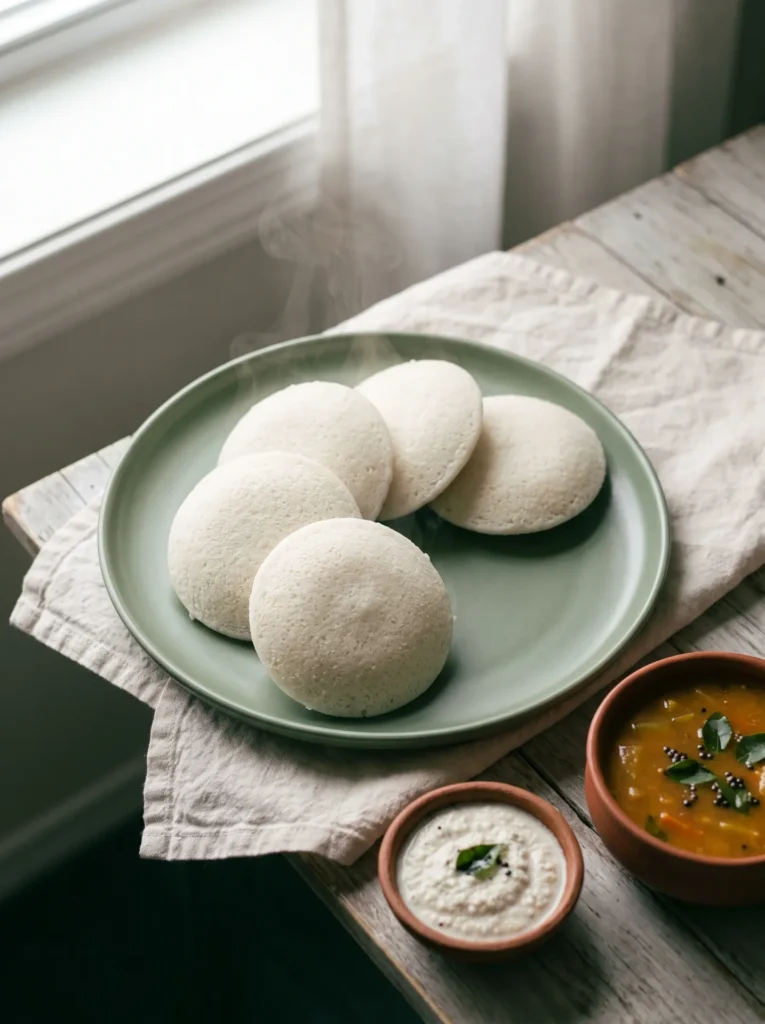
This idli batter recipe is three parts rice to one part urad dal, soaked, ground separately and left overnight to ferment into something light enough that the steamed cakes squeeze like a sponge. Nothing in it is exotic and nothing in it is optional except the poha. What decides the outcome is temperature: cold water in the grinder, a warm corner for the batter. Get those two right and the rest is waiting. A naturally leavened, plant-only staple that sits comfortably in our vegan recipes.
Table of Contents
Why this idli batter recipe works
- The rice to urad dal ratio is 3:1 by volume. Published home methods run anywhere from 8:1 down to 3:1, and the looser the dal, the flatter the result. Three to one gives enough dal to build structure without the sourness a dal-heavy batter develops by the second day.
- The dal does the lifting, not yeast. Skinless whole urad dal grinds into a mucilaginous foam that traps air, and the wild bacteria already on the grains acidify the batter as it rests. There is no commercial leavening anywhere in the ingredient list.
- Two textures, ground apart. The dal goes silk-smooth and the rice stays at fine-semolina grain. Grinding them together averages both into a paste that steams dense, which is the single most common reason a promising batter turns out heavy.
- One batch, three breakfasts. Day one steams into idlis; by day three the batter has thinned and soured enough to spread as dosa or uttapam, so one idli batter recipe covers most of a week of breakfasts.
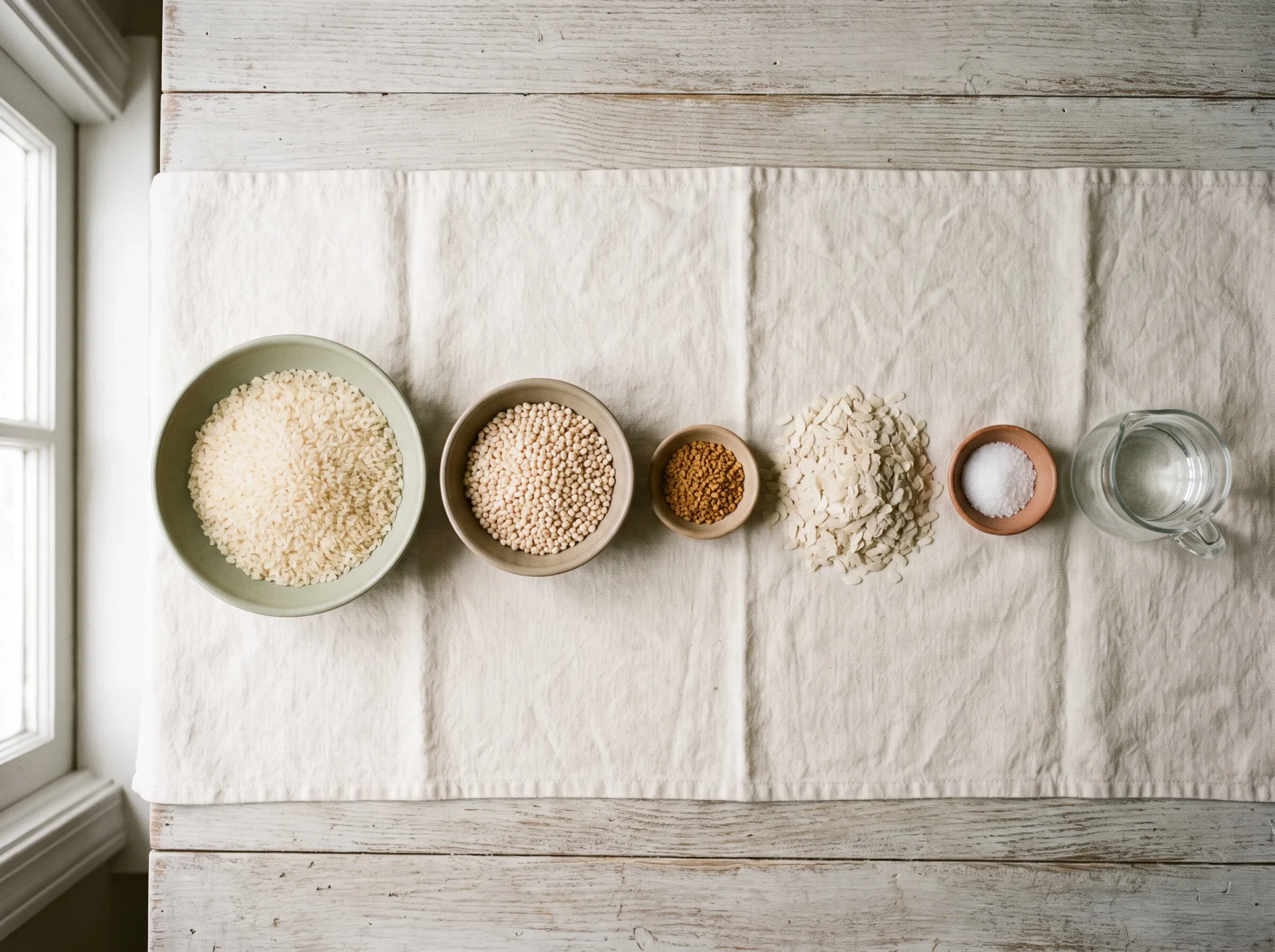
Ingredients
Makes 8 servings, about 24 idlis.
Equipment
How to make it
- Rinse and soak the rice. Rinse the rice through three or four changes of water until the water runs almost clear, then cover it by 3 inches (8 cm) of cool water and leave it 5 hours. Cloudy soaking water means surface starch that will weigh the batter down.
- Soak the dal and fenugreek separately. Rinse the urad dal until the water is clear, add the fenugreek seeds, cover by 3 inches (8 cm) and soak 4 hours. Rinse the poha and soak it in just enough water to cover for the last 20 minutes only, or it turns gluey.
- Grind the dal first, and grind it cold. Drain, then grind with 3/4 to 1 cup (180 to 240 ml) ice-cold water added a splash at a time, 20 to 25 minutes in a wet grinder or 4 to 5 minutes of short bursts in a blender, scraping down between bursts. Stop when it is bright white, doubled, and holds a soft peak; a half teaspoon dropped into a glass of water should float.
- Grind the rice coarse. Drain the rice, add the drained poha, and grind with about 3/4 cup (180 ml) cold water to the texture of fine semolina. Rub a little between your fingers: you want faint grain, not smoothness.
- Combine by hand. Tip both into one large bowl and fold with a clean hand for 2 to 3 minutes until uniform and thick enough to fall off the hand in a slow ribbon. Add the salt now only if your kitchen sits at 75 to 85F (24 to 29C); in a cooler room, hold it back until after fermentation.
- Ferment 8 to 12 hours. Cover loosely, leave the bowl no more than two-thirds full, and keep it at 80 to 90F (27 to 32C) — an oven with only the light on works. It is ready when it has doubled, domed, and smells pleasantly sour rather than sharp. A cold kitchen can take 16 hours; give it the time rather than the heat.
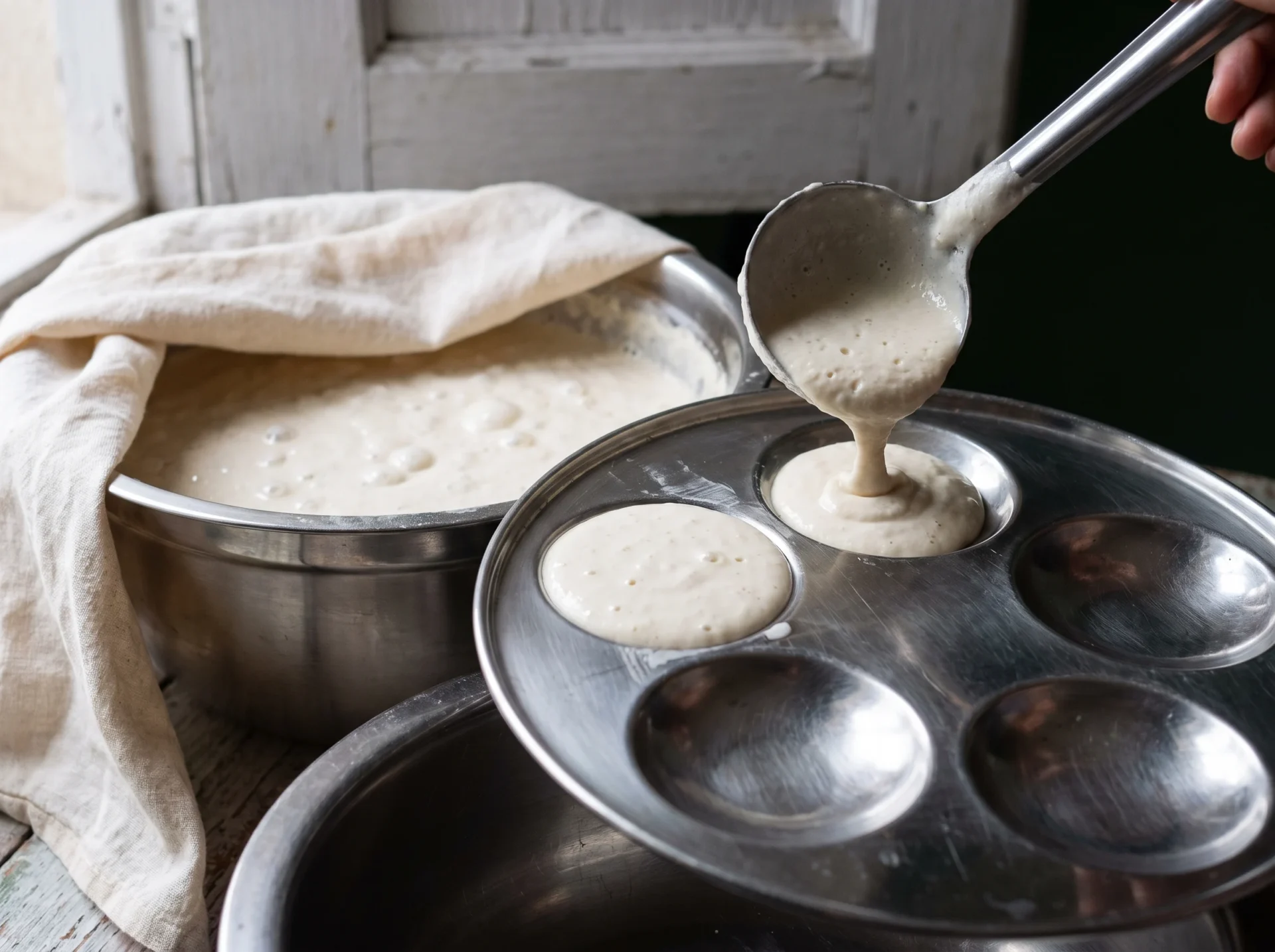
- Steam the idlis. Stir once, gently, and only enough to fold in the salt if you held it back. Grease the moulds, fill each three-quarters full, and steam over a rolling boil, covered and without any pressure weight, for 12 minutes. A skewer should come out clean. Rest 5 minutes before unmoulding or they tear.
Practical cooking tips
- Almost all of how to make idli batter well comes down to two temperatures. The grinder must stay cold, because friction heat kills the bacteria that will do the fermenting; the room must stay warm, because those same bacteria stall below about 70F (21C).
- A soft idli batter is a thick batter. It should mound briefly on the spoon before settling. Thin batter spreads in the mould, steams flat and turns rubbery, and no amount of extra fermentation will rescue it.
- Old dal is the usual culprit. Urad dal loses grinding volume as it ages, so a bag opened a year ago will foam poorly no matter how long you run the grinder. Buy small quantities and store them sealed and dark.
- Do not beat the risen batter. Every stir knocks out gas you spent the night building. One slow fold is all it gets.
- Salt after fermentation if in doubt. Many South Indian cooks prefer rock or non-iodised salt for this batter. Rather than argue the point, add the salt once the batter has risen, which removes the variable altogether.
Swaps and variations
- Idli rava instead of raw rice. Replace the 3 cups of rice with 3 cups of idli rava, soak it 30 minutes rather than 5 hours, and squeeze it dry before folding it into the ground dal. Macros are effectively unchanged; you trade a little texture for four hours.
- Leave out the poha. The batter still works, just slightly less tender. It removes about 27 calories and 6 g of carbohydrate per serving.
- Push the ratio to 2.5:1 for more protein. Swap 1/2 cup (100 g) of the rice for another 1/2 cup (100 g) of urad dal: protein rises by about 2 g per serving, carbohydrate falls by about 3 g, and calories barely move. The batter also ferments faster, so start checking at 7 hours.
- Make it a full plate. Idlis want something saucy beside them; a bowl of our harissa chickpea stew does the job when there is no sambar on the stove, and there are more ideas across the full recipe collection.
Storage and meal prep
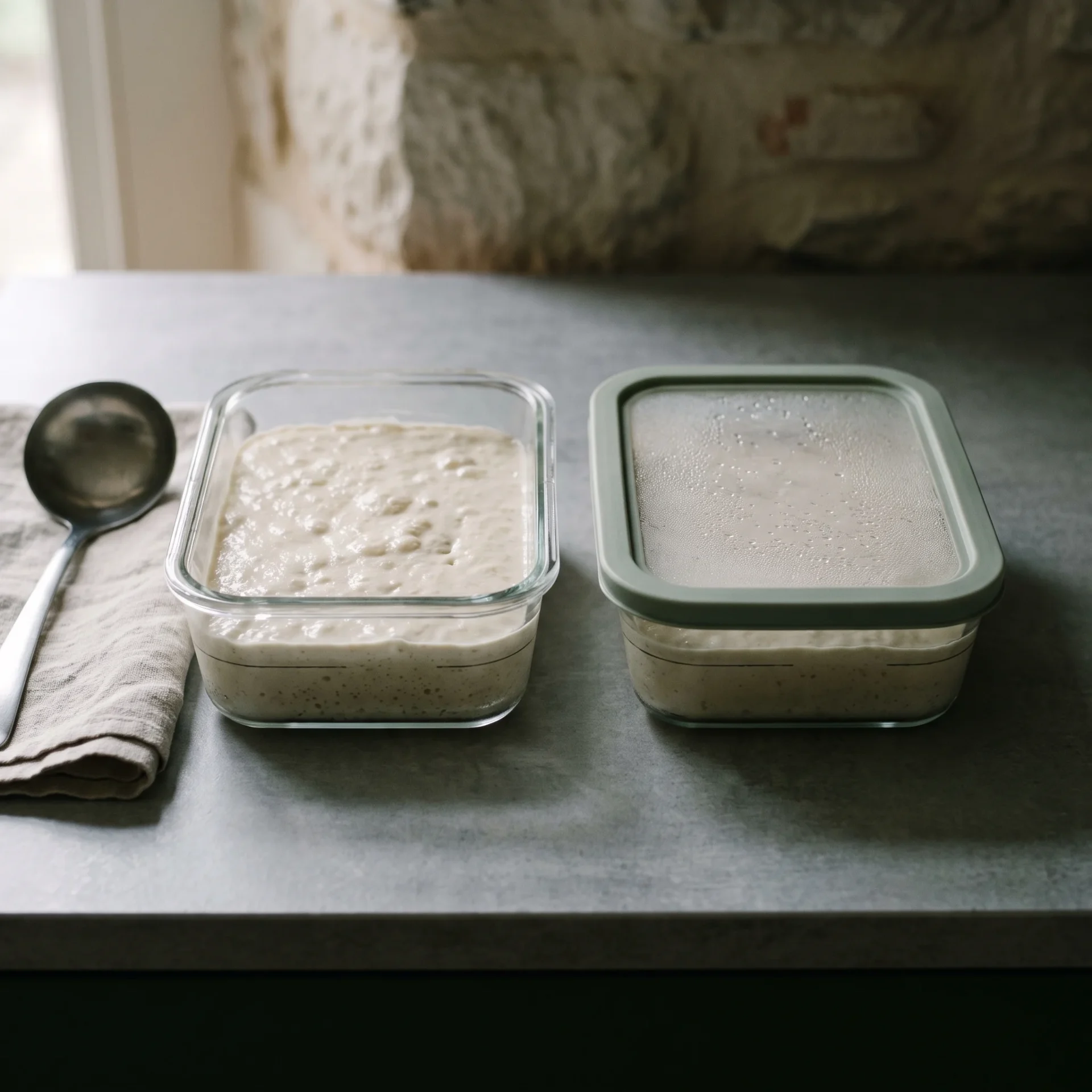
Homemade idli batter keeps 4 to 5 days refrigerated at or below 40F (4C), the benchmark the FDA sets for a safe refrigerator. Store it in a container no more than two-thirds full, because it carries on rising slowly in the cold. Once fermentation is done, do not leave it on the counter more than two hours, or one hour if the kitchen is above 90F (32C). It sours a little more each day, which is a feature after day two: thin it with a few tablespoons of water and it becomes dosa batter. Freeze surplus in 2-cup portions for up to a month and thaw it overnight in the fridge, then let it come to room temperature before steaming. Steamed idlis keep 3 days refrigerated and come back best re-steamed for 4 to 5 minutes; a microwave dries them out unless you cover them with a damp cloth. What does not survive storage is the first-day lightness, so steam the batch you want at its best on day one.
Nutrition per serving
| Nutrient | Per serving |
|---|---|
| Calories | 395 kcal |
| Protein | 13 g |
| Fat | 1 g |
| Total carbs | 82 g |
| Fiber | 6 g |
| Net carbs | 76 g |
One serving is 3 idlis, one eighth of the batch. Figures are calculated from the dry ingredient weights above using USDA FoodData Central and are an estimate that varies with brands and exact portion sizes.
Frequently asked questions
Why is my idli batter fermentation so slow?
Almost always the room is too cold. Below roughly 70F (21C) the bacteria barely work, and a batter that would double in 9 hours at 85F (29C) can need 16 or more. Move the bowl into an oven with the light on, or a switched-off oven with a mug of just-boiled water beside it, and check hourly rather than adding heat directly.
Can I halve this idli batter recipe?
Yes, and everything in this idli batter recipe scales cleanly except the grinding. A half quantity of dal often sits below the blades of a large blender jar, so use a smaller jar or accept a coarser grind. Soaking and fermentation times do not change.
How do I know the batter has fermented enough?
Look for three signs together: it has roughly doubled, the surface is domed and pocked with bubbles, and the smell is mildly sour rather than sharp or alcoholic. Volume alone can mislead in a warm kitchen, where the batter rises before the flavour has developed.
Can I use the same batter for dosa?
From day two onward, yes. Thin it with 2 to 4 tablespoons of water per cup until it pours rather than mounds. Fresh day-one batter is too thick to spread thinly and gives a thick, pancake-like dosa.
What if I do not have an idli steamer?
Small heatproof bowls, ramekins, or a greased muffin tin set on a trivet inside a wide lidded pot all work. Keep the water at a steady boil below the level of the moulds, and add 2 to 3 minutes to the steaming time for anything deeper than a standard idli well.
Is this batter vegan and gluten free?
Both. Rice, urad dal, fenugreek, poha and salt are all plant foods, and none of them contain gluten. Check only that the poha you buy is packed without a wheat-containing anti-caking agent, which is rare but not unheard of.
Ratings and reviews
No ratings yet. If you have cooked this, your rating helps the next person decide.
Rate this recipe