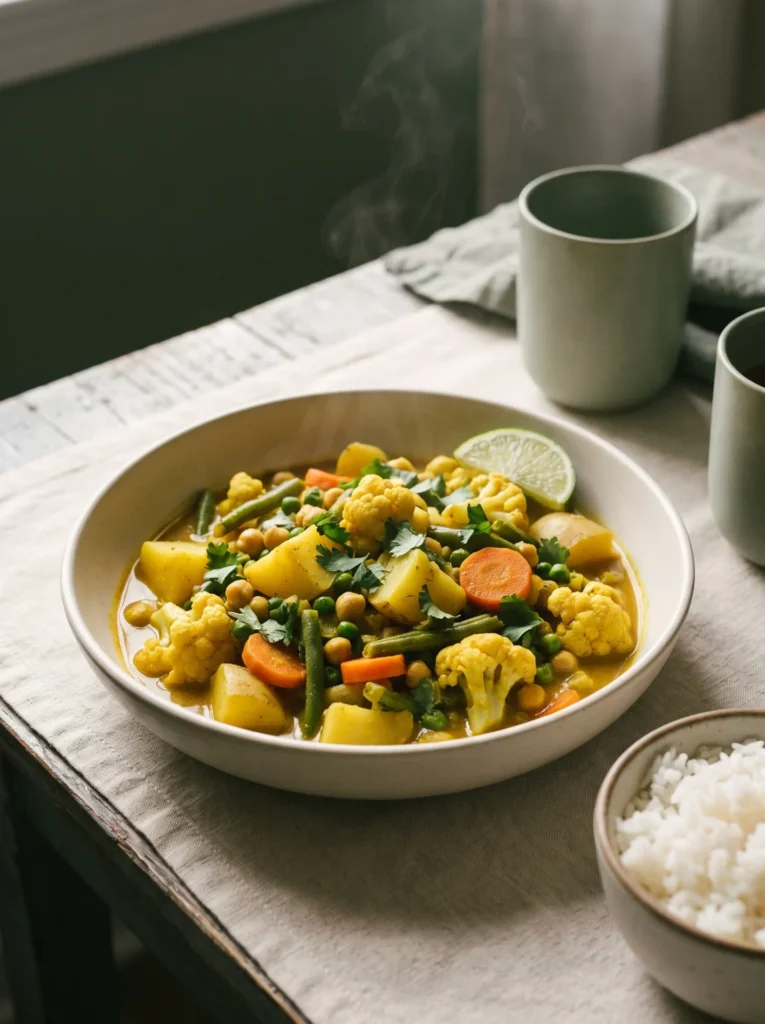
A good mixed vegetable curry is not a dump-everything-in-the-pot stew — it is a sauce built first, then vegetables added on a schedule, so the potatoes finish soft, the cauliflower keeps its shape and the peas stay bright. This version blooms curry powder and turmeric in coconut oil, thickens with one can of full-fat coconut milk and a spoonful of tomato paste, and stages each vegetable into the pan by how long it actually needs. Everything in it is plant-based, so it belongs with the rest of our vegan recipes.
Table of Contents
Why this mixed vegetable curry works
- The spices are bloomed, not boiled. Curry powder and turmeric go into hot coconut oil with the onion, garlic and ginger for a full minute before any liquid arrives, so their fat-soluble aromatics dissolve into the oil instead of staying grainy in the sauce.
- The vegetables go in on a timer. Potatoes and carrots get the whole simmer, cauliflower and green beans join halfway, and the peas get the last two minutes — which is why a vegetable curry with coconut milk built this way never arrives as uniform mush.
- Full-fat coconut milk does the thickening. One can carries enough fat to coat every piece without flour, cornstarch or a roux, and it holds together through reheating better than a dairy cream sauce does.
- Chickpeas turn it into dinner. A single drained can adds roughly 17 g of protein and 15 g of fiber to the batch, which is the difference between a side dish and a meal that keeps you full.
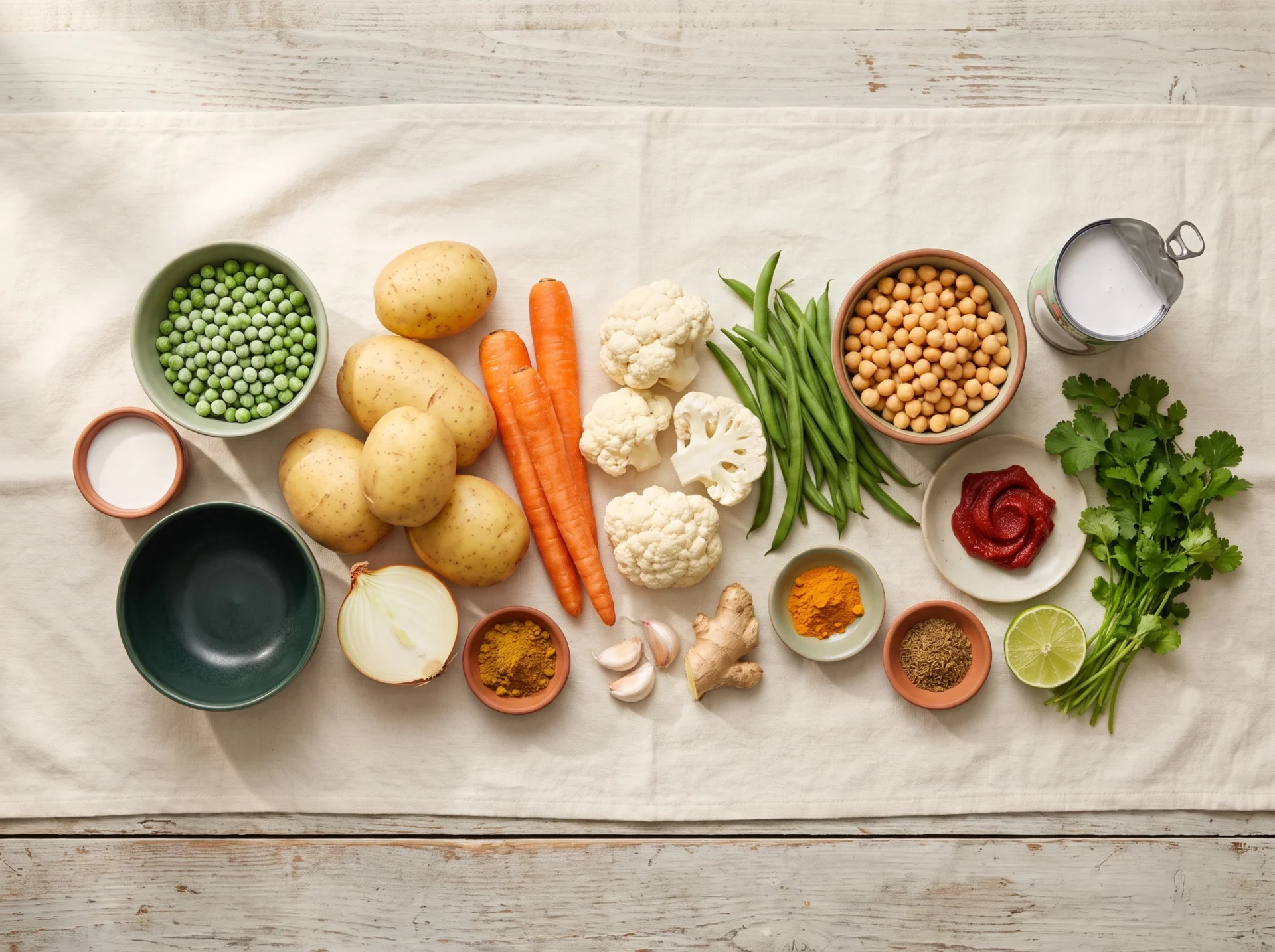
Ingredients
Makes 4 servings.
Equipment
How to make it
- Prep every vegetable first. Dice the potatoes to 3/4 inch, slice the carrots 1/4 inch thick, break the cauliflower into florets no wider than the potato cubes, and cut the beans into 1-inch lengths. The pan moves fast once the spices hit the oil, and mismatched sizes are the single biggest reason curries cook unevenly.
- Soften the aromatics. Warm the coconut oil in the Dutch oven over medium heat, add the onion with a pinch of salt, and cook 5 to 6 minutes, stirring now and then, until the pieces turn translucent and slack at the edges without browning. Add the garlic and ginger and cook 1 minute more, until they smell sweet rather than raw.
- Bloom the spices. Stir in the curry powder, turmeric, cumin and cayenne and cook 45 to 60 seconds, stirring constantly. The mixture will look dry and sandy and darken by several shades — move on the moment it smells toasted, because ground spices scorch and turn bitter in well under two minutes.
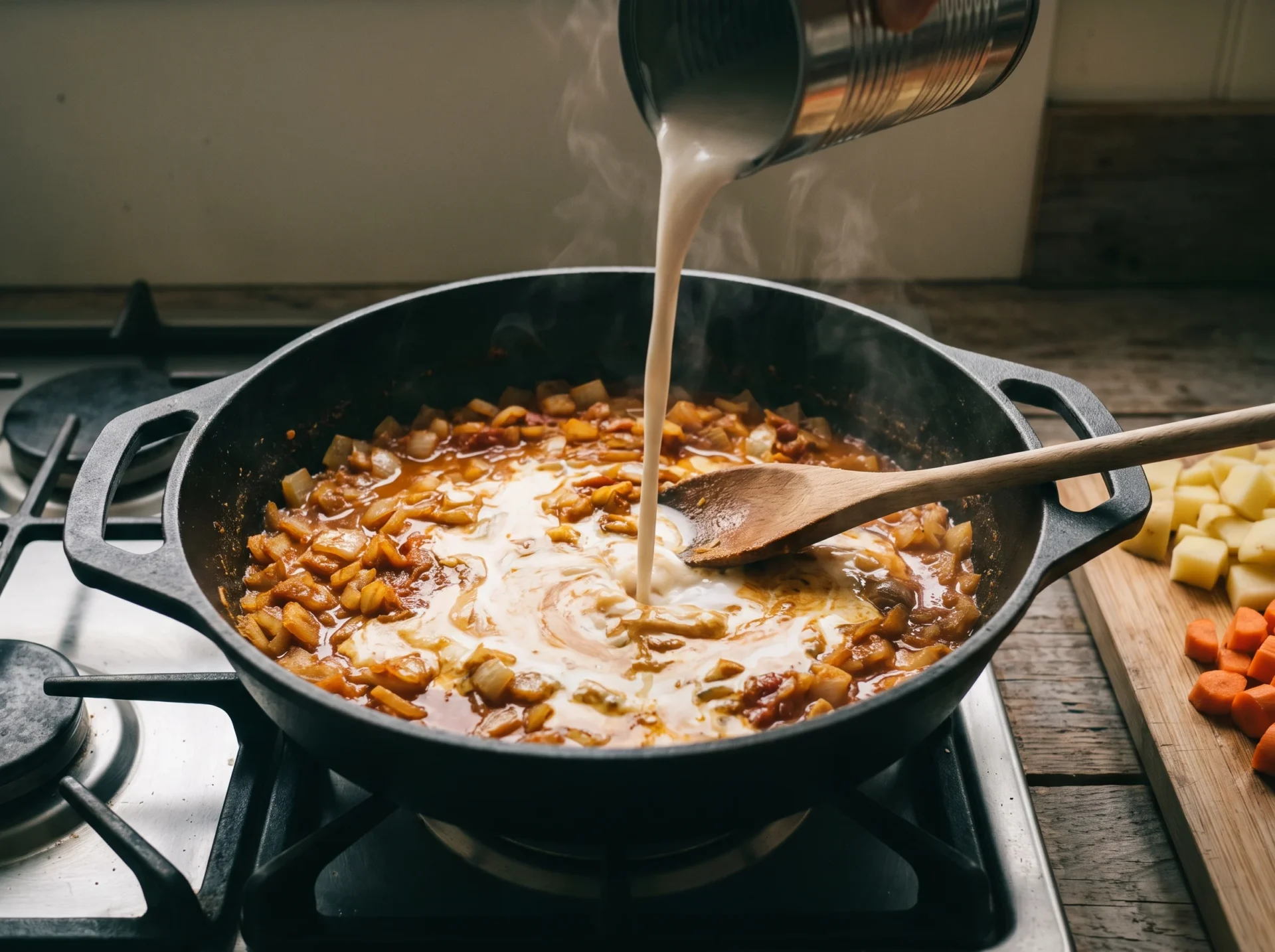
- Build the sauce. Add the tomato paste and stir 30 seconds, until it darkens to brick red, then pour in the coconut milk and broth. Scrape the bottom of the pan clean and bring it to a gentle simmer — small bubbles around the edge, not a rolling boil, which can split coconut milk into oily flecks.
- Simmer the hard vegetables. Add the potatoes, carrots, chickpeas and 1 tsp salt. Cover, drop the heat to medium-low and simmer 12 minutes. A knife tip should still meet resistance in the potato at this stage.
- Add the quick vegetables. Stir in the cauliflower and green beans, replace the lid and simmer 10 to 12 minutes more, until a knife slides into a potato cube with no resistance and the cauliflower is tender right through the stem.
- Finish off the heat. Stir in the peas and cook uncovered 2 minutes, just until they brighten and heat through. Pull the pot off the burner, stir in the lime juice, then taste and add salt in 1/4-teaspoon steps. Scatter the cilantro on top just before serving; folded in early it goes drab and loses its scent.
Practical cooking tips
- Shake the coconut milk can hard before opening, or scoop the solid cream and the thin water in together. Cream alone hitting a hot pan is what breaks a sauce into oily flecks.
- Taste your curry powder before committing two tablespoons. Blends range from mild to fiercely hot, and an easy vegetable curry is easiest to rescue at the start — begin with 1 1/2 tablespoons of an unfamiliar blend and add the rest at step 4.
- The most common failure is a thin, watery sauce, and it happens when the lid stays on with the heat too high, so the vegetables release water faster than it evaporates. If yours is loose at the end, simmer uncovered 3 to 4 minutes before the peas go in.
- Salt in two stages. A pinch with the onions pulls water out and speeds the softening; the rest goes in with the potatoes, where it has twenty minutes to travel into the vegetables instead of sitting on the surface.
- Waxy potatoes hold their edges. Yukon gold and red potatoes stay in cubes through a 25-minute simmer, while russets shed starch and blur into the sauce — which thickens it, but costs you the texture.
Swaps and variations
- Red lentils instead of chickpeas. Two-thirds cup (128 g) dry red lentils added at step 5, plus an extra 1/2 cup broth, replaces the can and thickens the sauce noticeably. Per serving that moves protein from 14 g to about 18 g, total carbs from 58 g to about 64 g, and calories to roughly 565.
- Light coconut milk for a leaner pot. The same 400 g can swapped for light drops fat per serving from 31 g to about 15 g and calories from 534 to roughly 410, but the sauce runs thinner and wants 5 extra uncovered minutes.
- Change the vegetables freely. Sweet potato for Yukon gold, broccoli for cauliflower, spinach stirred in with the peas. Keep the total vegetable weight near 2 1/4 lb (1 kg) and the macros stay within a few grams, which is what makes a vegan vegetable curry such a useful clear-out-the-crisper dinner.
- Want the beans without the coconut? Our harissa chickpea stew uses the same drained-chickpea trick with fire-roasted peppers in place of coconut milk, which cuts the fat per serving sharply.
Storage and meal prep
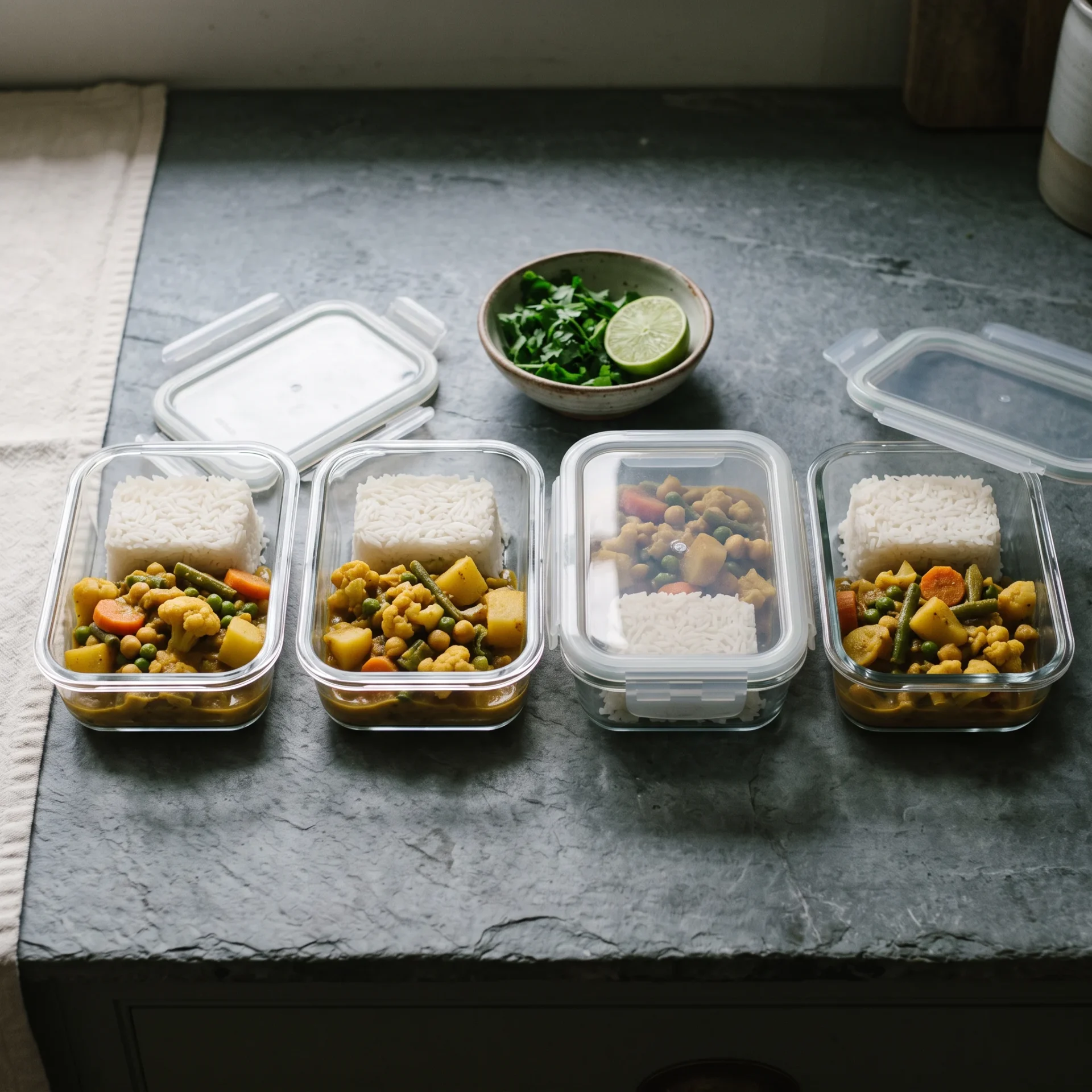
Cool the mixed vegetable curry fast by dividing it between shallow containers rather than leaving the whole pot on the stove, and get it into the fridge within two hours of cooking, as USDA guidance on leftovers advises. It keeps 3 to 4 days at 40°F (4°C) or below and freezes for up to 3 months at 0°F (-18°C); day two arguably tastes better, once the spices have settled into the coconut milk. Reheat on the stove over medium-low with a splash of water until it returns to a boil, or to 165°F (74°C) in the microwave, stirring halfway. Potatoes and chickpeas survive freezing intact, but the cauliflower softens and the peas lose their colour — so if you are cooking specifically for the freezer, hold both back and stir them in during reheating. Fresh cilantro and lime juice do not keep; add them per portion.
Nutrition per serving
| Nutrient | Per serving |
|---|---|
| Calories | 534 kcal |
| Protein | 14 g |
| Fat | 31 g |
| Total carbs | 58 g |
| Fiber | 14 g |
| Net carbs | 44 g |
Nutrition is an estimate calculated from the quantities above using USDA FoodData Central, and it varies with brands and exact portion sizes.
Frequently asked questions
Can I use frozen vegetables in this mixed vegetable curry recipe?
Yes, with one timing change. Frozen cauliflower, green beans and carrots go in straight from the freezer at step 6 rather than thawed, and that simmer drops to 6 to 8 minutes because they were blanched before freezing and turn to mush quickly. Frozen diced potato is the one to skip — it collapses into the sauce.
How to make vegetable curry thicker?
Take the lid off. Ten minutes of uncovered simmering reduces the sauce more reliably than any thickener. If you need it faster, mash three or four cooked potato cubes against the side of the pot with the back of the spoon; the released starch thickens the sauce without changing the flavour. A tablespoon of cornstarch slurried in cold water also works, though it dulls the sheen.
Is this mixed vegetable curry spicy?
Not as written. The only heat comes from the optional 1/4 teaspoon of cayenne and whatever chilli is already in your curry powder, so a mild blend gives a warm, aromatic curry that most children will eat. For real heat, add a sliced serrano with the garlic, or stir 1 teaspoon of chilli paste in at the end.
What should I serve with it?
Steamed basmati or jasmine rice is the default, and about 1 cup cooked adds roughly 200 calories and 45 g of carbohydrate on top of the figures in the table. Warm flatbread works too, and the curry stands on its own if you are keeping the meal lighter. Browse the rest of the recipe archive for sides that hold up next to a coconut sauce.
Can I make it in a slow cooker?
Yes, provided the aromatic steps happen on the stove first. Work through step 4 in a pan, transfer everything except the cauliflower, green beans and peas to the slow cooker, and cook on low for 4 hours. Add the cauliflower and beans for the final 45 minutes and the peas in the last 10, or they disintegrate.
Ratings and reviews
No ratings yet. If you have cooked this, your rating helps the next person decide.
Rate this recipe