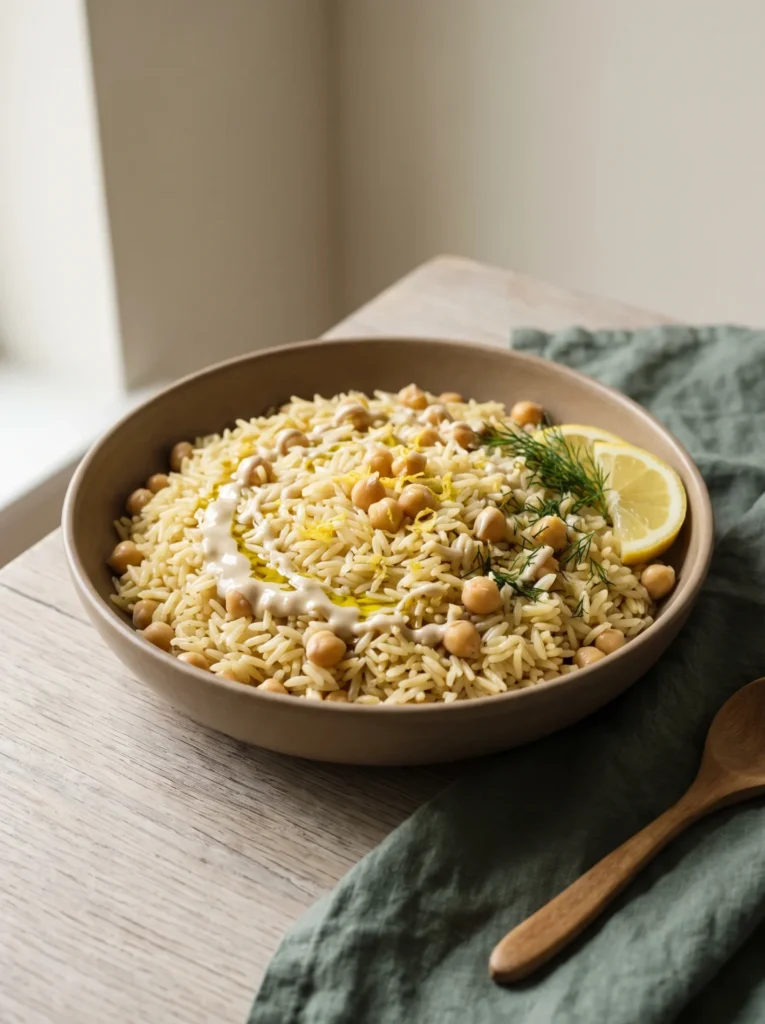
Greek lemon rice with chickpeas is what happens when a side dish is asked to carry dinner. The pilaf underneath is the classic one: onion softened in olive oil, dry grains toasted until they turn chalky, then broth and a covered rest that does most of the cooking. The chickpeas go in with the liquid and come out creamy, and a loosened tahini-lemon finish is stirred through off the heat. It belongs in the same weeknight rotation as the rest of our vegan mains.
Table of Contents
Why this recipe works
- Toasting the dry grains keeps them separate. Two minutes in hot oil coats every grain in fat before any liquid arrives, which is the whole difference between pilaf and porridge.
- The chickpeas cook in the same pot. Canned chickpeas need heating, not cooking, so they go in with the broth and absorb it instead of sitting on top as a garnish. That is what makes this one pot greek lemon rice a main rather than a side.
- Tahini does the work dairy usually does. Loosened with lemon juice and hot water it turns into a pourable cream that coats the grains, so nothing needs butter, stock cubes or feta to taste rich.
- The lemon goes in last. Juice simmered for twelve minutes tastes flat and slightly bitter; stirred into hot rice at the end it stays bright and the grains still drink it in.
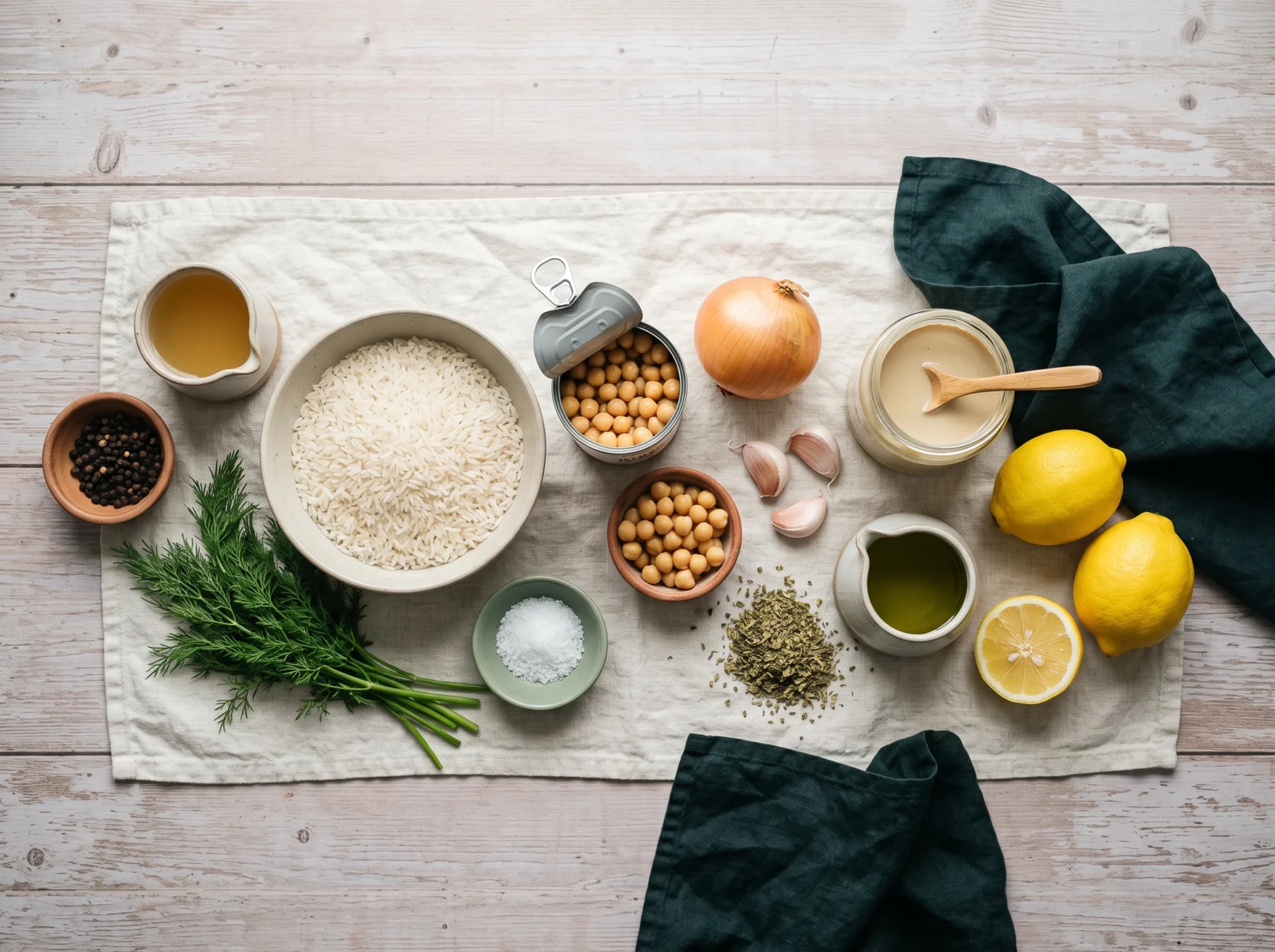
Ingredients
Makes 4 servings.
Equipment
How to make it
- Soften the onion. Warm the olive oil in the pan over medium heat, add the onion and ½ tsp of the salt, and cook 6 to 7 minutes until it is soft and fully translucent with no colour on it. Browning here makes the finished rice taste sweet rather than lemony.
- Bloom the garlic and oregano. Add the minced garlic and dried oregano and stir for 45 seconds, just until the garlic smells sweet and the oregano darkens a shade. It burns fast in hot oil, so keep it moving.
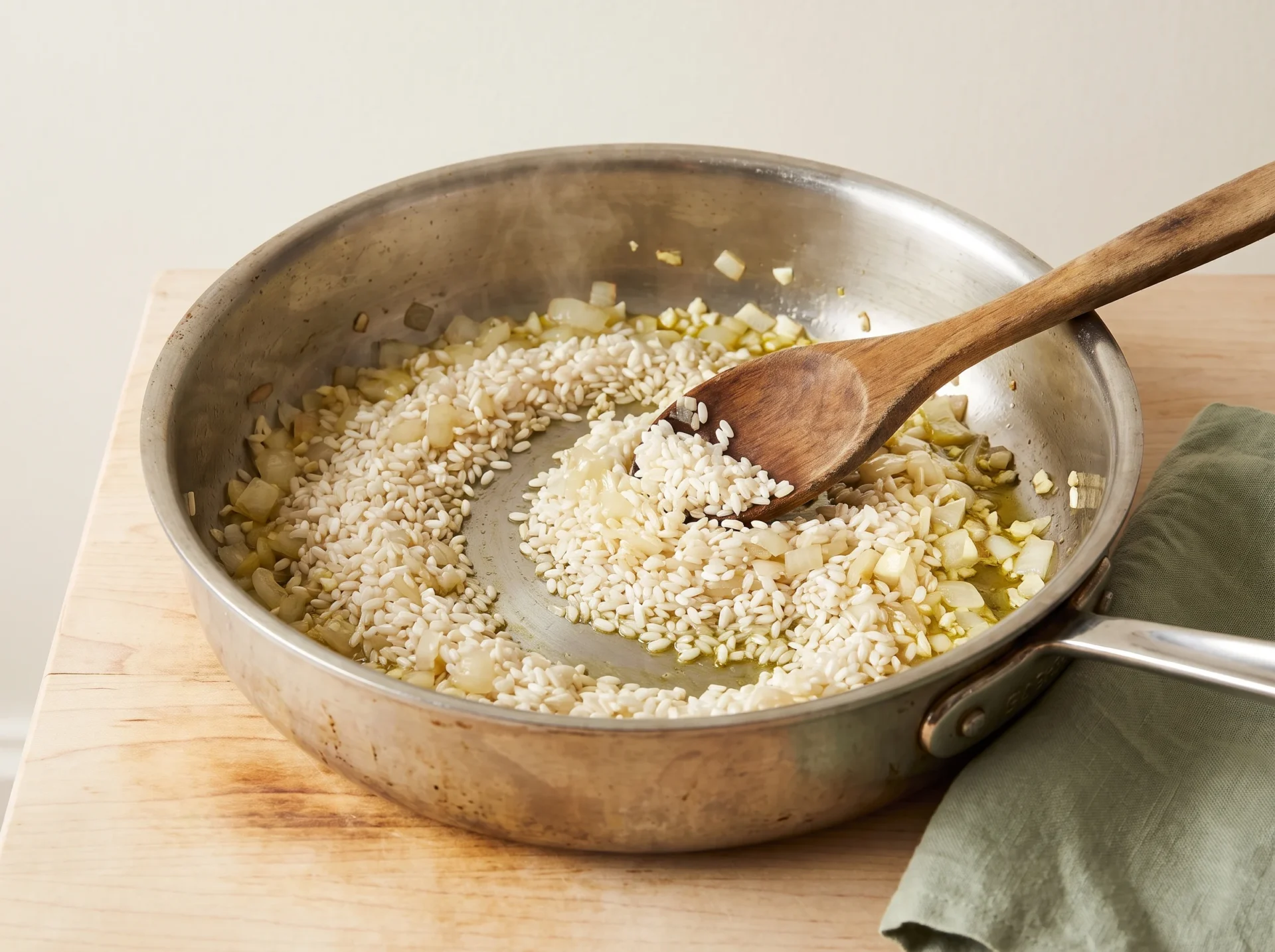
- Toast the rice. Tip in the dry rice, without rinsing it, and stir constantly for about 2 minutes, until the grains look chalky white and the edges have gone mostly translucent. This is the step that decides whether the finished dish is separate grains or a clump.
- Add the broth and chickpeas. Pour in the vegetable broth, add the drained chickpeas, the remaining salt and the black pepper, and stir once to level the surface. Bring it to a bare simmer, with lazy bubbles rather than a rolling boil.
- Cover and leave it alone. Drop the heat to its lowest setting, put the lid on and cook 12 minutes without lifting it or stirring. When the time is up the liquid should be gone and small craters should have opened across the surface.
- Rest off the heat, lid on, 10 minutes. The grains finish on trapped steam, and the ones against the pan reabsorb the last of the moisture. Skipping this is the most common way the dish goes wrong.
- Loosen the tahini and finish. Whisk the tahini with the lemon juice and 2 tbsp of hot water; it will seize into a stiff paste first, then slacken into a pourable cream. Fork the lemon zest, dill and tahini-lemon through the rice and serve straight away.
Practical cooking tips
- Do not rinse the rice. Rinsing is right for steamed rice and wrong here: the surface starch you would wash away is what the oil clings to during toasting, and a wet grain steams in the pan instead of toasting.
- Wide beats deep. A shallow layer cooks evenly; a narrow pot leaves the bottom waterlogged and the top dry, and no amount of stirring fixes it once the lid is on.
- The rest is not optional. Greek lemon rice with chickpeas is finished by steam rather than by heat, so the ten minutes under the lid off the burner do as much as the twelve minutes on it.
- Fluff with a fork. A spoon crushes the grains against each other and breaks the chickpeas; a fork lifts and separates.
- Expect the tahini to seize. Adding lemon juice to tahini thickens it dramatically before it thins. That is normal, so keep whisking and add the hot water a spoonful at a time.
Swaps and variations
- Brown rice. Use the same weight, add ½ cup (120 ml) more broth and simmer about 35 minutes instead of 12. Per serving it changes the numbers by roughly 1 g more fat and 1 g more fiber, and takes total carbs down by under 2 g.
- It is vegan by construction. This is vegan greek lemon rice with nothing swapped out: no butter, no stock cube, no feta. The one thing worth reading is the broth label, since some vegetable bouillons still carry chicken fat or milk solids.
- More protein. A second drained can of chickpeas adds about 87 kcal, 4 g protein, 14 g total carbs and 4 g fiber per serving. It is the cheapest way to push this past 15 g of protein a plate.
- Greens instead of pulses. For the same one-pot Greek rice method built on spinach rather than chickpeas, see the vegan spanakorizo, which uses the same toast-then-steam sequence.
Storage and meal prep
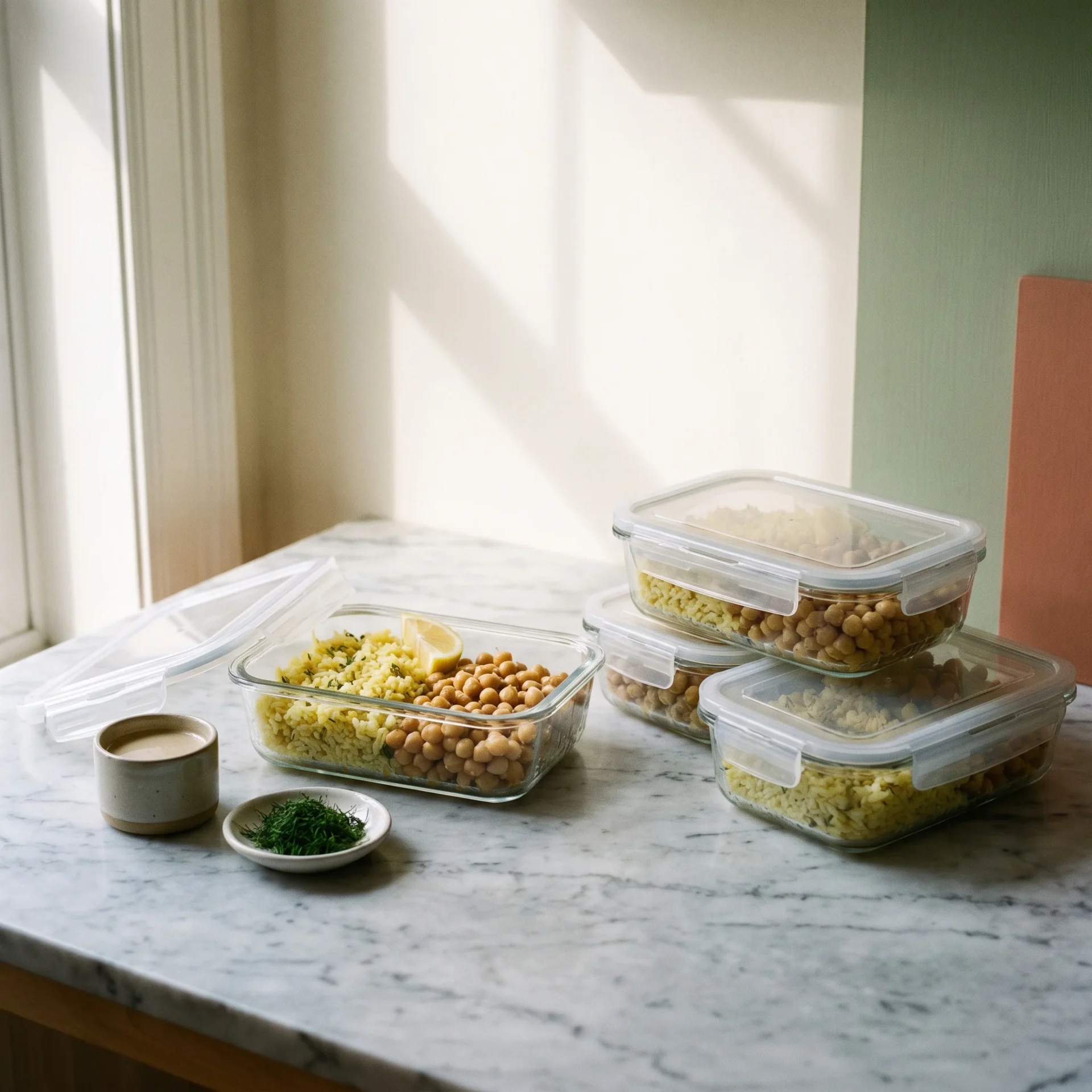
Greek lemon rice with chickpeas keeps 3 to 4 days in the fridge, which is the window USDA FSIS gives for cooked leftovers. Spread it into shallow containers and refrigerate at 40°F (4°C) or below within two hours of cooking rather than leaving the pan on the stove to cool, since a deep pot of hot rice sits in the danger zone for a long time. For chickpea rice meal prep, hold back the dill and the tahini-lemon and add them at serving: the herbs go grey by day two, and the tahini stiffens as it chills. Reheat with a splash of water, covered, until hot and steaming throughout, which FSIS puts at 165°F (74°C). It freezes for up to 3 months, though the chickpeas soften noticeably on thawing. More one-pot dinners live in the recipe archive.
Nutrition per serving
| Nutrient | Per serving |
|---|---|
| Calories | 482 kcal |
| Protein | 11 g |
| Fat | 16 g |
| Total carbs | 73 g |
| Fiber | 7 g |
| Net carbs | 66 g |
Nutrition is an estimate and varies with brands and exact portion sizes. These values were calculated from the quantities written above using USDA FoodData Central entries for raw long-grain white rice, canned drained chickpeas, olive oil and tahini.
Frequently asked questions
Can I make greek lemon rice with chickpeas ahead of time?
Yes, and it reheats better than most rice dishes because the chickpeas hold moisture. Cook the pilaf through step six, cool and refrigerate it, then add the dill and the tahini-lemon only once it is hot again.
What is the best rice for greek lemon rice?
Long-grain white rice, with basmati and jasmine both working well. Avoid risotto and paella varieties: they are bred to release starch and will turn creamy instead of staying in separate grains.
How do I make greek lemon rice without chicken broth?
This version already does. A low-sodium vegetable broth loses some savoury depth against chicken stock, so the recipe pays it back three ways: the onion is cooked slowly rather than quickly, the garlic and oregano are bloomed in oil, and the tahini adds fat and body at the end.
Why did my rice turn out mushy?
Usually too much liquid or a lid lifted mid-cook. Measure the broth rather than eyeballing it, keep the simmer lazy, and resist stirring once the lid is on, because every peek releases the steam the grains need.
Do I have to use tahini?
No, though it is what makes the dish taste finished rather than plain. Without it the rice is lighter and sharper; if you skip it, add another tablespoon of olive oil at the end so the lemon has some fat to sit against.
Ratings and reviews
No ratings yet. If you have cooked this, your rating helps the next person decide.
Rate this recipe