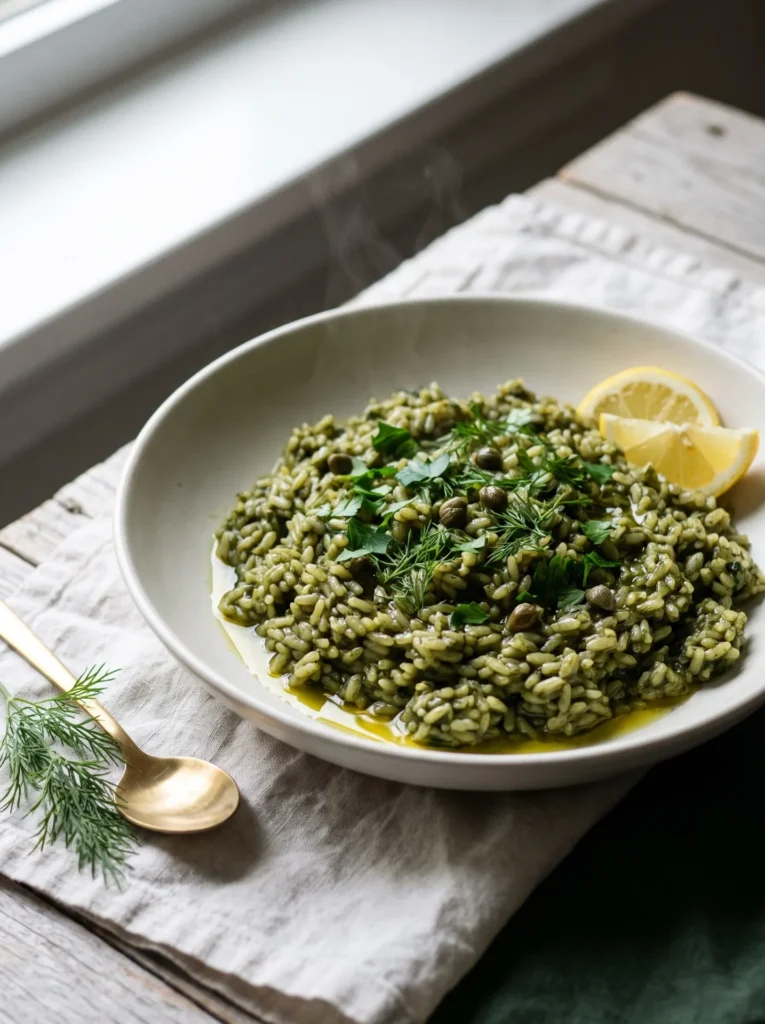
This vegan spanakorizo is the Greek spinach rice you already know, rebuilt so it tastes finished without a single crumb of feta. A full pound of spinach collapses into toasted medium-grain rice, and the salt and tang the cheese used to carry come instead from brined capers, good olive oil and a hard squeeze of lemon stirred in off the heat. One pot, one hour, and it eats as well cold on day three as it does steaming. More plant-based mains sit in the Vegan collection.
Table of Contents
Why this vegan spanakorizo works
- Capers and lemon do the job feta used to. Feta contributes three things: salt, acid and a little fat. Brined capers cover the first two and the olive oil covers the third, which is why this dairy free spanakorizo reads as complete rather than as a dish with a hole where the cheese was.
- Toasting the rice keeps the grains separate. Two or three minutes in hot oil before any liquid goes in coats every grain in fat, so the starch releases slowly and the pot finishes creamy instead of gluey.
- One pot, one burner. Onion, rice, spinach and broth all cook in the same pan, so this is one pot spinach rice from the first slice of onion to the table, with a single lid to wash.
- The spinach ratio is deliberate. A pound of raw leaves looks absurd next to one cup of rice and cooks down to roughly a tenth of its volume. That is what produces the dense green colour rather than a few sad flecks in white rice.
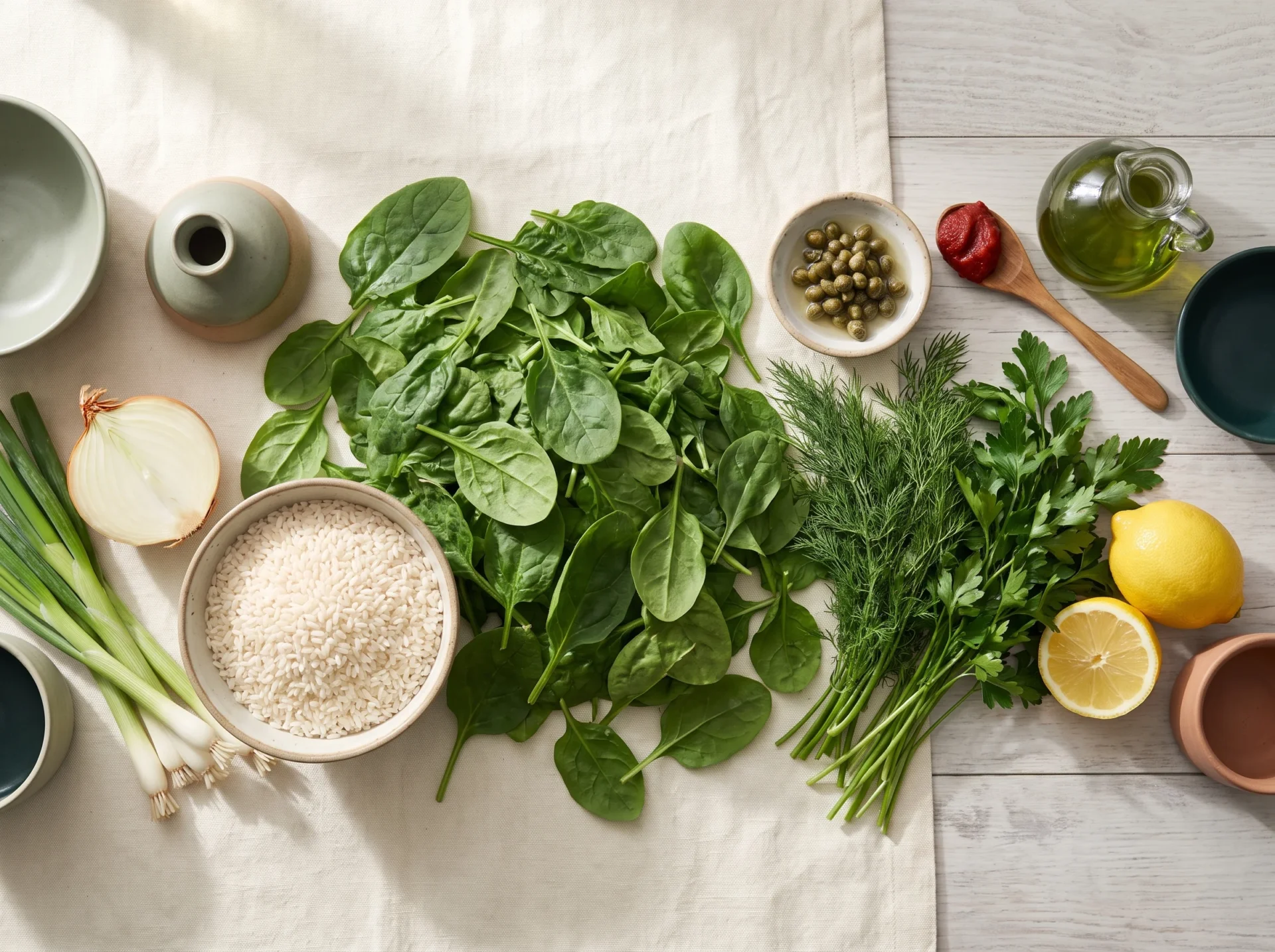
Ingredients
Makes 4 servings.
Equipment
How to make it
- Rinse the rice. Rinse the rice in a fine-mesh sieve under cold running water, swirling it with your fingers, until the water runs clear rather than milky, usually 30 to 45 seconds. Drain it thoroughly. Surface starch left on the grains is the single most common cause of a sticky, porridge-like pot.
- Prep the spinach. Wash the leaves in a sink of cold water and lift them out so any grit stays behind, then shake off the excess water. Chop roughly, stems and all; the stems soften completely in the time the rice needs.
- Soften the aromatics. Warm the olive oil in the pot over medium heat, add the onion with a pinch of the salt and cook for 6 to 7 minutes, stirring now and then, until it is translucent and just turning gold at the edges. Add the spring onions and cook 2 minutes more, until limp and glossy.
- Toast the rice and bloom the tomato paste. Tip in the drained rice and stir for 2 to 3 minutes, until the grains look chalky white in the centre with translucent edges and smell faintly nutty. Stir in the tomato paste and cook 1 minute more, until it darkens from bright red to brick and coats every grain.
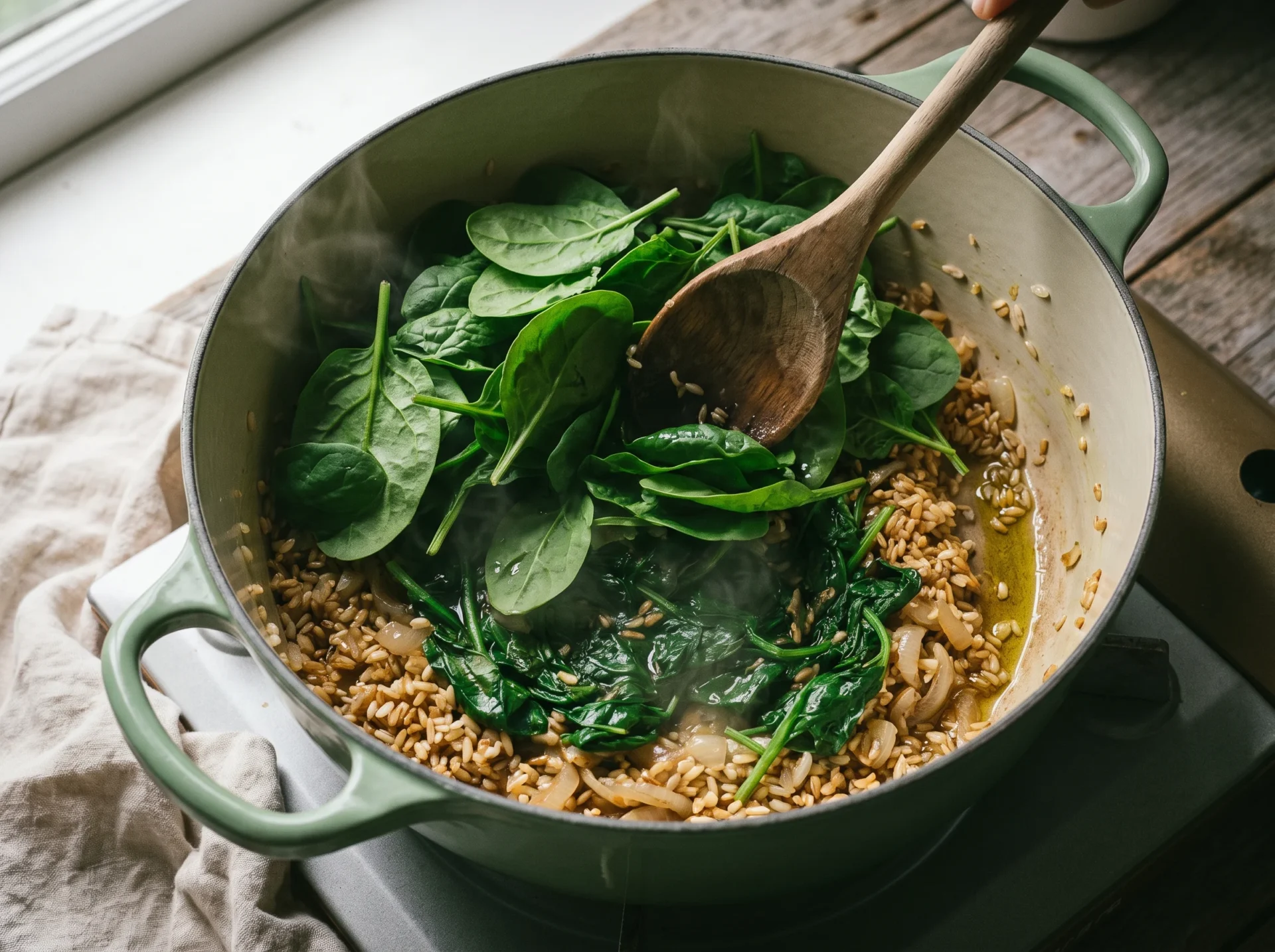
- Wilt the spinach. Add the spinach in three or four handfuls, waiting for each batch to collapse before the next goes in, about 4 to 5 minutes in total. Stop when the leaves are uniformly dark and glossy and a bright green liquid has gathered in the bottom of the pot.
- Simmer, covered and undisturbed. Pour in the hot broth, bring it to a visible bubble, then drop the heat to its lowest setting and clamp on the lid. Cook 15 to 18 minutes without lifting the lid, until the liquid is gone and small craters have opened across the surface of the rice.
- Rest, then finish off the heat. Take the pot off the burner and let it stand, still covered, for 10 minutes. Uncover and fold through the lemon juice, dill, parsley, capers, toasted pine nuts, the remaining salt and the pepper. Taste and add more lemon or salt off the heat, so the herbs stay green.
Practical cooking tips
- The lid is not optional. Every peek costs steam, and the pot is calculated on a fixed 2:1 broth-to-rice ratio. If the grains are still firm at 18 minutes, add 2 tbsp of hot water, re-cover and give it 4 more minutes rather than stirring.
- Damp spinach is fine, sopping spinach is not. Leaves dripping straight from the sink add liquid the recipe has not budgeted for. A firm shake or a few seconds in a salad spinner is enough.
- Add the lemon at the end, never at the start. Acid simmered with rice slows the grains as they soften and cooks the brightness straight out of the dill.
- Season last. Capers and broth both carry salt, and a vegan spanakorizo without feta needs less added salt than you would expect, not more. Taste only after the capers have gone in.
Swaps and variations
- Frozen spinach. One pound (450 g) of frozen leaf spinach works well: thaw it, squeeze it genuinely dry, and add it at step 5 for 2 minutes instead of 5. The macros move by only a few calories.
- Brown rice. Use medium-grain brown rice, raise the broth to 2 1/2 cups (600 ml) and simmer 35 to 40 minutes. Fibre climbs to about 7 g per serving and total carbs to roughly 55 g, though the spinach loses colour over the longer cook.
- No pine nuts. Leave them out and a serving drops to about 363 calories and 15 g fat. Toasted pumpkin seeds at the same 20 g put both back almost exactly, and cost less.
- Make it a full plate. A ladle of harissa chickpea stew next to this vegan greek rice turns a side into a dinner carrying about 20 g of protein between the two.
Storage and meal prep
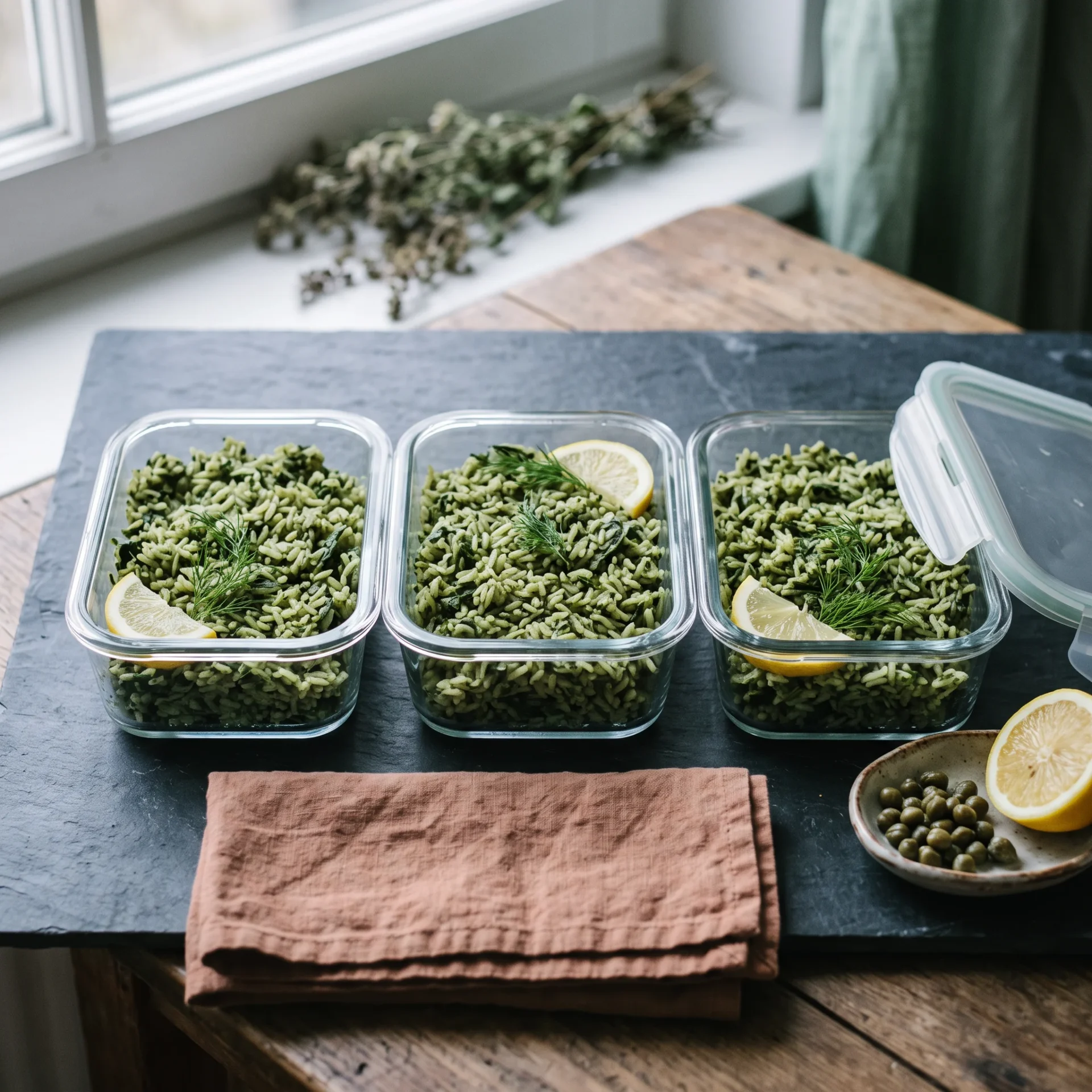
Cool the vegan spanakorizo quickly by spreading it in a shallow layer rather than leaving it banked in the hot pot, and get it into the fridge within two hours. FoodSafety.gov puts cooked leftovers of this kind at three to four days at 40°F (4°C) or below, and one to two months in the freezer. Reheat covered with a splash of water, in the microwave or a low pan: the rice comes back, but the dill does not, so hold a little back and stir it through fresh. It is also one of the better cold lunches in the recipe archive, since a second squeeze of lemon means it needs no reheating at all.
Nutrition per serving
| Nutrient | Per serving |
|---|---|
| Calories | 397 kcal |
| Protein | 9 g |
| Fat | 18 g |
| Total carbs | 53 g |
| Fiber | 5 g |
| Net carbs | 48 g |
Figures were calculated from the quantities written above using USDA FoodData Central entries for each ingredient in its raw or dry state. Nutrition is an estimate and varies with brands and exact portion sizes.
Frequently asked questions
Is spanakorizo normally vegan?
Often, but not reliably. The base of olive oil, onion, rice, spinach and lemon is plant-based to begin with, which is why the dish is a fixture of Greek fasting cooking. Most restaurant and recipe-site versions then finish it with crumbled feta or serve it with yogurt on the side, so read the method rather than the name.
What replaces feta in vegan spanakorizo?
Capers and extra lemon, which is the route this recipe takes: they supply the salt and the sharpness without pretending to be cheese. If you want the look as well, a firm almond or tofu feta crumbled over at the table adds roughly 40 calories and 3 g of protein per serving.
Can I use long-grain rice instead?
Yes, though the texture changes. Basmati or jasmine stays fluffy and separate rather than turning creamy, which some people prefer. Keep the same 2:1 broth ratio and start checking at 14 minutes, since long grains absorb faster than medium ones.
Why did my spinach rice turn out mushy?
Almost always unrinsed rice, a lifted lid, or wet spinach. Rinsing removes the loose surface starch that glues grains together, the lid holds the steam the ratio assumes, and leaves added still dripping quietly push the liquid past 2:1. Stirring during the covered simmer does the same damage.
Is this vegan spanakorizo good for meal prep?
It is one of the better rice dishes for it. The grains firm up overnight instead of going soft, and the lemon and dill hold their flavour cold, so portioned containers eat well straight from the fridge for three to four days without any reheating.
Ratings and reviews
No ratings yet. If you have cooked this, your rating helps the next person decide.
Rate this recipe