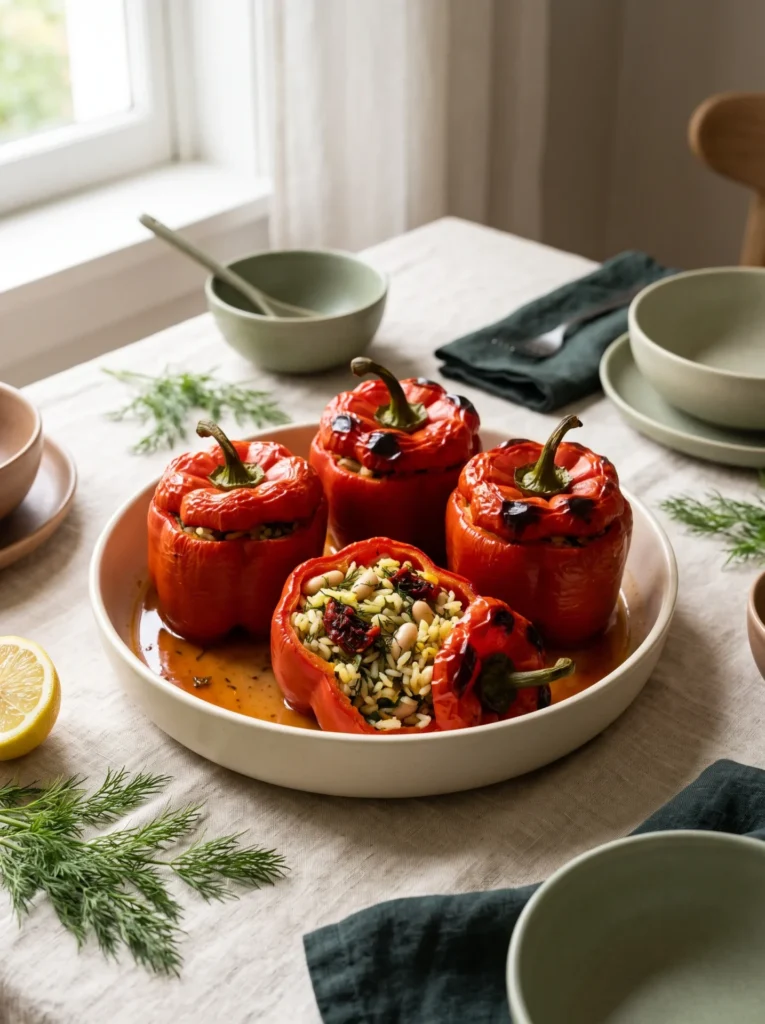
These vegan white bean stuffed peppers take the frame of Greek gemista and drop the cheese entirely: bell peppers roasted until their shoulders slump, packed with lemony herb rice, cannellini beans, dill and tomato. The beans do the binding work feta usually does, so the filling holds together on the fork instead of spilling across the plate. It is one of the sturdier vegan recipes to cook ahead, because the filling genuinely improves after a night in the fridge.
Table of Contents
Why these stuffed peppers work
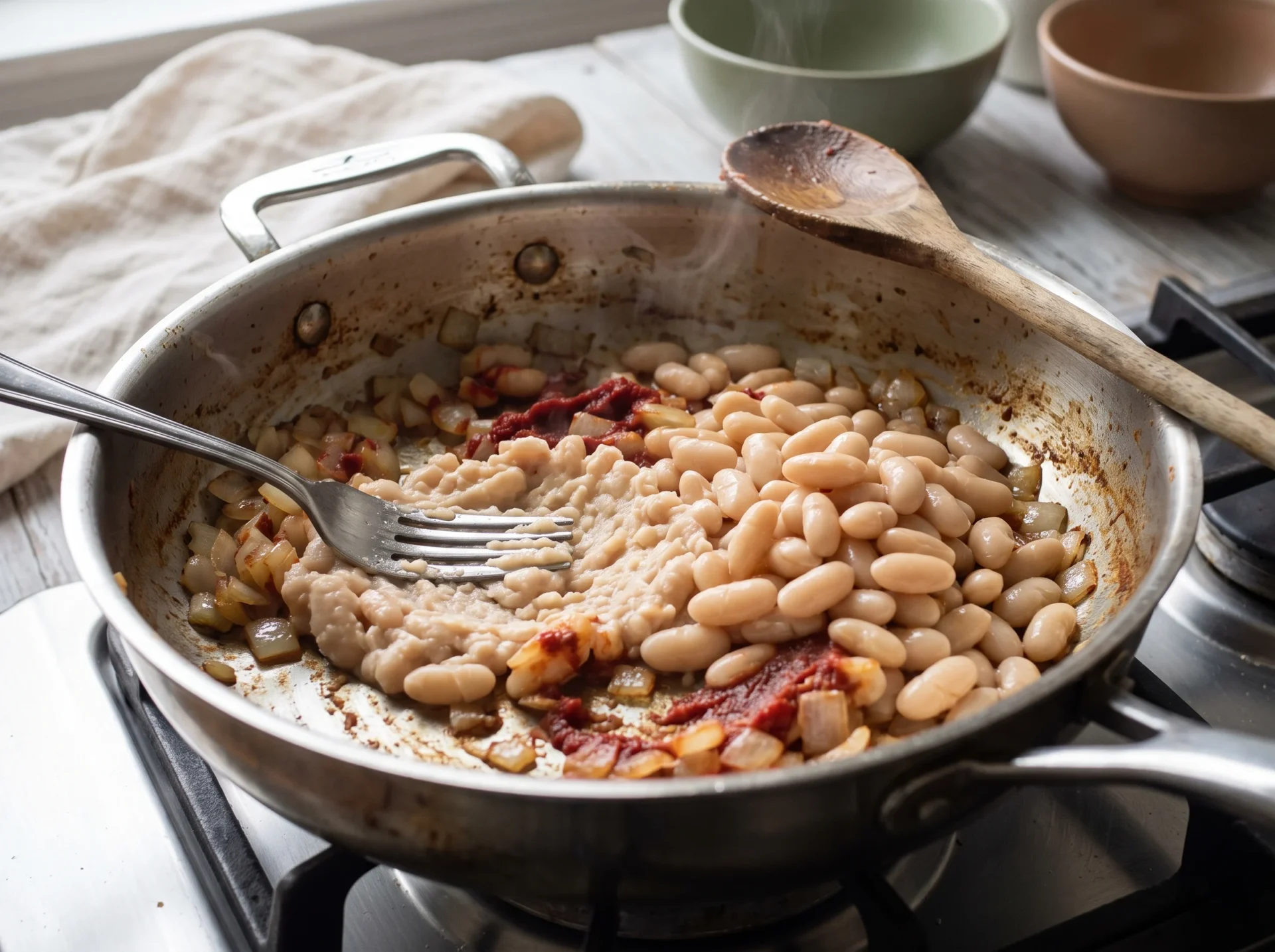
- The beans replace the cheese bind. Crushing a third of the cannellini beans against the pan releases enough starch to glue the rice together, which is what stops vegan stuffed peppers without cheese from collapsing the moment you cut in.
- The rice goes in already cooked. Raw rice steals liquid from the pepper and finishes chalky in the middle, so par-cooking it separately means filling and pepper are done at the same minute.
- Acid and herbs carry it. With no dairy fat to round off the tomato, lemon juice and a genuinely large amount of dill do that job instead.
- One dish, four lunches. The whole batch bakes in a single baking dish and portions straight into containers.
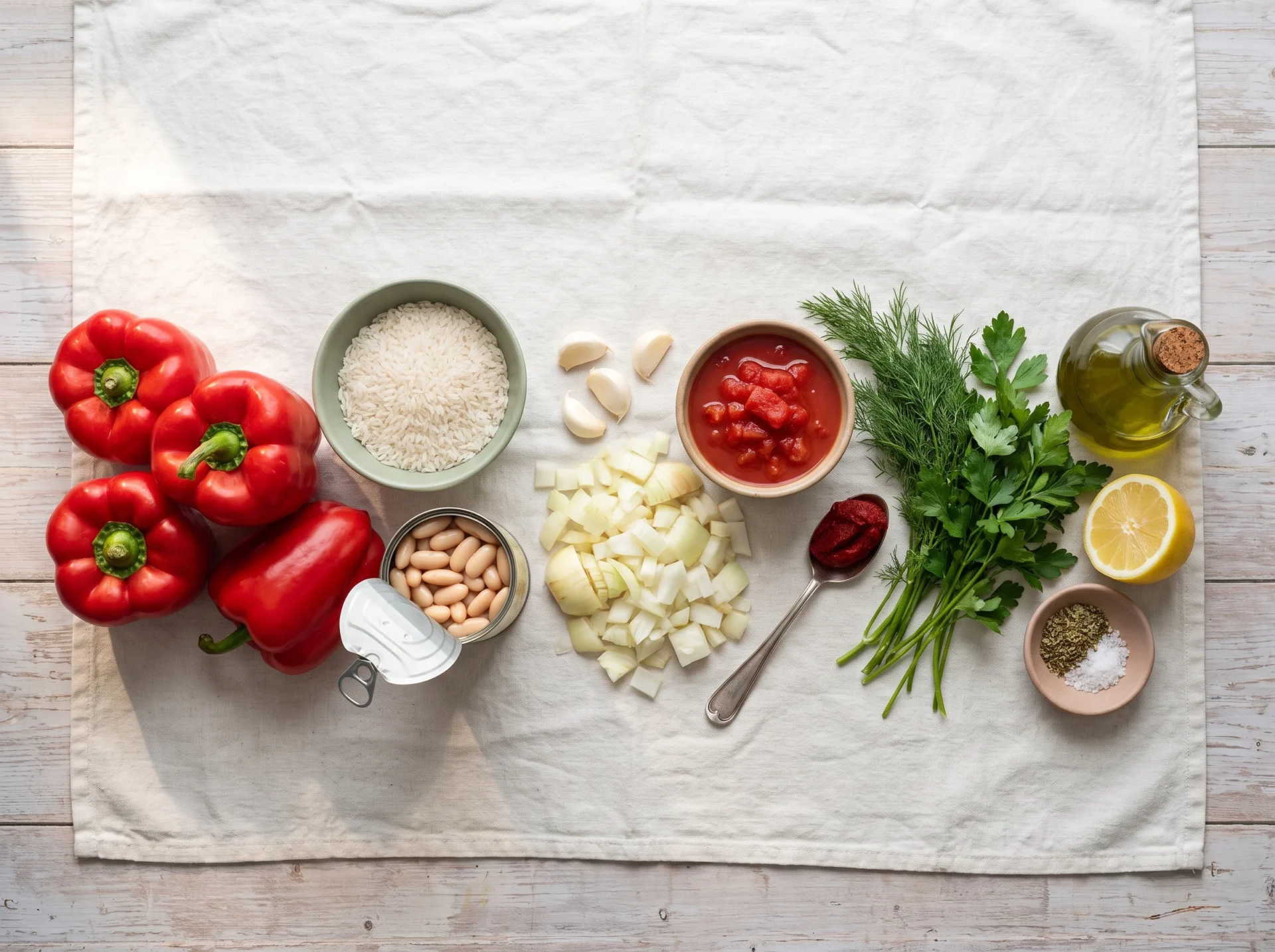
Ingredients
Makes 4 servings.
Equipment
How to make it
- Heat the oven and prep the peppers. Heat the oven to 350°F (175°C). Slice the cap off each pepper and keep it, then pull out the seeds and pale ribs. Rub the cavities with 1 tbsp of the olive oil and a pinch of salt, and stand them in the baking dish close enough to hold each other upright.
- Cook the rice. Bring the rice, broth and 1/4 tsp of the salt to a boil, cover, drop to the lowest heat and cook 15 minutes, until the liquid is gone and a grain squashed between your fingers has no chalky core. Fluff and set aside.
- Build the base. Warm the remaining 2 tbsp olive oil over medium heat and soften the onion 5 to 6 minutes, until translucent at the edges. Add the garlic and oregano and cook 45 seconds, until fragrant but not coloured. Stir in the tomato paste and cook 1 minute more, until it darkens to brick red.
- Crush a third of the beans. Tip about a third of the drained beans into the pan and press them against the side with a fork until they turn to a pale paste. This is the bind. Add the remaining beans whole, along with the diced tomatoes and their juice.
- Finish the filling. Off the heat, fold in the cooked rice, parsley, dill, lemon juice, the remaining salt and the black pepper. Taste it now: it should read a little sharper and saltier than you want, because the pepper dilutes it as it bakes.
- Stuff and cover. Pack the filling into the peppers, mounding it slightly, and set the caps back on. Pour 1/2 cup water into the dish around the bases and cover tightly with foil, tented so it does not touch the tops.
- Bake covered, then uncovered. Bake covered for 40 minutes, then pull the foil and bake 10 to 15 minutes more, until a knife slides through the pepper wall with no resistance and the edges have caught a little colour. Rest 10 minutes before serving, because straight from the oven the filling is still loose.
Practical cooking tips
- A watery base is the usual failure. Peppers shed liquid as they soften, so resist adding more than the 1/2 cup water and use the uncovered stretch at the end to drive off what collects.
- Pick squat peppers, not tall ones. Short wide peppers sit flat and stay upright; tall narrow ones tip and pour their filling into the dish.
- Do not skip the crush. Adding every bean whole is the single most common reason the filling falls apart when sliced.
- Salt the cavity, not just the filling. A pinch rubbed inside seasons the pepper wall, which is otherwise the blandest part of the dish.
- Serve them warm rather than hot. Mediterranean stuffed peppers are traditionally eaten closer to room temperature, and the herbs read louder once the dish drops below scalding.
Swaps and variations
- Brown rice. Use about 2 cups cooked brown rice in place of the white, which works out near 8 calories and 3 g total carbs lower with 1 g more fiber per serving. Our vegan mujadara with brown rice leans on the same swap.
- Chickpeas instead of cannellini. An equal drained weight adds roughly 15 calories, 1 g fat and 1 g fiber per serving at no cost in protein, but you lose some of the bind that makes cannellini bean stuffed peppers hold their shape, so crush a little more generously.
- Toasted pine nuts. 2 tbsp (17 g) scattered through the batch adds about 29 calories and 3 g fat per serving, plus a texture the dish otherwise lacks.
- Vegan feta. Crumble it over after baking rather than into the filling, because stirred in it melts to nothing and you lose both the salt hit and the look.
Storage and meal prep
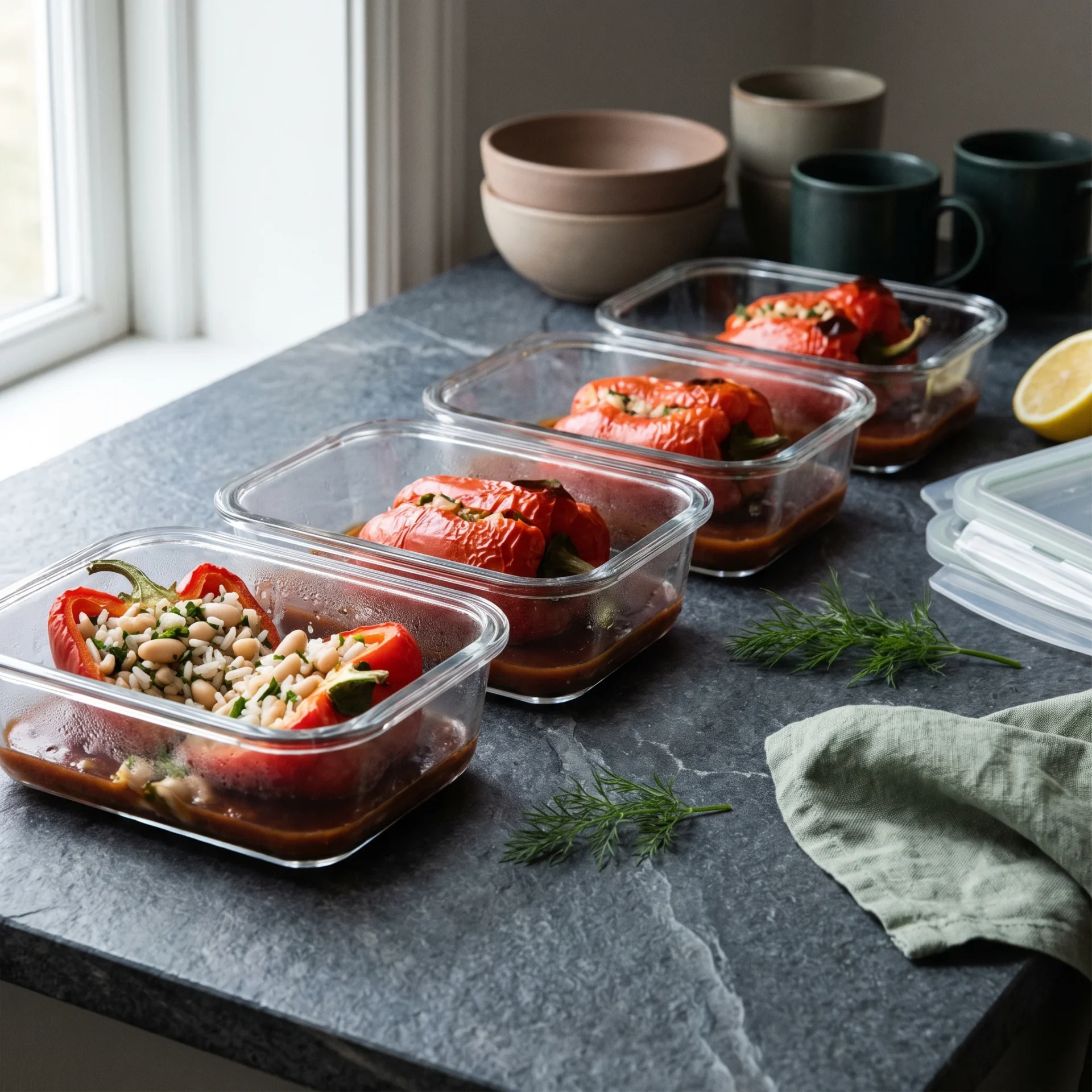
Refrigerate the peppers within two hours of them leaving the oven and use them within three to four days, following USDA guidance on leftovers. They reheat best covered in a 350°F (175°C) oven for 15 to 20 minutes, or in the microwave until steaming through at 165°F (74°C). For stuffed peppers meal prep, portion one pepper per container with a spoonful of the pan juices, which stops the rice drying at the edges. These vegan white bean stuffed peppers also freeze for up to three months; freeze them before the final uncovered bake and the walls keep far more structure on thawing. The fresh dill on top is the one thing that does not survive storage, so add it after reheating.
Nutrition per serving
| Nutrient | Per serving |
|---|---|
| Calories | 368 kcal |
| Protein | 10 g |
| Fat | 11 g |
| Total carbs | 59 g |
| Fiber | 9 g |
| Net carbs | 50 g |
Nutrition is an estimate and varies with brands and exact portion sizes. Values were calculated from the listed quantities using USDA FoodData Central, and the site’s carbs field reports total carbohydrate.
Frequently asked questions
Can I make vegan white bean stuffed peppers ahead of time?
Yes, and they are better for it. Assemble them completely, cover the dish and refrigerate up to 24 hours before baking, then add about 10 minutes to the covered stage because they go into the oven cold. The flavour deepens overnight as the lemon and dill settle into the rice.
Do I use cooked or uncooked rice in stuffed peppers?
Cooked, for this recipe. Uncooked rice needs far more liquid than a stuffed pepper can supply, so it either finishes chalky or forces you to flood the dish, which waterlogs the pepper walls. Par-cooking the rice first is the reliable route.
Can you freeze stuffed peppers?
Yes, for up to three months. Freeze them stuffed but before the final uncovered bake, wrapped individually, then bake from frozen at 350°F (175°C) for about an hour covered. Thawed peppers are softer than fresh ones, which is a texture trade rather than a fault.
What is vegan gemista?
Vegan gemista is the meatless version of the Greek summer dish of vegetables stuffed with seasoned rice and baked in olive oil and tomato. Traditional gemista is often already dairy-free; this one adds white beans, which is not classical but raises the protein and gives the filling a bind.
Are stuffed peppers with rice and beans a complete protein?
Together they cover more ground than either does alone: legumes run low in the sulphur amino acids methionine and cysteine, while grains run low in lysine, so the pair complements across those gaps. You do not need to engineer it meal by meal, though, since what matters is the spread across the whole day.
How do I stop the filling from spilling out?
Set the cut caps back on before baking and let the dish rest 10 minutes afterwards. The caps hold the mound in place while the pepper softens, and the rest lets the starch from the crushed beans firm up so a cut portion stays put on the plate. Browse the full recipe archive for more make-ahead mains.
Ratings and reviews
No ratings yet. If you have cooked this, your rating helps the next person decide.
Rate this recipe