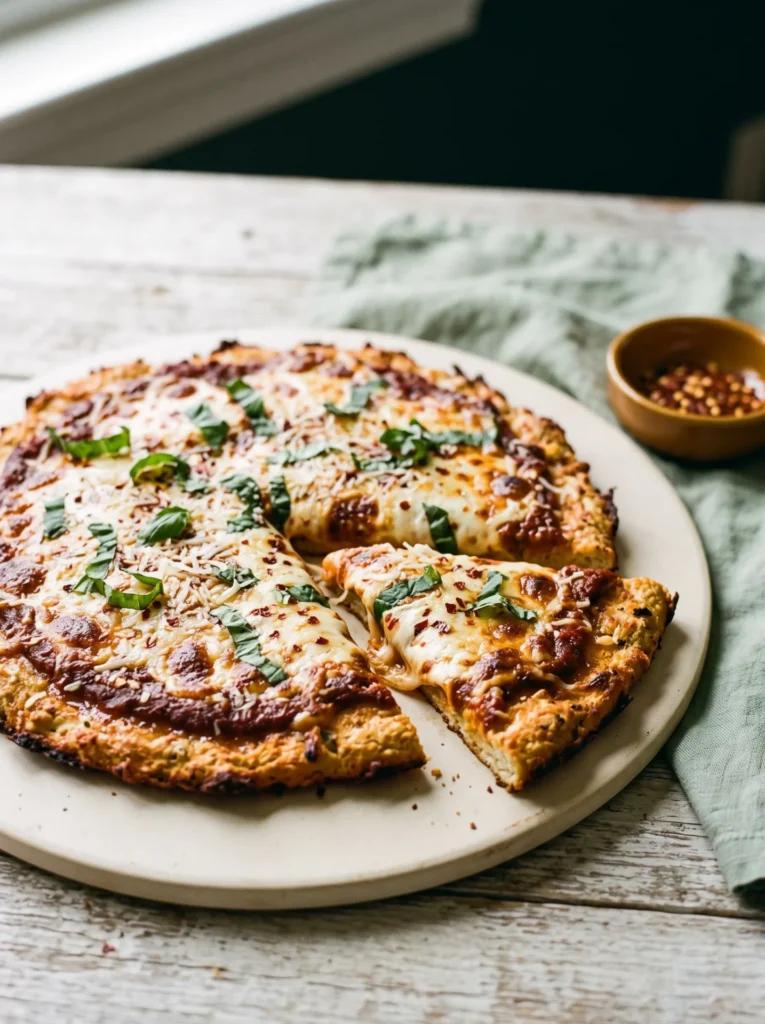
This high protein chicken crust pizza swaps the dough for a pound of seasoned ground chicken bound with egg and Parmesan, then finishes it the way a chicken parm pizza should finish: marinara, blistered mozzarella, torn basil. The crust bakes bare first, which is the whole trick — it dries out, browns at the edge, and comes out of the oven firm enough to pick up a slice by hand. If you cook from the keto recipes side of the site, this lands at 8 g net carbs a serving without a single almond-flour substitute.
Table of Contents
Why this high protein chicken crust pizza works
- The crust is the protein. A pound of ground chicken plus Parmesan and egg carries 39 g of protein per serving on its own, so nothing has to be bolted on afterwards to make the numbers work.
- Baking it bare fixes the sogginess. Ground chicken releases water and fat as it cooks. Twenty minutes naked in a hot oven drives that off before any sauce touches it, which is the difference between a slice you lift and a slice you fork.
- Parmesan does two jobs. It binds the raw mixture and it browns, so the underside develops a genuine crisp shell rather than the pale, steamed surface plain ground meat gives you.
- One pan, no special equipment. A rimmed sheet pan and a sheet of parchment. No pizza stone, no food processor, no cauliflower to wring dry.
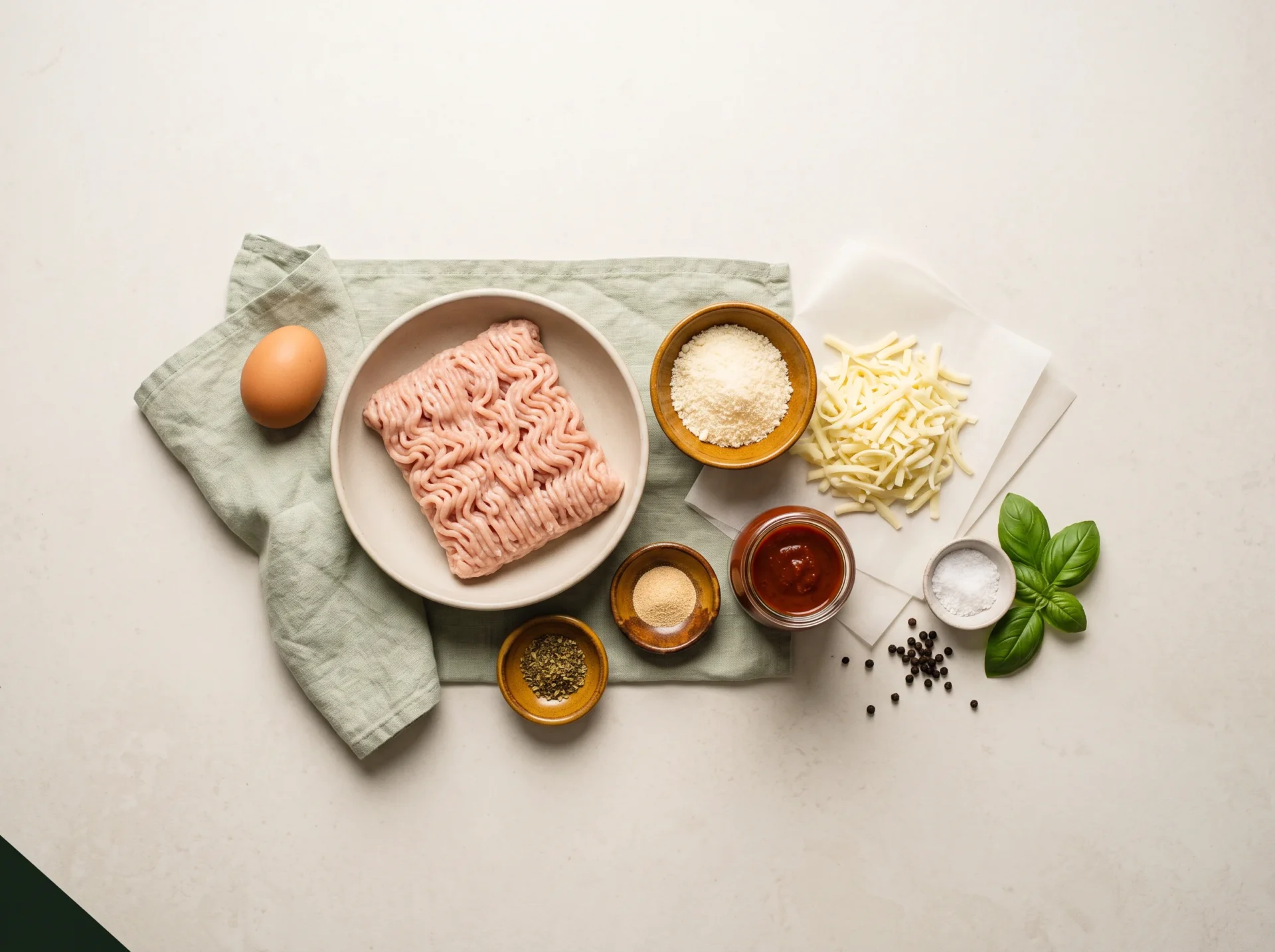
Ingredients
Makes 4 servings.
Equipment
How to make it
- Heat the oven and line the pan. Set the oven to 400°F (205°C) with a rack in the upper third, and line the sheet pan with parchment. Skip the parchment and the crust welds itself to the metal and tears the moment you try to lift it.
- Mix the crust. Combine the ground chicken, egg, 3/4 cup Parmesan, garlic powder, oregano, salt and pepper in a bowl and work it with your hands for about 30 seconds, until it holds together as one dense, slightly tacky mass. If it slumps instead of holding a shape, add 2 more tablespoons of Parmesan.
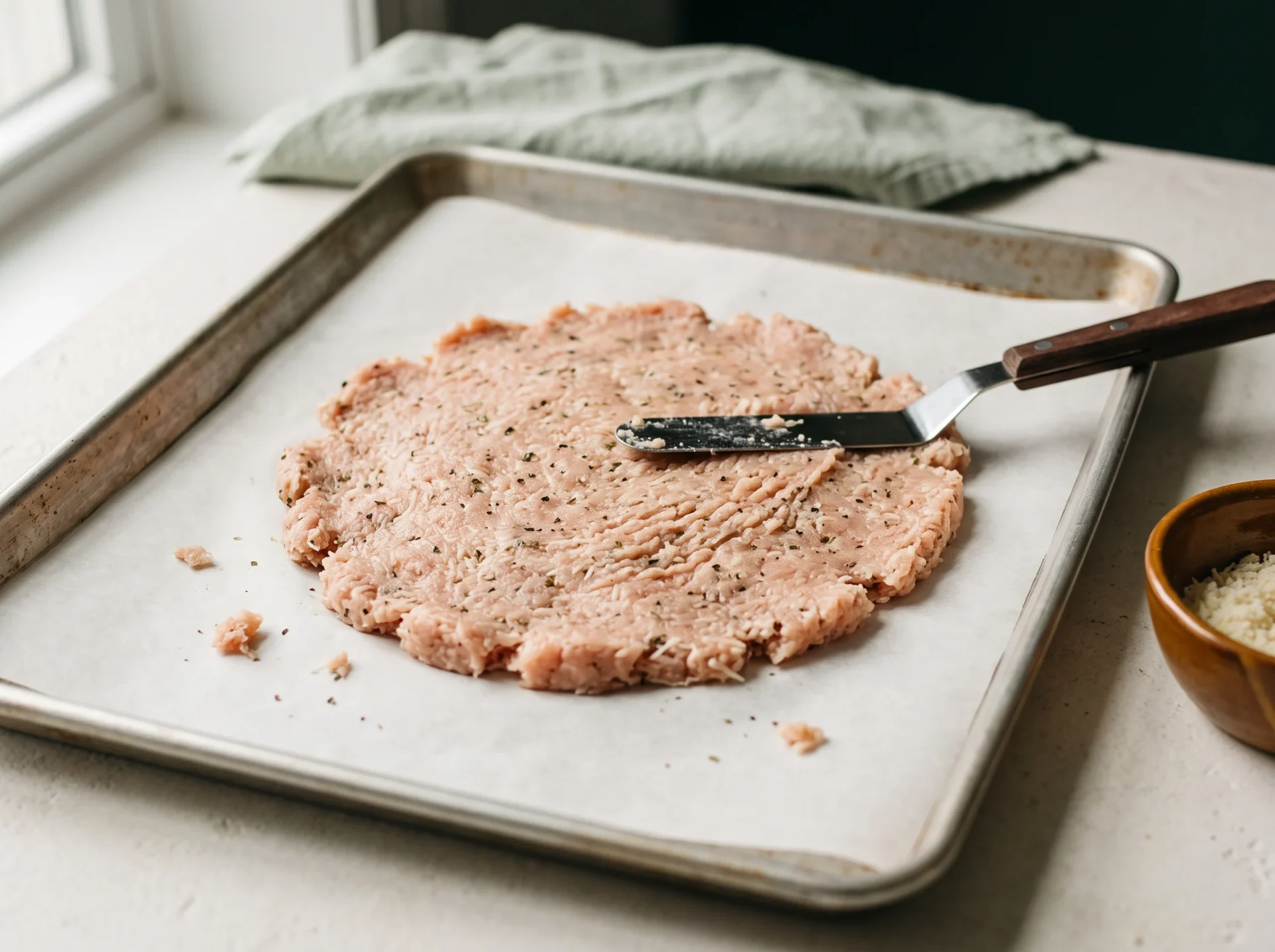
- Press it thin and even. Turn the mixture onto the parchment and press it out to a 10-inch round about 1/4 inch (6 mm) thick, leaving the rim a touch thicker. Even thickness matters far more than a neat circle — a thick patch stays wet in the middle while the edge overcooks.
- Bake the crust bare. Bake 20 to 22 minutes, with no sauce and no cheese, until the surface looks dry and matte, the edges have browned and shrunk slightly away from the parchment, and an instant-read thermometer in the centre reads at least 165°F (74°C), the USDA safe minimum for all poultry.
- Blot, then sauce and top. Pull the pan out and blot the surface with a paper towel; a pool of fat and juice is normal and it will make the crust soggy if you leave it. Spread the marinara thinly to within half an inch of the rim, scatter the mozzarella, then the remaining Parmesan, drizzle the olive oil and add the pepper flakes.
- Bake again, then broil. Return it for 10 to 12 minutes, until the cheese has fully melted and is bubbling across the whole surface, then broil 1 to 2 minutes until brown blistered spots appear. Watch it the entire time — the gap between blistered and burnt is under a minute.
- Rest before you cut. Slide the parchment onto a wire rack and rest 5 minutes, then scatter the basil and cut into 4 wedges. Cut it straight out of the oven and the molten cheese slides off in one sheet.
Practical cooking tips
- The one failure that ruins it: saucing a crust that is still wet. Every high protein chicken crust pizza that comes out floppy was topped before the bare bake had finished driving the moisture off. Dry and matte to the touch, not glistening, is the signal.
- Shred your own mozzarella. Bagged shreds are dusted with anti-caking starch that both adds carbs and stops the cheese melting into one smooth sheet.
- Cold ground chicken presses better. Straight from the fridge it stays put; at room temperature it smears and sticks to your palms. Damp hands help either way.
- A thin sauce layer, always. Half a cup across a 10-inch round is deliberate. A heavy hand with marinara is the second most common way to soften a ground chicken pizza crust.
Swaps and variations
- Ground turkey instead of chicken. Works identically. On USDA figures, 93% lean ground turkey shifts a serving by about 8 kcal, 1 g of protein and no meaningful fat, so the panel above still holds.
- Pepperoni on top. Ten thin slices, roughly 20 g in total, add about 25 kcal, 1 g protein and 2 g fat per serving. Carbs move by a quarter of a gram across the whole pizza, so a keto chicken crust pizza stays keto.
- Skip the sauce entirely. Olive oil, garlic and mozzarella turn this into a white pizza. Dropping the marinara takes total carbs from 9 g to 7 g and fiber from 1 g to under half a gram, so net carbs land at 7 g and calories at 433.
- Want another oven-baked keto chicken dinner? The Keto Cheesy Bacon Ranch Chicken Bake keeps the same low-carb chicken comfort-food lane with a creamy ranch-cheddar topping.
Storage and meal prep
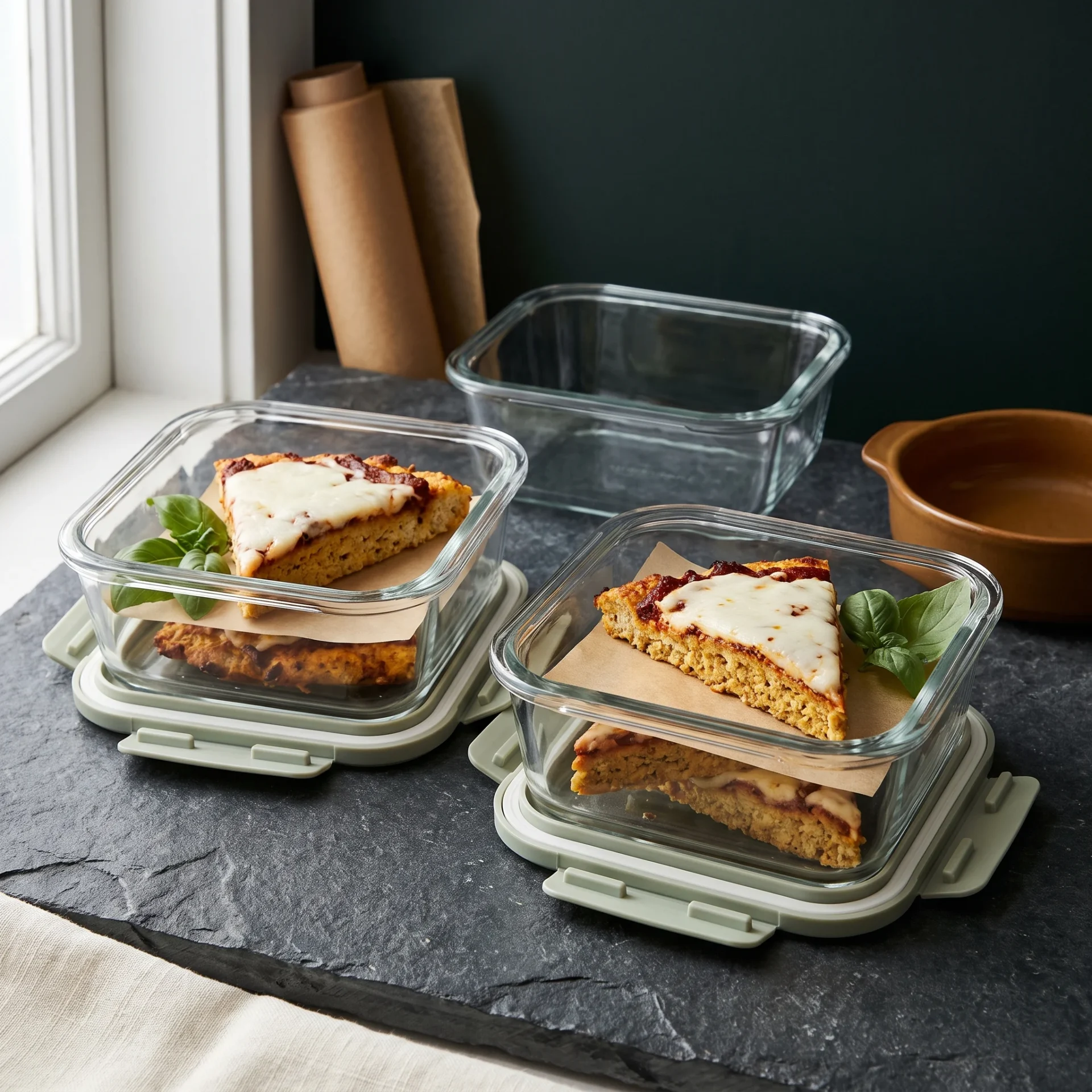
Cool the wedges on the rack for no more than an hour, then refrigerate in a sealed container for 3 to 4 days, which is the USDA window for cooked poultry leftovers. Stack them with a square of parchment between layers or the cheese fuses. For chicken crust pizza meal prep, reheat in a dry skillet over medium heat for 4 to 5 minutes with a lid on, or in a 375°F (190°C) oven for 8 minutes, until the centre reaches 165°F (74°C) again — the skillet is what brings the crisp underside back. A microwave reheats a high protein chicken crust pizza perfectly well but leaves it limp. Freeze baked wedges up to 3 months, wrapped individually; the fresh basil does not survive freezing, so add it after reheating. Browse the rest of the recipe archive for more make-ahead dinners.
Nutrition per serving
| Nutrient | Per serving |
|---|---|
| Calories | 448 kcal |
| Protein | 39 g |
| Fat | 28 g |
| Total carbs | 9 g |
| Fiber | 1 g |
| Net carbs | 8 g |
Calculated from the quantities above using USDA FoodData Central. Nutrition is an estimate and varies with brands and exact portion sizes.
Frequently asked questions
Does the crust actually hold together like pizza?
Yes, provided you press it to a genuine 1/4 inch and bake it bare first. At that thickness the egg and Parmesan set into a sheet that lifts by hand without drooping. A thicker crust stays soft in the middle and needs a fork, which is the usual complaint about a chicken parm pizza.
Can I use canned or shredded cooked chicken instead of raw?
You can, but it is a different crust. Cooked shredded chicken has no raw protein left to bind, so it leans entirely on the egg and cheese and produces a shorter, more crumbly base. Drain it very well and add an extra 2 tablespoons of Parmesan if you go that route.
How is this different from a cauliflower pizza crust?
Protein and water. A ground chicken pizza crust brings around 39 g of protein per serving and needs no wringing out; a cauliflower base contributes almost none and has to be squeezed hard before it will crisp. The chicken version is also sturdier once cold, which matters for leftovers.
Is a keto chicken crust pizza low enough in carbs?
At 8 g net carbs per serving it fits comfortably inside a 20 to 30 g daily allowance. Most of those carbs come from the marinara and the grated Parmesan, so the two levers worth pulling are a no-sugar-added sauce and a lighter hand with it.
Can I make the crust ahead?
Bake the bare crust up to 2 days ahead, cool it fully, and refrigerate it flat on its parchment. Top and finish it straight from the fridge, adding about 3 minutes to the second bake. Pressing the raw mixture ahead of time is not worth it — it weeps in the fridge.
Ratings and reviews
No ratings yet. If you have cooked this, your rating helps the next person decide.
Rate this recipe