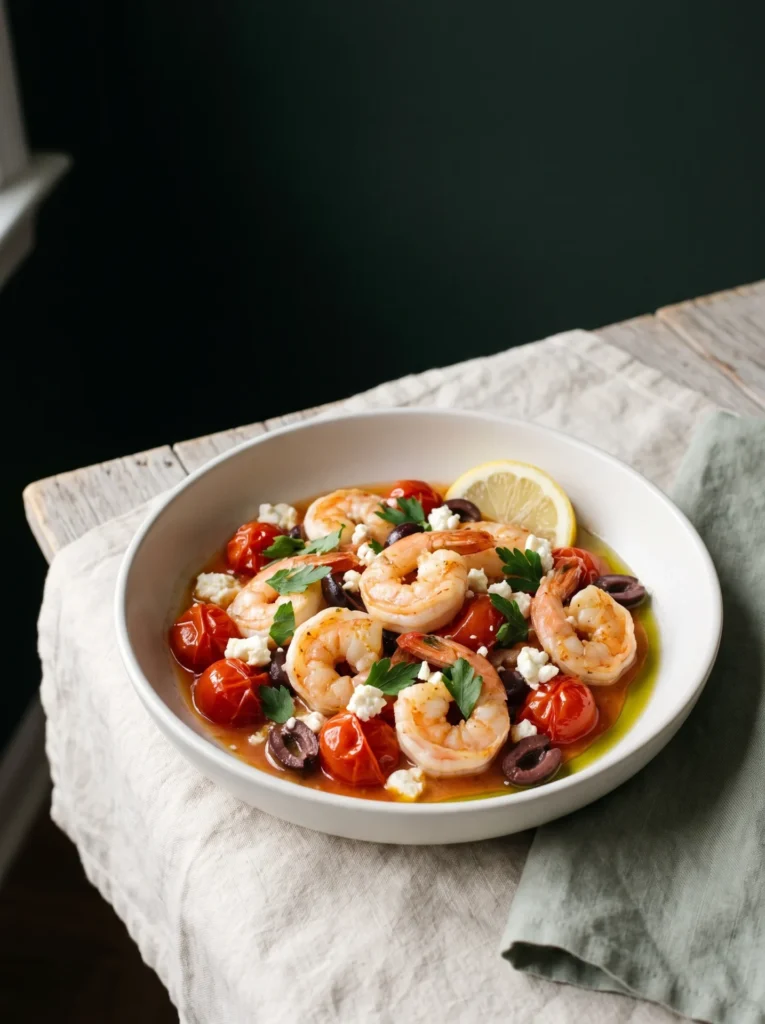
Mediterranean shrimp from frozen is the answer to the bag you keep forgetting to thaw: no overnight plan, no bowl of cold water on the counter, straight from the freezer into a hot pan. The ice the shrimp carry is not a problem to work around — under a lid it turns to steam and finishes the thaw in the same three minutes that cook them. What comes out is blistered cherry tomatoes, sliced garlic and lemon clinging to the shrimp, which is the Mediterranean way of eating at its most literal: olive oil as the fat, vegetables doing the work, seafood as the protein, and just enough feta to season the pan.
Table of Contents
Why Mediterranean shrimp from frozen works
- The freezer is the starting point, not a delay. The FDA is explicit that frozen seafood can go into the pan without thawing, and that seafood should never be thawed on the counter at room temperature. Skipping the thaw removes the step most likely to be done badly.
- Rinsing beats drying. Sixty seconds under cold running water strips the ice glaze that commercial shrimp are frozen in. Leave that glaze on and it melts into the pan as a flood, and the shrimp poach instead of searing.
- The sauce is built first. Tomatoes and garlic get four minutes alone to blister and sweeten, so the shrimp meet a hot, reduced pan and spend the shortest possible time in the heat.
- Fifteen minutes, one pan. Five minutes of slicing and rinsing, ten in the skillet — a real 15 minute shrimp dinner rather than one that quietly assumes a thawed bag and a clear counter.
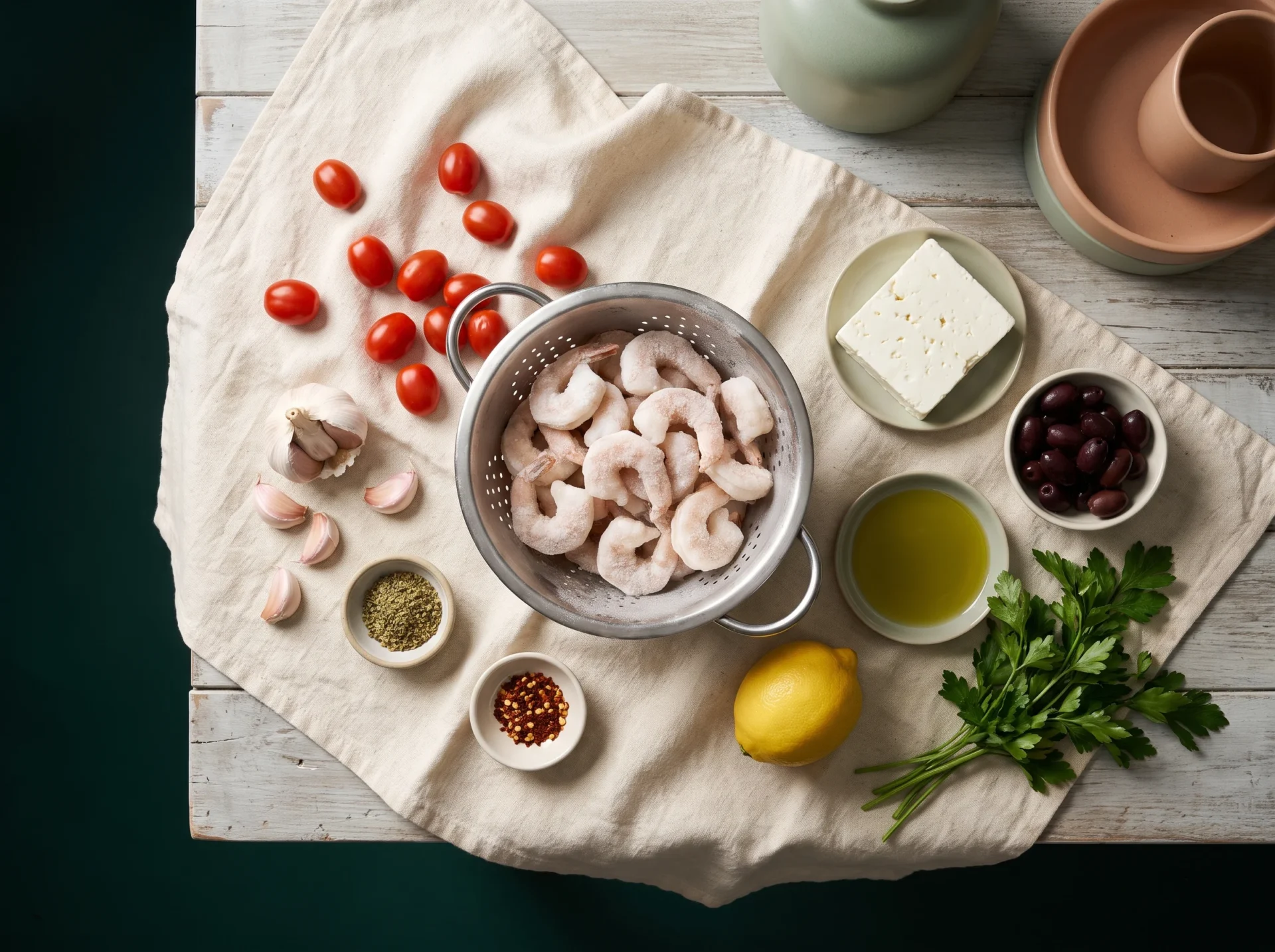
Ingredients
Makes 4 servings.
Equipment
How to make it
- Rinse off the ice glaze. Tip the frozen shrimp into a colander and run cold water over them for about 60 seconds, tossing to break apart any that are frozen together. You are removing the surface glaze, not thawing them — they should still feel firm and cold at the end. Shake the colander hard and leave it to drain while the pan heats.
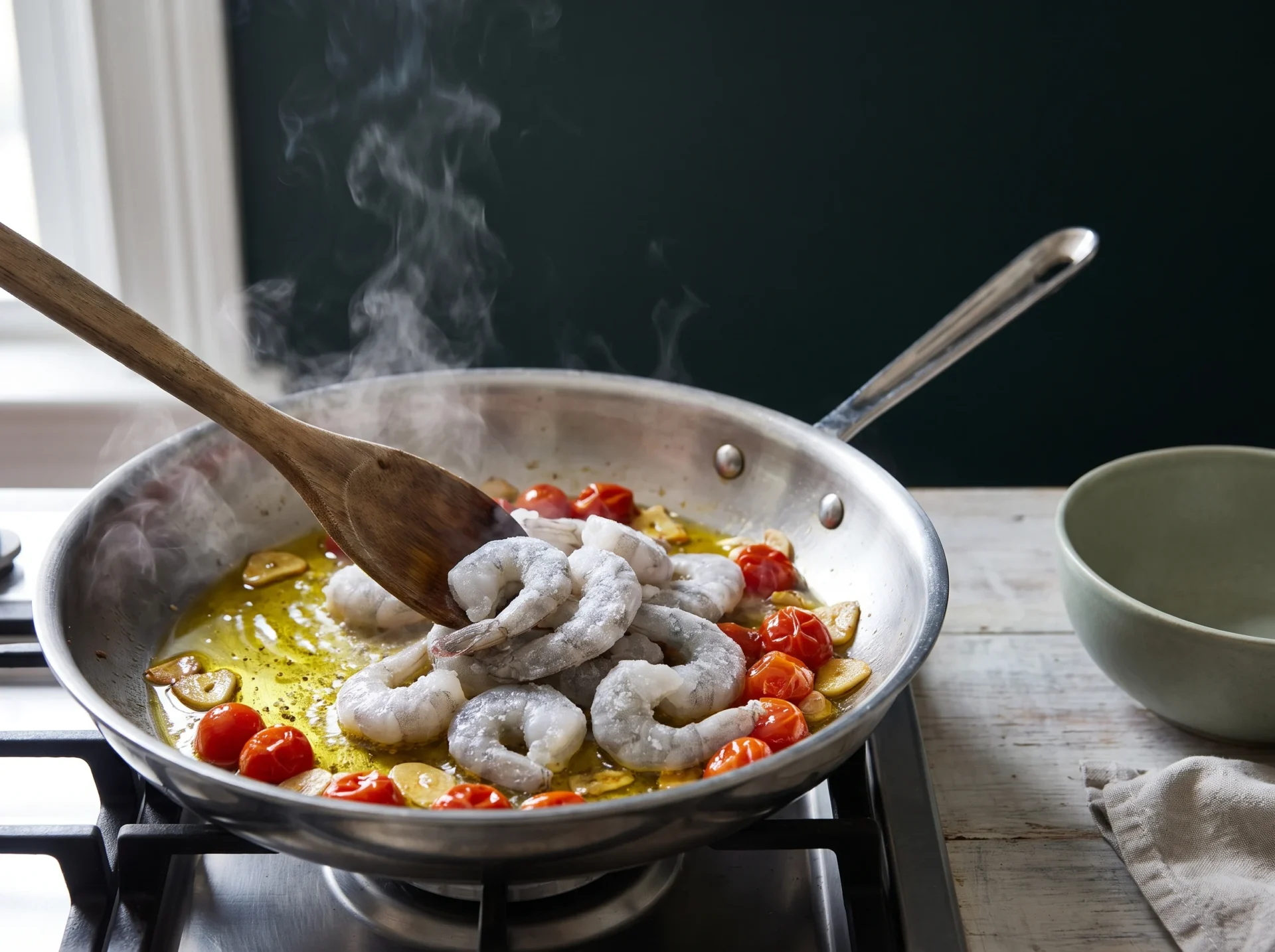
- Blister the tomatoes. Heat the olive oil in a 12-inch skillet over medium-high until it shimmers and moves in thin ripples. Add the cherry tomatoes cut side down with the salt and pepper and leave them undisturbed for 3 minutes, until the cut faces are browned and the skins have begun to slump.
- Bloom the garlic and oregano. Push the tomatoes to one side, add the sliced garlic, red pepper flakes and oregano to the bare metal, and stir for 30 to 45 seconds — until the garlic turns pale gold at the edges and smells sweet rather than raw. Stir it through the tomatoes before it can colour any further.
- Add the shrimp straight from the colander. Spread them in a single layer so each one touches the pan, cover, and cook for 3 minutes. The last of the frost and the shrimp’s own water turn to steam under the lid, which drives out the freeze far faster than a thawing bowl would.
- Uncover and finish the sear. Take the lid off, raise the heat, and toss for 2 to 3 minutes until the liquid has reduced to a glossy sauce that coats a spoon and every shrimp has curled into a loose C and turned firm, pearly and opaque — 145°F (63°C) on a thermometer. A shrimp curled into a tight O has gone a minute too far.
- Season off the heat and serve. Slide the pan off the burner, add the lemon juice, zest and olives, and toss once. Scatter the feta and parsley over the top and leave it one minute so the feta warms and softens without melting into the sauce.
Practical cooking tips
- Crowding is the only real failure. A 12-inch pan holds 1½ lb of shrimp in one layer. In a 10-inch skillet the same weight stacks, the melt water cannot evaporate, and you get pale poached shrimp in a watery pan — cook it in two batches instead and return the first batch at the end.
- Do not chase the shrimp dry with paper towels. After the rinse a hard shake is enough. Mediterranean shrimp from frozen relies on a little of that water to make the sauce; what ruins the dish is the thick glaze, not the damp.
- Buy raw, not pre-cooked. Bags labelled cooked and frozen are already at their limit. Reheat them and they turn rubbery no matter how careful the timing, so look for grey, translucent, raw shrimp on the label.
- 21–25 count is the sweet spot. Smaller shrimp overcook inside the three covered minutes; anything larger than 16–20 needs an extra minute under the lid and should be checked with a thermometer.
- The timing carries over. Once you know how to cook frozen shrimp in a covered pan — three minutes lidded, two to three uncovered — the same clock works for a curry base, a garlic butter pan or a tray of vegetables straight from the oven.
Swaps and variations
- Leave out the feta. The dish still works as a quick Mediterranean dinner and the serving drops to about 277 kcal, 35 g protein and 13 g fat — useful if you are serving it over something starchy.
- Lean it out. Cut the oil to 2 tbsp and skip the olives for a plainer garlic lemon shrimp skillet: roughly 286 kcal, 38 g protein, 13 g fat and 6 g total carbs per serving.
- Add greens. Stir 5 oz (140 g) baby spinach into the pan in the last minute, in handfuls. It adds about 8 kcal, 1 g protein and 1 g carbohydrate per serving and takes the dish from a skillet to a whole plate.
- Cooking for two. Halve everything and use a 10-inch pan, or follow the Mediterranean shrimp skillet for two, which builds the same tomato base at half the volume with a shorter cook.
Storage and meal prep
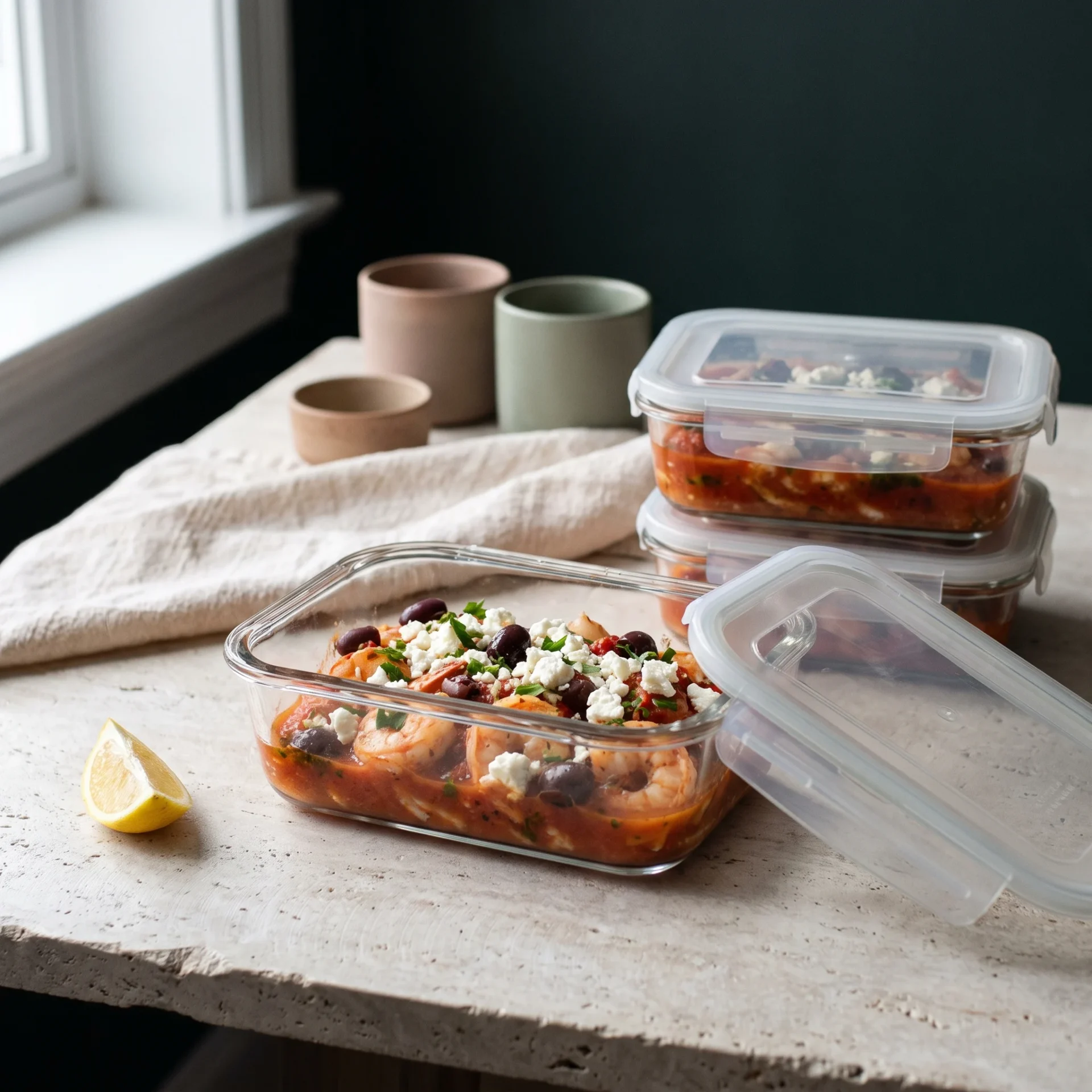
Cooked Mediterranean shrimp from frozen keeps in an airtight container in the refrigerator for 3 to 4 days, and gets into the container within two hours of cooking — one hour if the kitchen is above 90°F (32°C). Reheat it gently: a covered pan over low heat for 2 to 3 minutes, or 50 percent power in the microwave in 30-second bursts, stopping the moment it is hot through. Shrimp that were frozen, cooked and then frozen a second time lose their snap, so freeze the tomato sauce alone if you want a head start and cook a fresh bag into it. The feta and parsley do not survive storage well either — hold both back and add them to each portion as you reheat it. More one-pan dinners built the same way are in the full recipe archive.
Nutrition per serving
| Nutrient | Per serving |
|---|---|
| Calories | 333 kcal |
| Protein | 38 g |
| Fat | 18 g |
| Total carbs | 7 g |
| Fiber | 1 g |
| Net carbs | 6 g |
Calculated from the raw weights written above using USDA FoodData Central SR Legacy entries, with all of the pan oil counted as served. Nutrition is an estimate and varies with brands and exact portion sizes.
Frequently asked questions
Do I need to thaw the shrimp for this frozen shrimp recipe?
No. The FDA states that frozen seafood can be cooked without thawing, and this method is built around that: the shrimp go in still frozen and the covered pan does the thawing and the cooking together. If you do want them thawed, use the refrigerator overnight or a sealed bag in cold water — never the counter.
Can I use pre-cooked frozen shrimp instead?
You can, but the result is worse. Pre-cooked shrimp only need warming, so add them at the very end, off the heat, and stir for a minute in the residual heat of the sauce. Give them the full covered three minutes and they will be tough.
How do I know when the shrimp are done?
The flesh turns firm, pearly and opaque, and the shrimp curls into a loose C — the FDA doneness cue for shrimp, matching an internal temperature of 145°F (63°C). A tight O and a rubbery bite mean it went a minute past.
Why is my pan full of liquid?
Either the ice glaze was not rinsed off, or the pan was too small and the shrimp stacked instead of sitting in one layer. Both leave more water than a hot pan can evaporate. Raise the heat, uncover, and give it an extra two minutes; the sauce will reduce and tighten around the shrimp.
Is this low enough in carbs for a keto plate?
At 7 g total and 6 g net carbs per serving it is low in carbohydrate, and the tomatoes account for most of it. That figure is stated as calculated rather than as a claim about ketosis — how it fits a ketogenic day depends on the rest of what you eat.
Ratings and reviews
No ratings yet. If you have cooked this, your rating helps the next person decide.
Rate this recipe