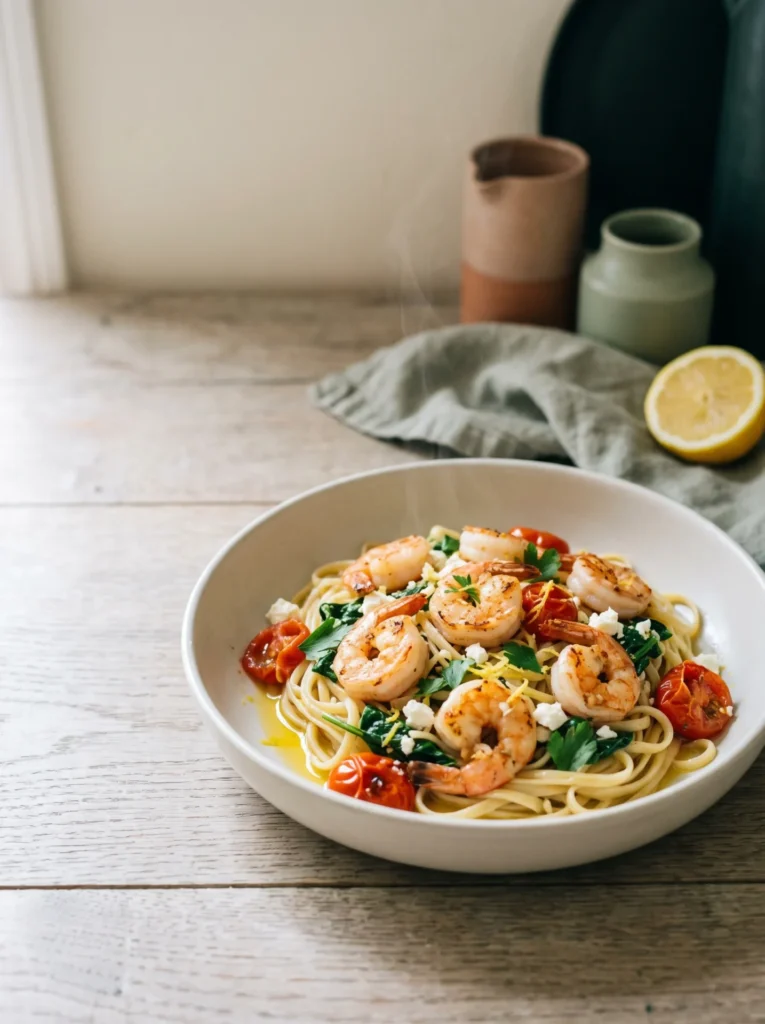
Mediterranean shrimp linguine is what happens when you stop treating pasta as the heavy part of dinner and let olive oil, lemon and a pan of blistered cherry tomatoes carry it instead. The sauce is nothing more than starchy pasta water shaken into good oil until it turns silky, and the shrimp go in for barely three minutes at the very end. It sits squarely inside the Mediterranean way of eating: seafood, vegetables, olive oil, and just enough feta to season the bowl.
Table of Contents
Table of Contents
Why this Mediterranean shrimp linguine works
- The sauce makes itself. Starchy pasta water whisked into olive oil emulsifies into a glossy coating that clings to every strand. No cream, no roux, nothing to babysit.
- The shrimp never overcook. They leave the pan while the thickest part is still faintly translucent and finish on residual heat in the pasta, which is the difference between tender and rubbery.
- Protein does the heavy lifting. A pound of shrimp across four bowls puts 38 g of protein in each, so a plate of pasta still eats like a real meal.
- One pot, one skillet, 35 minutes. The pasta water doubles as the sauce base, so Mediterranean shrimp linguine dirties a pot and a pan and nothing else.
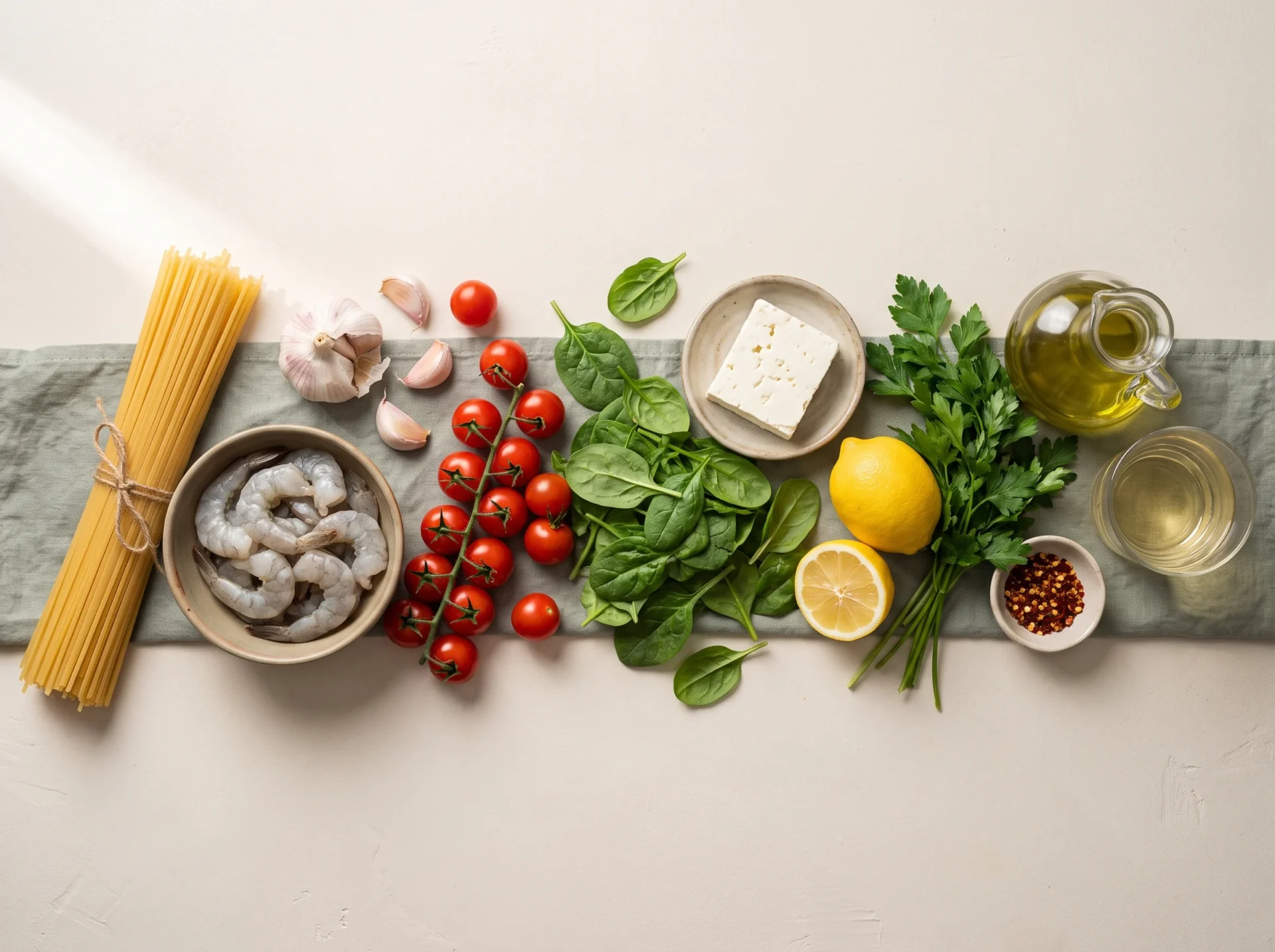
Ingredients
Makes 4 servings.
Equipment
How to make it
- Salt the water and start the pasta. Bring 4 quarts (4 L) of water to a rolling boil, salt it until it tastes seasoned, and cook the linguine one minute short of the package time for al dente. Before draining, dip out 1 1/2 cups (350 ml) of the cloudy cooking water.
- Dry and season the shrimp. Pat the shrimp completely dry and toss with 1/4 tsp of the salt. Surface moisture steams instead of searing, and wet shrimp go grey and slack rather than pink and firm.
- Bloom the garlic gently. Warm 2 tbsp of the olive oil in the skillet over medium heat, add the sliced garlic and the pepper flakes, and cook 60 to 90 seconds until the slices are pale gold at the edges. Browned garlic turns bitter and cannot be rescued.
- Blister the tomatoes and reduce the wine. Raise the heat to medium-high, lay the halved tomatoes cut side down, and leave them undisturbed 3 to 4 minutes until the skins slump and the cut faces darken. Pour in the wine and simmer 2 to 3 minutes until the raw alcohol smell is gone and the liquid has reduced by half.
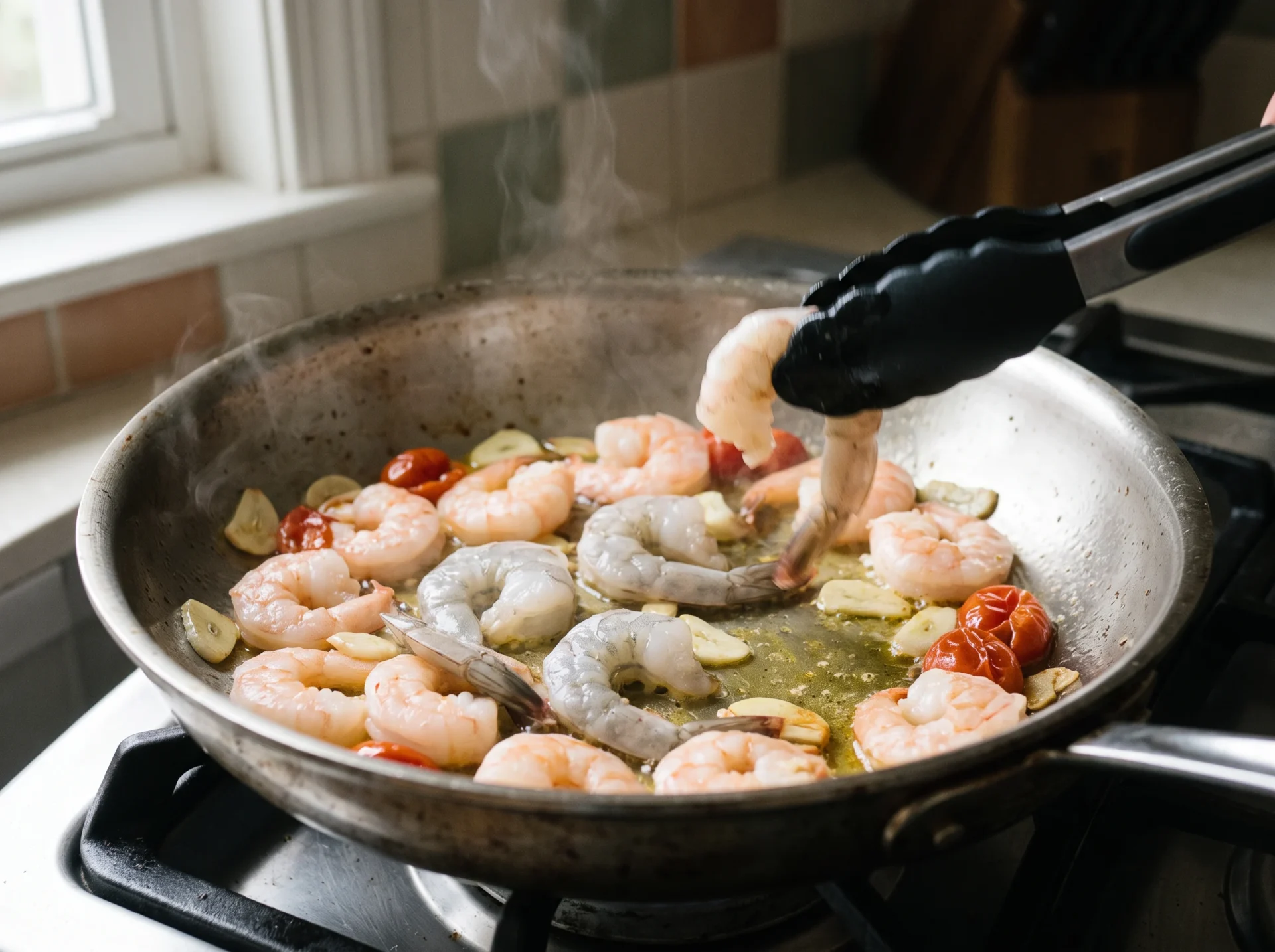
- Cook the shrimp and pull them early. Add the shrimp in a single uncrowded layer and cook about 90 seconds per side, then lift them to a plate while the thickest part of a few is still faintly translucent. They finish in the hot pasta, where they reach the FDA minimum of 145°F (63°C) for shellfish and read firm, pearly and opaque throughout.
- Wilt the spinach and build the sauce. Add the spinach with 1/2 cup (120 ml) of the reserved pasta water and stir 30 to 60 seconds until it collapses. Add the drained linguine, the last 1 tbsp of olive oil, and the lemon juice and zest, then toss hard for about a minute, adding more pasta water a splash at a time until the sauce turns glossy and coats the strands instead of pooling under them.
- Return the shrimp and finish. Slide the shrimp and their juices back in, toss 30 seconds to heat through, and take the pan off the heat. Scatter the feta, parsley and black pepper over the top, taste for salt, and serve while the sauce is still loose.
Practical cooking tips
- The classic failure in any garlic shrimp pasta is a broken, oily sauce sitting in a puddle. It happens when the pan is too hot as the pasta water goes in. Pull the skillet back to medium and toss constantly, and the starch will bind the oil into an emulsion.
- Reserve more pasta water than you think you need. Plain tap water dilutes the seasoning without the starch to thicken it, and the linguine keeps drinking sauce off the heat.
- Buy shrimp by count rather than by adjective. At 21/25 per pound they hold their shape in a hot pan; smaller counts shrink to nothing.
- Add the feta off the heat. Crumbled into a live pan it goes grainy and stringy; scattered at the table it stays creamy and salty.
- Taste before you salt at the end. Between the pasta water and the feta, the dish is usually seasoned already.
Swaps and variations
- No wine in the house? Use 1/2 cup (120 ml) low-sodium stock plus 1 tsp white wine vinegar. The swap changes the macros by about 3 kcal per serving, which rounds to nothing, but skipping the vinegar costs you the acidity that makes a shrimp linguine with white wine taste bright rather than flat.
- Whole-wheat linguine at the same 12 oz (340 g) drops the dish by roughly 20 kcal per serving and lifts fiber from about 4 g to about 9 g, with protein landing within a gram.
- Halve the linguine to 6 oz (170 g) and double the spinach for a lighter plate: about 415 kcal and 40 g of total carbs per serving instead of 569 and 71.
- Swap the shrimp for salmon and you have a different dinner altogether. Our Mediterranean salmon bowl does that properly, with quinoa in place of pasta.
Storage and meal prep
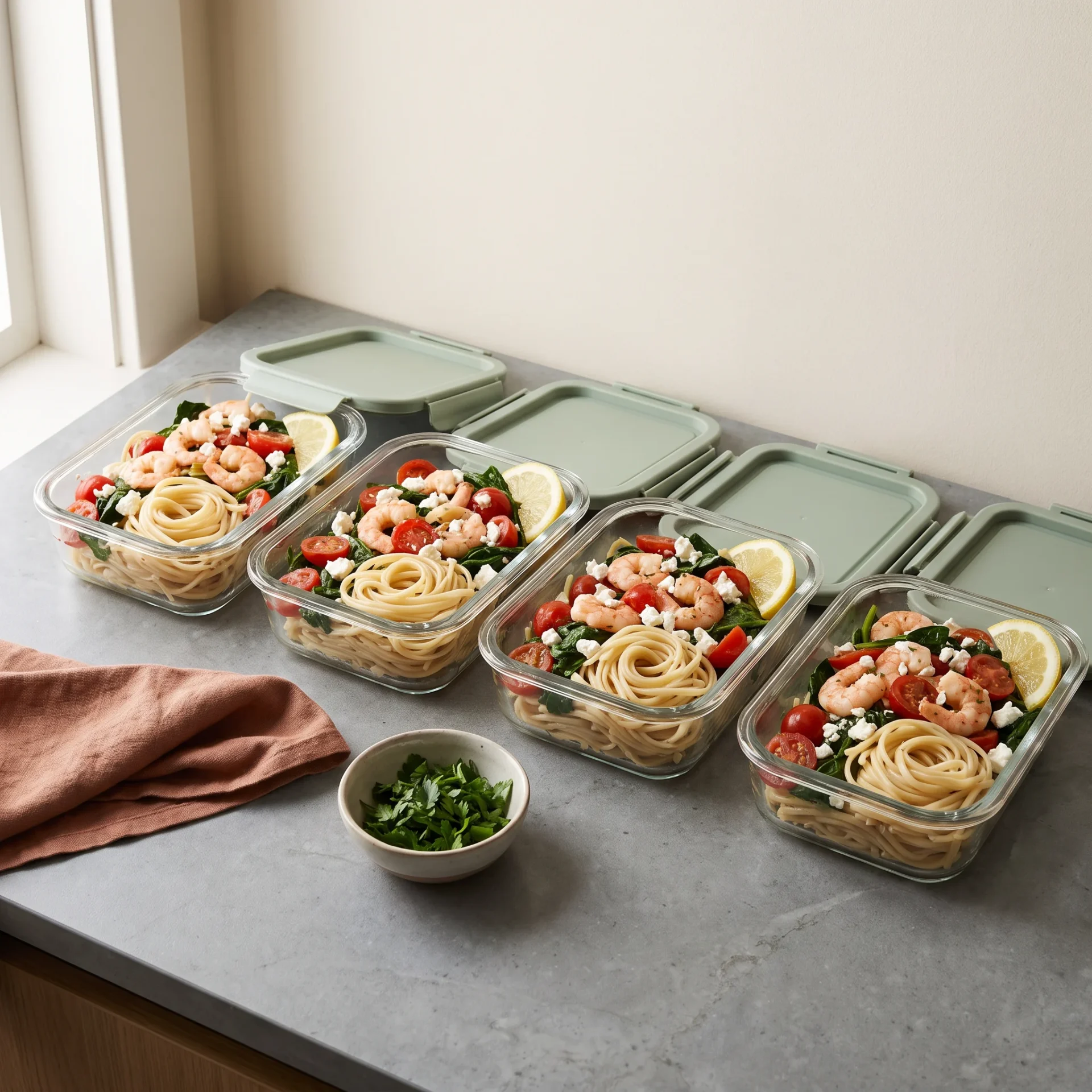
Mediterranean shrimp linguine holds up in the fridge better than most seafood pasta, with one caveat about the feta. Refrigerate leftovers in a sealed container within two hours of cooking, or within one hour if the kitchen is above 90°F (32°C), and eat them within three days. USDA leftover guidance puts the reheating target at 165°F (74°C). Like any Mediterranean pasta recipe built on olive oil rather than cream, it reheats better than you would expect: warm a portion in a skillet over medium-low with a tablespoon of water until it loosens, rather than microwaving it, where the shrimp seize.
For shrimp linguine meal prep, portion into four containers and keep the feta and parsley back in a small bag, scattering them on after reheating: feta turns rubbery the second time it is heated and parsley blackens. This dish does not freeze well, as the linguine goes mealy on thawing.
Nutrition per serving
| Nutrient | Per serving |
|---|---|
| Calories | 569 kcal |
| Protein | 38 g |
| Fat | 15 g |
| Total carbs | 71 g |
| Fiber | 4 g |
| Net carbs | 67 g |
Figures are calculated from the quantities written above, using USDA FoodData Central entries for dry pasta, raw shrimp, olive oil, cherry tomatoes, spinach and feta, on a serving of about 1 1/2 cups (340 g).
Nutrition is an estimate and varies with brands and exact portion sizes.
Frequently asked questions
How long to cook shrimp for pasta?
About three minutes total for large 21/25-count shrimp: roughly 90 seconds per side over medium-high heat. Pull them the moment the thickest part turns from grey and translucent to pearly and let the pasta finish the job. Shrimp left in a hot pan past that point tighten into rubber within a minute.
Can I use frozen shrimp?
Yes, and in most kitchens frozen is the fresher option, since nearly all shrimp are frozen at sea. Thaw them overnight in the fridge or under cold running water for about ten minutes, then dry them thoroughly. Thawed shrimp carry a lot of surface water, and wet shrimp steam instead of searing.
Is Mediterranean shrimp linguine really a Mediterranean dish?
It follows the Mediterranean dietary pattern rather than any one national cuisine: olive oil as the main fat, seafood as the protein, vegetables in volume, and dairy used as a seasoning instead of a base. The Mediterranean diet is a way of eating, not a treatment, and no single dish changes a health outcome on its own.
What should I serve with it?
Very little, and that is rather the point. The pasta already carries the protein and the vegetables. If you want a second dish, a plain green salad dressed with lemon is enough; browse the recipe archive if you would rather open with a soup.
Why did my sauce turn oily instead of silky?
The emulsion broke, almost always because the pan was too hot or the pasta water went in too slowly. Take the skillet off direct heat, add a splash of the reserved water, and toss vigorously for twenty seconds. The starch usually pulls the oil back into suspension.
Ratings and reviews
No ratings yet. If you have cooked this, your rating helps the next person decide.
Rate this recipe