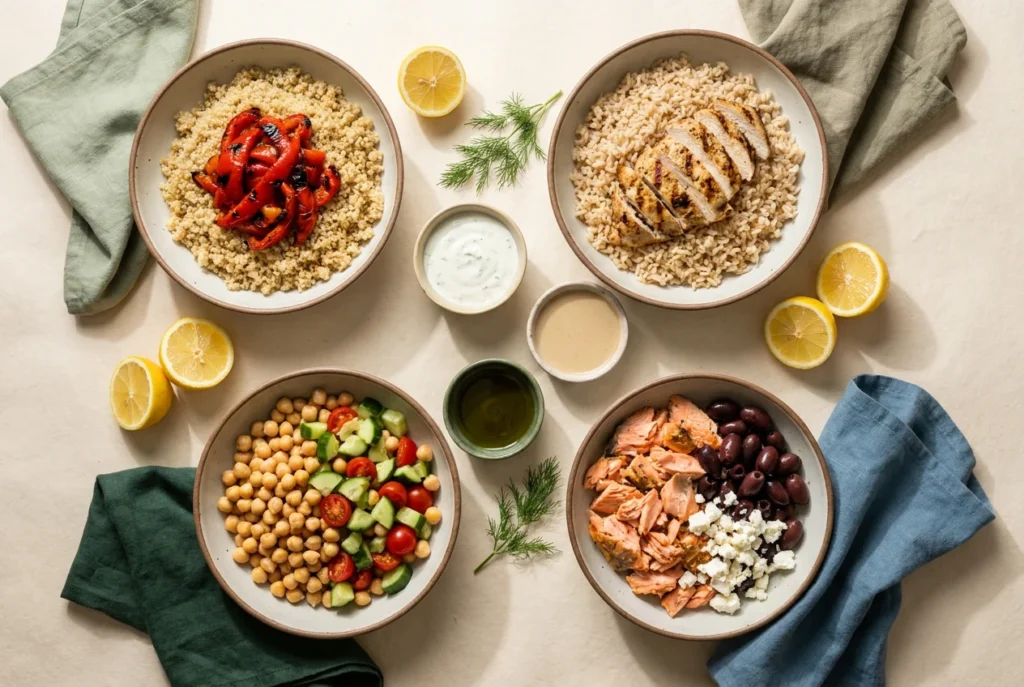
Mediterranean bowl ideas all reduce to one formula: a grain or green base, a cooked protein, two or three raw vegetables, and a sauce built on yogurt, tahini or olive oil. Change one part and you have a different bowl.
What follows is twelve working builds of that formula, each one a recipe already published here. Every calorie and minute figure below is that recipe’s own estimate, calculated from its written ingredient weights against USDA FoodData Central composition data — not a rounded guess, and not an average borrowed from somewhere else.
Key takeaways
- Every Mediterranean bowl is base + protein + raw vegetables + sauce. The formula never changes; only what sits in the four slots does.
- The twelve bowls below run from 271 to 730 calories a serving and from 15 to 45 minutes, so the calorie range is something you choose rather than something the style imposes.
- The sauce is the component most people leave out and the one that decides whether the bowl tastes finished instead of assembled.
- For meal prep, pack the sauce separately. USDA FSIS puts cooked leftovers at three to four days refrigerated; a bowl dressed on day one is soft by day two.
On this page
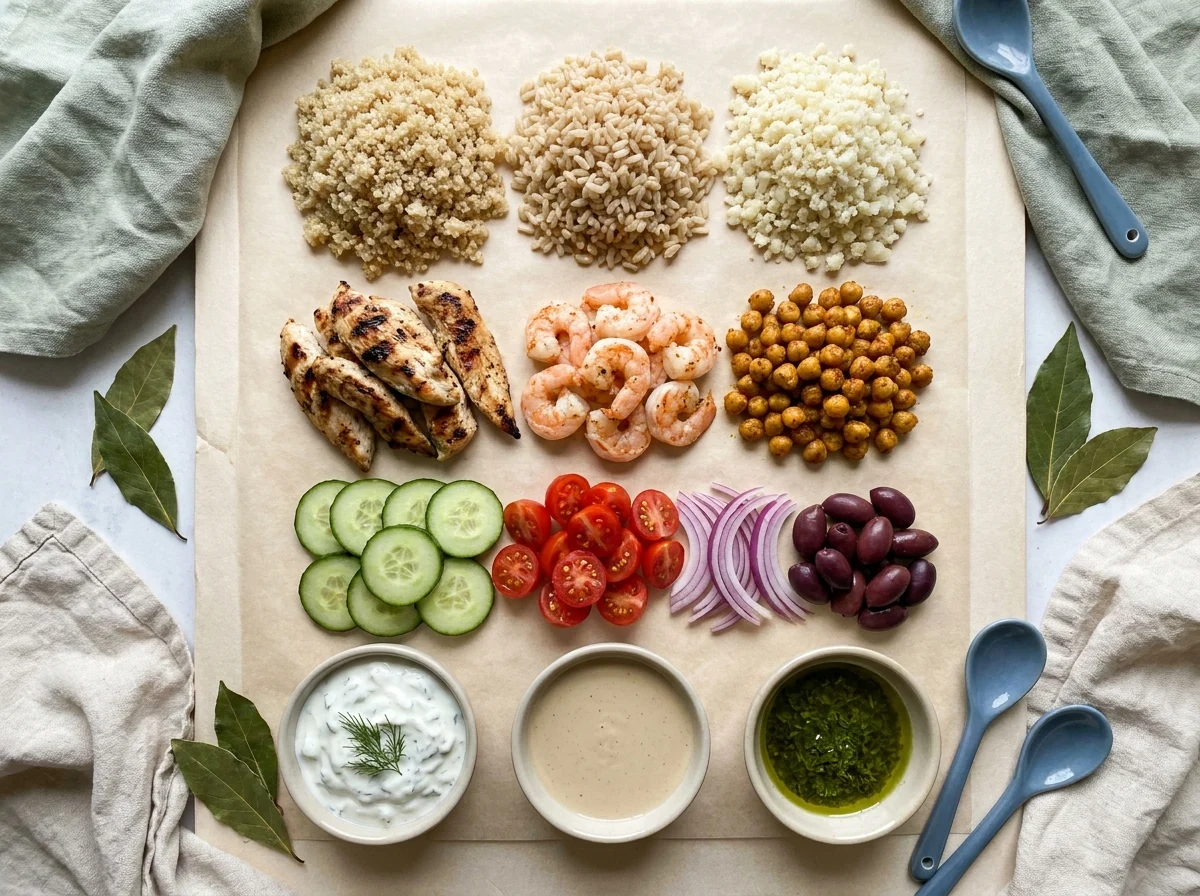
The four-part formula behind every Mediterranean bowl
Ask what goes in a Mediterranean bowl and the honest answer is four things in rough proportion, not a fixed ingredient list. Roughly half the bowl is base and vegetables, a quarter is protein, and the sauce is a genuine portion rather than a drizzle.
- Base — brown rice, quinoa, farro, or cauliflower rice when you want the carbohydrate figure low. Greens alone work, but the bowl empties faster.
- Protein — shrimp, chicken, salmon, spiced ground beef, chickpeas or lentils. The Harvard T.H. Chan Nutrition Source describes the pattern as one built on vegetables, legumes and whole grains, with seafood eaten regularly and red meat only occasionally.
- Raw vegetables — cucumber, tomato, red onion, olives. Their job is crunch and acidity against a soft warm base.
- Sauce — tzatziki, lemon tahini, or olive oil with lemon and oregano. Without it the components sit next to each other instead of becoming one dish.
That is the whole of how to make a Mediterranean bowl. Everything below is the formula with different things in the slots.
Quick weeknight Mediterranean bowl ideas
Four builds that finish in thirty minutes or less. Each one is a complete bowl, not a component you still have to assemble around.
No-cook shrimp and chickpea bowl — 15 minutes
Chickpeas replace the grain entirely, which is why this is the fastest bowl on the list: nothing meets heat. Cold shrimp, cucumber, feta and lemon dressing, 370 calories a serving.
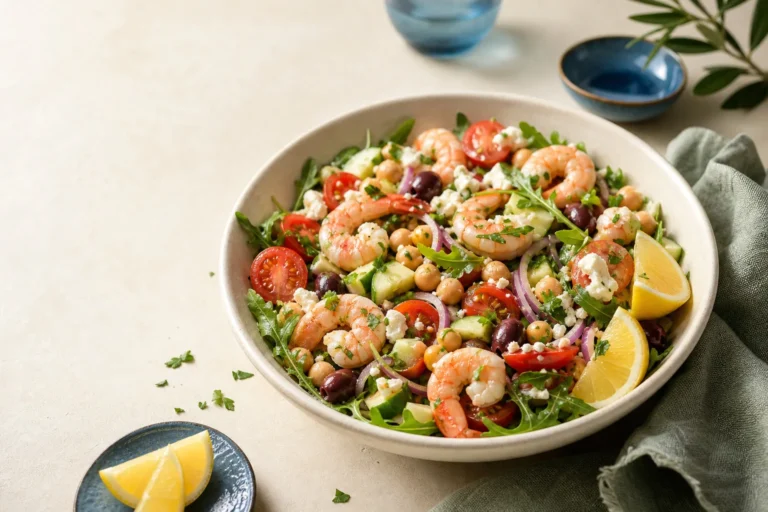
Air fryer shrimp with feta and lemon — 20 minutes
The leanest build here at 292 calories and 6 g of carbohydrate, because the air fryer does the work with almost no added fat. Spoon it over greens or rice depending on how hungry you are.
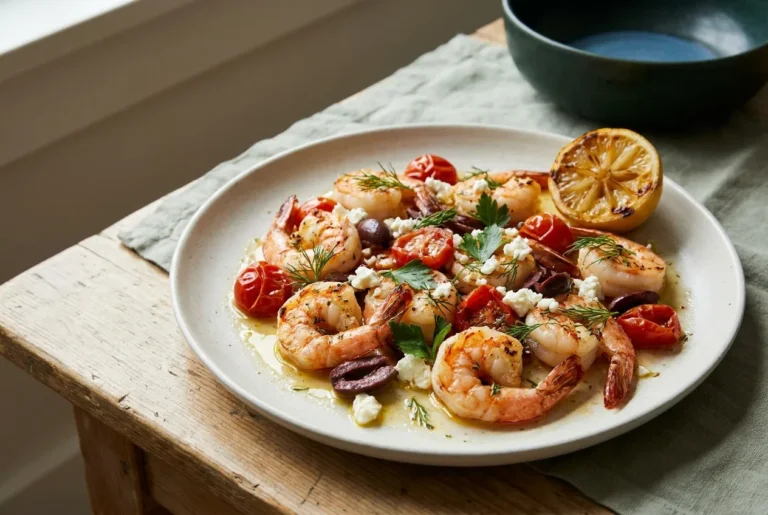
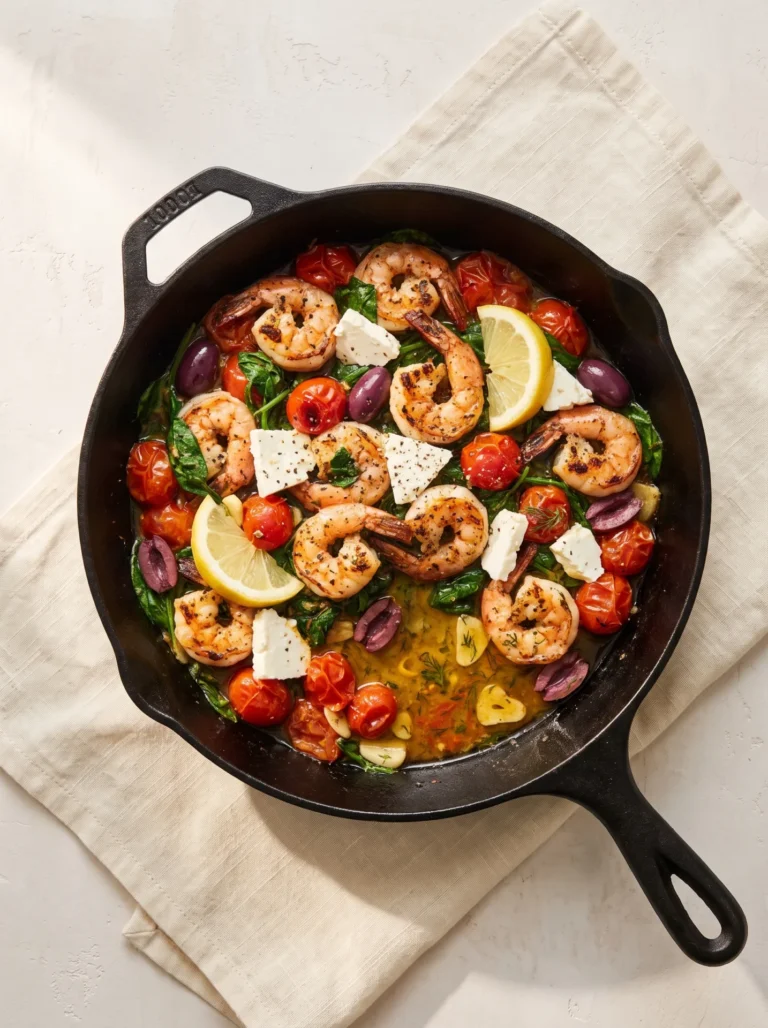
One-skillet shrimp for two — 22 minutes
Blistered tomatoes, spinach, olives and feta in a single pan, scaled for two rather than halved from four. Shrimp go in last; the FDA doneness cue is flesh that turns firm, pearly and opaque.
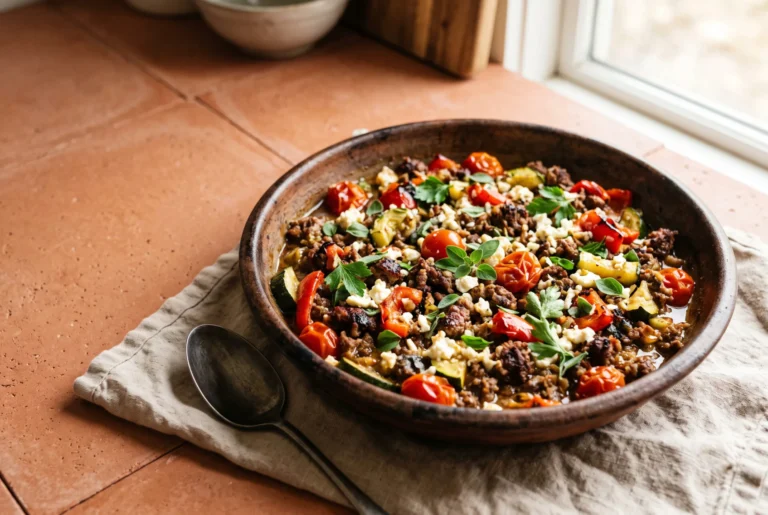
Ground beef skillet over cauliflower rice — 30 minutes
The cheapest protein in the group and the lowest carbohydrate load at 10 g a serving. Zucchini, peppers and tomatoes cook down in the beef fat; feta goes on off the heat.
Make-ahead and meal-prep Mediterranean bowls
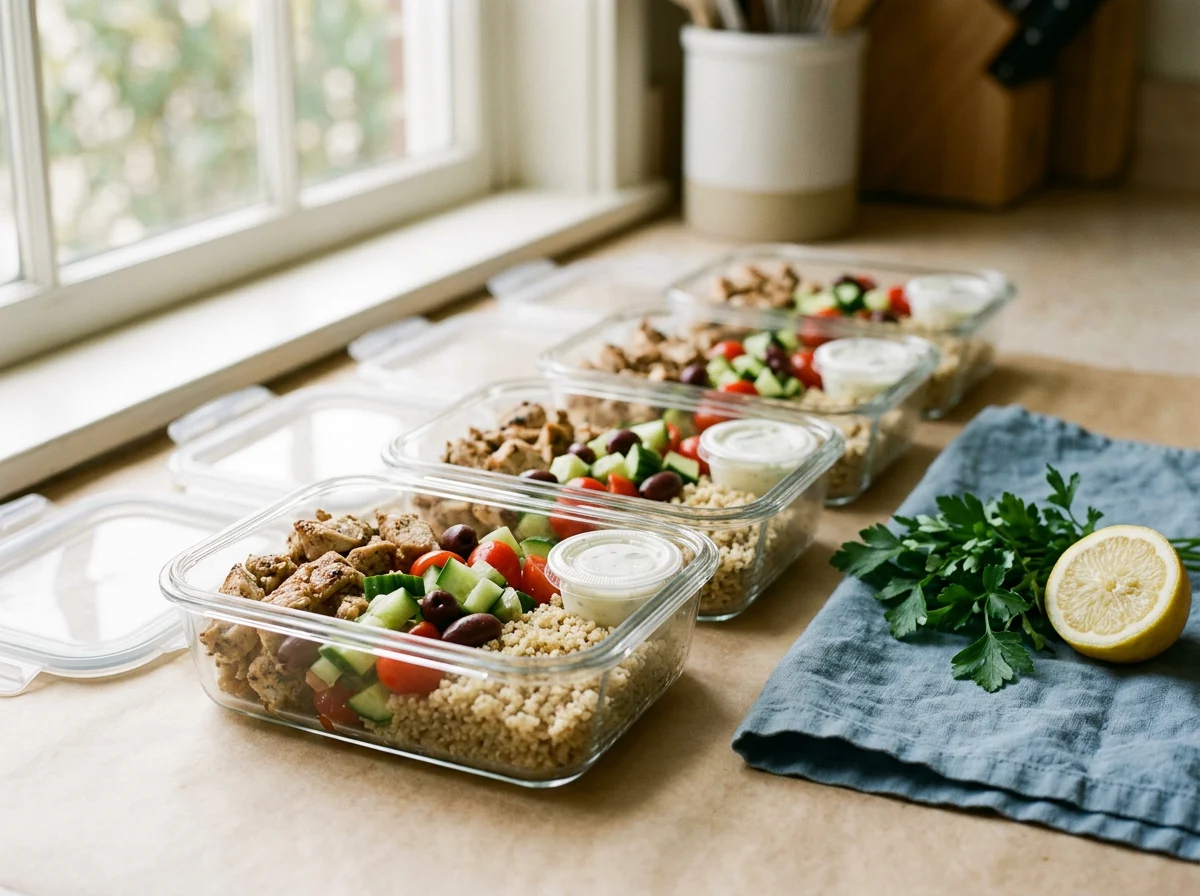
These four hold their texture for several days, which is the only property that matters in a meal-prep bowl. Sauce goes in a separate cup every time.
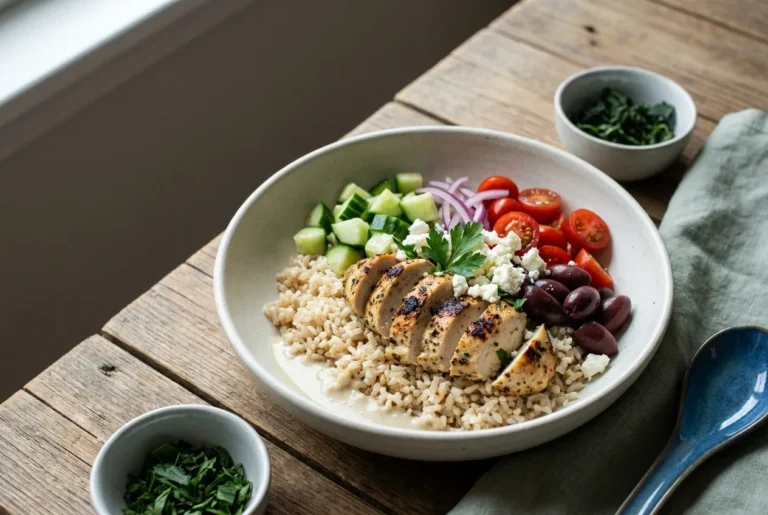
Brown rice bowl with lemon chicken — 35 minutes
The default Mediterranean grain bowl and the one to build first: brown rice, oregano chicken, crisp vegetables, tahini. At 413 calories it sits in the middle of the range and reheats without going dry.
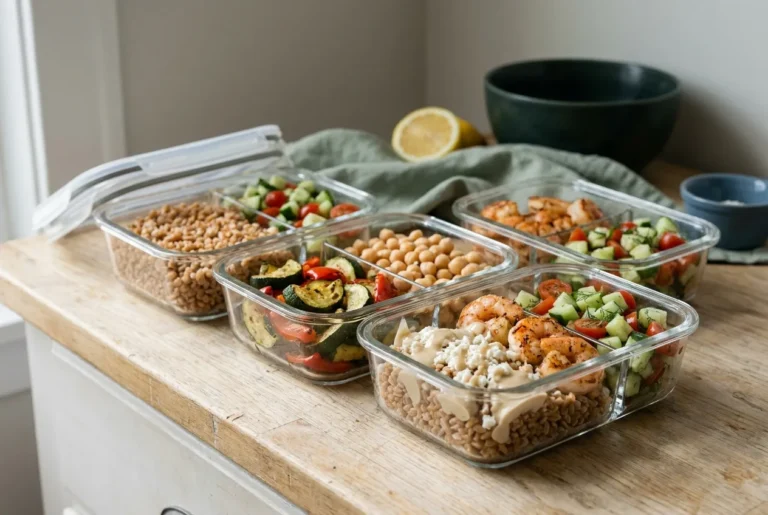
Farro shrimp bowls with lemon tahini — 45 minutes
Farro is the one base that genuinely improves after a night in the fridge; it stays chewy where rice softens. Four lunches at 634 calories and 46 g of protein each.
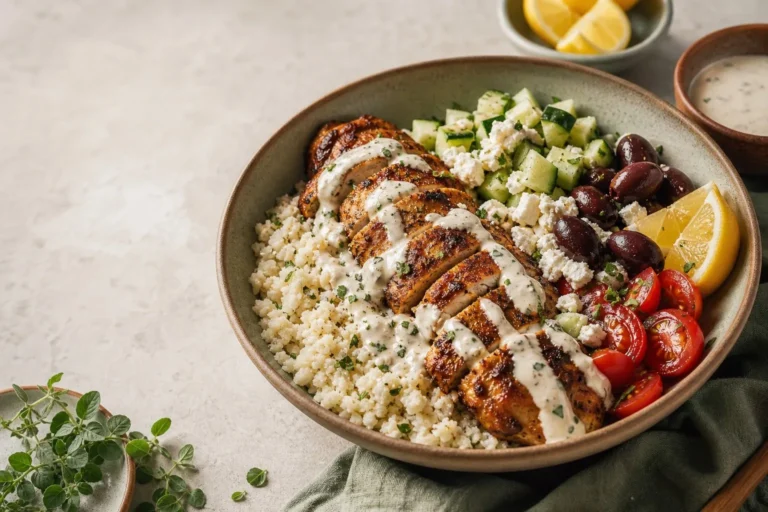
Cauliflower rice bowl with spiced chicken — 40 minutes
The same construction with the grain swapped out, at 22 g of carbohydrate instead of the rice bowl’s 28 g. Drain the cauliflower rice hard or the bowl weeps by day two.
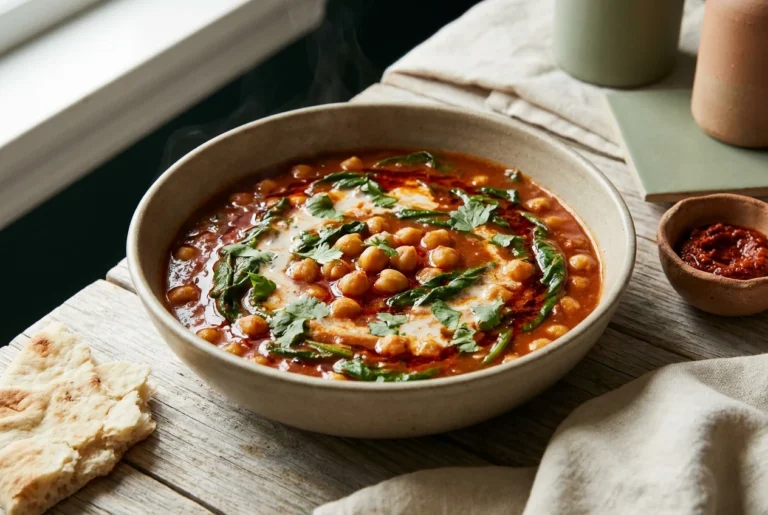
Harissa chickpea stew over grains — 40 minutes
The plant-protein entry, and the one that tastes better on day three than day one. Ladle it over any base; the stew is the protein, the vegetable and half the sauce at once.
A brothier option is Mediterranean Lentil Soup with Lemon and Cumin, which becomes a bowl the moment you spoon it over rice instead of eating it from a mug.
Bowls worth building for guests
Four that survive being served to other people, either because they look composed or because they scale without extra pans.
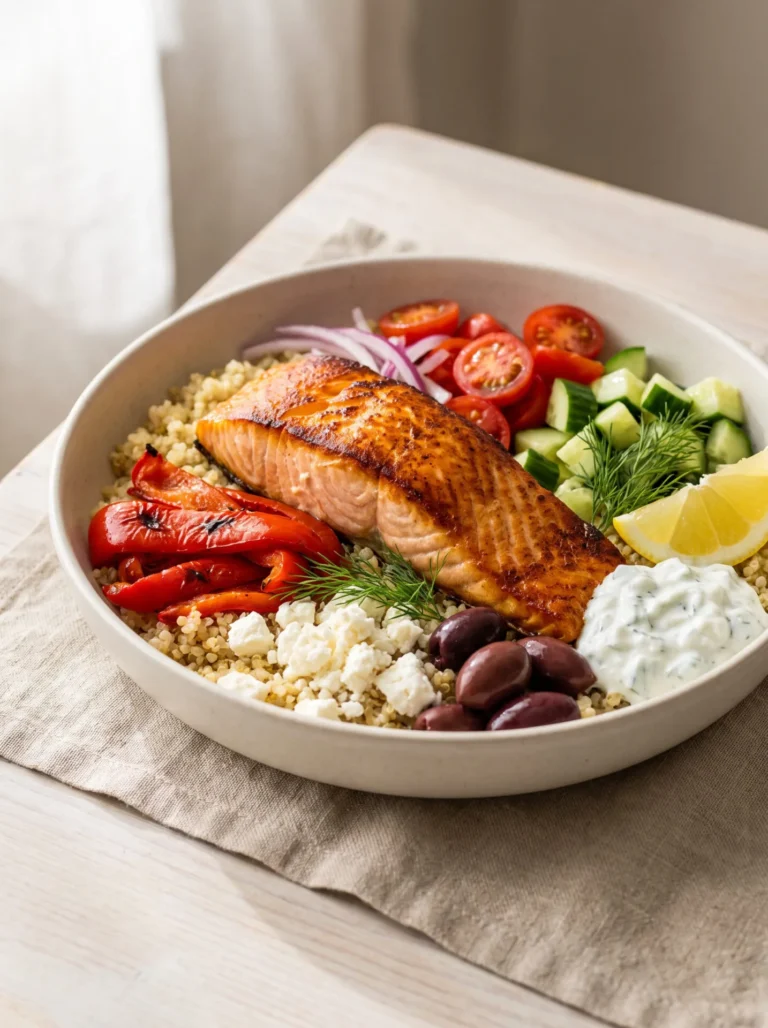
Salmon bowl with quinoa and tzatziki — 40 minutes
The most generous bowl here at 730 calories and 50 g of protein, and the best-looking one on a table. Squeeze the grated cucumber dry before it goes into the tzatziki or the sauce runs.
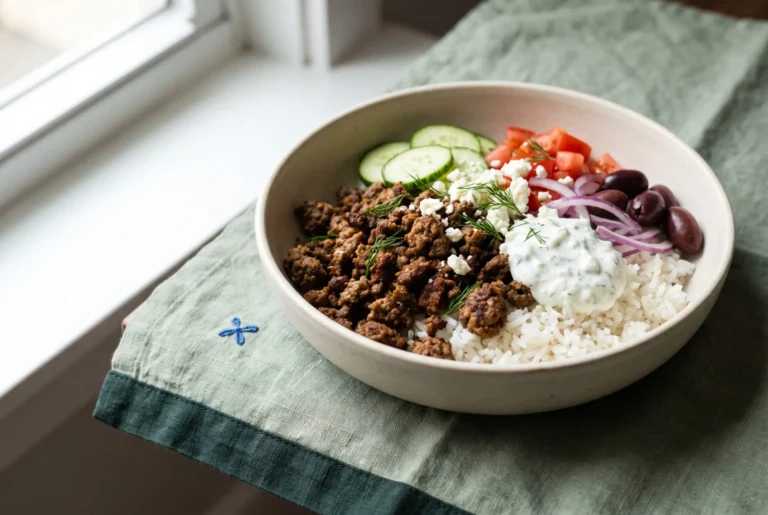
Greek gyro bowl with tzatziki — 40 minutes
A gyro taken apart and rebuilt over rice, which is easier to serve to six people than warm pita. 489 calories, and the component everyone goes back for is the pickled onion.
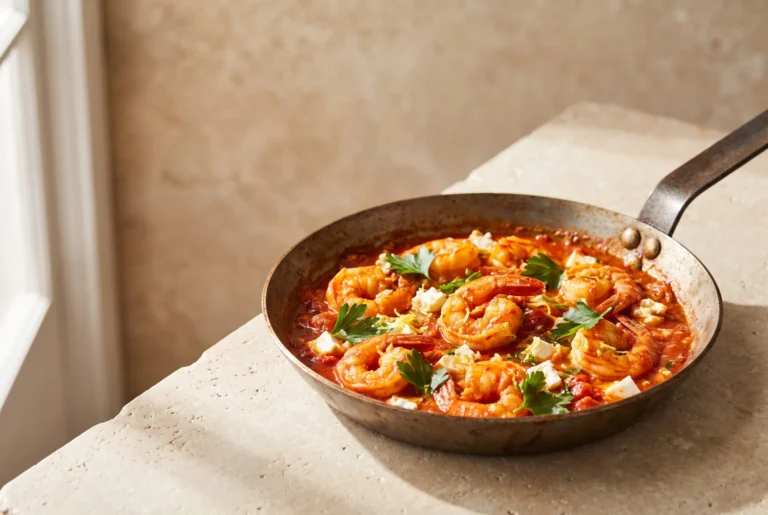
Shrimp saganaki over rice — 40 minutes
The lightest build on the list at 271 calories, because the sauce is reduced tomato rather than oil or yogurt. It arrives at the table in the pan it cooked in.
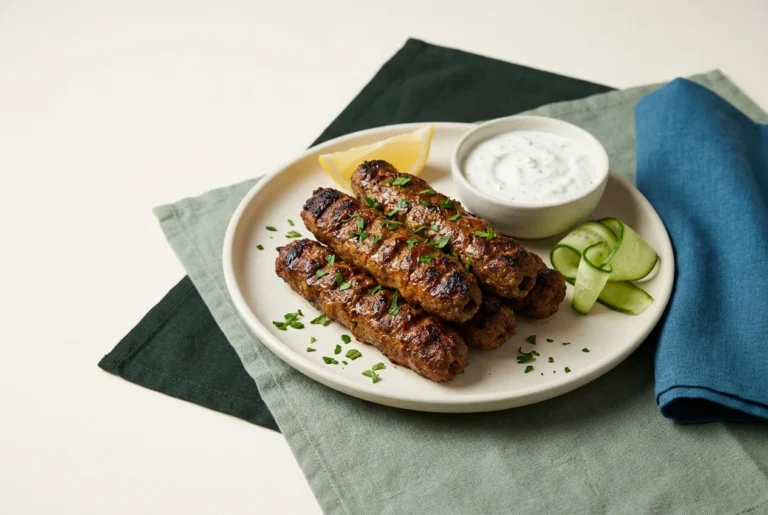
Kofta kebab bowl with yogurt sauce — 30 minutes
Kofta shaped ahead and air-fried to order, at 297 calories a serving. This is the build to make when people are arriving at different times, since the kebabs cook in twelve minutes.
For a low-carbohydrate version of the same table, Keto Mediterranean Shrimp Zoodles with Feta and Olives swaps the grain for zucchini noodles without changing anything else.
How these twelve bowls compare
Laid side by side, these Mediterranean bowl ideas make one thing obvious: cooking time and calories are unrelated. The 15-minute bowl and the 40-minute bowl sit within a hundred calories of each other; what moves the number is the base and the fat in the sauce, not the effort.
| Bowl | Calories per serving | Ready in |
|---|---|---|
| Shrimp saganaki | 271 | 40 min |
| Air fryer shrimp | 292 | 20 min |
| Kofta kebab | 297 | 30 min |
| Ground beef skillet | 334 | 30 min |
| No-cook shrimp salad | 370 | 15 min |
| Brown rice bowl | 413 | 35 min |
| Harissa chickpea stew | 451 | 40 min |
| Skillet shrimp for two | 486 | 22 min |
| Greek gyro bowl | 489 | 40 min |
| Cauliflower rice bowl | 624 | 40 min |
| Farro shrimp bowls | 634 | 45 min |
| Salmon bowl | 730 | 40 min |
How to build a week from these Mediterranean bowl ideas
Cook one base and one sauce on Sunday and the week assembles itself. A double batch of brown rice covers four bowls; a jar of lemon tahini covers all five days.
- Sunday — cook the grain and one sauce. Roast nothing yet.
- Monday to Wednesday — the farro shrimp bowls, sauce packed separately.
- Thursday — the harissa chickpea stew over the remaining grain, since it is at its best by now.
- Friday — the no-cook shrimp salad, because nobody cooks a base on Friday.
The rest of the Mediterranean recipe archive slots into the same frame, and if you want the fat side of the pattern in numbers first, our piece on olive oil on the Mediterranean diet covers how much a day the pattern actually assumes. When the protein is roasted rather than pan-cooked, the same logic appears in sides for Greek chicken.
What to skip
Three things that appear in most healthy Mediterranean bowls online and earn their place in none of them.
- Bottled Greek dressing. It is the one shortcut that makes every bowl taste identical. Lemon, olive oil and salt take forty seconds.
- A second grain. Quinoa and rice in one bowl adds calories and nothing else; the crunch you are reaching for comes from the raw vegetables.
- Pre-crumbled feta. It is dried out and coated to stop it clumping, so it never softens into the warm base the way a block does.
Frequently asked questions
What goes in a Mediterranean bowl?
A base, a protein, raw vegetables and a sauce. In practice that is brown rice, quinoa or cauliflower rice; shrimp, chicken, salmon, beef or chickpeas; cucumber, tomato, red onion and olives; and tzatziki, lemon tahini or seasoned olive oil.
How do you make a Mediterranean bowl taste like a restaurant one?
Acid and salt at the end. Restaurant bowls finish with lemon juice squeezed over the assembled bowl and flaky salt on the vegetables, after plating rather than during cooking, which is why the flavour reads brighter than a home version.
How long does a Mediterranean bowl keep in the fridge?
Three to four days, matching the USDA FSIS window for cooked leftovers, provided the sauce is stored separately and added at the moment of eating.
Can you make a Mediterranean bowl without grains?
Yes. Cauliflower rice, zucchini noodles or a bed of greens all work as the base, and the carbohydrate figure drops by roughly a third against a rice bowl of the same size. The other three components stay exactly as they are.
Which Mediterranean bowl recipe should a beginner start with?
The brown rice bowl with lemon chicken. It uses the most forgiving base, the most familiar protein and a sauce that does not split, so nothing in it depends on timing you have not practised yet.
Note: This article is for general information and is not medical advice. Nutrition figures are estimates that vary with brands, ripeness, and portion size. Talk to a doctor or registered dietitian before changing your diet, especially if you are pregnant, managing diabetes or kidney disease, or taking prescribed medication.