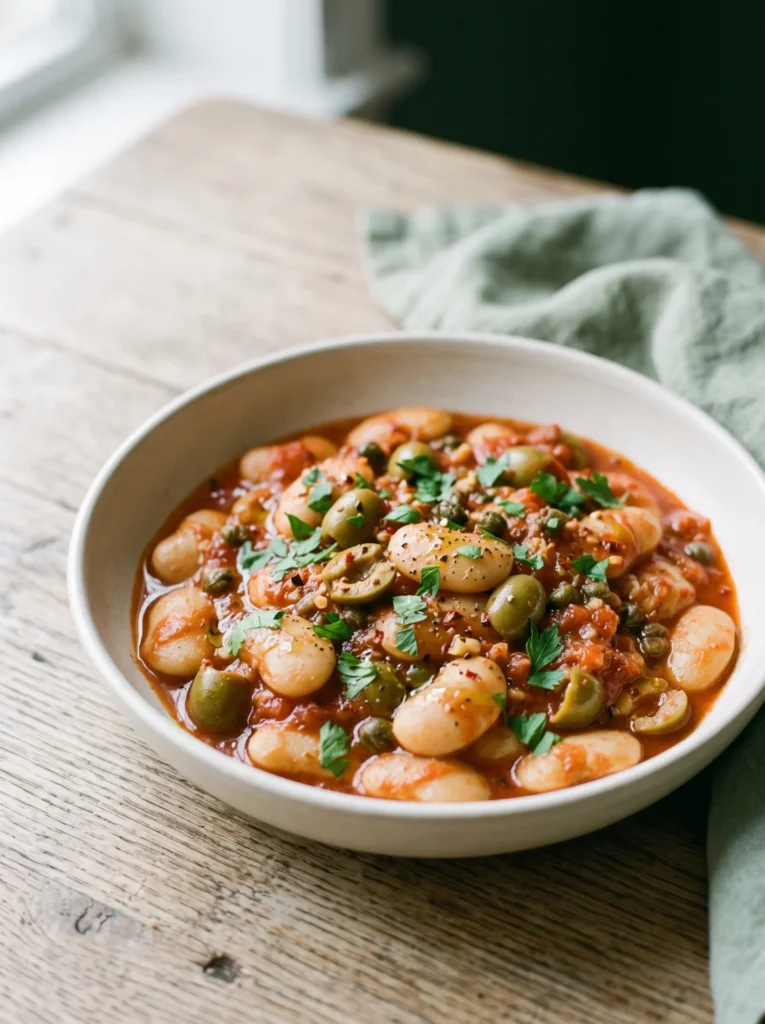
These puttanesca butter beans are what a tin of beans becomes when you treat it like the main ingredient instead of a filler. The sauce is the classic southern Italian one — olives, capers, garlic, chilli, tomato — and the beans go in at the very end so they stay whole and creamy rather than collapsing into the pan. It is one pot, twenty minutes, and entirely plant-based. If you are building a weeknight repertoire, this belongs with the rest of our vegan recipes.
Table of Contents
Why these puttanesca butter beans work
- The beans go in last. Tinned beans are already fully cooked. Every minute they spend being stirred in hot sauce is a minute spent breaking down, so they get 5 to 7 minutes at the end and nothing more.
- No anchovies, nothing lost. Traditional puttanesca leans on anchovy for depth. Olives and capers carry enough salt and savour on their own, which is why this version works as a vegan one pot dinner without a substitute standing in for anything.
- Draining without rinsing. The starch left on the beans thickens the sauce slightly and helps it cling. Rinsing washes away the only free thickener in the dish.
- Fibre, not just carbs. At 11 g of fibre a serving this is a genuinely high fibre vegan meal, and the fibre is what makes 34 g of carbohydrate sit as 23 g net.
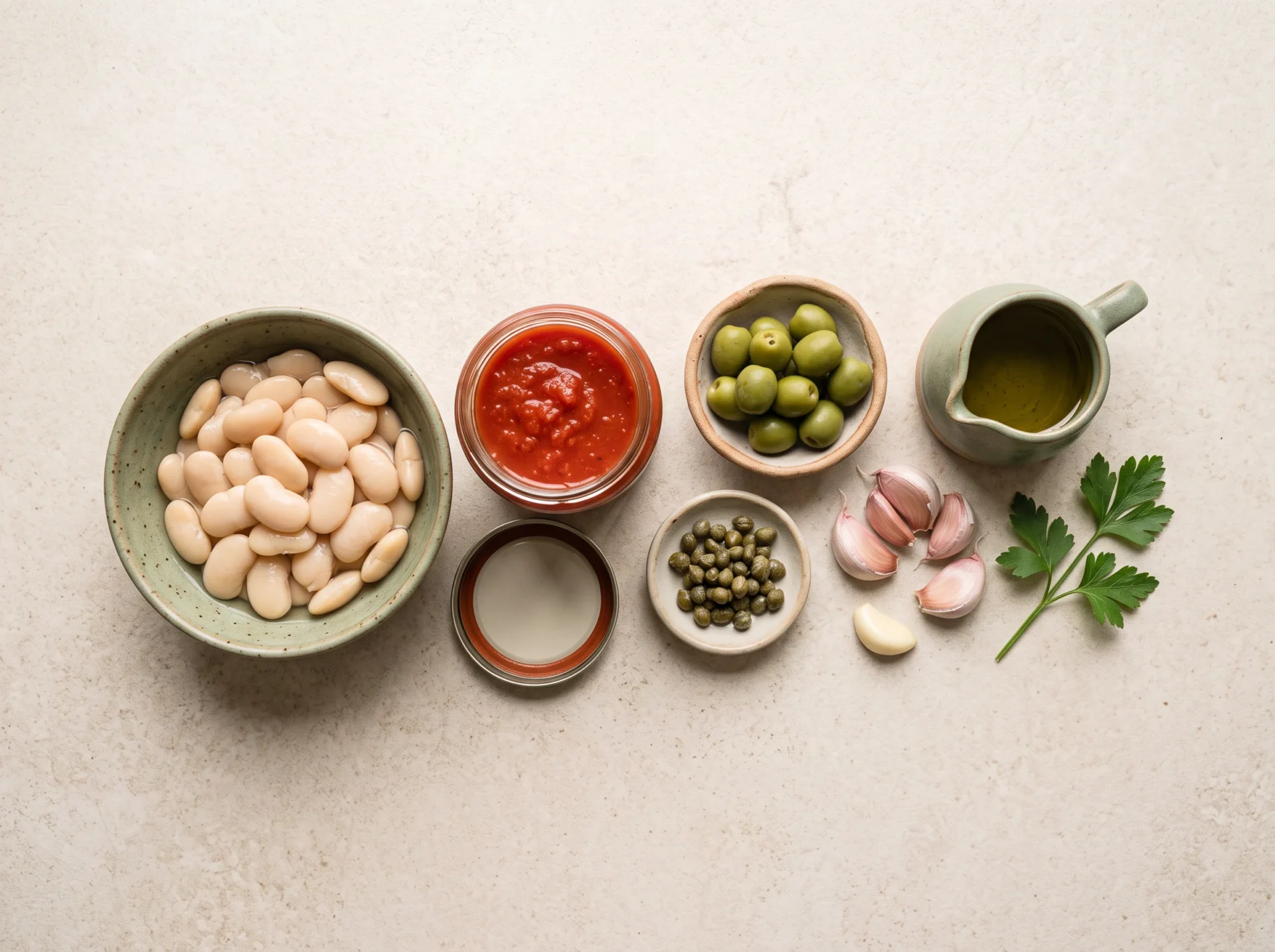
Ingredients
Makes 4 servings.
Equipment
How to make it
- Drain the beans but do not rinse. Open the tins and drain the butter beans in a sieve. Leave them unrinsed — the thin starch clinging to them helps the finished sauce cling rather than slide off the beans. Set them aside while the sauce builds; they go in late, not now.
- Soften the garlic without colouring it. Warm the olive oil in a wide shallow pan over medium-low heat and add the sliced garlic. Cook for 2 minutes until it smells sweet and turns barely blond at the edges. Garlic that browns here turns bitter and the bitterness does not cook out, so pull the heat down the moment it starts to colour.
- Build the puttanesca base. Add the chopped olives, the capers and the chilli flakes and stir for 1 minute, until the capers start to pop and the oil turns faintly orange. This short fry is what separates a puttanesca from tomato sauce with olives dropped in.
- Simmer the tomatoes down. Pour in the crushed tomatoes, add the oregano and a pinch of salt, and simmer uncovered for 8 minutes over medium heat. The sauce should thicken enough that a spoon drawn through it leaves a trail that closes slowly. Taste before you season further — olives and capers are already salty.
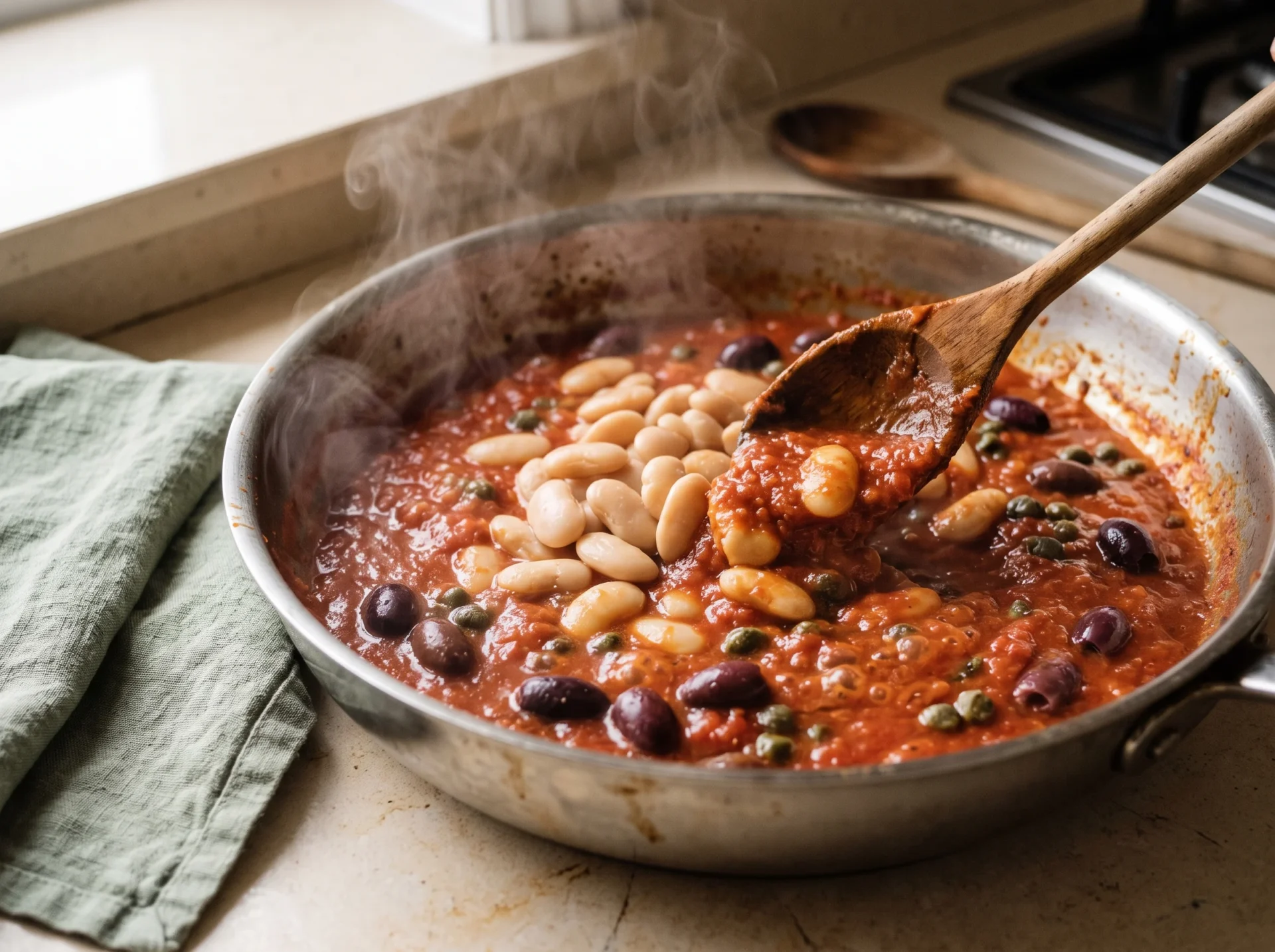
- Fold the beans in at the end. Add the drained butter beans and fold them through gently with a spatula rather than stirring with a spoon. Simmer partially covered for 5 to 7 minutes, just long enough for the beans to heat through and take on the sauce. Stop stirring once they are coated; every extra pass breaks more skins.
- Loosen, finish and rest. If the sauce has tightened past a coating consistency, loosen it with 2 to 3 tablespoons of water rather than more oil. Take the pan off the heat, scatter the torn parsley over, and let it stand for 3 minutes before serving — the beans absorb sauce as they settle.
Practical cooking tips
- Use a wide pan, not a deep saucepan. Depth means stirring to distribute heat, and stirring is what breaks the beans.
- Jarred butter beans are larger and softer than tinned; if you use them, cut the final simmer to 3 minutes. Tinned butter beans run firmer, which is an advantage here rather than a fault.
- Salt at the very end. Olives, capers and the tomato tin all carry salt, and the sauce reduces by roughly a fifth while it simmers.
- If you like heat, add the chilli with the garlic rather than at the end — it needs oil and time to bloom.
Troubleshooting tips
- Beans broke up into mush. They went in too early or were stirred too often. Fold, do not stir, and only after the sauce has already thickened.
- Sauce is watery. The tomatoes did not reduce enough. Keep simmering uncovered before the beans go in, never after.
- Tastes flat. Almost always under-salted, because people season early and then the sauce reduces. Taste at the end and correct then.
- Bitter edge. The garlic browned. Start it in warm rather than hot oil and watch it rather than the clock.
- Too salty. Add a splash of water and a few extra beans; both dilute without changing the character.
Swaps and variations
- Cannellini or chickpeas. Both work in this butter bean recipe, though neither has the same creamy interior. Chickpeas hold their shape even better and need only 3 minutes at the end.
- Black olives instead of green. Milder and slightly sweeter; use the same weight. Expect about 15 fewer calories a serving.
- Add greens. Two large handfuls of spinach folded in with the beans wilt in the residual heat and add almost nothing to the carb count.
- Richer finish. A tablespoon of good olive oil stirred in off the heat makes the sauce glossier; it adds roughly 30 calories a serving.
Serving ideas
- On thick toasted sourdough, the sauce soaking in — the most common way these are eaten in Italy.
- Over polenta or alongside rice, which stretches four servings to six.
- With a sharp green salad to cut the salt and oil.
- Cold from the fridge the next day, which is how butter beans in tomato sauce are often best.
Storage and meal prep
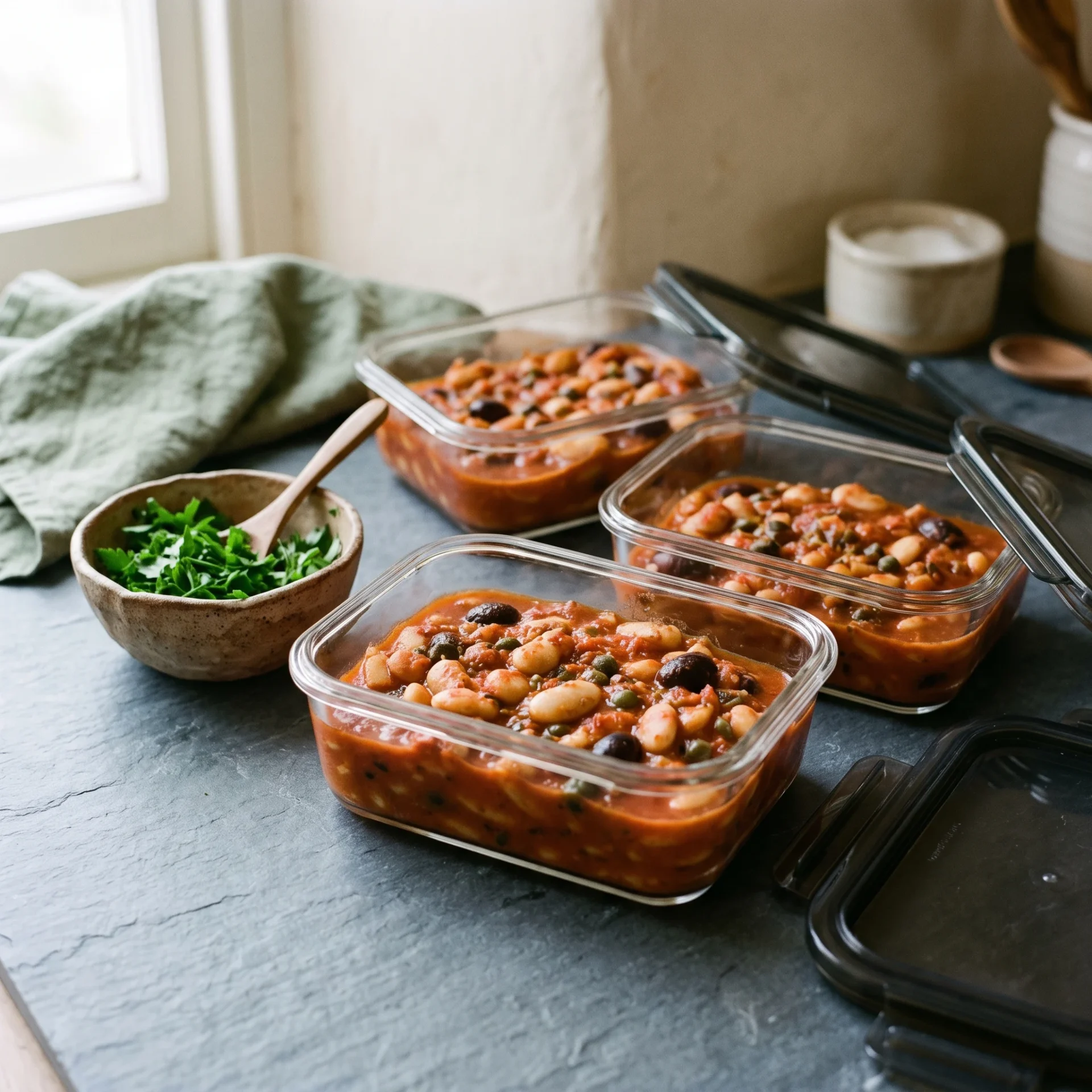
Cool the pan to room temperature within two hours, then refrigerate in an airtight container for up to 4 days. The flavour genuinely improves overnight as the olives and capers spread through the sauce. Reheat gently in a pan with a splash of water rather than in bursts in the microwave, which boils the sauce and finishes the job of breaking the beans. These puttanesca butter beans also freeze for up to 3 months, though the beans soften noticeably on thawing — freeze it only if you are happy with a stew-like texture rather than whole beans. Add the parsley fresh on serving, never before storing.
Nutrition per serving
| Nutrient | Per serving |
|---|---|
| Calories | 298 kcal |
| Protein | 12 g |
| Fat | 14 g |
| Total carbs | 34 g |
| Fiber | 11 g |
| Net carbs | 23 g |
Nutrition is an estimate calculated from the stated ingredients using USDA FoodData Central values, and varies with brands and exact portion sizes.
Frequently asked questions
How much protein is in puttanesca butter beans?
12 g a serving, calculated from the ingredient weights rather than taken from a label. Some recipes for this dish claim figures in the twenties; those numbers usually assume a much larger bean quantity or count a serving as a third of the pan rather than a quarter. Serve it over rice or with bread if you want the meal to land higher.
Do I need to rinse tinned butter beans?
Not for this dish. Rinsing removes the starch that helps the sauce cling, and the liquid you drain away carries most of the tinned flavour anyway. Rinse only if your tin lists added sugar or if you are sodium-restricted.
Is puttanesca vegan?
Not traditionally. The classic Neapolitan version includes anchovy, which dissolves into the oil at the start. This recipe leaves it out entirely rather than substituting it; olives and capers supply the salt and savour that the anchovy was doing.
Why did my beans turn to mush?
They were in the pan too long or were stirred too hard. Tinned beans are fully cooked when they come out of the tin, so they need heating through, not cooking. Fold them in at the end with a spatula and stop once they are coated.
Can I make this ahead for the week?
Yes, and it is better for it. Make the whole pan, cool it, and portion it cold; four days in the fridge is the supported window. Keep the parsley separate and add it when you serve.
What else can I make with a tin of beans?
A great deal — beans carry most of the fast plant-based cooking on this site. Browse the full recipe library for the rest.
Ratings and reviews
No ratings yet. If you have cooked this, your rating helps the next person decide.
Rate this recipe